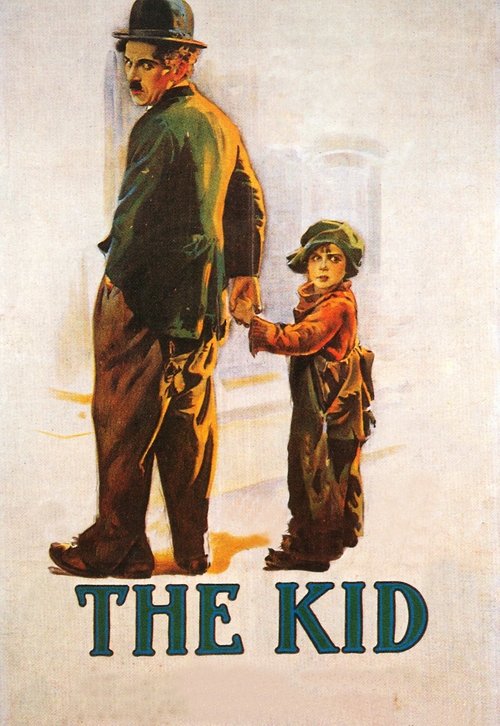
The Kid
"6 reels of Joy."
Overview
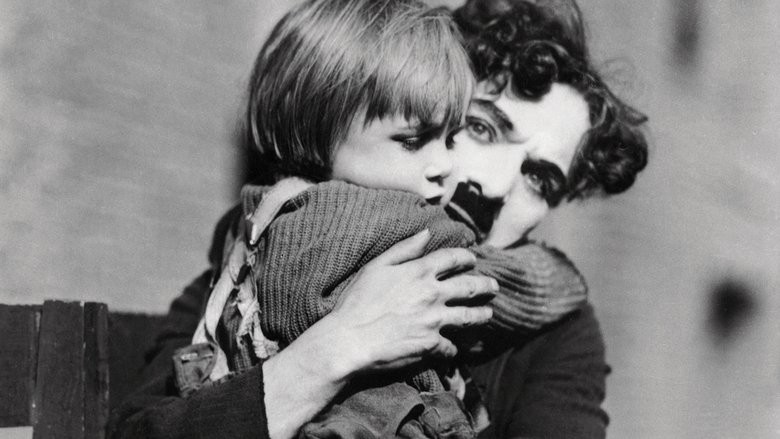
"The Kid" (1921) is a silent comedy-drama that marks Charlie Chaplin's first full-length feature as a director. The story begins with a desperate unwed mother (Edna Purviance) who abandons her newborn son in a luxury car, hoping he will be cared for by a wealthy family. However, the car is stolen, and the thieves leave the baby in an alley. The Tramp (Charlie Chaplin) discovers the child and, after a series of comedic attempts to get rid of him, finds a note from the mother pleading for the baby to be loved and cared for. His heart melts, and he takes the boy in, naming him John.
Five years later, the Tramp and the Kid (Jackie Coogan) have formed a strong, loving bond, living a life of cheerful poverty. They have a clever scheme to earn money: the Kid breaks windows with a stone, and the Tramp, a glazier, just happens to be nearby to offer his repair services. Meanwhile, the boy's mother has become a wealthy and famous opera singer. Plagued by regret, she dedicates herself to charitable work for children in the slums, unknowingly crossing paths with her own son.
Their lives are disrupted when a doctor discovers the Tramp is not the Kid's biological father, and the authorities are notified. This leads to a tearful separation as officials try to take the boy to an orphanage. The Tramp's desperate attempts to reunite with his adopted son form the emotional core of the film's second half, culminating in a series of dramatic chases and a poignant dream sequence.
Core Meaning
"The Kid" is a profound exploration of the nature of love, family, and social justice. At its heart, the film argues that the bonds of love and care, not blood ties or social standing, are what truly constitute a family. Chaplin uses the relationship between the Tramp and the Kid to challenge conventional notions of fatherhood and societal responsibility. The film is also a powerful social commentary on poverty and the indifference of the upper classes. Through a masterful blend of slapstick comedy and heart-wrenching drama, Chaplin critiques the social institutions that would tear a loving, albeit unconventional, family apart based on rigid rules and class prejudice. The film's message is ultimately one of hope and the resilience of the human spirit in the face of adversity.
Thematic DNA
Poverty and Social Injustice
The film vividly portrays the harsh realities of poverty in the early 20th century. The Tramp and the Kid's resourceful but precarious existence in a slum is contrasted with the wealth of the Kid's mother and the indifference of the authorities. Chaplin, drawing from his own childhood experiences, uses the setting to highlight the systemic inequalities that leave people vulnerable. The attempt by the orphan asylum officials to take the Kid away, despite the obvious love and care he receives from the Tramp, is a direct critique of a society that values rigid regulations over genuine human connection.
The Nature of Family and Fatherhood
"The Kid" redefines the concept of family, suggesting that it is forged through love and mutual care rather than biological ties. The Tramp, an unlikely father figure, provides the Kid with unwavering love and companionship, creating a happy, albeit impoverished, home life. This bond is portrayed as more authentic and meaningful than the relationship the Kid has with his biological parents, who initially abandon him. Chaplin challenges the patriarchal norms of the time by presenting a nurturing and deeply emotional father figure in the Tramp.
Love and Compassion
Love is the central, redemptive force in "The Kid." It is the Tramp's compassion that leads him to take in the abandoned baby, and it is the love between him and the Kid that allows them to endure their hardships. The film suggests that love can be found in the most unexpected places and can transcend social class and circumstance. The mother's eventual search for her son is also driven by love and regret, leading to her redemption. Ultimately, the film champions empathy and human connection as essential for survival and happiness.
Abandonment and Redemption
The film begins with an act of abandonment, as the mother leaves her child out of desperation. This initial sin sets the stage for a journey of redemption, not only for the mother, who spends years searching for her son, but also for the Tramp, who finds purpose and love in caring for the boy. The theme of redemption is also reflected in the film's ending, where the fractured family is finally brought together in a more stable and loving environment.
Character Analysis
The Tramp
Charlie Chaplin
Motivation
Initially, his motivation is simply to survive. However, upon finding the Kid and reading the mother's note, his primary motivation becomes to love, protect, and provide for his adopted son. This love gives his life meaning and purpose beyond his own immediate needs.
Character Arc
The Tramp begins as a solitary, carefree wanderer. The discovery of the abandoned baby forces him into a role of responsibility he initially rejects. Over five years, he develops a deep, paternal love for the Kid, transforming from a self-serving individual into a devoted and fiercely protective father figure. His desperate fight to keep the Kid reveals the profound change in his character, showing his capacity for unconditional love and self-sacrifice.
The Kid (John)
Jackie Coogan
Motivation
The Kid's primary motivation is to be with the Tramp, whom he loves as his father. He is a loyal and active participant in their shared life, motivated by love and a desire for their small family unit to remain intact.
Character Arc
The Kid's arc is one of finding a sense of belonging and family in the most unconventional of circumstances. He grows from an abandoned infant into a resourceful and loving child who is an equal partner in his and the Tramp's life. The trauma of being separated from the only father he has ever known underscores the depth of their bond. His reunion with his biological mother represents a move towards a more stable future, but it is his unwavering love for the Tramp that defines his character.
The Woman (The Mother)
Edna Purviance
Motivation
Initially motivated by a desperate desire to provide a better life for her child, her motivation shifts to atoning for her past actions. After achieving success, she is driven by a deep-seated need to find her lost son and make amends for abandoning him.
Character Arc
The Woman begins the film in a state of desperation, leading her to abandon her child. Her arc is one of redemption. She transforms from a destitute, unwed mother into a successful and wealthy actress. However, her success is shadowed by the guilt and regret of her past actions. She channels her remorse into charity work, which eventually leads her back to her son. Her journey culminates in her reunion with the Kid and her acceptance of the Tramp into their new family.
The Man (The Father)
Carl Miller
Motivation
His primary motivation appears to be his art career, which he prioritizes over his family. His later expression of regret suggests a belated sense of conscience.
Character Arc
The Man has a minimal arc in the film. He is initially shown as a self-absorbed artist who rejects his responsibility as a father. Years later, when he encounters the Woman again, he expresses regret for his past behavior. His character serves primarily as a catalyst for the Woman's initial desperate act of abandonment.
Symbols & Motifs
The Note
The handwritten note left with the baby, which reads, "Please love and care for this orphan child," symbolizes the mother's desperate hope for her son's future and the universal need for love and compassion. It is the catalyst that transforms the Tramp's initial reluctance into fatherly devotion.
The Tramp discovers the note tucked into the baby's blankets. This is the turning point where he decides to keep and raise the child. The note reappears later in the film when the doctor finds it and shows it to the mother, confirming the Kid's identity.
The Broken Windows
The scheme of the Kid breaking windows for the Tramp to repair symbolizes their symbiotic relationship and their creative, albeit illicit, means of survival in a society that offers them few opportunities. It represents their resourcefulness and their ability to create order and a livelihood out of chaos.
This recurring gag is shown as the primary source of income for the Tramp and the Kid. It's a comedic illustration of their teamwork and their defiance of a system that has marginalized them.
The Dreamland Sequence
The Tramp's dream of a heavenly neighborhood where everyone has wings symbolizes his desire for a world free from poverty, conflict, and the harsh realities of his life. It also reflects the film's themes of good versus evil and the longing for a utopian existence. However, the intrusion of devils into his dream suggests that even in paradise, human frailties and temptations exist.
After the Kid is taken from him, the Tramp falls asleep on the doorstep of their former home and dreams that his neighborhood has been transformed into a celestial paradise. The dream ends abruptly when a policeman wakes him up, bringing him back to the harsh reality.
The Flophouse
The flophouse represents the rock bottom of poverty and desperation. It is a transient space for those who have nowhere else to go, highlighting the precariousness of the Tramp and the Kid's existence when they are on the run.
After escaping from the orphanage officials, the Tramp and the Kid spend the night in a flophouse. It is here that the proprietor, motivated by a reward, betrays them and takes the Kid to the police, leading to their separation.
Memorable Quotes
A picture with a smile - and perhaps, a tear.
— Title Card
Context:
This is one of the first title cards shown at the beginning of the film, setting the tone for the entire narrative.
Meaning:
This opening title card perfectly encapsulates the film's innovative blend of comedy and drama. It prepares the audience for a story that will evoke a wide range of emotions, from laughter to sorrow. It was a revolutionary concept for its time, as films were generally expected to be either purely comedic or dramatic.
Please love and care for this orphan child.
— The Woman (via a note)
Context:
The Tramp finds this note with the baby after several comedic attempts to get rid of him.
Meaning:
This simple, heartfelt plea is the emotional turning point of the film's opening. It transforms the abandoned baby from a burden into a human being in need of love. It is this note that melts the Tramp's heart and convinces him to take on the responsibility of raising the child.
Are you the father of this child? / Well—practically.
— The Doctor and The Tramp
Context:
A doctor, called to attend to the sick Kid, questions the Tramp about his relationship to the boy. This questioning leads to the discovery that the Tramp is not the biological father and sets in motion the conflict with the authorities.
Meaning:
This exchange highlights the central theme of the film: that fatherhood is defined by love and care, not biology. The Tramp's honest and simple answer, "practically," asserts the legitimacy of his role as a father, even though he is not the biological parent.
Philosophical Questions
What truly defines a family?
"The Kid" challenges the conventional definition of family by presenting a loving and nurturing relationship between an unrelated man and a child. The film argues that the emotional bonds of love, care, and mutual support are more important than biological ties in creating a true family. It forces the audience to question whether the state has the right to interfere in such a relationship simply because it does not conform to societal norms.
Does poverty negate the ability to provide a loving home?
The film directly confronts the prejudice that the poor are unfit parents. Despite their poverty, the Tramp and the Kid have a rich and happy life together, filled with love and laughter. The authorities, however, see only the material deprivation and seek to remove the child. The film asks whether a loving but impoverished home is not preferable to a materially comfortable but emotionally sterile institution.
Can comedy be a vehicle for serious social commentary?
Chaplin masterfully uses slapstick comedy to disarm the audience and make them more receptive to the film's serious social themes. The humor makes the harsh realities of poverty and social injustice more palatable, allowing Chaplin to critique societal institutions without being preachy. The film raises the question of whether art, and comedy in particular, can be a powerful tool for social change.
Alternative Interpretations
While "The Kid" is largely seen as a heartwarming story of love and family, some alternative interpretations exist. One perspective is that the film can be read as a critique of the very idea of the traditional nuclear family. The most loving and functional family unit in the film is the unconventional one formed by the Tramp and the Kid, while the biological parents are initially absent or unable to provide care. The happy ending, which sees the Tramp welcomed into the wealthy mother's home, can be seen as a concession to conventional societal expectations, rather than a truly radical statement about family structures.
Another interpretation focuses on the religious and allegorical elements of the film. The opening scene explicitly compares the suffering of the unwed mother to that of Christ carrying the cross. The Tramp, in his selfless love for the Kid, can be seen as a Christ-like figure. The "Dreamland" sequence, with its angels and devils, can be interpreted as a more explicit exploration of the film's moral and spiritual themes. From this perspective, the film is not just a social drama, but also a meditation on sin, redemption, and the possibility of finding grace in a fallen world.
Cultural Impact
"The Kid" had a profound cultural impact, solidifying Charlie Chaplin's status as a cinematic genius and a global superstar. Released in the aftermath of World War I, the film resonated deeply with audiences who were grappling with loss and economic hardship. Its groundbreaking blend of slapstick comedy and sentimental drama was an innovation that influenced countless filmmakers and changed the landscape of cinema. Before "The Kid," comedies were typically short and farcical, while dramas were serious and often melodramatic. Chaplin proved that the two could be seamlessly woven together to create a richer, more emotionally resonant viewing experience.
The film's portrayal of poverty and social inequality was also significant. Drawing on his own experiences of a difficult childhood in London, Chaplin brought a level of authenticity and empathy to his depiction of life in the slums that was rare in Hollywood films of the era. This social commentary would become a hallmark of his later work. The film also launched the career of Jackie Coogan, who became the world's first major child movie star. The public's adoration for Coogan was so immense that it eventually led to the passage of the "Coogan Act" in California, a law designed to protect the earnings of child performers. "The Kid" remains a timeless masterpiece, celebrated for its universal themes of love, family, and resilience that continue to connect with audiences a century after its release.
Audience Reception
Upon its release in 1921, "The Kid" was an immediate and overwhelming success with both critics and audiences. It was praised for its innovative combination of comedy and pathos, a blend that was considered revolutionary at the time. Audiences were charmed by the heartwarming relationship between the Tramp and the Kid, and Jackie Coogan's performance was particularly lauded, catapulting him to international stardom. The film's emotional power was so great that it was described as "a picture with a smile—and perhaps, a tear," a phrase that has become synonymous with the film itself. While some modern viewers might find the sentimentality to be a bit heavy-handed, the film's emotional core continues to resonate. The main point of criticism, both then and now, has been directed at the somewhat abrupt and overly optimistic ending, as well as the surreal and lengthy "Dreamland" sequence, which some feel disrupts the narrative flow. Overall, however, the verdict has been overwhelmingly positive, with "The Kid" consistently ranked as one of Chaplin's masterpieces and one of the greatest films of the silent era.
Interesting Facts
- "The Kid" was Charlie Chaplin's first feature-length film as a director, and it was a massive success, becoming the second-highest-grossing film of 1921.
- The making of the film was deeply personal for Chaplin, who had recently lost his own infant son just before production began.
- Chaplin had to smuggle the film's negative to Salt Lake City to edit it in secret to prevent his first wife, Mildred Harris, from seizing it as part of their divorce settlement.
- Jackie Coogan became the first major child star in film history as a result of his role in "The Kid."
- Chaplin was a perfectionist, and the shooting ratio for the film was an incredibly high 53:1, meaning he shot 53 feet of film for every one foot that made it into the final cut.
- In 1972, Chaplin re-released the film with a new musical score that he composed himself.
- The emotional scene where the Kid is taken away was so powerful because Jackie Coogan's father reportedly told him he would be sent to a real workhouse if he didn't cry.
- The bond between Chaplin and Coogan was strong both on and off-screen, with Chaplin often taking the young actor to amusement parks on Sundays.
- In 2011, "The Kid" was selected for preservation in the United States National Film Registry by the Library of Congress for being "culturally, historically, or aesthetically significant."
⚠️ Spoiler Analysis
Click to reveal detailed analysis with spoilers
Frequently Asked Questions
Explore More About This Movie
Dive deeper into specific aspects of the movie with our detailed analysis pages
Comments (0)
No comments yet. Be the first to share your thoughts!