Skip to content
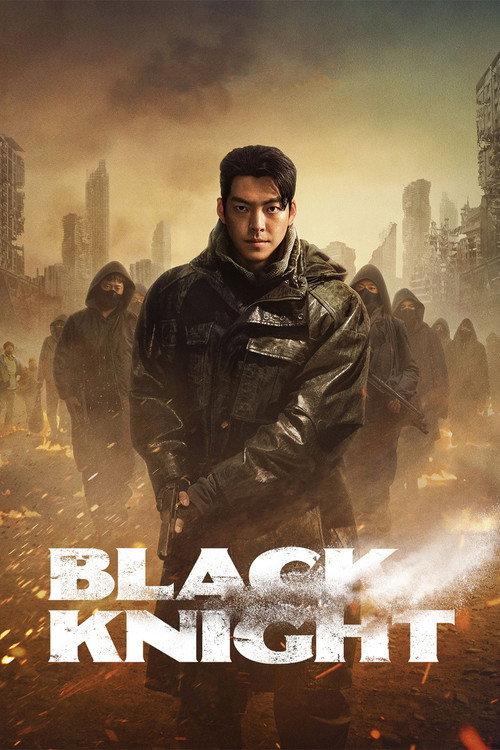
Black Knight
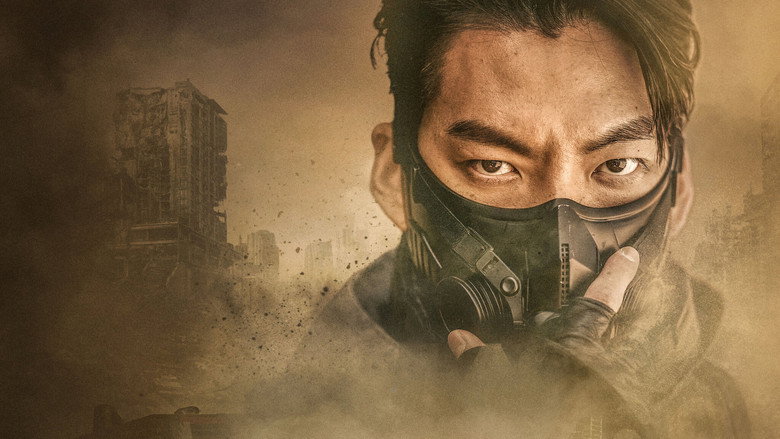
Amidst a suffocating desert of sandstorms and metallic tyranny, a desperate pulse of human rebellion ignites like a solitary flare piercing an ash-choked horizon.
Black Knight

Black Knight

택배기사

"The one hope to overturn the world."

12 May 2023 — 12 May 2023 South Korea 1 season 6 episode Ended 7.4 (317)

Cast: Kim Woo-bin, Kang You-seok, Esom, Song Seung-heon, Kim Eui-sung

Drama Sci-Fi & Fantasy Action & Adventure Commodification of Basic Survival & Environmental Collapse Class Division, Marginalization, and Refugee Injustice Corporate Hegemony vs. Grassroots Resistance Mentorship, Legacy, and Reclaiming Agency

Overview

Set in the year 2071, Black Knight envisions a grim post-apocalyptic future where a catastrophic comet collision has transformed the Korean Peninsula into a toxic wasteland, wiping out nearly 99% of humanity. In this brutal world, the decimated population relies strictly on breathing respirators and oxygen cartridges controlled by the monolithic Cheonmyeong Group. Society is fractured into a rigid, barcode-segmented caste system: the affluent elite live inside protected subterranean districts, the middle tiers reside in regulated enclosures, while the unclassified refugees are discarded in the contaminated badlands without identity or resources.

The only bridge between survival and extinction is a cadre of elite, armed delivery couriers known as Knights. While delivering life-sustaining supplies through sandstorm-ridden ruins, they must fend off heavily armed marauders and raiders. At the core of the narrative is Knight 5-8, a legendary warrior who maintains a quiet double life: by day a vital service driver, and by night the leader of a clandestine underground network fighting against the oppressive social hierarchy.

When 5-8 crosses paths with Yoon Sa-wol—a resilient refugee boy harboring a dangerous physiological mutation—and military officer Jeong Seol-ah, their fates intertwine in a multi-layered conflict. Together, they challenge Cheonmyeong Group’s ruthless heir, Ryu Seok, whose sinister experiments and resource monopolization threaten the annihilation of the remaining refugee populace.
Core Meaning

The overarching message of Black Knight is that basic human survival needs—air, water, and dignity—must never become privatized commodities exploited for corporate dominance and social stratification. The series argues that when institutional power uses scarcity as a tool of segregation and oppression, collective rebellion and structural solidarity become moral imperatives. It emphasizes that humanity’s true worth lies not in barcodes or genetic purity, but in empathy and universal equality.

Thematic DNA

Commodification of Basic Survival & Environmental Collapse 30%
Class Division, Marginalization, and Refugee Injustice 25%
Corporate Hegemony vs. Grassroots Resistance 25%
Mentorship, Legacy, and Reclaiming Agency 20%

Commodification of Basic Survival & Environmental Collapse

Clean air is framed not as a natural right, but as a corporate asset monopolized by Cheonmyeong. As Ryu Seok deliberately restricts and pollutes resources to manufacture artificial scarcity and sustain dependence, the story highlights the dangers of unchecked corporate exploitation during climate collapse.

Class Division, Marginalization, and Refugee Injustice

Society is stratified into Core, General, Special, and Refugee classes. Refugees are stripped of civic QR codes, criminalized simply for existing, and denied medical care or clean air, demonstrating how societal hierarchies dehumanize marginalized communities to maintain comfort for the privileged few.

Corporate Hegemony vs. Grassroots Resistance

The direct conflict between Cheonmyeong’s executive monopoly and 5-8’s insurgent courier network showcases how centralized totalitarian control inevitably breeds organized underground resistance.

Mentorship, Legacy, and Reclaiming Agency

The dynamic between 5-8 and Sa-wol reflects the transfer of hope, discipline, and purpose across generations, demonstrating how 5-8 refines Sa-wol’s chaotic rage into focused leadership so that resistance survives through shared principles.

Character Analysis

5-8

Kim Woo-bin

Archetype: The Reluctant Mentor / Rebel Key Trait: Stoic moral resolve, peerless martial combat skills

Motivation

Driven to dismantle Cheonmyeong’s corrupt monopoly, protect innocent refugees, and guarantee equal access to air for all human beings.

Character Arc

Evolves from a cynical, lone crusader carrying past trauma as an unclassified refugee into an inspiring commander, mentor, and revolutionary leader.

Yoon Sa-wol

Kang You-seok

Archetype: The Chosen Hero / Protegé Key Trait: Fiery determination, physical adaptability (mutant bone matrix)

Motivation

Initially motivated by survival and avenging the murder of his adoptive sister Seul-ah, later expanding to fighting for the liberation of all refugees.

Character Arc

Transitions from an impulsive, vengeance-seeking refugee survivor into a disciplined, capable fighter (Knight 5-7) and an agent of systemic societal liberation.

All 5 characters and cast

Symbols & Motifs

The Oxygen QR Code / Barcode Imprint

Meaning:

Serves as a visual motif for institutional subjugation, bureaucratic dehumanization, and corporate valuation of human life.

Context:

Embedded on citizens' hands to dictate their societal tier, legal status, and access to breathable air.

The Delivery Respirator / Mask

Meaning:

Represents both a physical defense against a lethal environment and the fundamental fragility of human life.

Context:

Constantly worn by anyone traversing the toxic outer atmosphere to filter contaminated air.

The Armored Delivery Truck

Meaning:

Embodies a lifeline of survival, armored autonomy, and a mobile fortress bringing both essential goods and revolution.

Context:

Driven by the Knights across the ruined badlands while under constant threat of ambush by raiders.

Mutant Metal Bones

Meaning:

Symbolizes physical adaptation forged through extreme suffering and the unpredictable resilience of the oppressed class.

Context:

Developed by Sa-wol due to prolonged exposure to radioactive mines during his childhood.

The Underground Core (Air Core)

Meaning:

Represents the concealment of brutal industrial exploitation beneath polished corporate utopian promises.

Context:

The massive underground machinery facility that supplies breathable air exclusively to the elite subterranean districts.

Memorable Quotes

택배기사는 살아남기 위해 가장 강해야 한다.
— 5-8

Context

Spoken in Episode 1 while illustrating the extreme dangers faced by delivery couriers against wasteland raiders.

Meaning

Summarizes the harsh reality of the post-apocalyptic wasteland, where the delivery of survival supplies necessitates uncompromising martial power.

사람은 누구나 공평하게 숨 쉴 권리가 있어.
— 5-8

Context

Delivered in Episode 3 during a pivotal discussion regarding the moral purpose of the underground resistance.

Meaning

Articulates the central philosophical thesis of the series: that breathing is an inalienable human right rather than a purchasable privilege.

All 5 quotes

Episode Highlights

Episode 1

S1E1

Establishes the dust-ravaged wasteland of 2071, displaying 5-8's combat expertise against desert raiders and revealing Sa-wol’s secret life under Seol-ah’s protection.

Significance:

Introduces the ruined post-apocalyptic world order, the vital role of the Knights, and the precarious standing of unclassified refugees.

Episode 2

S1E2

Cheonmyeong operatives carry out a violent raid resulting in the tragic death of Seul-ah, leaving a wounded Sa-wol determined to enter the Knight selection tournament.

Significance:

Serves as the catalyst for Sa-wol's journey, shifting his arc from passive hiding to active rebellion.

Episode 3

S1E3

5-8 uncovers Cheonmyeong’s illegal abduction of refugee children and agrees to subject Sa-wol to rigorous physical and combat training.

Significance:

Forges the master-apprentice bond between 5-8 and Sa-wol while linking the refugee kidnappings to corporate corruption.

Episode 4

S1E4

The deadly multi-stage tournament reaches its climax as Sa-wol overcomes fierce competitors to officially earn the rank of Knight 5-7.

Significance:

Grants the resistance an inside operative with legitimate clearance into Cheonmyeong’s heavily guarded core districts.

Episode 5

S1E5

Ryu Seok initiates a covert genocide using poisoned vaccines, prompting 5-8, Major Seol-ah, and the President to coordinate a joint offensive.

Significance:

Unites institutional military authority with grassroots insurgents in an open stand against Cheonmyeong's leadership.

Episode 6

S1E6

5-8 and allied forces storm the subterranean Core District, rescue Sa-wol from a lethal transfusion, and eliminate Ryu Seok as the reactor overloads.

Significance:

Concludes the series by ending Cheonmyeong's monopoly, abolishing the barcode caste system, and establishing equal oxygen distribution.

Philosophical Questions

Can a basic element of biological life legitimately be owned or monetized?

Explored through Cheonmyeong’s total privatization of air and water, showing how commercializing fundamental biological necessities naturally reduces human existence to an economic commodity.

Does institutional efficiency justify systemic inequality in a catastrophe?

Examines whether resource scarcity during civilizational collapse ethically permits the classification and abandonment of portions of the population to preserve an elite core.

Is violent insurrection morally required when democratic and institutional avenues are completely captured by corporate monopolies?

Illustrated through 5-8's decision to organize an armed insurgency once legal, corporate, and political avenues fail to protect innocent civilian lives.

What defines human value when society reduces individuals to economic productivity codes?

Contrasts the cold utility of QR barcodes and genetic markers against the inherent dignity, solidarity, and empathy demonstrated by the marginalized refugees.

Alternative Interpretations

The series can be analyzed through several distinct conceptual frameworks:

Full ending explanation

Cultural Impact

Premiering amidst a prominent wave of globally recognized South Korean socio-political genre series, Black Knight resonated strongly by tapping into contemporary regional anxieties regarding Asian dust and particulate pollution (황사 / 미세먼지), accelerating climate collapse, and expanding economic inequality. Upon its release on Netflix on May 12, 2023, the miniseries achieved substantial international viewership, accumulating over 31 million hours viewed during its debut window and securing positions in the Global Top 10 Non-English TV rankings across numerous countries.

Audience Reception

Critical and audience reception highlighted several strong elements alongside narrative critiques:

  • Praise: Reviewers and audiences commended Kim Woo-bin’s commanding screen presence, the stylized post-apocalyptic visual design, dynamic vehicle pursuits, and intricate combat choreography.
  • Criticism: Common criticisms centered on the compressed six-episode format, which led to rushed pacing, an underdeveloped mutation subplot for Ryu Seok, and limited depth for secondary characters.
  • Overall Consensus: Recognized as a sleek, action-driven dystopian thriller delivering compelling entertainment and social critique, despite its constrained episode count.

Interesting Facts

  • The series is based on the popular 2016–2019 Toomics webtoon 'Delivery Knight' by author Lee Yoon-gyun.
  • Director Cho Ui-seok wrote and directed all six episodes, reuniting with Kim Woo-bin following their 2016 film 'Master'.
  • Produced by Project 318 with a reported budget of approximately ₩25 billion (~$19–20 million USD).
  • Over 80% of outdoor scenes required complex VFX, volumetric sand particle simulation, and green-screen environments to render Seoul as a submerged desert.
  • The show marked Kim Woo-bin’s first major action-heavy lead series following his recovery and return to acting.
  • Renowned South Korean hip-hop and electronic music producer Primary composed the official musical score.

Easter Eggs

Korean Delivery Culture Parody

Recontextualizes South Korea’s hyper-efficient real-world Rocket Delivery (Taekbae) system into an armed post-apocalyptic combat profession.

QR Codes and Pandemic Echoes

The mandatory digital scanning codes and reliance on respirators deliberately invoke collective memories of COVID-19 safety protocols pushed to a dystopian extreme.

Knight Numbering System

Designations such as 5-8, 4-1, and 5-7 mirror military callsigns, emphasizing the organized, clandestine cell structure of the couriers.

Frequently Asked Questions

Explore More About This Movie

Dive deeper into specific aspects of the movie with our detailed analysis pages

Comments (0)

Leave a comment

No comments yet. Be the first to share your thoughts!

Similar Movies