Skip to content
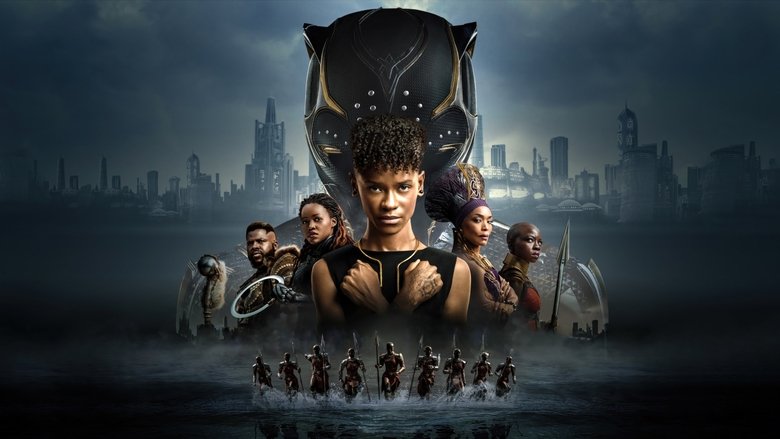
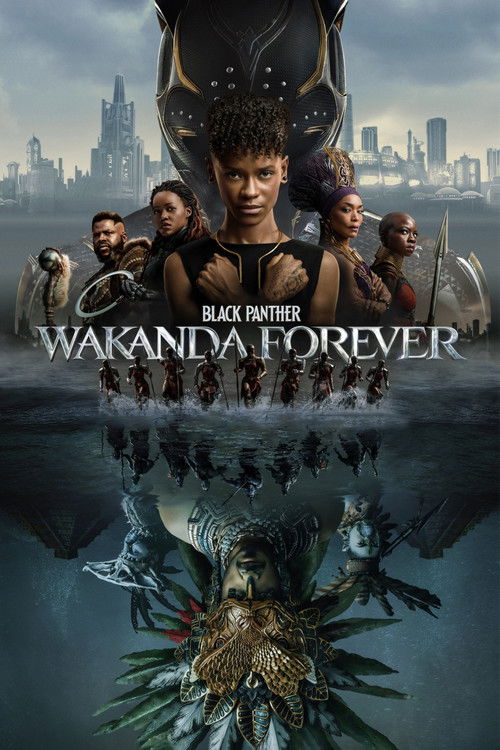
Black Panther: Wakanda Forever
An elegiac sci-fi epic steeped in ancestral sorrow and ferocious defiance, where waves of mourning collide like ocean currents against burning shores of grief, forging a painful path toward spiritual renewal.
Black Panther: Wakanda Forever

Black Panther: Wakanda Forever

"Forever."

09 November 2022 United States of America 162 min 7.0 (7,724)

Director: Ryan Coogler

Cast: Letitia Wright, Tenoch Huerta Mejía, Lupita Nyong'o, Danai Gurira, Winston Duke

Action Adventure Science Fiction Grief, Loss, and Healing Anti-Colonialism and the Tragedy of Subjugated Conflicts Motherhood and Matriarchal Leadership Vengeance vs. Mercy
Budget: $250,000,000
Box Office: $859,102,154

Overview

Black Panther: Wakanda Forever picks up in the immediate aftermath of an insurmountable tragedy: the passing of King T'Challa. As the kingdom of Wakanda reels from the loss of its protector, Queen Ramonda and Princess Shuri face mounting geopolitical pressure from world powers eager to exploit the nation’s vulnerability and seize access to vibranium. The royal family and Wakandan leadership must balance national security with their profound, personal processes of mourning.

The global hunt for vibranium leads to the discovery of another hidden civilization deep beneath the ocean: Talokan, ruled by the ancient, winged-ankled leader Namor. Fearing surface-world exploitation, Namor emerges to propose an uncompromising alliance to Wakanda—one that threatens global destabilization if Wakanda refuses to align with his militant methods.

Faced with an unprecedented ultimatum and escalating hostilities, Wakanda’s leaders, warriors, and allies must band together to defend their sovereignty. Princess Shuri is forced to step beyond the safety of her laboratory and confront whether her grief will consume her as vengeance or mature into the wisdom needed to lead her people forward.
Core Meaning

The film serves as both a deeply personal requiem for the late Chadwick Boseman and an inquiry into the psychology of grief. It posits that unaddressed bereavement and historical trauma can easily metastasize into destructive rage and cycles of retribution. Rather than offering easy superhero catharsis, the movie argues that genuine strength lies in breaking retaliatory violence through mercy, shared empathy, and the communal preservation of cultural legacy.

Thematic DNA

Grief, Loss, and Healing 35%
Anti-Colonialism and the Tragedy of Subjugated Conflicts 30%
Motherhood and Matriarchal Leadership 20%
Vengeance vs. Mercy 15%

Grief, Loss, and Healing

Functions as the central narrative engine. Shuri processes loss through denial and scientific obsession, Ramonda through spiritual devotion and maternal duty, and Nakia through quiet seclusion. The film illustrates how healing is non-linear and requires communal vulnerability.

Anti-Colonialism and the Tragedy of Subjugated Conflicts

The film juxtaposes two isolationist, indigenous/African diaspora superpowers threatened by Western imperialist resource extraction. The tragedy lies in how imperialist pressures pit marginalized nations against each other rather than uniting them against their common exploiters.

Motherhood and Matriarchal Leadership

In contrast to the first film's focus on father-son lineages, this sequel centers on maternal wisdom, matriarchal governance, and the sacrifices women make to sustain society amidst crisis.

Vengeance vs. Mercy

Serves as the moral crucible for both Shuri and Namor. The narrative asks whether suffering justifies righteous annihilation or whether choosing restraint is the ultimate act of courage.

Character Analysis

Shuri

Letitia Wright

Archetype: Reluctant Hero / Grieving Scientist Key Trait: Brilliant intellectual acumen shadowed by searing emotional rage.

Motivation

To protect Wakanda and avenge the catastrophic losses inflicted upon her family.

Character Arc

Evolves from a technologically detached, guilt-ridden sister into a vengeful warrior, finally maturing into a compassionate protector who rejects cruelty.

Namor / K'uk'ulkan

Tenoch Huerta Mejía

Archetype: Antihero / Tragic Antagonist Key Trait: Fierce loyalty and uncompromising militancy rooted in historical trauma.

Motivation

Unconditional defense of Talokan against surface-world imperial encroachment.

Character Arc

Driven by five centuries of watching surface empires enslave and exploit indigenous peoples, he pushes Talokan toward preemptive warfare to ensure his people's survival.

All 5 characters and cast

Symbols & Motifs

White Funeral Robes

Meaning:

White represents the traditional color of mourning in pan-African customs, embodying loss and the ultimate release of paralyzing sorrow.

Context:

Worn during royal funeral processions; Shuri burning her funeral shroud in the final scene symbolizes her willingness to release the paralyzing grip of grief and let her brother rest.

Water and Submersion

Meaning:

Represents Talokan’s protective womb, the historical transatlantic trauma of the Middle Passage, rebirth, and being overwhelmed by sorrow.

Context:

Used to visualize the sanctuary of Talokan, the flooding of Wakanda's golden city, and the suffocating sensation of deep grief.

The Heart-Shaped Herb

Meaning:

A symbol of ancestral connection, spiritual continuity, and divine right.

Context:

Shuri's synthetic replication of the herb bridges the gap between cold technological rationalism and sacred ancestral belief, allowing her access to the Ancestral Plane.

The Jade Bracelet

Meaning:

Represents shared history, maternal reverence, and the fragile bridge between two isolated civilizations.

Context:

Gifted by Namor to Shuri, crafted directly from the soil of his mother’s homeland.

Fire and Combustion

Meaning:

Embodies the destructive drive of vengeance and uncontrolled fury, contrasting sharply with water.

Context:

Reflected in Shuri’s burning ancestral realm vision and incorporated into her battle armor.

Memorable Quotes

I am Queen of the most powerful nation in the world! And my entire family is gone! Have I not given everything?!
— Queen Ramonda

Context

Ramonda strips Okoye of her rank in the royal council room after Shuri is captured.

Meaning

Highlights the profound cost of leadership, the raw agony of maternal loss, and the personal sacrifices demanded of Wakanda's matriarch.

Only the most broken people can be great leaders.
— Namor

Context

Spoken to Shuri while showing her the underground wonders of Talokan.

Meaning

Encapsulates Namor's worldview, rationalizing shared trauma as the foundational prerequisite for absolute authority.

All 4 quotes

Philosophical Questions

Does trauma justify preemptive violence?

The narrative contrasts Namor's conviction that centuries of oppression justify ruthless preemptive warfare with Wakanda's realization that moral restraint is essential to avoid becoming the oppressors they resist.

Can technology replace spiritual tradition?

Explored through Shuri's journey from dismissing ancestral rites as superstition to discovering that scientific mastery without spiritual grounding leaves the human soul vulnerable to despair and moral decay.

What constitutes righteous leadership in times of collective loss?

The film examines whether a true leader should channel and embody their citizens' justified anger or absorb that anger to forge lasting peace.

Alternative Interpretations

The film can be analyzed through multiple analytical frameworks:

Full ending explanation

Cultural Impact

Black Panther: Wakanda Forever was released under exceptional cultural scrutiny and emotional gravity, serving as an international collective memorial for Chadwick Boseman, whose portrayal of T'Challa had achieved landmark status for Black representation in cinema.

The film expanded its Afrofuturist worldbuilding to embrace Mesoamerican indigenous heritage. Tenoch Huerta's Namor resonated strongly with Latin American and indigenous audiences, bringing indigenous language (Yucatec Maya) and anti-colonial historiography into mainstream global blockbuster cinema. Cultural theorists also praised its depiction of complex matriarchal power structures and thoughtful handling of historical trauma.

Audience Reception

Aggregated critical and audience responses widely praised Angela Bassett's commanding performance as Queen Ramonda, the mature and heartfelt handling of Chadwick Boseman’s passing, Tenoch Huerta’s multi-layered portrayal of Namor, and Ludwig Göransson’s intricate score blending Mayan and West African instruments.

Conversely, points of criticism focused on the extensive 161-minute runtime, uneven second-act pacing, franchise-mandated CIA subplots involving Everett Ross and Val, and dark, murky lighting during certain climactic battle sequences. Overall, it was regarded as one of the most mature and emotionally weighty entries in the Marvel Cinematic Universe.

Interesting Facts

  • Ryan Coogler and Joe Robert Cole had completed a full draft centered on T'Challa dealing with the time lost after 'The Blip' and his relationship with his son before Chadwick Boseman passed away.
  • Angela Bassett's performance as Queen Ramonda earned her an Academy Award nomination for Best Supporting Actress—the first acting Oscar nomination for any Marvel Cinematic Universe film.
  • Talokan was reimagined from the Marvel Comics kingdom of Atlantis to draw inspiration from ancient Mayan and Aztec mythology, developed alongside historians and indigenous language experts.
  • Tenoch Huerta did not know how to swim prior to signing onto the role and underwent extensive free-diving and underwater stunt training with the cast.
  • The film opens with a completely silent Marvel Studios fanfare featuring exclusively clips and images of Chadwick Boseman.
  • Rihanna recorded the lead single 'Lift Me Up,' marking her first new solo music release in six years as a dedicated tribute to Chadwick Boseman.

Easter Eggs

Killmonger on the Ancestral Plane

When Shuri takes the synthetic herb, she encounters N'Jadaka / Erik Killmonger (Michael B. Jordan) instead of her mother or brother, reflecting the burning vengeance brewing inside her subconscious.

Bast at Omnipotence City

Shuri mentions the panther goddess Bast early in the film, referencing the deity who was previously shown physically among the gods in Thor: Love and Thunder.

Riri Williams’ Garage Callbacks

The Cambridge garage where Riri Williams builds her flight suit incorporates structural callbacks to Tony Stark’s initial Mark I and Mark II workshop scenes in 2008’s Iron Man.

Valentina Allegra de Fontaine & Agent Ross

The reveal that CIA Director Valentina Allegra de Fontaine is Everett Ross's ex-wife ties Wakanda's geopolitical friction directly into broader MCU espionage storylines.

Prince Toussaint (T'Challa II)

The mid-credits scene introduces T'Challa and Nakia's son, whose Wakandan name is revealed to be T'Challa, honoring the character's legacy without recasting.

Frequently Asked Questions

Explore More About This Movie

Dive deeper into specific aspects of the movie with our detailed analysis pages

Comments (0)

Leave a comment

No comments yet. Be the first to share your thoughts!

Similar Movies