Skip to content
Alienoid
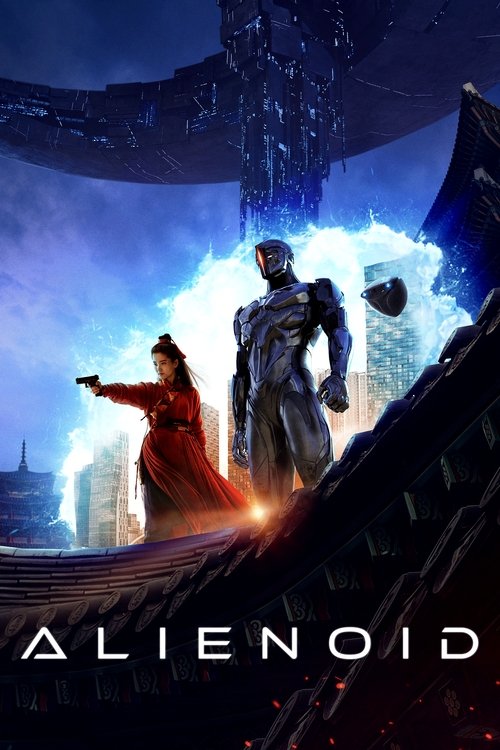
A dizzying, high-octane blend of historical wuxia fantasy and futuristic sci-fi action, brimming with frantic kinetic joy, where ancient Taoist talismans clash with sleek extraterrestrial metal across a fractured, time-bending canvas.
Alienoid

Alienoid

외계+인 1부

"For ages, aliens have locked up their prisoners in humans bodies."

20 July 2022 South Korea 142 min 6.9 (585)

Director: Choi Dong-hoon

Cast: Ryu Jun-yeol, Kim Woo-bin, Kim Tae-ri, So Ji-sub, Yum Jung-ah

Fantasy Action Adventure Science Fiction Interconnectedness of Time and Fate Found Family and Emotional Evolution Collision of Ancient Tradition and Technological Futurism Identity, Dual Natures, and Hidden Inner Monsters Survival and Environmental Preservation
Budget: $24,500,000
Box Office: $12,109,608

Overview

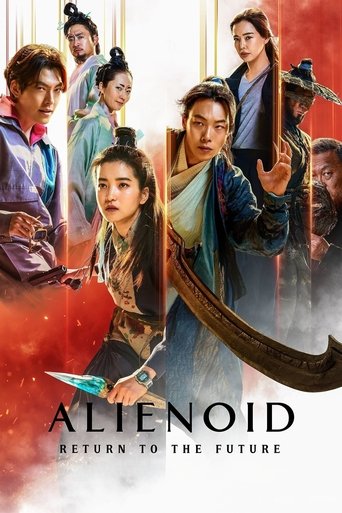
Directed by hitmaker Choi Dong-hoon (The Thieves, Assassination, Jeon Woo-chi), Alienoid (2022) [외계+인 1부] is an ambitious South Korean science-fantasy epic. The narrative operates across two primary timelines: present-day 2022 Seoul and the late Goryeo Dynasty in 1391 AD. Unbeknownst to humanity, an advanced alien civilization has used human brains as organic prison cells to lock away extraterrestrial criminals for thousands of years. Monitoring these captive souls in 2022 is Guard, a stoic android warden, alongside his shape-shifting AI partner, Thunder. Their routine containment protocol collapses when a rogue alien leader, the "Controller," orchestrates a violent prison break, threatening to flood Earth with toxic alien gas called Havaa.

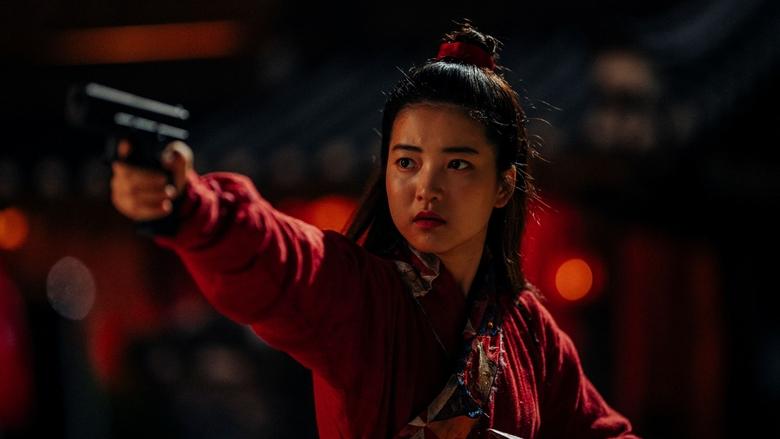
Simultaneously, 630 years in the past during the Goryeo Dynasty, a parallel chaos unfolds. Muruk, a bumbling, bounty-hunting Taoist wizard (dosa), embarks on a quest to recover the "Divine Blade"—a mythical artifact rumored to bestow unlimited power. Along his journey, he crosses paths with Lee Ahn (Ean), a mysterious young woman armed with a modern handgun, earning her the moniker "The Girl Who Shoots Thunder". As two bickering mages from Mount Jiri and a masked cult villain join the scramble for the blade, time portals rupture, revealing that the fates of medieval sorcerers and futuristic androids are inextricably intertwined.
Core Meaning

Choi Dong-hoon’s overarching vision in Alienoid is to forge a distinctly Korean blockbuster paradigm by bridging Eastern folklore with Western science-fiction tropes. At its core, the film argues that compassion, familial bonds, and human connection transcend time, technology, and species. Guard and Thunder, though created as unfeeling synthetic enforcers, transcend their programming through the emotional act of raising a human child. Furthermore, the film explores the idea that ancient spiritual magic and cutting-edge alien technology are merely two different languages describing the same cosmic mystery.

Thematic DNA

Interconnectedness of Time and Fate 30%
Found Family and Emotional Evolution 25%
Collision of Ancient Tradition and Technological Futurism 20%
Identity, Dual Natures, and Hidden Inner Monsters 15%
Survival and Environmental Preservation 10%

Interconnectedness of Time and Fate

The film reframes time not as a straight highway, but as a web where cause and effect loop across centuries. Actions taken in modern Seoul directly generate the myths and conflicts of 14th-century Goryeo, demonstrating how human destinies are bound across temporal boundaries.

Found Family and Emotional Evolution

Centering on Guard, Thunder, and young Ean, the film explores how emotional ties are forged through caregiving rather than bloodlines. A synthetic android learns paternal tenderness, demonstrating that empathy is an acquired moral choice.

Collision of Ancient Tradition and Technological Futurism

By juxtaposing Taoist charms, wire-fu martial arts, and levitating cat companions with starships, mechanical tentacles, and laser suits, the narrative asserts that traditional cultural identity and modern sci-fi imagination can co-exist harmoniously.

Identity, Dual Natures, and Hidden Inner Monsters

Multiple characters harbor secondary identities or internal passengers—alien souls trapped in oblivious human brains. Muruk’s journey centers on uncovering whether his internal power stems from his own spiritual discipline or an alien monster sleeping within his subconscious.

Survival and Environmental Preservation

The alien faction seeks to unleash Havaa to terraform Earth's atmosphere for their species, threatening human extinction. This framing pits ecological preservation against alien colonization.

Character Analysis

Muruk

Ryu Jun-yeol

Archetype: The Trickster Hero / Unlikely Chosen One Key Trait: Quick wit, agile wire-fu martial arts, and deep comedic charm

Motivation

Claim the bounty on the Divine Blade; later, protect Ean and uncover his true childhood origin.

Character Arc

Begins as an irreverent, greedy bounty-hunting dosa (Taoist wizard) relying on party tricks and wooden talismans. As he bonds with Ean, he matures into a self-sacrificing warrior and confronts the dark alien power locked inside him.

Guard & Thunder

Kim Woo-bin; voiced by Kim Dae-myung

Archetype: The Stoic Guardian / Cybernetic Father Figure Key Trait: Unshakable duty, multi-form adaptability, and stoic heroism

Motivation

Maintain alien prison containment and safeguard Ean from all threats.

Character Arc

Guard is an unyielding robot warden strictly bound by rules of non-interference. Through raising human orphan Ean alongside Thunder (his shape-shifting, humorous AI companion), Guard develops genuine human paternal instinct.

All 5 characters and cast

Symbols & Motifs

The Divine Blade (Sin-geom)

Meaning:

Represents ultimate power and authority. While 14th-century sorcerers view it as a holy magical sword, it is actually an advanced alien energy key capable of powering spaceship reactors and opening temporal wormholes.

Context:

Sought after by sorcerers, mages, and aliens alike across both 1391 Goryeo and 2022 Seoul as the central object driving the story's conflict.

Muruk’s Taoist Fan

Meaning:

Symbolizes illusion, trickery, and hidden tactical potential.

Context:

Serves as a visual artpiece containing his shape-shifting cat attendants, Left Paw and Right Paw, who spring out of the paper painting into reality.

The Modern Handgun (Pistol)

Meaning:

Serves as a temporal visual anomaly—a symbol of modern firepower inserted into an era of swords and spells.

Context:

Carried by adult Ean in the Goryeo era, earning her the legend of "The Girl Who Shoots Thunder".

The Red Atmosphere Cloud (Havaa)

Meaning:

Symbolizes destruction, alien terraforming, and existential doom.

Context:

Its toxic red hue contrasts sharply with Earth's natural atmosphere during the alien invasion.

The Magic Mirror of Mount Jiri

Meaning:

Acts as a motif for truth and illusion.

Context:

Used by the two Taoist mages to reveal the true alien form lurking beneath a human host’s exterior.

The Silver Wrist Orb / Bracelet

Meaning:

Serves as a temporal tether and tracker.

Context:

Given to child Ean in 2012, connecting her past child self to her adult persona across centuries.

Memorable Quotes

우리는 인간을 보호할 뿐, 개입하지 않는다.
— Guard (Kim Woo-bin)

Context

Stated as Guard's foundational containment protocol in 2022.

Meaning

Represents Guard’s initial strict robot directive before he breaks protocol to adopt baby Ean, marking his journey toward gaining a human soul.

천둥을 쏘는 여류
— Goryeo Dynasty Folk / Bounty Hunters

Context

Used by people in 1391 Goryeo when describing Ean's mysterious identity.

Meaning

Highlights the mythic reputation Ean develops in 1391 due to her modern firearm, blurring the line between ancient folklore and modern technology.

All 5 quotes

Philosophical Questions

What constitutes true humanity—biological origin or emotional capacity?

Explored through Guard and Thunder. Though synthetic, their decision to nurture and sacrifice for Ean grants them emotional humanity superior to many biological beings.

Is destiny governed by causal time loops or individual agency?

Ean and Muruk actively fight against catastrophic historical outcomes, proving that personal courage can reshape predetermined temporal loops.

Can technological progress and spiritual tradition coexist?

Shown through the climax, where Taoist spells and alien energy weapons operate side-by-side, suggesting magic and science are complementary extensions of human understanding.

Alternative Interpretations

The Sci-Fi Closed Time Loop: Read linearly, the film portrays a causal time loop. The crisis in 2022 forces Guard and Ean to travel to 1391, which in turn sets up the historical myths, buried technology, and character motivations that make the 2022 events possible in the first place.

Full ending explanation

Cultural Impact

Alienoid represents an ambitious experiment in South Korean cinema—blending traditional Joseon/Goryeo period drama (saguk), Taoist shamanism, and high-tech Hollywood sci-fi.

Grounded in Eastern Taoist philosophy (balance of Yin/Yang, flow of natural energy) combined with Buddhist concepts of reincarnation and spiritual energy bound within physical vessels.

Released in South Korea on July 20, 2022. Despite massive hype, it underperformed domestically, earning ~$12.1 million against its high budget. Domestic audiences were initially divided by its complex dual-timeline jumps and tonal shifts. However, upon its international release via Well Go USA and global streaming platforms, it achieved cult status, praised by foreign critics for its kinetic fun, visuals, and uninhibited creative energy.

Audience Reception

Praised Aspects: Energetic pacing, wire-fu action choreography, visual effects, and standout comedic performances by Yum Jung-ah, Jo Woo-jin, and Ryu Jun-yeol.

Main Points of Criticism: Overstuffed narrative structure, abrupt genre shifts (switching from futuristic hospital sci-fi horror to 14th-century slapstick martial arts comedy), a long runtime (142 minutes), and an unresolved cliffhanger ending.

Overall Verdict: A wild, visually spectacular popcorn blockbuster that asks the viewer to surrender logical nitpicks in exchange for pure cinematic imagination.

Interesting Facts

  • Alienoid Part 1 and Part 2 were filmed simultaneously over a grueling 387-day shoot (March 2020 to April 2021)—one of the longest continuous movie productions in Korean history.
  • This film marked Kim Woo-bin’s return to cinema after a six-year hiatus following his 2017 nasopharyngeal cancer diagnosis. Director Choi Dong-hoon halted the project to wait for his full recovery.
  • The production utilized over 2,000 VFX shots created by leading Korean studios like Dexter Studios, merging CGI alien starships with historical period architecture.
  • Ryu Jun-yeol underwent months of wire-fu, traditional Korean swordsmanship, and archery training to perform the majority of Muruk’s acrobatic martial arts stunts.
  • The combined production budget for both parts was approximately 70 billion KRW (~$53 million USD), with Part 1 costing around 33 billion KRW (~$25 million USD), making it one of South Korea's most expensive film projects.
  • Rather than relying exclusively on green screen, the crew constructed full-scale physical replicas of Goryeo market squares in Jeonju and interior alien ship corridors.

Easter Eggs

Homage to Jeon Woo-chi: The Taoist Wizard (2009)

Director Choi Dong-hoon included multiple nods to his earlier classic, including Muruk's magical fan, trickster demeanor, and bickering Taoist mages.

"Thunder Repairs" Signage

In 2022 Seoul, subtle background storefront signs display "Thunder Repairs," hinting at Guard and Thunder’s covert integration into human society.

Childhood Bracelet Continuity

Young Ean’s silver wrist accessory in 2012 matches the ornament adult Ean wears in 1391, acting as a visual clue that she is the same girl stranded across time.

Hollywood Sci-Fi Homages

The mechanical tentacle alien guards pay tribute to the Sentinels from The Matrix, while the temporal arrival of Guard's car references Back to the Future.

Cameo with Future Payoff

Lee Ha-nee (Honey Lee) appears in Part 1 as customs officer Min Gae-in in what seems like a minor comedic subplot, but her character’s lineage becomes pivotal in Part 2.

Frequently Asked Questions

Explore More About This Movie

Dive deeper into specific aspects of the movie with our detailed analysis pages

Comments (0)

Leave a comment

No comments yet. Be the first to share your thoughts!

Similar Movies