Skip to content
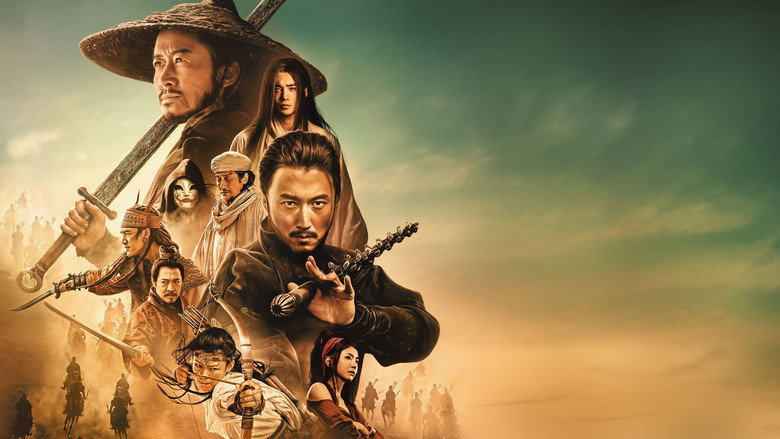
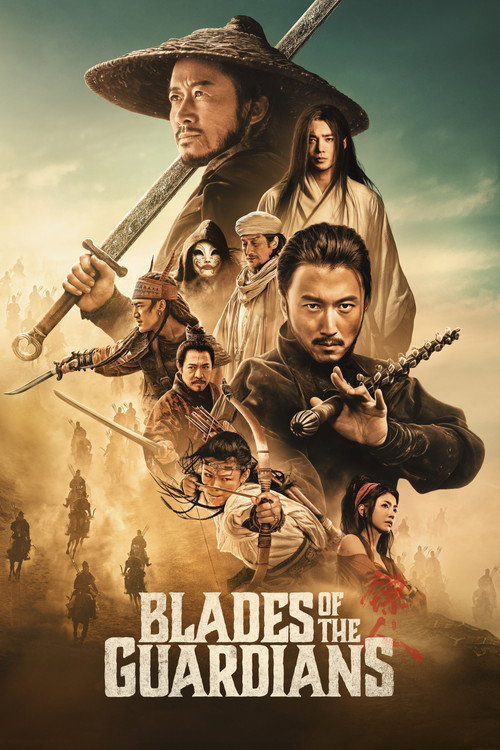
Blades of the Guardians
A sun-scorched wuxia Western steeped in weary honor, relentless bloodlust, and tender paternal devotion, where solitary blades carve pathways through violent sandstorms only to find liberation in tragic sacrifice.
Blades of the Guardians

Blades of the Guardians

镖人:风起大漠

"A grand martial arts feast is back!"

17 February 2026 China 126 min 8.2 (201)

Director: Yuen Woo-ping

Cast: Wu Jing, Nicholas Tse Ting-Fung, Chen Lijun, Yu Shi, Sun Yizhou

Drama Action Adventure Western The Cost of Freedom vs. Duty & Loyalty Brotherhood, Betrayal, and Past Sins Resilience of the Oppressed & Peasant Awakening Paternal Responsibility and Inherent Innocence Female Agency and Vengeance in Frontier Society
Budget: $123,000,000
Box Office: $203,356,793

Overview

Blades of the Guardians (Biao Ren: Wind Rises in the Desert) is a martial arts epic directed by Yuen Woo-ping and produced by Wu Jing and Yu Baimei. Adapted from Xu Xianzhe's acclaimed graphic novel (manhua) Biao Ren, the narrative unfolds in 607 AD during the reign of Emperor Yang of the Sui Dynasty—a turbulent period marked by tyranny, civil unrest, and lawless desert frontiers.

The story follows Dao Ma (Wu Jing), a formidable warrior, former imperial bodyguard, and nomadic bounty hunter wandering the Western Regions with his young charge, Xiao Qi. Driven by debt and loyalty to Old Mo, chief of the Mo Clan, Dao Ma accepts a lucrative escort commission to safely transport a mysterious masked figure across the Gobi Desert to the imperial capital of Chang'an. However, the convoy quickly becomes the nexus of widespread violence when the escort package is revealed to be Zhi Shi Lang (Sun Yizhou), the empire's most hunted rebel agitator.

As word spreads, imperial enforcers led by Dao Ma's former comrade Di Ting (Nicholas Tse), western tribal warlords, and merciless mercenary killers converge on the caravan. Dao Ma must form uneasy alliances with wandering martial artists—including the lethal swordsman Shu (Yu Shi) and Old Mo's vengeful daughter Ayuya (Chen Lijun)—to survive a treacherous journey across the sand dunes.
Core Meaning

At its core, Blades of the Guardians explores the preservation of personal conscience and human connection amidst imperial collapse and systemic corruption. Director Yuen Woo-ping and co-producer Wu Jing use the brutal backdrop of the late Sui Dynasty to contrast state-sanctioned violence with true Xia (martial chivalry). The film posits that true honor does not stem from blind obedience to a dynasty or empty ideological rhetoric, but from keeping promises, safeguarding the innocent, and breaking free from cycles of institutional violence.

Thematic DNA

The Cost of Freedom vs. Duty & Loyalty 30%
Brotherhood, Betrayal, and Past Sins 25%
Resilience of the Oppressed & Peasant Awakening 20%
Paternal Responsibility and Inherent Innocence 15%
Female Agency and Vengeance in Frontier Society 10%

The Cost of Freedom vs. Duty & Loyalty

Explored through Dao Ma's refusal to remain an instrument of royal oppression. Choosing the life of a rogue bounty hunter grants him autonomy, but isolates him in constant mortal danger.

Brotherhood, Betrayal, and Past Sins

Mirrored in the tragic dynamic between Dao Ma and Di Ting. Both were forged in the elite Xiaoji Cavalry, but while Dao Ma chose defection to protect life, Di Ting endured a decade of imprisonment and retribution, binding himself inextricably to a broken vow.

Resilience of the Oppressed & Peasant Awakening

Represented through the enigmatic figure of Zhi Shi Lang, who ignites grassroots rebellion against the Sui tyrant.

Paternal Responsibility and Inherent Innocence

Grounded in the tender relationship between Dao Ma and Xiao Qi. In a desensitized, cutthroat world, protecting a child's innocence becomes Dao Ma's primary moral compass.

Female Agency and Vengeance in Frontier Society

Emphasized by Ayuya's refusal to remain a tribal bargaining chip or victim, transforming into a warrior who claims vengeance on her own terms.

Character Analysis

Dao Ma

Wu Jing

Archetype: The Cynical Ronin / Reluctant Protector Key Trait: Pragmatic combat mastery paired with hidden warmth

Motivation

Repaying his personal debt to Old Mo and keeping Xiao Qi safe from imperial persecution.

Character Arc

Transitions from a self-interested bounty hunter focused on survival to a steadfast guardian of the future.

Di Ting

Nicholas Tse

Archetype: The Tragic Antagonist / Broken Enforcer Key Trait: Ruthless discipline masking profound survivor's guilt

Motivation

Tracking down Dao Ma to resolve the collective guilt and consequence of their destroyed brotherhood.

Character Arc

Starts as an unyielding hunter for the crown, but devolves into an existential warrior seeking an end to his trauma.

All 5 characters and cast

Symbols & Motifs

The Flower Mask of Zhi Shi Lang

Meaning:

Symbolizes collective dissent and political revolution. The mask depersonalizes the rebel leader, suggesting that while an individual can be slain, the spirit of rebellion cannot be extinguished.

Context:

Worn by Zhi Shi Lang and later used as a tactical decoy by Shu during the infiltration of He Yixuan's camp.

The Desert Sandstorm

Meaning:

Represents the chaos of the late Sui era and uncontrollable historical upheavals. It acts both as a destructive force and a sanctuary where warriors shed social constraints and confront their true nature.

Context:

Recurrent throughout the desert journey, serving as the atmospheric backdrop for major combat encounters and Ayuya's self-declaration.

Dao Ma's Multi-Blade Sheath

Meaning:

A manifestation of the bounty hunter's pragmatic versatility and heavy burdens; each blade represents a different survival skill in an unforgiving wasteland.

Context:

Carried constantly on Dao Ma's back across the Western Regions and drawn during versatile combat encounters.

The Eagle Feather

Meaning:

A nomadic totem belonging to Ayuya and the Mo clan, representing honor, familial pride, and ultimately lethal retribution.

Context:

Worn by Ayuya and used directly as the instrument of fatal vengeance against the usurper He Yixuan.

The Broken Banner of the Xiaoji Guard

Meaning:

Embodies unresolved trauma, discarded imperial glory, and the ghosts of slain brothers.

Context:

A visual motif haunting Di Ting's memories and motivations throughout his relentless pursuit of Dao Ma.

Memorable Quotes

我叫刀马。记得住也好,记不住也好,反正名头不重要。
— Dao Ma

Context

Delivered during early encounters with bounty targets and adversaries.

Meaning

Establishes his roguish, grounded persona and nonchalance toward superficial fame in the underworld.

我是莫家的阿育娅,我就是大沙暴!
— Ayuya

Context

Shouted during her charge against overwhelming hostile forces in the desert following her father's execution.

Meaning

Captures her rebirth from a victimized daughter into an unstoppable, vengeful warrior.

All 5 quotes

Philosophical Questions

Can individual honor survive within a corrupt state system?

The film contrasts Di Ting's rigid adherence to duty with Dao Ma's desertion, examining whether uncritical loyalty to an unjust dynasty invalidates personal morality.

What defines true strength: detachment or emotional attachment?

While Dao Ma is burdened by his protective bond with Xiao Qi, this emotional vulnerability ultimately provides the psychological resilience needed to survive against ruthless mercenaries.

Is violent revenge liberating or self-consuming?

Ayuya's path demonstrates that while vengeance secures justice for her slaughtered clan, it permanently strips away her former innocence and leaves her a solitary wanderer.

Alternative Interpretations

The film can be interpreted through three distinct lenses:

Full ending explanation

Cultural Impact

Premiering as a tentpole release for the 2026 Chinese New Year box office, Blades of the Guardians marked an ambitious effort to revitalize the wuxia genre by combining the gritty edge of graphic novel adaptations with practical Hong Kong action staging. Distributed internationally by Well Go USA and Trinity CineAsia, the film earned acclaim for its tactile, location-based cinematography and ignited broad cultural discussions on modernizing wuxia aesthetics, highlighted by Chen Lijun's breakout screen performance and Nicholas Tse's complex antagonist.

Audience Reception

Audience and critical reception widely celebrated the film as one of the most potent wuxia action entries of the decade. Major praise was directed toward Yuen Woo-ping's hard-hitting, practical choreography, Tony Cheung's stunning desert cinematography, and standout performances by Chen Lijun and Nicholas Tse. Minor criticisms noted an overstuffed narrative resulting from compressing multiple manga volumes, as well as occasional tonal shifts between brutal wuxia violence and theatrical comedy involving Zhi Shi Lang.

Interesting Facts

  • Directed by 81-year-old martial arts icon Yuen Woo-ping as a grand return to practical, hard-hitting wuxia cinema.
  • Filmed on location across the deserts and barren valleys of Xinjiang and Inner Mongolia under extreme heat and real sandstorms.
  • During late production, Yue opera superstar Chen Lijun was recast as Ayuya on short notice, completing an intensive 11-day reshoot along with equestrian and combat training.
  • Features cameos and supporting appearances representing four generations of martial arts cinema, including Jet Li, Tony Leung Ka-fai, Max Zhang, and Kara Wai.
  • Emphasized practical equestrian stunts and authentic hand-to-hand combat using traditional Chinese polearms, curved sabers, and recurve bows over CGI wire-work.

Easter Eggs

Lone Wolf and Cub & Yojimbo dynamic

The pairing of a rugged, lethal escort wandering with a young child (Dao Ma and Xiao Qi) directly homages Japanese chanbara staples like Kozure Ōkami and Akira Kurosawa's Yojimbo.

Yuen Clan choreography echoes

Multiple combat sequences feature choreography paying homage to Yuen Woo-ping's classic filmography, including Iron Monkey (1993) and Crouching Tiger, Hidden Dragon (2000).

Historical origin of Zhi Shi Lang

Zhi Shi Lang is directly based on the historical Sui Dynasty rebel leader Wang Bo, who penned the 611 AD folk ballad Song of Not Dying in Liaodong to incite uprisings against Emperor Yang.

Desert outpost and tavern battles

The frontier tavern and desert outpost skirmishes directly reference King Hu's foundational wuxia Dragon Gate Inn (1967) and Tsui Hark's 1992 remake.

Frequently Asked Questions

Explore More About This Movie

Dive deeper into specific aspects of the movie with our detailed analysis pages

Comments (0)

Leave a comment

No comments yet. Be the first to share your thoughts!

Similar Movies