Skip to content
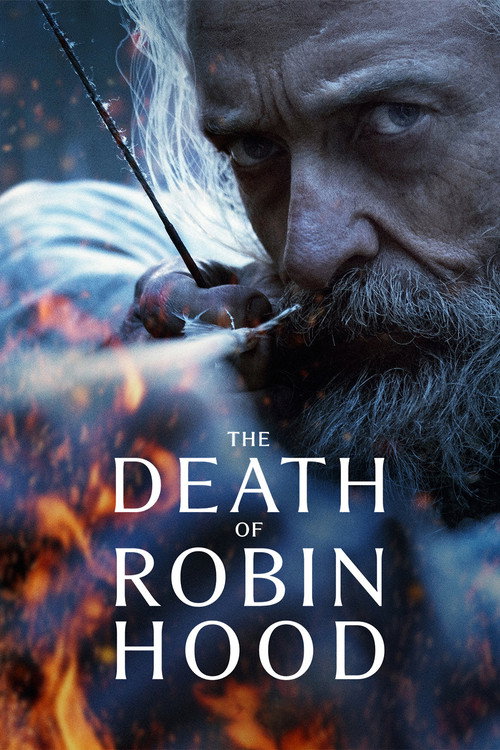
The Death of Robin Hood
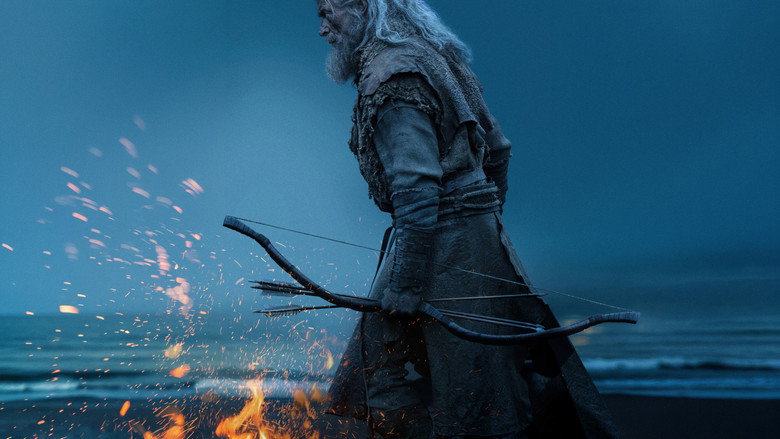
A bleak medieval drama drenched in winter fog and raw grief, where the crushing weight of a violent past bleeds into a quiet sanctuary, reflecting a rusted blade seeking rest in wet earth.
The Death of Robin Hood

The Death of Robin Hood

"He was no hero."

18 June 2026 United States of America 123 min 6.3 (207)

Director: Michael Sarnoski

Cast: Hugh Jackman, Jodie Comer, Bill Skarsgård, Murray Bartlett, Noah Jupe

Drama Action Adventure Deconstruction of Myth vs. Historical Reality The Cycle of Vengeance and Blood Debts Redemption, Confession, and Grace Mortality and Acceptance of Death
Budget: $25,000,000
Box Office: $3,200,000

Overview

Set in 1247 England, The Death of Robin Hood presents a stark, revisionist reimagining of English folklore. Directed and written by Michael Sarnoski, the story strips away the romanticism of Sherwood Forest, portraying Robin Hood not as a noble thief stealing from the rich to give to the poor, but as an aged, battle-worn outlaw who lived a life of brutal crime, murder, and self-preservation. Living in self-imposed isolation on the harsh moors, Robin is tormented by the countless blood debts and vengeful survivors that his violent past has created.

When an attempt to help his former companion Little John reclaim a farm erupts into a gruesome massacre, Robin suffers severe, near-fatal wounds. Carried away from the battlefield, he is taken to the isolated Priory of St. Clement on a coastal island. There, under the alias "Randolph," he is placed in the care of Sister Brigid, a compassionate prioress who nurses him back to health.

Surrounded by a community of outcasts, monks, and an orphaned young girl, Robin is forced into an unaccustomed tranquility. As he confronts the gap between the heroic myth that society spun around his name and the bloody reality of his actions, Robin must decide whether a man defined by violence can ever truly find grace or redemption before his time runs out.

Core Meaning

Director Michael Sarnoski uses the legend of Robin Hood to examine the nature of mythmaking, the cost of systemic violence, and the possibility of radical forgiveness. Rather than celebrating folklore, the film interrogates how societies create idealized fables to romanticize or excuse human cruelty.

Sarnoski’s core message is that true heroism is not found in derring-do or martial violence, but in the quiet, painful acts of breaking cycles of vengeance, confessing one's sins, and extending grace when retaliation is justified.

Thematic DNA

Deconstruction of Myth vs. Historical Reality 30%
The Cycle of Vengeance and Blood Debts 25%
Redemption, Confession, and Grace 25%
Mortality and Acceptance of Death 20%

Deconstruction of Myth vs. Historical Reality

The film constantly contrasts the popular ballads of Robin Hood with the grim reality. Robin explicitly rejects the romantic tales, revealing that his actions were driven by bloodlust and greed rather than altruism.

The Cycle of Vengeance and Blood Debts

Violence in the film is shown as a compounding debt. Every murder Robin commits generates new enemies—often children or relatives of his victims—who track him down, proving that violence only begets more violence until someone actively chooses to stop it.

Redemption, Confession, and Grace

Through the character of Sister Brigid, the film explores divine and human grace. Despite knowing the terrible truth of Robin's past, she offers care rather than retribution, demonstrating that grace is unearned and requires immense moral strength.

Mortality and Acceptance of Death

Unlike traditional action epics where heroes die in grand, glorious battles, Robin Hood faces a quiet, physical decline. The narrative centers on coming to terms with death, letting go of legacy, and accepting one's inevitable end.

Character Analysis

Robin Hood / "Randolph"

Hugh Jackman

Archetype: Fallible Antihero / Battle-worn Outlaw Key Trait: Weathered ferocity combined with deep, unspoken remorse.

Motivation

Escaping the endless cycle of vengeance and finding peace.

Character Arc

Begins as a cold, cynical killer living in self-imposed exile; evolves through his recovery at the priory into a man who acknowledges his sins and chooses a selfless act of protection before dying.

Sister Brigid

Jodie Comer

Archetype: Compassionate Caregiver / Moral Anchor Key Trait: Quiet moral fortitude and unwavering empathy.

Motivation

Providing spiritual and physical healing to the broken.

Character Arc

Maintains her composure and spiritual duty even when confronted with the man who destroyed her own family, choosing radical forgiveness over revenge.

All 5 characters and cast

Symbols & Motifs

The Bow and Arrow

Meaning:

Initially an instrument of death and terror, the bow shifts in meaning when Robin uses it to teach young Little Margaret how to hunt for food, transforming a tool of slaughter into a means of sustenance and bonding.

Context:

Used by Robin initially to murder and make war, and later taught to Little Margaret at the priory island and used for his final act before death.

Blood / Bloodletting

Meaning:

Blood symbolizes both moral stain and physical mortality. The medieval practice of bloodletting at the priory becomes a dual metaphor for medical healing and spiritual purging.

Context:

Employed during medieval medical treatments at the priory as Sister Brigid attempts to purge Robin's bodily and spiritual afflictions.

The Priory Island

Meaning:

Acts as a spiritual sanctuary and purgatorial limbo where social hierarchies and past identities disappear.

Context:

The isolated coastal island location of St. Clement where Robin is brought after suffering near-fatal wounds.

Mud and Earth

Meaning:

Grounds the story in visceral realism, symbolizing human decay and the ultimate burial ground waiting for all men, regardless of their legends.

Context:

Pervasive throughout the English landscape where Robin buries past vengeance-seekers and meets his own mortality.

The Rosary and Druidic Ruins

Meaning:

Demonstrates layers of faith. Rosaries placed in the hands of the dead emphasize the film's deep engagement with Christian morality and mortal judgment.

Context:

The priory stands on ancient druidic ground, and rosaries are placed in the hands of the dead during rites.

Memorable Quotes

I robbed and killed for the joy of it, nothing more.
— Robin Hood

Context

Spoken early in the film when confronting a stranger.

Meaning

Summarily shatters the popular folklore of Robin Hood as a selfless champion of the poor.

Knives cut bread as well as they do flesh. It's a question of balance.
— Sister Brigid

Context

Said to Robin while tending to his wounds in the priory.

Meaning

Illustrates the film's core duality between destruction and healing.

All 5 quotes

Philosophical Questions

Can a life defined entirely by violence be forgiven, or is true redemption impossible?

Explored through Robin's deep guilt and Sister Brigid's radical refusal to seek revenge.

Do national legends inspire societal good, or do they merely glorify real-world bloodshed?

Explored through discussions between Robin and Brigid on the dangerous power of stories.

How does one achieve peace when facing death under the weight of inescapable moral debts?

Explored through Robin's physical decline and his quiet acceptance of his final arrow.

Alternative Interpretations

The Christian Parable of Grace: One reading views the film as an explicit Christian allegory. Robin represents a sinner burdened by insurmountable guilt, while Sister Brigid represents divine grace that offers salvation regardless of past atrocities.The Cynical Meta-Deconstruction: Another interpretation sees the film as a critique of cultural mythmaking, arguing that humanity invents heroic fable...

Full ending explanation

Cultural Impact

Released in June 2026 by A24, The Death of Robin Hood arrived at a time when audiences were accustomed to glossy, high-budget studio reboots of classic intellectual property. Sarnoski’s film stood as an anti-blockbuster counter-programming effort.

While it divided audiences and underperformed commercially ($7 million worldwide on a $20 million budget) against summer tentpoles like Toy Story 5, critics praised its artistic audacity, Jackman's performance, and Pat Scola's cinematography. It has gained a reputation among cinephiles as one of the most uncompromising deconstructions of English folklore put to film.

Audience Reception

The film received a highly polarising reception (~56% audience score):

  • Praised Aspects: Hugh Jackman's haunting, gaunt performance; Jodie Comer's understated warmth; Pat Scola's atmospheric 35mm photography; Jim Ghedi's evocative score; and the brave refusal to cater to blockbuster tropes.
  • Criticisms: A relentlessly somber and depressing tone; a slow, dirge-like pace in the second act; and a stark shift from early action to static monastic dialogue.

Overall Verdict: Viewers expecting a swashbuckling action movie were disappointed, whereas fans of meditative character studies (Pig, Unforgiven) embraced it as a powerful, haunting elegy.

Interesting Facts

  • Director Michael Sarnoski was inspired to write the script after finding an antique 1940s Robin Hood storybook given to him following his father's death, which contained the original 17th-century ballad Robin Hood's Death.
  • Filming took place on location in Northern Ireland in early 2025 under harsh winter weather, capturing authentic, bleak coastal environments including areas near the Giant's Causeway.
  • Bill Skarsgård underwent extensive physical makeup and prosthetic work to play a gaunt, terrifyingly brutal Little John, leading many audience members and critics to not recognize him initially.
  • Hugh Jackman joined as both lead actor and producer through Ryder Picture Company, viewing the project as a medieval companion piece to his work in Logan (2017).
  • The score was composed by British folk musician Jim Ghedi, utilizing period-appropriate traditional Irish strings, bagpipes, and acoustic instruments to build an eerie, melancholic atmosphere.
  • Costume designer Lorna Ó Ríordáin created weathered, multi-layered garments made from raw wool and heavy leather to accurately capture 13th-century peasant harshness rather than Hollywood glamour.

Easter Eggs

The 17th-Century Ballad Adaptation

The film's narrative framework directly adapts the anonymous ballad Robin Hood's Death, specifically incorporating the medieval bloodletting treatment and shooting an arrow from a window to mark a burial site.

Aspect Ratio Shift

Cinematographer Pat Scola shifts the film's aspect ratio from a wide 2.35:1 (or 2.40:1) during the open, violent wilderness first act to a tighter 1.66:1 once Robin arrives at the priory, visually compressing his world into an intimate, claustrophobic spiritual space.

Boethius Philosophy Citation

The Leper character quotes Boethius’ The Consolation of Philosophy, echoing real 13th-century monastic scholarship amidst physical suffering.

Homage to Revisionist Classics

The narrative structure deliberately references Clint Eastwood's Unforgiven (1992) and Richard Lester's Robin and Marian (1976), honoring the tradition of aging outlaws confronting their unromantic pasts.

Frequently Asked Questions

Explore More About This Movie

Dive deeper into specific aspects of the movie with our detailed analysis pages

Comments (0)

Leave a comment

No comments yet. Be the first to share your thoughts!

Similar Movies