Skip to content
K.O.
A bruised, sun-bleached neo-noir where the crushing weight of accidental slaughter meets the visceral fury of Marseille's asphalt, framed like a wounded titan trading blood for a ghost's forgiveness.
K.O.

K.O.

05 June 2025 France 84 min 6.5 (287)

Director: Antoine Blossier

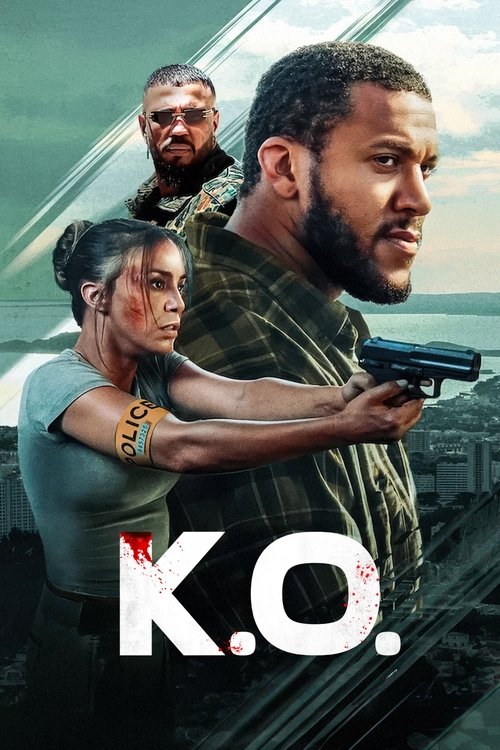
Cast: Ciryl Gane, Alice Belaïdi, Foued Nabba, Maleaume Paquin, Anne Azoulay

Drama Action Adventure Guilt, Atonement, and Penance Retaliation vs. Restraint in Violence Generational Trauma and Fatherlessness Institutional Decay and Urban Alienation

Overview

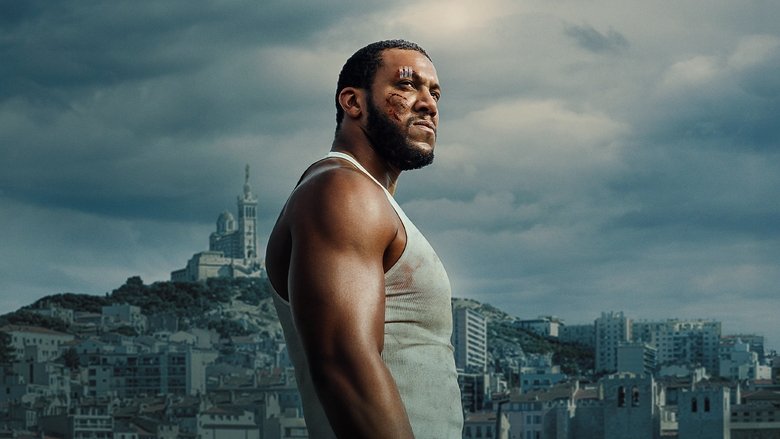
Directed by Antoine Blossier, K.O. (2025) is a French-Belgian hard-boiled action drama headlined by real-life heavyweight MMA champion Ciryl Gane in his leading-man debut. The film opens inside the electrified atmosphere of a professional mixed martial arts cage where professional fighter Bastien delivers an accidental, catastrophic blow to his rival Enzo, killing him instantly on the canvas. Paralyzed by remorse, Bastien walks away from combat sports entirely, disappearing into self-imposed exile breaking stones at an isolated quarry.

His quiet penance is shattered years later when Enzo's grieving widow, Emma, tracks him down to reveal that her troubled teenage son, Léo, has drifted into Marseille's drug underworld and vanished after witnessing a gangland massacre. Convinced that saving the boy represents his only chance at moral restitution, Bastien mounts a motorcycle and heads into the volatile city to rescue him.

Upon arriving in Marseille, Bastien joins forces with Captain Kenza Alaoui, a relentless, rogue policewoman who was suspended after using Léo as an informant. Uniting as an unorthodox duo—a towering heavyweight attempting to restrain his lethal power and a diminutive, shotgun-wielding detective seeking vengeance—they navigate skull-masked gangsters, corrupt authorities, and explosive turf wars to rescue the boy.
Core Meaning

The central thematic thrust of K.O. is that physical strength is meaningless without moral restraint, and true atonement requires confronting the consequences of past devastation rather than retreating into isolation. Antoine Blossier explores how violence creates an enduring generational echo, asserting that guilt cannot be outrun through ascetic punishment but instead demands active, selfless sacrifice to heal broken lives.

Thematic DNA

Guilt, Atonement, and Penance 40%
Retaliation vs. Restraint in Violence 25%
Generational Trauma and Fatherlessness 20%
Institutional Decay and Urban Alienation 15%

Guilt, Atonement, and Penance

Bastien's narrative trajectory stems from the trauma of the fatal knockout. The quarry symbolizes his internal prison, while his descent into Marseille represents a willingness to sacrifice his own life to balance the moral ledger.

Retaliation vs. Restraint in Violence

The story contrasts Kenza's aggressive, preemptive brutality with Bastien's reluctant defense. Having crossed the threshold of killing, Bastien treats his body as a weapon that must be strictly controlled.

Generational Trauma and Fatherlessness

Léo's descent into delinquency mirrors the emotional abandonment caused by his father's death. Bastien inadvertently becomes a reluctant surrogate protector to fill the void he created.

Institutional Decay and Urban Alienation

Through northern housing projects and compromised police precincts, the narrative illustrates a society abandoned to organized cartels where law and criminality blur.

Character Analysis

Bastien

Ciryl Gane

Archetype: Reluctant Hero / Wounded Giant Key Trait: Controlled physical power and gentle demeanor.

Motivation

To atone for Enzo's death and save Léo from the underworld.

Character Arc

Transitions from an isolated recluse crippled by guilt into an active protector who channels his physical gifts for redemption.

Kenza Alaoui

Alice Belaïdi

Archetype: Rogue Cop / Loose Cannon Key Trait: Fierce determination and unapologetic aggression.

Motivation

Dismantle the Manchours cartel and clear her conscience regarding Léo.

Character Arc

Softens her cynical, shoot-first approach as she learns to trust Bastien's moral core.

All 5 characters and cast

Symbols & Motifs

The Octagon / The Cage

Meaning:

Represents both Bastien's peak athletic prowess and the arena of his original sin.

Context:

Tight urban corridors, back alleys, and club interiors throughout the film visually evoke the enclosed cage from which Bastien cannot break free.

The Sledgehammer / Quarry Stones

Meaning:

Serves as a symbol of Sisyphean self-flagellation and penance.

Context:

Used during Bastien's self-imposed exile as he breaks inanimate rock to suppress the kinetic violence stored within his hands.

Skull Face Masks

Meaning:

Dehumanizes the criminal element and evokes death as an organized, omnipresent force.

Context:

Worn by the Manchours syndicate enforcers operating across Marseille's underworld.

Motorcycle Helmet and Solitary Road

Meaning:

Signifies nomadism, emotional isolation, and detachment from human society.

Context:

Frames Bastien's journey as he remains isolated inside his own thoughts until arriving in the crowded chaos of Marseille.

Memorable Quotes

Son père est mort à cause de toi... Tu nous dois ça !
— Emma

Context

Spoken when Emma confronts Bastien at his secluded dwelling to compel him into the rescue mission.

},{

Meaning

Demonstrates Emma weaponizing Bastien's guilt to force him into action.

C'est une affaire de police. / Ça ne marche pas comme ça. Je viens.
— Kenza Alaoui & Bastien

Context

Spoken outside the Marseille jurisdiction when Kenza tries to dismiss Bastien from the investigation.

Meaning

Highlights Bastien's unwavering commitment to personal atonement over procedural authority.

All 3 quotes

Philosophical Questions

Can a life taken accidentally ever truly be compensated for by saving another?

Explored through Bastien's journey to balance his moral ledger by putting his life on the line to rescue Enzo's son.

Is non-violence a luxury that collapses when innocents are targeted by unrestrained evil?

Examined through Bastien's struggle to balance his commitment to restraint against the deadly brutality of the Manchours cartel.

Where does the boundary lie between seeking genuine justice and pursuing personal vengeance?

Contrasted through Kenza's aggressive, retaliatory methods and Bastien's principled desire for protective restitution.

Alternative Interpretations

The Kinetic Exorcism Interpretation: Bastien's journey can be viewed as an internal psychological exorcism where his reluctance to fight represents an effort to purge the killer inside him, testing whether he can exert physical power without succumbing to bloodlust.

Full ending explanation

Cultural Impact

K.O. arrived amidst surging global interest in French mixed martial arts, propelled by UFC events in Paris and the domestic stardom of French fighters. The film combines the classic French polar tradition of gritty Marseille police thrillers with modern combat sports cinema. Released globally on Netflix on June 6, 2025, it reached the top of international non-English streaming charts with millions of views in its opening weeks.

Audience Reception

Critical and audience reception was generally favorable toward the action staging and lead chemistry, earning an overall score around 5.8 to 6.5 / 10.

  • Praise: Reviewers commended the visceral, bone-crunching action and realistic grappling choreography that avoided fast cuts, as well as the mismatched buddy chemistry between Ciryl Gane and Alice Belaïdi.
  • Criticism: Critics noted the narrative's reliance on familiar action tropes—such as the guilt-ridden fighter and missing child—along with conventional crime-syndicate portrayals.

Interesting Facts

  • K.O. marks the first leading feature film role for French UFC heavyweight contender Ciryl 'Bon Gamin' Gane, following a brief appearance in Den of Thieves: Pantera.
  • Director Antoine Blossier tailored fight scenes directly to Gane's authentic striking, clinch work, and grappling pedigree, minimizing wirework and CGI enhancements.
  • The screenplay was written by Guillaume Lemans, Louis Aubert, and Clément Marchand alongside director Antoine Blossier.
  • The film's visual aesthetic was crafted by director of photography Alain Duplantier, with an electronic score composed by Thomas Couzinier.
  • The production was shot on location across the northern quarters (quartiers Nord) and port areas of Marseille.
  • The physical disparity between the 6-foot-5 Ciryl Gane and the 5-foot-tall Alice Belaïdi was intentionally emphasized in camera framing to highlight their buddy-cop dynamic.

Easter Eggs

Ciryl Gane's 'Bon Gamin' Persona

The character of Bastien deconstructs Gane's real-world persona as a polite, smiling heavyweight athlete by thrusting that demeanor into a gritty cinematic landscape.

Homage to The Raid and John Wick

The nightclub confrontation and claustrophobic corridor brawls pay tribute to modern kinetic action cinema using neon backlighting and close-quarters grappling.

Marseille Hip-Hop Culture

Casting Marseille native rapper Foued Nabba (Kofs) grounds the film in authentic local rap and street culture.

Frequently Asked Questions

Explore More About This Movie

Dive deeper into specific aspects of the movie with our detailed analysis pages

Comments (0)

Leave a comment

No comments yet. Be the first to share your thoughts!

Similar Movies