
Skip to content
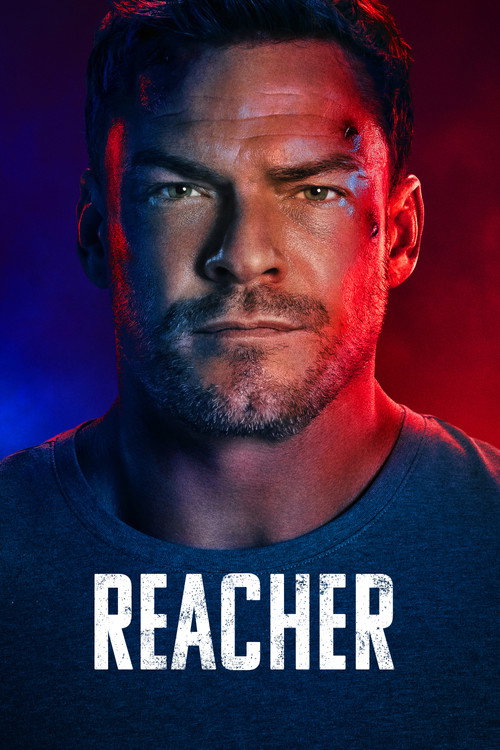
Reacher
Amidst rain-soaked highways and shadowy small-town corridors, this muscular crime noir burns with unyielding vengeance, portraying a lone titan marching into systemic corruption like an iron hammer shattering brittle glass.
Reacher

Reacher

"Reacher's back."

03 February 2022 — 27 March 2025 United States of America 4 season 32 episode Returning Series 8.1 (2,999)

Cast: Alan Ritchson, Maria Sten, Malcolm Goodwin, Willa Fitzgerald, Serinda Swan

Drama Crime Action & Adventure Institutional Corruption vs. Absolute Justice The Nomad’s Freedom and Burden Loyalty and Found Family Intellect, Physicality, and Pragmatic Violence Ghosts of the Past and Retribution

Overview

Reacher is an action-crime thriller series developed by Nick Santora for Prime Video, adapting Lee Child’s celebrated Jack Reacher novels. The series follows Jack Reacher, a former U.S. Army Military Police major turned nomadic drifter. Carrying no baggage, no phone, and only a toothbrush, passport, and the clothes on his back, Reacher travels across the United States by Greyhound bus and on foot, guided solely by an uncompromising internal moral compass.

Across its seasons, the show operates as an anthology-style mystery narrative. Each season drops Reacher into a completely new environment—ranging from a deceptively quiet Southern town entangled in currency counterfeiting to high-stakes corporate defense conspiracies and undercover operations inside international arms syndicates. Though the environments, supporting allies, and enemies rotate each season, Reacher’s razor-sharp investigative mind and brutal physical efficiency remain the constant force leveling every unfair playing field he encounters.

Rather than focusing on bureaucratic procedure, the overarching narrative explores the clash between systemic institutional decay and absolute individual justice. Whether uncovering dirty cops, corporate hitmen, or black-market warlords, Reacher systematically unravels deep-rooted conspiracies. The series balances visceral, bone-crunching combat with intricate detective work, illustrating how a man with nothing to lose becomes the ultimate defense for those with nowhere else to turn.

Core Meaning

The fundamental message of Reacher is that true justice often exists outside the rigid boundaries of formal institutional law. Throughout the series, creators demonstrate that institutions—whether small-town police departments, federal agencies, military contractors, or corporate conglomerates—are inherently vulnerable to rot, greed, and moral compromise. When administrative and legal systems fail to protect ordinary people, individual moral clarity and absolute accountability must step in.

Reacher himself serves as a living antidote to modern hyper-capitalism and societal anxiety. In a world obsessed with material accumulation, status, and digital tethering, Reacher owns nothing and answers to no higher authority than his own conscience. He represents an uncorruptible force of nature: a man who demands no reward, fears no consequences, and refuses to look away when predators victimize the vulnerable.

Thematic DNA

Institutional Corruption vs. Absolute Justice 30%
The Nomad’s Freedom and Burden 25%
Loyalty and Found Family 20%
Intellect, Physicality, and Pragmatic Violence 15%
Ghosts of the Past and Retribution 10%

Institutional Corruption vs. Absolute Justice

In Season 1, corruption is localized within Margrave’s municipal government and police department. In Season 2, it scales up to military-industrial defense contractors and corporate executives selling weapons for profit. In Season 3, it encompasses black-market networks operating beneath high-society facades. The theme reveals how power inevitably corrodes systemic oversight, requiring Reacher’s unsanctioned force to restore balance.

The Nomad’s Freedom and Burden

Reacher’s commitment to a rootless, off-grid lifestyle grants him total independence, but continuously costs him lasting human relationships. While Season 1 contrasts his nomadic nature with the rooted life of Roscoe, subsequent seasons explore how his isolation acts as both tactical armor and an inescapable emotional burden when he must walk away from people he cares about.

Loyalty and Found Family

Beginning with Reacher’s drive to avenge his brother Joe in Season 1, this theme peaks in Season 2 with the introduction of the 110th MP Special Investigations Unit and their ethos ("You do not mess with the Special Investigators"). Season 3 further solidifies his enduring brotherhood with Frances Neagley and his debt to fallen military comrades.

Intellect, Physicality, and Pragmatic Violence

The show consistently subverts muscle-bound action tropes by pairing Reacher’s towering physique with a hyper-deductive, Sherlockian mind. Violence is never presented as mindless aggression, but as a precise, mathematical instrument used strictly to eliminate threats and protect the defenceless.

Ghosts of the Past and Retribution

Reacher is repeatedly drawn out of obscurity by personal ties to his past. Whether investigating his brother’s murder, hunting killers targeting his military unit, or settling an unfinished score with a rogue figure who murdered a former colleague, his journey is driven by unyielding retribution.

Character Analysis

Jack Reacher

Alan Ritchson

Archetype: Nomadic Vigilante / The Invincible Champion Key Trait: Hyper-observant, deductive intellect combined with towering physical power.

Motivation

To live unburdened while relentlessly protecting the innocent and enforcing justice.

Character Arc

Evolves from a strictly detached outsider who avoids human ties into a man who accepts that his past, his military family, and his moral responsibilities will always anchor his humanity.

Frances Neagley

Maria Sten

Archetype: Tactical Specialist / Fierce Loyalist Key Trait: Elite firearms/investigative competency, dry wit, and strict personal boundaries.

Motivation

Upholding the 110th MP code and protecting her military family.

Character Arc

Starts as Reacher’s trusted former military subordinate who keeps strict physical and emotional boundaries (stemming from her haphephobia), evolving into a true equal and independent lead investigator across seasons.

All 5 characters and cast

Symbols & Motifs

The Cheap Toothbrush and Cash

Meaning:

Symbolizes Reacher’s ultimate minimalist freedom.

Context:

Carried loose in his pocket alongside folded bills, it represents his refusal to be burdened by material possessions, debt, or digital tracking.

Greyhound Buses and Open Highways

Meaning:

Symbolizes perpetual motion, the mythic American frontier, and Reacher’s refusal to remain rooted in any one place.

Context:

A recurring visual motif marking the beginning and end of Reacher’s chapters.

The 110th Challenge Coin / Unit Dog Tags

Meaning:

Symbolizes eternal brotherhood, military duty, and unbreakable loyalty among his former Special Investigations team.

Context:

Used among his former Special Investigations team as an enduring symbol of their shared bond and military code.

Peach Pie / All-American Diner Food

Meaning:

Represents simple civilian pleasures and elusive peace.

Context:

Reacher spends much of Season 1 trying to enjoy a slice of peach pie in Margrave, which he finally tastes only after justice has been served.

Shattered Glass and Demolished Doors

Meaning:

Signifies Reacher’s brutal disruption of corrupt, enclosed spaces and false pretenses.

Context:

A visual motif during combat sequences throughout the series.

Memorable Quotes

I don't hit soft.
— Jack Reacher

Context

Season 1, Episode 1 ('Welcome to Margrave'). Said to Detective Finlay after Reacher effortlessly incapacitates attackers.

Meaning

Establishes Reacher's pragmatic combat philosophy and lack of bravado.

You do not mess with the Special Investigators.
— Jack Reacher & Frances Neagley

Context

Season 2, Episode 1 ('ATM'). The core motto of the 110th MP unit spoken after discovering the murder of Calvin Franz.

Meaning

Encapsulates the fierce bond and promise of absolute retribution.

All 5 quotes

Episode Highlights

Welcome to Margrave

S1E1

Reacher arrives in Georgia, gets arrested for murder, and makes the shocking discovery that the victim is his estranged brother Joe.

Significance:

Sets up the series' premise and personal stakes for Reacher.

Reacher Said Nothing

S1E7

Reacher sets a deadly night-time trap for assassins in the pouring rain, proving his tactical superiority and surviving a close brush with death.

Significance:

Serves as a high-tension highlight demonstrating Reacher's lethal combat and tactical skills.

Pie

S1E8

Features the full assault on the Kliner warehouse, KJ's demise, the destruction of the counterfeiting ring, and Reacher finally eating his peach pie.

Significance:

Serves as the Season 1 climax resolving the Margrave counterfeiting plot.

ATM

S2E1

Reacher learns of Calvin Franz's murder, reunites with Neagley and the 110th, and establishes a darker, personal conflict.

Significance:

Season 2 premiere that sets the main storyline involving the targeting of the 110th unit.

New York's Finest

S2E6

Detective Russo makes a tragic hero's stand to protect a witness's daughter, galvanizing the 110th for final vengeance.

Significance:

Pivotal turning point that drives the team's relentless push into the finale.

Fly Boy

S2E8

Reacher and his team execute a high-altitude helicopter rescue, throwing main villain Shane Langston to his death and dismantling the defense conspiracy.

Significance:

Season 2 finale bringing full retribution against the corporate defense conspirators.

Persuader / Undercover

S3E1

Reacher goes undercover into Zachary Beck's crime ring, driven by a deep personal vendetta against Xavier Quinn.

Significance:

Season 3 premiere establishing Reacher's undercover operation and past trauma.

L.A. Story

S3E7

A major coast-to-coast operational detour uncovers Quinn's master deception, setting up the finale.

Significance:

Penultimate Season 3 chapter revealing the full scope of Quinn's network.

Unfinished Business

S3E8

Reacher engages in a brutal brawl with 7'2" bodyguard Paulie and executes Xavier Quinn, resolving a long-standing past trauma.

Significance:

Season 3 finale resolving Reacher's past vendetta and freeing Beck's daughter.

Philosophical Questions

Is true justice attainable within legal institutions, or does it require vigilante enforcement when systems rot?

The series explores how formal institutions are inherently vulnerable to corruption, greed, and moral compromise, demonstrating that individual moral clarity and unsanctioned force must step in when legal systems fail to protect ordinary people.

What constitutes genuine freedom: absolute detachment from possessions and society, or meaningful human roots?

This is explored through Reacher's rootless lifestyle, balancing total independence against the emotional burden of continuous isolation and the cost of walking away from lasting relationships.

Does absolute moral clarity justify the use of lethal pragmatic violence against bad actors?

The show addresses this by depicting Reacher's violence not as mindless aggression, but as a precise, mathematical instrument used strictly to eliminate predators and restore balance to unfair playing fields.

Where does duty to institutional military authority end, and personal moral obligation begin?

Examined through the actions of former Military Police investigators whose unbreakable personal codes of loyalty and accountability supersede bureaucratic institutional authority.

Alternative Interpretations

The Modern Western Gunslinger Myth: Reacher can be viewed as the modern iteration of the classic Western stranger (like Shane or The Man with No Name). He rides into a corrupt town, cleans it up through righteous violence, and rides off into the sunset, fundamentally unable to integrate into settled society.

Full ending explanation

Cultural Impact

Reacher debuted in 2022 during a major resurgence of high-budget action procedurals (often dubbed 'dad TV') alongside shows like Bosch and The Terminal List. Arriving during a period of complex real-world social anxieties, the show fulfilled a cultural desire for straightforward, uncompromising moral justice.

Critical and audience reception started exceptionally strong with Season 1, which was praised for its faithful book fidelity and Ritchson’s charismatic performance. Season 2 achieved record streaming numbers on Prime Video, though it generated debate among fans regarding its shift toward an ensemble team dynamic. Season 3 brought a critical return to form by putting Reacher back into an isolated, high-stakes undercover environment. The show's success led Prime Video to expand the franchise with an officially greenlit spin-off centered on Frances Neagley (Neagley).

Audience Reception

Season 1: Critically acclaimed (89% Rotten Tomatoes). Praised for faithful adaptation of Killing Floor, Ritchson’s imposing casting, tight mystery pacing, and small-town noir atmosphere.

Season 2: Exceptionally high viewership, but provoked mixed discussion among core fans. Critics appreciated the 110th unit dynamic, but fans criticized over-the-top explosive action scenes and villain dialogue that deviated from the grounded tone of Season 1.

Season 3: Received widespread praise for returning Reacher to a solitary undercover setting (Persuader), delivering tense narrative stakes and imposing physical matchups.

Overall Verdict: A dominant action-crime television franchise that successfully revived traditional action hero storytelling for modern audiences.

Interesting Facts

  • Following fan backlash over Tom Cruise's casting in earlier films, showrunner Nick Santora strictly mandated an actor matching the books' physical dimensions, requiring Alan Ritchson (6'3", 235+ lbs) to submit physical measurements on camera and gain 30 pounds of muscle.
  • Alan Ritchson’s real father was a U.S. Air Force Chief Master Sergeant, and Ritchson grew up moving between military bases as a child, giving him authentic insight into Reacher's background.
  • Despite being set in rural Georgia (Season 1), New York (Season 2), and Maine (Season 3), the majority of the series was filmed in Ontario, Canada, using custom outdoor backlots and Toronto soundstages.
  • Alan Ritchson performs the majority of his own physical stunts, with choreography utilizing dirty street brawling, Keysi combat methods, and high-impact strikes rather than theatrical martial arts flips.
  • The set decoration team created a fictional, unseen character named 'Trish' whose personalized cubicle desks and items quietly appear in office backgrounds across multiple seasons.

Easter Eggs

Author Lee Child's Cameo

In the Season 1 finale ('Pie'), novel author Lee Child cameos as an older diner patron who passes Reacher as he walks into the diner, muttering 'Excuse me' right before Reacher orders his long-awaited peach pie.

The Terminator 2 Nod

In Season 2 Episode 1 ('ATM'), when Reacher learns that main villain Shane Langston is played by Robert Patrick, Reacher quips 'I don't care if he's the T-1000'—a direct meta-reference to Patrick's famous role in Terminator 2: Judgment Day.

Mention of James Barr

In Season 1 Episode 2, Reacher offhandedly references an Indiana military sniper investigation involving a suspect named James Barr—a nod to the plot of Lee Child's novel One Shot.

Street / Town Name Easter Eggs

Small towns and street names throughout the series are named after Lee Child's literary agents, editors, and real-life friends.

Dwarfing Reacher with Paulie

Casting 7'2" bodybuilder Olivier Richters as Paulie in Season 3 was done specifically to fulfill a legendary book moment where Reacher—normally imposing—is physically dwarfed by an opponent.

Frequently Asked Questions

Explore More About This Movie

Dive deeper into specific aspects of the movie with our detailed analysis pages

Comments (0)

Leave a comment

No comments yet. Be the first to share your thoughts!

Similar Movies