Skip to content
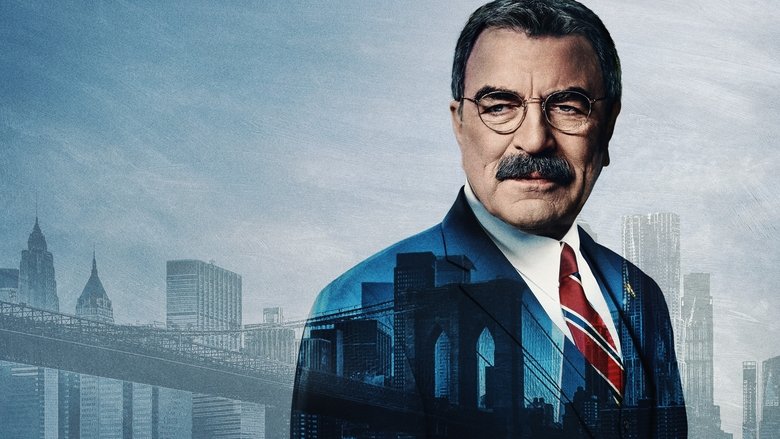
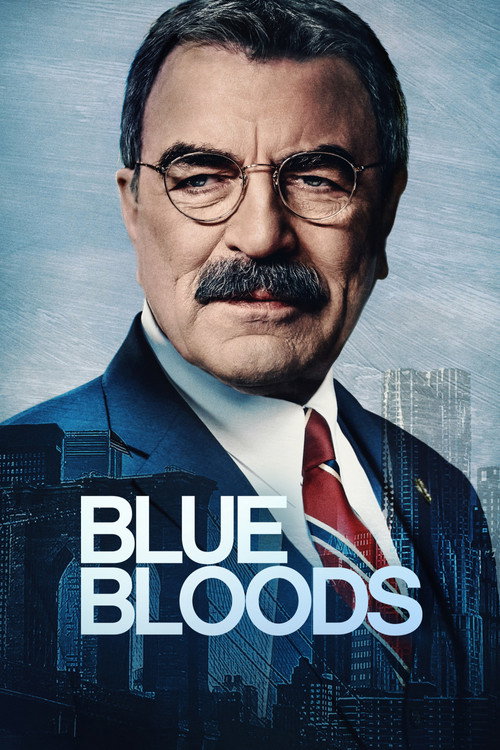
Blue Bloods
A solemn procedural wrapped in warm domestic reverence, capturing the friction between duty and devotion: silver shields, whispered prayers, and Irish whiskey glowing under the amber chandelier of an unbreakable family hearth.
Blue Bloods

Blue Bloods

"Honor. Justice. Family. It’s in their blood."

24 September 2010 — 13 December 2024 United States of America 14 season 293 episode Ended 7.8 (1,020)

Cast: Tom Selleck, Donnie Wahlberg, Bridget Moynahan, Will Estes, Len Cariou

Drama Crime Family as the Ultimate Moral Anchor The Complexity of Justice and the Rule of Law The Burden of Leadership and Public Trust Tradition, Faith, and Generational Transition Grief, Sacrifice, and Resilience

Overview

Blue Bloods chronicles four generations of the Reagan family, a devout Irish-American Catholic dynasty entrenched in New York City’s legal and law enforcement infrastructure. Anchored by NYPD Police Commissioner Francis "Frank" Reagan (Tom Selleck) and his retired commissioner father, Henry "Pop" Reagan (Len Cariou), the narrative spans every tier of justice: seasoned detective work led by hotheaded eldest son Danny (Donnie Wahlberg), judicial and prosecutorial ethics navigated by Assistant District Attorney Erin (Bridget Moynahan), and street-level patrol work represented by Harvard Law graduate-turned-officer Jamie (Will Estes).

Across 14 seasons and 293 episodes, the series weaves procedural case-of-the-week investigations with long-running personal and institutional challenges. The Reagans confront internal corruption, political maneuvering from City Hall, evolving social dynamics regarding policing in modern America, and profound personal losses. Unlike conventional procedurals centered solely on gritty forensics or courtroom theatrics, the narrative arc treats the justice system as an ongoing moral dialectic where family loyalty and professional integrity constantly test each other.

The central narrative spine remains the weekly Sunday dinner, which functions as both an emotional reset and a forum where the family reconciles the ideological fractures produced by their respective positions within the law. Over the show's run, the family evolves through marriages, promotions, the discovery of lost kin, and grief, maintaining an unbroken commitment to public service and familial devotion until the final gavel falls.

Core Meaning

The fundamental message of Blue Bloods is that absolute justice cannot exist without moral conscience, personal accountability, and a supportive moral community. Created by Robin Green and Mitchell Burgess, the series demonstrates that the rule of law is an imperfect human construct that requires continuous ethical vigilance. Across all seasons, the show asserts that authority without empathy leads to tyranny, while justice untempered by institutional duty collapses into vigilantism. The Reagan family serves as an idealized microcosm illustrating how traditional values, intergenerational dialogue, and unconditional family solidarity provide the necessary moral compass to navigate the moral ambiguities of governance and law enforcement.

Thematic DNA

Family as the Ultimate Moral Anchor 30%
The Complexity of Justice and the Rule of Law 25%
The Burden of Leadership and Public Trust 20%
Tradition, Faith, and Generational Transition 15%
Grief, Sacrifice, and Resilience 10%

Family as the Ultimate Moral Anchor

The central pillar of the series is the belief that family is the essential foundation for surviving the psychological and ethical demands of public service. Throughout 14 seasons, professional tensions, ideological clashes, and grief are mediated across the dinner table, reinforcing kinship above bureaucratic friction.

The Complexity of Justice and the Rule of Law

The series repeatedly explores the disconnect between "doing what is right" and "following the letter of the law". This tension is expressed through the friction between Danny’s street instincts, Erin’s adherence to constitutional statutes, and Frank’s systemic responsibilities.

The Burden of Leadership and Public Trust

Exemplified by Frank Reagan, leadership is depicted as an isolating, sacrificial duty. The series demonstrates that true public leadership requires standing between shifting political tides (Mayoral pressure) and the rank-and-file officers while maintaining transparency and public trust.

Tradition, Faith, and Generational Transition

Through Catholicism, military service, and NYPD traditions, the show examines how heritage is transmitted across generations—from Henry down to the great-grandchildren—and how institutions preserve their values amid changing cultural landscapes.

Grief, Sacrifice, and Resilience

The narrative is shaped by enduring grief—the pre-series death of brother Joe Reagan, the loss of Frank's wife Mary, the sudden death of Danny's wife Linda, and the constant physical risk faced by officers in the line of duty.

Character Analysis

Francis "Frank" Reagan

Tom Selleck

Archetype: The Stoic Patriarch / Wise Mentor Key Trait: Unflinching ethical integrity and quiet, measured authority

Motivation

To maintain the integrity of the NYPD and protect his city and family without compromising his moral convictions.

Character Arc

Begins as a seasoned Police Commissioner carrying grief over the death of his son Joe and wife Mary. Over 14 seasons, he weathers multiple mayoral administrations, internal scandals, and shifting cultural perceptions of policing, growing into a revered elder statesman who places institutional integrity and moral duty above political expediency.

Daniel "Danny" Reagan

Donnie Wahlberg

Archetype: The Passionate Warrior / Dedicated Detective Key Trait: Fierce protective instinct and intuitive street smarts

Motivation

To bring immediate justice to victims and protect the innocent at all costs.

Character Arc

Starts as a volatile, decorated Iraq War veteran and first-grade detective prone to bending rules to capture criminals. Across the series—particularly following the tragic death of his wife Linda—he matures emotionally, learning restraint, developing deep vulnerability, and leaning on his partner Maria Baez while remaining the relentless protector of victims.

All 5 characters and cast

Symbols & Motifs

The Sunday Dinner Table

Meaning:

The ultimate symbol of unity, moral reconciliation, and tradition.

Context:

No matter how fiercely the family clashes on cases during the week, they break bread, say grace together, and listen to one another, signifying that blood and faith transcend ideology.

The NYPD Police Shield (The Badge)

Meaning:

Represents both generational honor and an immense moral weight.

Context:

It serves as a reminder of the public trust and the sacrifices of fallen family members (such as Joe Reagan).

The Catholic Grace Prayer ("Bless us, O Lord...")

Meaning:

Symbolizes gratitude, humility, and moral grounding before higher authority.

Context:

Recited before every Sunday meal across all seasons.

The Commissioner’s Office at One Police Plaza

Meaning:

Symbolizes institutional power, isolation, and moral burden.

Context:

The office is the arena where Frank mediates political conflicts with mayors, community advocates, and his inner circle.

St. Jude Medals and Catholic Iconography

Meaning:

Represents patron saint protection for desperate causes and police officers facing mortal danger.

Context:

Frequently seen worn by officers or kept in pockets.

Memorable Quotes

I may serve at the pleasure of the Mayor, but I work for the people of the City of New York.
— Frank Reagan

Context

Recurring thematic line across multiple seasons, notably in conflicts with City Hall.

Meaning

Represents Frank’s steadfast refusal to compromise police ethics for mayoral politics.

Bless us, O Lord, and these thy gifts, which we are about to receive from thy bounty, through Christ, our Lord. Amen.
— The Reagan Family

Context

Every Sunday Dinner across Seasons 1–14.

Meaning

The sacred prayer signaling family communion, gratitude, and moral grounding.

All 5 quotes

Episode Highlights

Pilot

S1E1

Introduces the family, Frank’s tenure as commissioner, Jamie’s graduation from the Police Academy, and establishes the overarching mystery surrounding the death of brother Joe Reagan.

Significance:

Establishes the core characters, family dynamics, and foundational mythology of the series.

The Blue Templar

S1E22

The Reagan family collaborates off-the-books to bring down the Blue Templar, the corrupt brotherhood within the NYPD responsible for the murder of Joe Reagan.

Significance:

Cements the family's shared code of justice and resolves the first season's central mystery.

Unwritten Rules

S4E1

Following the line-of-duty murder of Danny’s former partner, the entire department mobilizes.

Significance:

Explores the delicate line between legitimate police work and the impulse for revenge.

Cutting Losses

S8E1

Reveals that Danny’s wife, Linda Reagan, died in an off-screen medevac helicopter crash.

Significance:

Explores Danny's intense grief and determination to carry on for his boys, setting his major multi-season character arc.

My Aim Is True

S8E22

Danny discovers Linda's death was orchestrated by a Mexican cartel, culminating in the closure of that case, while Jamie and Eddie publicly reveal their romantic engagement.

Significance:

Brings closure to Linda's murder and marks the major turning point in Jamie and Eddie's relationship.

Something Blue

S9E22

Jamie Reagan and Eddie Janko celebrate their rehearsal dinner and prepare to tie the knot.

Significance:

Solidifies Eddie's full integration into the Reagan family structure.

Family Secrets

S10E19

Sean discovers via a school DNA project that Joe Reagan had a son, leading the family to embrace Detective Joe Hill into the Reagan circle.

Significance:

Expands the Reagan lineage and integrates a new generational branch into the family dynamic.

The End

S14E18

Concludes the 14-year saga with the department solving a high-stakes case involving a fallen colleague, celebrating new life and secret reconciliations, and sharing one final, emotional Reagan Sunday dinner.

Significance:

Provides the definitive resolution and thematic culmination for the entire 14-season series arc.

Philosophical Questions

Can legal rules accommodate moral righteousness?

The show continuously juxtaposes Erin’s strict constitutional formalism with Danny’s pursuit of moral justice.

What is the personal cost of public duty?

Frank Reagan's stoic solitude illustrates the emotional and interpersonal toll required to maintain impartiality in public office.

How can ancient moral traditions survive modern institutional cynicism?

The show uses the Catholic faith and family heritage to test whether foundational ethics can endure political polarization.

Alternative Interpretations

Several lenses offer alternative perspectives on the series:

Full ending explanation

Cultural Impact

Premiering in the fall of 2010 on CBS, Blue Bloods established an anchor on Friday night television, frequently dominating total viewership numbers across 14 seasons.

Culturally, the series stood out during an era increasingly dominated by antiheroes and serialized prestige television. It maintained an earnest, traditional structure centered on civic duty, faith, and institutional pride. In its later seasons, the show had to navigate shifting national conversations around police reform and civil rights, intentionally addressing systemic friction while maintaining an empathetic view of rank-and-file officers. Its enduring ratings success proved the commercial vitality of multi-generational network dramas and solidified the "Reagan Sunday Dinner" as a fixture of modern American television culture.

Audience Reception

Critical Consensus: Early reviews praised Tom Selleck’s commanding presence and the unique integration of family drama with procedural crime-solving, though some critics noted formulaic storylines.

Audience Devotion: Audiences embraced the show for its emotional reliability, strong character consistency, and family dinner scenes, making it a linear television ratings powerhouse.

Criticisms and Controversies: Main criticisms included the abrupt off-screen killing of Linda Reagan in Season 8 and the pacing of the Season 14 finale, which some fans felt compressed major narrative resolutions. Nonetheless, overall reception remains affectionate, celebrating the series as a classic procedural.

Interesting Facts

  • The series was created by the husband-and-wife writing team Robin Green and Mitchell Burgess (veterans of The Sopranos and Northern Exposure) before Kevin Wade took over as long-running showrunner.
  • Unlike many procedurals filmed on Los Angeles soundstages, Blue Bloods was filmed extensively on location across all five boroughs of New York City and at Brooklyn studios.
  • Filming the weekly Sunday dinner scenes was notoriously grueling; they routinely took 6 to 8 hours to shoot from every angle, requiring actors to fake-eat or carefully pace consumption of real catered meals throughout the day.
  • Len Cariou (Henry Reagan) is in reality only five years older than Tom Selleck (Frank Reagan), requiring makeup, wardrobe, and acting technique to convey an intergenerational father-son relationship.
  • Tom Selleck held substantial creative input as an executive producer, insisting throughout the run that the show remain a family drama first and a crime procedural second.
  • Amy Carlson chose not to renew her contract at the end of Season 7, prompting the writers to write Linda Reagan’s tragic off-screen passing into the Season 8 premiere.

Easter Eggs

Treat Williams as Lenny Ross

The late Treat Williams had a recurring cameo role as Frank’s freewheeling former partner Lenny Ross, serving as Frank's emotional mirror; his final appearance and the subsequent tribute episode honored Williams' legacy.

Music Industry Stars

Donnie Wahlberg (founding member of New Kids on the Block) starred alongside prominent music guest stars, including Lyle Lovett (as Texas Ranger Major Waylon Gates) and Jimmy Buffett (playing a con artist impersonator).

Real-life NYPD technical advisors (such as James Nuciforo) regularly appeared as background officers or consulted directly on scripts.

Ensured realistic procedural verisimilitude and honored law enforcement connections.

The Sopranos Creative Lineage

With creators Robin Green and Mitchell Burgess hailing from The Sopranos, numerous actors from the HBO series made guest appearances, including Michael Rispoli, Dominic Chianese, and Steve Schirripa (who became series regular Anthony Abetemarco).

Frequently Asked Questions

Explore More About This Movie

Dive deeper into specific aspects of the movie with our detailed analysis pages

Comments (0)

Leave a comment

No comments yet. Be the first to share your thoughts!

Similar Movies