Skip to content
Blue Box
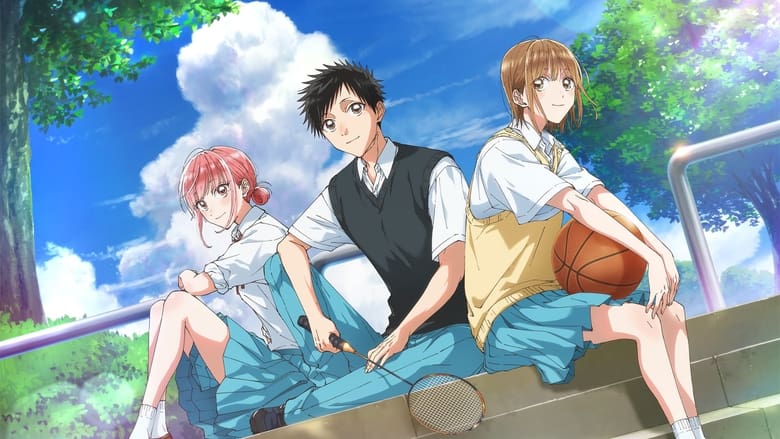
A sunlit sports romance full of held breath and unsaid words, where a shuttlecock and a basketball trace separate arcs through the same gym while first love builds quietly, one practice at a time.
Blue Box

Blue Box

アオのハコ

"Do these sports-crossed lovers have a chance?"

03 October 2024 — 27 March 2025 Japan 2 season 26 episode Returning Series 7.9 (101)

Cast: Shoya Chiba, Reina Ueda, Akari Kito, Chiaki Kobayashi, Yuma Uchida

Drama Animation Love as motivation Dedication and effort Emotional honesty and confession Unrequited love and friendship

Overview

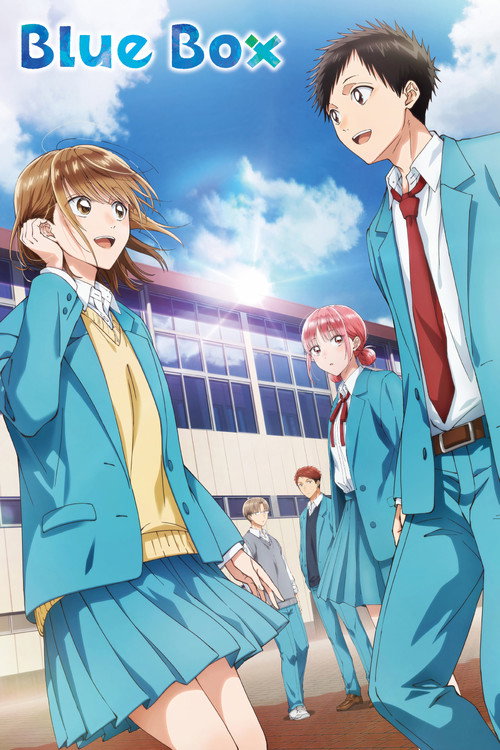
Blue Box (Ao no Hako) is an anime adaptation of Kouji Miura's manga, produced by Telecom Animation Film, directed by Yuichiro Yano and streamed worldwide on Netflix. It follows Taiki Inomata, a hardworking badminton player who greatly admires Chinatsu Kano, the star of the girls' basketball team and his senior by one year. She is often the first person at practice, and she became a strong player through sheer dedication.

The story mixes the discipline of school sports with the uncertainty of first love. Taiki and Chinatsu both aim for the national championships, and they push each other forward. Meanwhile, Taiki's childhood friend Hina Chono, a rhythmic gymnast, starts to see him differently. The result is a love triangle that the series handles with unusual honesty.

The first season ran for 25 episodes from October 2024 to March 2025 and adapted roughly nine volumes of the manga. A second season was announced in March 2025 for Fall 2026. It continues the story of growing up through training, competition and feelings that finally get spoken aloud.
Core Meaning

At its core, Blue Box says that love and ambition don't have to compete. At their best, they make each other stronger. Taiki's feelings for Chinatsu are shown less as a distraction and more as something that drives him to work harder on his own goals. The series also argues for emotional honesty. Its characters confess, turn each other down and face their feelings directly instead of dragging out misunderstandings. It suggests that saying something painful is kinder than staying silent, and that youth is defined by effort in both the gym and the heart.

Thematic DNA

Love as motivation 30%
Dedication and effort 25%
Emotional honesty and confession 25%
Unrequited love and friendship 20%

Love as motivation

Taiki's admiration for Chinatsu starts as a crush on a senior he watches from across the gym. Over time it becomes a shared commitment to reaching the national championships. The show treats romance as something that pushes each character forward in their sport, not as a sideshow.

Dedication and effort

Chinatsu was once a poor basketball player and became a star through persistence. Taiki keeps working despite setbacks. Early-morning practices and repeated drills show that growth comes from routine rather than talent alone.

Emotional honesty and confession

The series skips the usual trope of feelings that never get said. Hina confesses early, even though she knows Taiki loves someone else. The first season builds toward Taiki's clear and painful rejection of her. Being honest is treated as a sign of maturity.

Unrequited love and friendship

Hina's arc looks at the pain of loving someone whose heart belongs to another person. It asks whether a childhood friendship can survive a confession and a rejection.

Character Analysis

Taiki Inomata

Shoya Chiba

Archetype: Earnest hero / underdog Key Trait: Persistent and sincere

Motivation

At first he wants to reach nationals so he can stand beside Chinatsu. Over time this becomes a real drive to succeed on his own terms.

Character Arc

Taiki begins as a badminton player with a quiet crush on Chinatsu. He grows into someone who takes responsibility for his feelings. He tells Hina honestly that his feelings for Chinatsu will not change, and he works toward confessing to Chinatsu herself.

Chinatsu Kano

Reina Ueda

Archetype: Admired senior / quiet achiever Key Trait: Dedicated and composed

Motivation

Her main goal is to reach the national championships in basketball, the result of years of hard work that turned her from a weak player into a strong one.

Character Arc

Chinatsu starts as the idealized star whom Taiki watches from afar. She slowly shows her own vulnerability and feelings as the two grow closer.

All 3 characters and cast

Symbols & Motifs

The color blue (the 'blue box')

Meaning:

Blue stands for youth, the freshness and ache of adolescence. The 'box' can be read as the enclosed world of the gym and of school life.

Context:

The idea appears in the title and is echoed in the opening theme, "Same Blue" by Official Hige Dandism.

The shared gym

Meaning:

The gym is a space where two different sports, and two people, grow side by side. It links training with closeness.

Context:

Taiki and Chinatsu's early-morning practices, where their bond first forms.

Shuttlecock and basketball

Meaning:

These represent separate paths toward the same goal: each character has to win their own battles on the way to nationals.

Context:

Taiki's badminton and Chinatsu's basketball run in parallel throughout the series.

Episode Highlights

Episode 1 (Series Premiere)

S1E1

Introduces Taiki, his admiration for Chinatsu, and the gym where they both train. Critics praised the premiere as a stunning adaptation.

Significance:

Establishes the show's mix of sport and romance and its soft visual style.

Chinatsu Senpai

S1E2

Develops Taiki and Chinatsu's relationship as senior and junior.

Significance:

Lays the groundwork for the central romance.

Episode 14

S1E14

Hina confesses her love to Taiki. She knows he likes Chinatsu and tells him she doesn't need an immediate answer.

Significance:

Turns the story into an open love triangle and breaks the genre habit of delaying confessions.

Season 1 Finale

S1E25

Taiki calmly tells Hina that his feelings for Chinatsu will not change and rejects her. He explains that letting her wait would only hurt them both.

Significance:

Ends the first season on a dramatic, much-discussed rejection that sets up season 2.

Philosophical Questions

Is it kinder to reject someone clearly than to let them hope?

Hina offers to wait as long as it takes. Taiki decides that accepting this would hurt them both, and the series presents his honest rejection as painful but caring.

Can love and ambition coexist?

Taiki's feelings drive his effort in badminton rather than getting in its way. The series suggests that the two can strengthen each other.

How It Ends

Alternative Interpretations

Some viewers read the series mainly as a sports drama in which romance is the fuel. Others see it as a romance with sports as the setting. Hina's arc can also be read in two ways. One reading treats it as the tragic side of the love triangle. The other treats it as a story of self-respect, where Taiki's rejection frees her instead of stringing her along.

Full ending explanation

Cultural Impact

Blue Box arrived as a high-profile Netflix-streamed adaptation of a popular manga. Reviewers noted that it tries to refresh the romance anime genre by blending in sports. Outlets such as Anime Corner and Game Rant called it a "beautiful nexus between sport and romance" and "exceptional from start to finish." Its Hina rejection scene in particular was singled out as "one for the ages." The theme song by Official Hige Dandism, one of Japan's biggest bands, raised the show's profile further. The quick renewal for a second season shows strong audience interest.

Audience Reception

Season 1 was well received. Critics praised the deep characters, heart-racing situations and stunning animation, and highlighted how Telecom Animation Film's soft colors and delicate lines honor Kouji Miura's art. Its willingness to have characters confess early and deal with rejection directly stood out against genre conventions. Season 2 had been announced for Fall 2026 but had not been widely reviewed as of these sources.

Interesting Facts

  • The anime is based on the manga Blue Box (Ao no Hako), written and illustrated by Kouji Miura.
  • The series is animated by Telecom Animation Film and directed by Yuichiro Yano.
  • The opening theme, "Same Blue", is performed by Official Hige Dandism, and Eve also provides a theme song.
  • Netflix streamed the series worldwide, releasing episodes weekly from October 2024.
  • Season 1 ran for two consecutive cours (25 episodes) from October 2024 to March 2025 and adapted about nine manga volumes.
  • Season 2 was announced on March 27, 2025, with a Fall 2026 release.

Frequently Asked Questions

Explore More About This Movie

Dive deeper into specific aspects of the movie with our detailed analysis pages

Comments (0)

Leave a comment

No comments yet. Be the first to share your thoughts!

Similar Movies