Memoir of a Snail
"Life can only be understood backwards, but we have to live it forwards."
Overview
"Memoir of a Snail" chronicles the life of Grace Pudel, a lonely hoarder of snail memorabilia in 1970s Australia. Born with a cleft lip, Grace finds solace in her unique hobby, a connection to her late mother. After the death of her father, she and her beloved twin brother, Gilbert, are separated and sent to different foster homes across the country.
Grace's life is a series of misfortunes, from her quirky but neglectful swinger foster parents to a deceptive marriage. Her only lifelines are the letters from Gilbert and her friendship with an eccentric and vivacious elderly woman named Pinky. The film follows Grace's journey through trauma and isolation as she learns to navigate a world that has often been cruel, ultimately seeking the courage to emerge from the protective shell she has built around herself.
Core Meaning
The central message of "Memoir of a Snail" is about embracing life's imperfections and finding the resilience to move forward, no matter how slowly, in the face of trauma and grief. Director Adam Elliot explores the idea that we are all, in some way, flawed and 'lumpy,' and that there is beauty and strength in our brokenness.
The film delves into the psychological underpinnings of hoarding as a coping mechanism for loss and loneliness. It champions the underdog and the misfit, suggesting that even in the darkest of times, connection, friendship, and self-acceptance can provide a path to healing. Ultimately, it's a story about learning to let go of the past that cages us and understanding that, like a snail, we can only live life by moving forwards.
Thematic DNA
Loneliness and Isolation
From a young age, Grace experiences profound isolation, which is exacerbated when she is separated from her twin brother, Gilbert. Her snail collection and eventual hoarding become a physical manifestation of her emotional retreat from the world. The film visually represents her loneliness through a predominantly muted, brown-toned color palette, reflecting her subdued inner world.
Grief and Trauma
Grace's life is punctuated by a relentless series of traumatic events, including the loss of her parents, separation from her brother, and emotional abuse. The film explores how grief manifests in different ways, with Grace's hoarding serving as a coping mechanism to deal with her immense pain and loss. Her journey is a testament to the enduring impact of childhood trauma on adult life.
Resilience and Hope
Despite the overwhelming sadness, a thread of hope runs through the narrative. Grace's friendship with the vivacious Pinky provides a crucial lifeline and a different perspective on life. The film's ending, where Grace finally pursues her passion for animation and reunites with her brother, underscores the theme of resilience and the possibility of finding happiness after enduring immense hardship.
Finding Your Own Family
The film emphasizes that family is not solely defined by blood ties. After being separated from her brother, Grace finds a new, unconventional family in her friendship with Pinky. Pinky becomes a mother figure to Grace, offering her guidance and unconditional support, which is instrumental in Grace's journey towards self-acceptance.
Character Analysis
Grace Pudel
Sarah Snook
Motivation
Grace's primary motivation for much of the film is to find connection and a sense of safety in a world that has repeatedly hurt her. She clings to the hope of one day reuniting with her brother, which keeps her going through her darkest times.
Character Arc
Grace begins as a shy, bullied child who retreats into a world of snails to cope with loss. After being separated from her twin, she becomes a lonely, anxious adult, trapped by her hoarding and past traumas. Through her friendship with Pinky, and a final letter of encouragement from her, Grace finds the strength to confront her past, let go of her self-destructive habits, and pursue her dream of becoming an animator, ultimately finding peace and reuniting with her brother.
Gilbert Pudel
Kodi Smit-McPhee
Motivation
Gilbert's main motivation is to reunite with his sister, Grace. Their connection is the central emotional core of his journey, and the promise of seeing her again sustains him through his traumatic experiences.
Character Arc
As a child, Gilbert is Grace's fierce protector. After their separation, he is sent to an abusive, religious foster home that tries to suppress his identity and sexuality. Despite the immense hardship and abuse he endures, including conversion therapy, he holds onto the hope of finding Grace. His eventual reunion with Grace at the end of the film is a testament to their unbreakable bond.
Pinky
Jacki Weaver
Motivation
Pinky is motivated by a profound love for life and a desire to see others, particularly Grace, embrace its possibilities. She consistently finds the 'silver linings' and encourages Grace to do the same, to step out of her shell and live.
Character Arc
Pinky is an eccentric, life-affirming elderly woman who has lived a full and adventurous life despite her own share of misfortunes. She befriends Grace and becomes her mentor, offering wisdom, humor, and unconditional support. Even after her death from Alzheimer's, her words of encouragement in a final letter provide Grace with the final push she needs to change her life.
Symbols & Motifs
Snails
Snails symbolize Grace's emotional state and her way of coping with the world. Their shells represent the protective barrier she erects around herself, retracting when faced with trauma. The spiral on the snail's shell is a visual motif for life coming full circle. Furthermore, snails can only move forward, not backward, which ties into the film's central theme of the necessity of moving on from the past.
Grace's obsession with snails begins as a connection to her deceased mother. It evolves into a compulsive hoarding of snail-themed objects, which fill her home and isolate her. Ultimately, she must let go of her snail collection to break free from her self-imposed cage and move forward in her life.
The Snail Beanie
The snail beanie knitted by her father is a symbol of parental love and her unique identity. It's a tangible connection to the brief happiness of her childhood and a reminder of her family's encouragement to embrace her differences.
Grace wears the beanie throughout much of her life. Significantly, when she decides to purge her hoard and start anew, it is the one snail-related item she chooses to keep, signifying that she is not erasing her past but integrating it into her new, healthier life.
Hoarding
Grace's hoarding is a physical manifestation of her grief and trauma. The clutter in her home mirrors the emotional turmoil within her. It is a coping mechanism, a way of filling the void left by the loss of her family.
After being separated from Gilbert, Grace's collecting of snail memorabilia spirals into an obsessive hoard that takes over her life. Her decision to burn her collection is a pivotal moment in her character arc, symbolizing her liberation from the weight of her past.
Memorable Quotes
Dad used to say that childhood was like being drunk. Everyone remembers what you did, except you.
— Grace Pudel
Context:
Grace narrates this line early in the film as she begins to recount her childhood, setting the tone for a story that is both whimsical and deeply melancholic.
Meaning:
This quote encapsulates the film's bittersweet and often dark humor, while also touching on the fragmented and unreliable nature of memory, especially in the context of childhood trauma.
The worst cages are the ones we create for ourselves.
— Pinky
Context:
This is part of Pinky's posthumous letter to Grace, which serves as the catalyst for Grace's transformation. It gives Grace the clarity to see that her hoarding and isolation are a prison of her own making.
Meaning:
This line delivers the core message of the film: that while external circumstances can cause immense pain, true liberation comes from overcoming our internal fears and self-imposed limitations.
Life can only be understood backwards, but we have to live it forwards.
— Pinky
Context:
This piece of wisdom is part of Pinky's lasting influence on Grace, encouraging her to accept her past and embrace the future. The theme is also physically represented by the snails, which can only move forward.
Meaning:
This quote, borrowed from philosopher Søren Kierkegaard, is the philosophical heart of the film. It speaks to the idea that we can only make sense of our past through reflection, but we cannot be paralyzed by it; we must continue to move forward.
Philosophical Questions
Can we truly move forward without reconciling with our past?
The film deeply explores this question through Grace's journey. Her hoarding of snails is a clear attempt to hold onto her past, specifically her connection to her mother and brother. She is emotionally stagnant until she confronts this past, symbolized by the act of burning her collection. The film suggests that while we must live life forwards, as the Kierkegaard quote advises, that forward motion is only possible after a meaningful, and often painful, process of understanding and making peace with what came before.
To what extent do we create our own prisons?
Pinky's letter to Grace explicitly states, 'The worst cages are the ones we create for ourselves.' Grace's house, filled with her hoard, becomes a literal and metaphorical cage that protects her from the outside world but also prevents her from living. The film posits that while trauma may be inflicted upon us by external forces, our response to that trauma—the fears we internalize and the limitations we place on ourselves—can be the most significant barrier to our own happiness and freedom.
Alternative Interpretations
While the film's ending is presented as a hopeful reunion, some viewers have interpreted it differently. One perspective is that Gilbert's return is not literal but a symbolic representation of Grace's full acceptance of her past and her readiness to embrace life. In this reading, Gilbert's survival is less important than Grace's emotional and psychological liberation. Her creation of a successful animated film is the true culmination of her journey, and 'Gilbert's' appearance is the final integration of her lost half.
Another, more critical interpretation views the happy ending as somewhat undermining the film's powerful exploration of grief. Some audience members have expressed that the story of moving on from the devastating loss of a loved one would have been more poignant if Gilbert had remained dead. His sudden, almost miraculous survival, could be seen as a retreat from the harsher realities the film so bravely confronts for most of its runtime, offering a more conventional, crowd-pleasing resolution rather than a starker, perhaps more realistic, meditation on permanent loss.
Cultural Impact
"Memoir of a Snail" continues director Adam Elliot's significant contribution to adult-oriented stop-motion animation, a niche he has helped to define with his previous works like the Oscar-winning short "Harvie Krumpet" and the feature "Mary and Max." His films, which he terms 'clayographies' (clay-animated biographies), are notable for their deeply personal, bittersweet tone and their willingness to tackle mature themes such as disability, mental illness, loneliness, and trauma with both dark humor and profound empathy.
Critically, the film has been hailed as a masterpiece and one of the best animated films of the year, winning the prestigious Cristal for a Feature Film at the Annecy International Animation Film Festival. Its nomination for the Best Animated Feature at the Academy Awards makes it only the second R-rated film to be nominated in that category, a significant milestone that challenges the perception of animation as a medium solely for children. This recognition helps to legitimize and promote adult animation within the mainstream film industry.
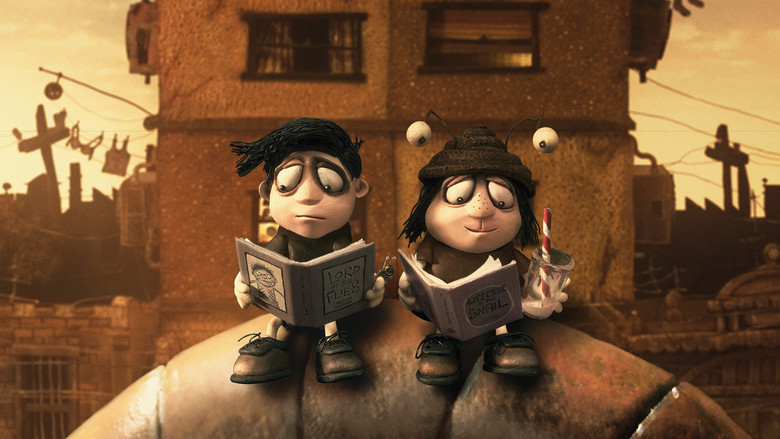
Elliot's distinctive visual style, characterized by its 'chunky, wonky' aesthetic, visible fingerprints in the clay, and muted color palettes, stands in stark contrast to the polished look of mainstream CGI animation. This handmade quality emphasizes the film's themes of imperfection and humanity, influencing a generation of independent animators who value tactile, author-driven storytelling. The film's philosophical underpinnings, particularly its use of Kierkegaard's philosophy, also elevate its cultural standing, inviting deeper analysis and discussion about the nature of memory, grief, and existence.
Audience Reception
Audience reception for "Memoir of a Snail" has been largely positive, with many viewers praising its emotional depth, unique visual style, and dark humor. Online discussion forums and review sites show that the film resonated deeply with many, who found its portrayal of loneliness and grief to be authentic and moving. Audiences often describe the experience as an 'emotional rollercoaster,' leaving them in tears but ultimately feeling uplifted by the hopeful conclusion.
The main points of criticism tend to focus on the relentless bleakness of the story, with some viewers finding the constant barrage of tragedies to be overwhelming or even emotionally manipulative. The ending has also been a point of contention; while many found the reunion of the twins to be a cathartic and earned reward, a minority felt it was an abrupt reversal that softened the impact of the film's exploration of grief.
Interesting Facts
- The film was in development for eight years.
- The original concept for the film was titled "Memoir of a Ladybird," but director Adam Elliot changed it because he felt ladybirds were too "cutesy" and snails offered better symbolic potential.
- Over 7,000 snail props were handmade for the film.
- There is no CGI in the film; every element on screen was physically made and animated in-camera.
- The director, Adam Elliot, based the character of Grace on his mother and a friend who was born with a cleft palate.
- The film's production company is fittingly named "Snail Pace Films."
- The film won the Cristal for a Feature Film, the top prize at the Annecy International Animation Film Festival in 2024.
Easter Eggs
A tiny jar containing the real fingertip of one of the animators appears in several scenes.
During production, an animator accidentally cut off the tip of her finger. The crew decided to preserve it in a tiny jar and included it in the background of Grace's hoard as a macabre and darkly humorous inside joke.
A butcher shop in a street scene is a tribute to the film 'Delicatessen'.
Director Adam Elliot is a fan of the French filmmaker Jean-Pierre Jeunet, and a butcher character looking through a shop window is a direct homage to a similar character in Jeunet's 1991 film 'Delicatessen'.
In the background of a scene where Grace's father is watching 'The Two Ronnies' on TV, a specific joke from David Foster Wallace's novel 'Infinite Jest' can be heard.
The joke about a dyslexic, atheist insomniac wondering about the existence of a 'dog' is a direct lift from the novel, indicating the film's literary influences and adding a layer of intertextual humor.
⚠️ Spoiler Analysis
Click to reveal detailed analysis with spoilers
Frequently Asked Questions
Explore More About This Movie
Dive deeper into specific aspects of the movie with our detailed analysis pages
Comments (0)
No comments yet. Be the first to share your thoughts!