Skip to content
BLUE LOCK
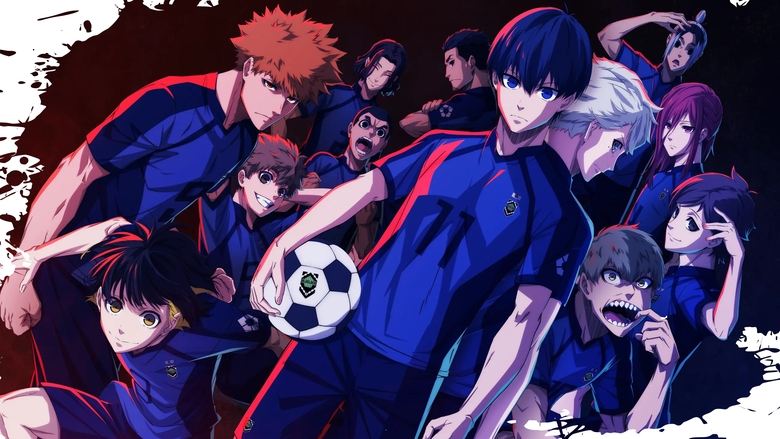
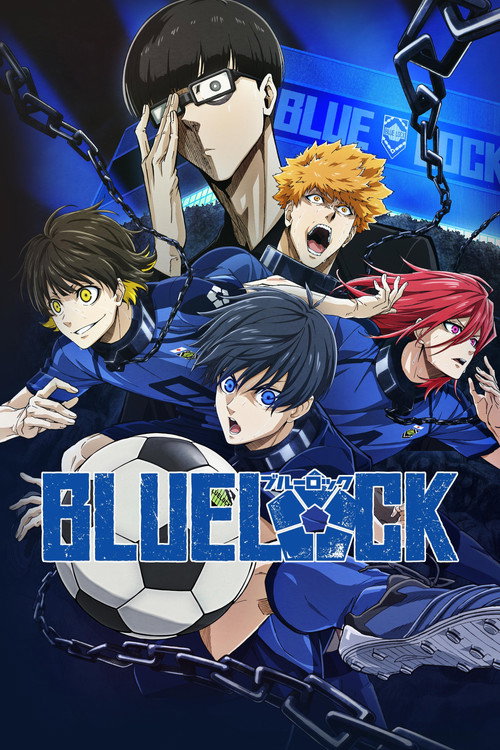
An adrenaline-soaked psychological battleground charged with raw ambition, BLUE LOCK transforms association football into an explosive forge where polite camaraderie is shattered into brilliant puzzle pieces of pure individuality.
BLUE LOCK

BLUE LOCK

ブルーロック

09 October 2022 — 28 December 2024 Japan 1 season 38 episode Ended 8.3 (659)

Cast: Kazuki Ura, Tasuku Kaito, Yuki Ono, Soma Saito, Junichi Suwabe

Drama Animation Action & Adventure Radical Egoism vs. Blind Collectivism Reinventing the Self / Continuous Adaptation The Predator-Prey Dynamic and "Devouring" Rivals Flow State and Calculated Genius Obsession, Isolation, and the Cost of Greatness

Overview

Set in the aftermath of Japan's disappointing exit from the 2018 FIFA World Cup, BLUE LOCK follows a radical, ruthless project spearheaded by the Japan Football Union (JFU) and masterminded by the eccentric visionary Jinpachi Ego. Convinced that Japanese soccer suffers from an excess of self-sacrificing collectivism and lacks a world-class striker, Ego imprisons 300 of the nation's most promising high school forwards inside a high-tech, isolated facility dubbed "Blue Lock." The stakes are absolute: the sole survivor will become the national team's ace striker, while every eliminated player is permanently barred from ever representing Japan on the international stage.

The narrative centers on Yoichi Isagi, a polite forward whose high school dreams were crushed because he prioritized passing to an open teammate over taking the decisive shot himself. Entering the facility with self-doubt, Isagi must navigate brutal multi-stage selection trials where every teammate is simultaneously a vital asset and a rival who must be figuratively "devoured."

Across its run, the series escalates from internal cutthroat survival games to high-stakes showdowns that threaten the very existence of the program. As outside corporate and traditional sports institutions attempt to shut down Ego's experiment, the Blue Lock candidates are forced to unite their fiercely selfish talents to challenge the established Japanese national youth team (U-20 Japan), proving whether radical individualism can overcome established orthodoxy and revitalize national sports culture.
Core Meaning

The core thesis of BLUE LOCK is a radical deconstruction of traditional Japanese collectivism (wa) and conventional sports manga ethics. The creators challenge the notion that harmony, polite deference, and uncritical self-sacrifice lead to elite excellence. Instead, the series posits that true greatness in high-stakes competition is born from Egoism—an unapologetic, self-aware desire to dominate, realize one's unique genius, and embrace personal responsibility for victory or defeat. Constructive synergy does not arise from passive compromise, but from the friction and mutual elevation of uncompromising individual titans pushing each other past their limits.

Thematic DNA

Radical Egoism vs. Blind Collectivism 30%
Reinventing the Self / Continuous Adaptation 25%
The Predator-Prey Dynamic and "Devouring" Rivals 20%
Flow State and Calculated Genius 15%
Obsession, Isolation, and the Cost of Greatness 10%

Radical Egoism vs. Blind Collectivism

The foundational pillar of the series contrasts the comforting illusion of teamwork with the harsh necessity of individual hunger. While traditional sports narratives prioritize the "power of friendship," BLUE LOCK presents sports as an evolutionary arena where players must discover their singular identity, refuse subservience, and demand the spotlight.

Reinventing the Self / Continuous Adaptation

Throughout the selections, players repeatedly hit performance walls. Survival requires shedding outdated preconceptions, dismantling one's foundational understanding of the game, and rebuilding one's skill set from scratch under extreme psychological pressure.

The Predator-Prey Dynamic and "Devouring" Rivals

Relationships in the series are defined by competition and consumption. Growth occurs when a player analyzes an opponent's or teammate's unique weapon, calculates how to exploit or counter it, and incorporates that tactical logic into their own arsenal.

Flow State and Calculated Genius

The series explores the psychological concept of "Flow"—the intersection of immense challenge and absolute capability. It demystifies miraculous sporting feats, showing that true clutch moments are engineered through calculated environmental control, hyper-focus, and obsession rather than mere luck.

Obsession, Isolation, and the Cost of Greatness

Achieving peak performance demands emotional and social isolation. Characters must risk their friendships, career stability, and psychological comfort to pursue a solitary dream.

Character Analysis

Yoichi Isagi

Kazuki Ura

Archetype: The Adaptive Mastermind / Evolving Hero Key Trait: Spatial Awareness & Direct Shot

Motivation

Initially seeks validation; evolves into an obsession with becoming the world's number one striker through tactical supremacy.

Character Arc

Begins as an unconfident, compliant player and evolves into a cold, ruthless spatial tactician who orchestrates matches by manipulating friends and foes alike.

Meguru Bachira

Tasuku Kaito

Archetype: The Instinctive Artist / Wild Card Key Trait: Unpredictable Dribbling & Passing

Motivation

Starts out seeking a kindred spirit; evolves into playing for the pure, uninhibited joy of self-expression.

Character Arc

Starts dependent on passing to others who "have a monster" inside them; learns through abandonment to play purely for himself, unlocking peak individual dribbling.

All 5 characters and cast

Symbols & Motifs

Puzzle Pieces (Spatial Awareness & Tactical Reconstruction)

Meaning:

Visualizes rationalized tactical epiphanies and the deconstruction of the pitch into actionable variables.

Context:

Whenever Yoichi Isagi analyzes the pitch, the world visually deconstructs into floating jigsaw pieces. When he identifies the missing variable (a blind spot, a teammate's movement, or an opponent's habit), the puzzle snaps together.

Auras / Ego Manifestations

Meaning:

Symbolizes the exteriorization of players' unconscious drives, competitive essence, and athletic potential.

Context:

Characters emit distinct spiritual and energetic auras reflecting their inner drives—such as Isagi's emerald flames, Bachira's primal yellow sparks, Barou's regal crimson lightning, and Rin's shadowy marionette threads.

The "Monster"

Meaning:

Represents pure, childlike creative instinct, uninhibited self-expression, and the underlying fear of isolation.

Context:

Used as Meguru Bachira's imaginary childhood companion. Overcoming and integrating this monster reflects his transition from seeking external companionship to finding complete self-sufficiency.

The Blue Lock Facility

Meaning:

Represents a Panopticon and high-pressure crucible designed to strip away social conditioning and force rapid athletic evolution.

Context:

The sterile, pentagonal prison facility equipped with holographic training fields and constant surveillance where the candidates are confined.

The Throne and Crown

Meaning:

Represents monarchical dominance, rigid hierarchy, and subsequent psychological ego death upon failure.

Context:

Shoei Barou conceives of the pitch as a monarchy where he is the sole ruler; when his tactical logic is shattered by Isagi, the visual crumbling of this crown symbolizes his complete ego destruction and eventual rebirth.

Memorable Quotes

世界一のエゴイストでなければ、世界一のストライカーにはなれない。
— Jinpachi Ego

Context

Delivered by Ego during his introductory speech to the 300 gathered forwards in Season 1, Episode 1.

Meaning

Serves as the mission statement of the entire franchise, establishing the core philosophy that shatters conventional sports ethos.

お前のゴールで、勝ってみせろ。
— Yoichi Isagi

Context

Spoken by Isagi in Season 1, Episode 1, and reappearing as an ongoing thematic motif throughout his evolution.

Meaning

Represents Isagi rejecting passive play and deference to claim direct agency and responsibility for the match outcome.

All 5 quotes

Episode Highlights

Dream

S1E1

Isagi suffers defeat in the regional high school qualifiers after passing the ball; he enters the Blue Lock facility and makes the ruthless decision to eliminate Ryosuke Kira in the opening tag game.

Significance:

Establishes the series' dark survival tone and sets Isagi on his path of discarding collectivist conditioning for egoism.

Born Slippy / The Formula of a Goal

S1E9

Team Z faces Team V and is pushed to the brink against prodigies Nagi and Reo, prompting Isagi to systematically dissect his playstyle.

Significance:

Isagi formulates his reproducible goal-scoring formula, triggering a historic comeback and crystallizing his analytical methodology.

The Loser's Way / Protagonist

S1E17

During the 3v3 Second Selection, Isagi completely outmaneuvers Shoei Barou on the pitch, subjecting Barou to complete tactical subjugation.

Significance:

Forces Barou through ego death and rebirth while transforming Isagi into a dominant, cold tactical commander.

Connection / Devour

S1E23

The climatic 4v4 rematch between Isagi's squad and Rin Itoshi's team, where Bachira awakens his self-reliant ego and Rin claims a narrow victory via a lucky bounce.

Significance:

Concludes the Second Selection, fully awakening Bachira's autonomy and earning Isagi recognition from Rin before they face the World Five.

The Stage is Set

S2E4

Covers the culmination of the Third Selection and the official formation of the Blue Lock Eleven squad.

Significance:

Sets up the existential clash against the U-20 Japan National Team to determine whether the Blue Lock program survives.

Flow State / The Monster Unleashed

S2E10

Ryusei Shidou executes his gravity-defying "Big Bang Drive" overhead goal while Barou enters the match as an unpredictable rogue agent.

Significance:

Demonstrates peak athletic flow states and sends the U-20 showdown into utter tactical chaos.

The World-Changing Goal

S2E14

Blue Lock secures a historic victory over the Japan U-20 team, capped by Yoichi Isagi capitalizing on the final decisive clash between Rin and Sae.

Significance:

Transforms the landscape of Japanese football, establishes Isagi as a national hero, and validates Ego's radical doctrine before the entire world.

Philosophical Questions

Is extreme selfishness necessary to achieve true creative and athletic genius?

The series tests this through Ego's philosophy, exploring whether compromising one's personal vision for the collective good prevents a competitor from reaching the pinnacle of excellence.

Does prioritizing the collective good inherently stifle exceptional individual potential?

Explored through the deconstruction of Japanese team harmony (wa), illustrating how players like Isagi suppress their decisive instincts when societal pressure mandates sharing responsibility.

Can an ethical framework justify sacrificing the dreams of the majority to forge a single champion?

Investigated via the Blue Lock program's zero-sum premise, which permanently ruins the national team prospects of 299 high schoolers to produce one world-class striker.

Is luck purely random, or is it a statistical reward manufactured by being in position to capitalize on chaos?

Examined during the Second Selection and U-20 climaxes, where Ego and Isagi define "luck" as the calculated positioning required to receive unpredictable opportunities.

Alternative Interpretations

The narrative can be analyzed through several distinct conceptual frameworks:

Full ending explanation

Cultural Impact

BLUE LOCK premiered during the Fall 2022 anime season, coinciding directly with the 2022 FIFA World Cup in Qatar. When Japan's national team ("Samurai Blue") pulled off historic group-stage upset victories against Germany and Spain, the anime went viral globally, with fans and sports commentators dubbing Japan's real-life success "The Blue Lock Effect." Illustrator Yusuke Nomura even created collaborative promotional art featuring the official Japan National Football Team jersey.

The series radically shifted the sports anime paradigm, transitioning the genre away from traditional team-bonding narratives toward high-intensity psychological survival games, establishing a new blueprint for competitive sports dramas.

Audience Reception

Critical and audience reception has established BLUE LOCK as a breakout hit and a genre-redefining sports anime, though reception varied across seasons:

  • Season 1 (8.2/10): Widely praised as a modern classic in sports anime. Critics and viewers lauded the inventive premise, pulse-pounding electronic/rock soundtrack, sharp character dynamics, and fluid match execution.
  • Season 2 (6.8/10): While the narrative arc of the U-20 Japan match was praised for its dramatic tension, the production faced noticeable fan criticism regarding static frames, slideshow-like sequences, and heavy reliance on CGI shortcuts during high-intensity plays.
  • Overall Verdict: Despite animation quality variations, the franchise remains one of the most culturally dominant and influential anime titles of the 2020s.

Interesting Facts

  • The first season was animated by Studio Eight Bit under director Tetsuaki Watanabe with assistant director Shunsuke Ishikawa, before directorial duties shifted to Yūji Ishihara for Season 2.
  • Series composition and scripts were handled by Taku Kishimoto, who previously wrote celebrated sports anime adaptations including Haikyuu!!.
  • Adapted from the manga written by Muneyuki Kaneshiro (creator of As the Gods Will) and illustrated by Yusuke Nomura, infusing survival-game mechanics into sports.
  • Animators at Eight Bit integrated visual motifs modeled directly on tactical boards and heat maps used by modern professional soccer managers to track spatial positioning.
  • Post-episode comedic shorts titled Blue Lock Additional Time were scripted with direct gag input and storyboard sketches from the original manga creators.

Easter Eggs

Real-World Striker Philosophies

In the opening episode, Jinpachi Ego references real-world football icons including Noël Le Graët, Pelé, Eric Cantona, and Cristiano Ronaldo to justify his philosophy of absolute striker arrogance.

2018 World Cup Belgian Counter-Attack

The series opens explicitly framing Japan's real-life heartbreak in the 2018 FIFA World Cup Round of 16 against Belgium (the infamous 14-second counterattack), utilizing the real historical event as the narrative catalyst for creating the Blue Lock project.

V-System Holographic Goalkeeper (Blue Lock Man)

The artificial intelligence goalkeeper system used inside the facility serves as a homage to modern virtual training simulators and arcade soccer machines.

Nod to Shonen Tropes Inversion

The character design of Ryosuke Kira in Episode 1 intentionally mirrors classic, kind-hearted sports manga protagonists, making his swift elimination in the first trial a direct subversion of traditional genre expectations.

Frequently Asked Questions

Explore More About This Movie

Dive deeper into specific aspects of the movie with our detailed analysis pages

Comments (0)

Leave a comment

No comments yet. Be the first to share your thoughts!

Similar Movies