Skip to content
Skeleton Knight in Another World
A breezy fantasy epic draped in noble chivalry and playful humor, where an ominous, grinning skull hidden beneath silver plate armor shields the innocent from brutal real-world horrors.
Skeleton Knight in Another World

Skeleton Knight in Another World

骸骨騎士様、只今異世界へお出掛け中

07 April 2022 — 10 August 2026 Japan 2 season 24 episode Returning Series 7.3 (115)

Cast: Tomoaki Maeno, Fairouz Ai, Nene Hieda, Miyu Tomita, Takuya Eguchi

Drama Animation Sci-Fi & Fantasy Action & Adventure Appearance vs. True Nature (Monstrosity vs. Humanity) The Scourge of Exploitation, Slavery, and Systemic Bigotry Active Chivalry and Moral Responsibility Companionship Across Cultural and Racial Divides Escapism, Identity, and Agency in an Unfamiliar Reality

Overview

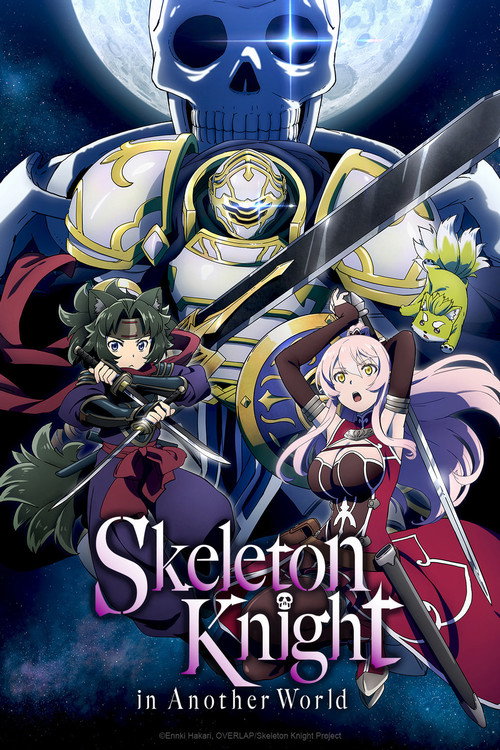
Skeleton Knight in Another World (Gaikotsu Kishi-sama, Tadaima Isekai e Odekake-chū) is a high-fantasy isekai television series adapted from the light novel series by Ennki Hakari and KeG. The narrative follows an avid Japanese MMORPG player who falls asleep at his screen and wakes up trapped inside his endgame avatar: a towering, overpowered paladin wielding god-tier holy and martial magic. The critical catch is his cosmetic skin—underneath his gleaming armor, he is an undead skeleton. Terrified of being hunted down as an abomination by civilization, he assumes the name Arc and resolves to maintain a quiet, unassuming mercenary life.

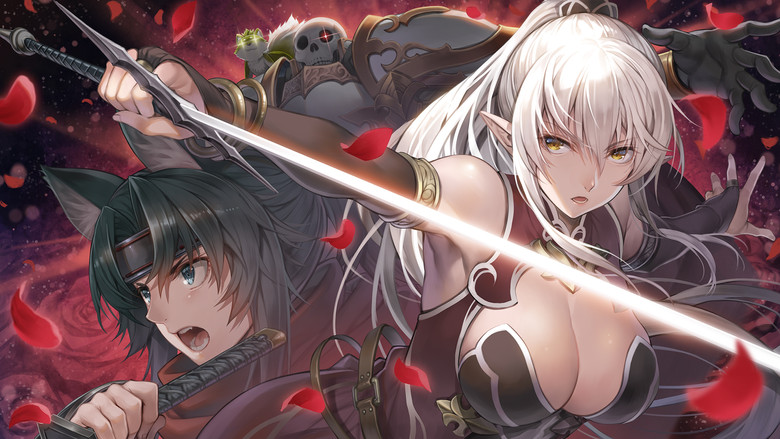
However, Arc’s inherent moral compass constantly undermines his desire to remain unnoticed. Early in his wanderings, he intervenes to rescue noblewomen and adopts an adorable spirit creature known as a cottontail fox named Ponta. His path soon intersects with Ariane Glenys Maple, a fierce dark elf warrior dedicated to dismantling underground slave rings and rescuing abducted kin. Teaming up with Ariane and later the beastkin shinobi Chiyome, Arc becomes drawn into a broader web of political corruption, royal power struggles within the Rhoden Kingdom, and insidious imperial machinations.

Across its run, the series balances vibrant travelogue exploration and culinary lightheartedness with a progressively complex geopolitical conflict. As Arc searches for sacred hot springs in hopes of lifting what he assumes to be a curse on his skeletal body, the traveling party uncovers systemic human supremacy and imperial conspiracies fueled by monstrous experimentation, forcing the reluctant Skeleton Knight to step forward as a true champion of the downtrodden.
Core Meaning

At its core, Skeleton Knight in Another World examines the contrast between outward monstrous appearance and inner moral righteousness. Through Arc’s journey, the series argues that true monstrosity is defined not by bone, skin, or beastly heritage, but by abusive hierarchies, prejudice, and cruelty disguised behind aristocratic civility.

By juxtaposing an undead knight fighting for justice against "civilized" humans who kidnap and exploit demi-humans, the narrative demonstrates that moral duty requires active intervention rather than passive neutrality. Arc cannot ignore the suffering of others even when doing so puts his hidden identity at risk, emphasizing that empathy and personal conviction transcend biological boundaries and social appearances.

Thematic DNA

Appearance vs. True Nature (Monstrosity vs. Humanity) 30%
The Scourge of Exploitation, Slavery, and Systemic Bigotry 25%
Active Chivalry and Moral Responsibility 20%
Companionship Across Cultural and Racial Divides 15%
Escapism, Identity, and Agency in an Unfamiliar Reality 10%

Appearance vs. True Nature (Monstrosity vs. Humanity)

Arc possesses the terrifying visage of a death knight but houses a gentle, foodie gamer's conscience. Conversely, noble human aristocrats and slave traders present themselves in regal finery while committing grotesque crimes. This dynamic evolves as Arc's allies gradually look past his armor and skull to see his genuine soul.

The Scourge of Exploitation, Slavery, and Systemic Bigotry

A central engine of the narrative is human discrimination against elves and beastkin. Unlike many lighthearted isekai that treat slavery as a casual trope, the show portrays it as a state-sanctioned evil and political weapon, driving Ariane and Chiyome’s dedicated liberation crusades.

Active Chivalry and Moral Responsibility

Arc initially seeks obscurity, but the sheer absurdity of holding godlike power while remaining idle in the face of atrocity forces him into action. His journey shows that having the strength to protect the vulnerable creates an inescapable obligation to act.

Companionship Across Cultural and Racial Divides

The bond forged between an undead-skinned human gamer, a proud dark elf, a beastkin ninja, and a spirit creature represents an alternative model of unity. Their collective loyalty defies the deep-seated historical enmities dividing the fantasy realm.

Escapism, Identity, and Agency in an Unfamiliar Reality

Arc explores the world through the mechanics of his familiar MMORPG interface while dealing with the reality of living in a tangible world with mortal consequences. Over time, his gaming detachment fades into genuine emotional investment in the fate of the realm.

Character Analysis

Arc

Tomoaki Maeno

Archetype: Reluctant Champion / Gentle Giant Key Trait: Good-natured, boisterous altruism paired with devastating physical and magical supremacy.

Motivation

Finding a cure to regain a living human body while protecting the innocent whenever injustice crosses his path.

Character Arc

Begins as a bewildered gamer attempting to keep a low profile while enjoying fantasy delicacies and sight-seeing. Over the course of the story, he embraces his role as an indispensable liberator, actively dismantling slave rings and challenging imperial corruption while searching for a way to break his curse.

Ariane Glenys Maple

Fairouz Ai

Archetype: Vengeful Warrior / Noble Crusader Key Trait: Fierce combat prowess (fire magic and dual swordplay) tempered by hidden gentleness.

Motivation

Rescuing all kidnapped elven children and destroying the criminal infrastructure that preys on her people.

Character Arc

Starts with intense hostility and skepticism toward all humans due to the horrific enslavement of elven kin. Through Arc’s selfless dedication, she learns to trust cross-species alliances, growing from an isolated strike-force warrior into an empathetic leader bridging diplomatic divides.

All 5 characters and cast

Symbols & Motifs

The Full-Face Helmet & Silver Armor

Meaning:

Symbolizes Arc's social survival and inner vulnerability. It represents his role as an anonymous protector who seeks neither personal fame nor political office.

Context:

Used as a literal physical mask separating his undead skeletal horror from human society whenever he interacts with civilization.

Ponta the Cottontail Fox (Spirit Creature)

Meaning:

Represents innocence, purity, and spiritual validation.

Context:

Ponta is instinctively drawn to Arc regardless of his terrifying skeletal appearance, serving as a clear sign to outsiders like Ariane that Arc’s spirit is fundamentally benign.

Slaving Collars & Magic Restraints

Meaning:

The physical manifestation of oppression, systemic bigotry, and institutional exploitation.

Context:

Destroying these collars serves as an episodic visual motif signaling liberation and the reclamation of dignity for subjugated demi-humans.

Hot Springs (Onsen) and Healing Springs

Meaning:

Recurring motifs of purification, rejuvenation, and Arc’s quest to restore his mortal flesh.

Context:

Visited throughout Arc's journey, providing rare moments of vulnerability where he sheds his armor among trusted allies.

Gourmet Food & Feasts

Meaning:

Motifs representing grounded humanity, physical comfort, and emotional nostalgia.

Context:

Despite lacking a digestive tract or taste buds in his skeletal form, Arc obsesses over cooking and sharing meals to maintain an emotional link to his former human life.

Memorable Quotes

見過ごすわけにはいかん!
— Arc

Context

Spoken in Season 1, Episode 1 when Arc spots bandits assaulting Lauren and Rita.

Meaning

Encapsulates Arc's defining character rule: his gaming persona's instinct to intervene and protect the innocent always overrides his fear of being exposed as an undead monster.

キュイー!
— Ponta

Context

Used repeatedly throughout the series across various adventuring scenes.

Meaning

Ponta's signature vocalization, which expresses affection, alerts Arc to magical danger, or demands food, serving as emotional and comedic punctuation.

All 5 quotes

Episode Highlights

The Galant Knight Sets Out for the Parallel World (流浪の騎士、只今世直し中)

S1E1

Introduces Arc's sudden transformation into an armored skeleton, demonstrates his overwhelming combat capabilities, and showcases his fateful rescue of Lauren and Rita.

Significance:

Serves as the series' inciting incident, establishing its signature blend of comedic tone, gamer mechanics, and brutal real-world villainy.

An Austere Elf Dances for Her Companions (凛々しきエルフは、同胞が為に舞う)

S1E3

Marks the debut of Ariane Glenys Maple as she carries out high-stakes combat operations to free captive demi-humans.

Significance:

Establishes the overarching plot regarding the systemic kidnapping and trafficking of elven youths within human territories.

A Secret Revealed, and a Bond Forged (明かされる秘密と紡がれる絆)

S1E5

Arc formally joins forces with Ariane and shows a degree of personal vulnerability regarding his mysterious background.

Significance:

Solidifies the primary adventuring partnership and anchors their collaborative campaign against criminal syndicates.

The Capital in Chaos and a Maiden's Oath (揺れ動く王都と乙女の誓い)

S1E9

Expands the narrative into royal political intrigue involving Princess Yuriarna and the corrupt succession struggle in the Rhoden Kingdom.

Significance:

Broadens the series' stakes from localized rescue skirmishes into a full-scale geopolitical conflict.

I Shall Cut Through the Evils of This World! (異世界の悪を、我は断つ!)

S1E12

Arc unleashes his most powerful summoning and area-of-effect magic to vanquish corrupt aristocrats and monstrous threats.

Significance:

The Season 1 climax that cements the enduring bond between Arc, Ariane, and Chiyome as they venture toward elven and dragon territories.

Duel to the Death? Silver Knight VS Silver Knight! (死闘? 白銀の騎士対白銀の騎士!)

S2E1

Pits Arc against rival imperial silver knights amidst production under Aura Studio.

Significance:

Launches the Season 2 narrative arc into the Holy Revlon Empire conflict and reignites Arc's quest toward curse-lifting springs.

Encounter in the Dragon Realm

S2E2

Focuses on diplomatic and cultural interactions in new territories as Arc navigates noble family dynamics.

Significance:

Advances Arc’s search for the legendary Wind Dragon Mountain spring and broadens the fantasy lore.

Philosophical Questions

What dictates moral humanity—flesh and blood, or ethical choice?

Arc's lack of biological human organs contrasted against his deeply empathetic nature challenges visual, biological, and racial definitions of personhood.

Is true neutrality possible when one holds overwhelming power?

Arc’s initial desire to live quietly as a detached observer is constantly dismantled by the moral imperative to defend the weak when equipped with godlike strength.

Can entrenched societal prejudice be reformed from within, or must it be dismantled by force?

Ariane and Chiyome’s struggle questions whether diplomacy with corrupt human monarchies is viable without active, militant liberation campaigns.

Alternative Interpretations

Viewers and analysts have explored several distinct interpretations of the series' themes and world mechanics:

Full ending explanation

Cultural Impact

Premiering amidst the saturation of the "isekai boom" in the late 2010s and early 2020s, Skeleton Knight in Another World positioned itself as a classic comfort watch with a high-action punch. Rather than deconstructing or parodying the genre with cynical meta-commentary, it embraced straightforward heroic fantasy tropes.

The show carved out a dedicated following within the fantasy streaming ecosystem for its blend of high-end fight animation, colorful worldbuilding, and the comedic dynamic between Tomoaki Maeno’s boisterous Arc and Fairouz Ai’s stern Ariane. While not radically reinventing anime storytelling, it cemented its place as a reliable, entertaining staple of serialized light-novel adaptations.

Audience Reception

Audience and critical reception of the series features clear points of acclaim alongside notable tonal controversies:

  • Praise: Viewers and critics consistently praise the fun chemistry of the main adventuring party (especially Arc, Ariane, and Ponta), the vibrant animation during magic battles, and the enjoyable, earnest portrayal of an overpowered fantasy knight.
  • Criticism & Controversies: The most significant and persistent point of criticism centers on the show's jarring tonal shifts, particularly in the premiere episode of Season 1. The opening sequence featured an explicit, gratuitous attempted sexual assault scene before abruptly pivoting into breezy, lighthearted comedy, leading several critics to call out the unnecessary and exploitative nature of the scene.
  • Verdict: Despite the rocky initial reception regarding its tone, subsequent episodes settled into an enjoyable, fast-paced action-adventure series that satisfied fans of traditional high-fantasy isekai.

Interesting Facts

  • The property began as a web novel published on Shōsetsuka ni Narō in October 2014 by Ennki Hakari before being picked up by Overlap for light novel and manga publication.
  • Season 1 was uniquely co-animated by Studio Kai and HORNETS under director Katsumi Ono, known for his dynamic action direction on Senki Zesshō Symphogear and Hypnosis Mic.
  • When Season 2 went into production, animation responsibilities moved to Aura Studio, and series composition transitioned to veteran writer Toshizo Nemoto (That Time I Got Reincarnated as a Slime), while director Katsumi Ono remained to helm the project.
  • Norwegian rock singer PelleK provided high-energy rock theme songs for the anime, including "Aa, Waga Rouman no Michi yo" for Season 1 and "Rōman Kaidō, Osanpo-chū" for Season 2.
  • Arc’s character build in the story reflects a classic hybrid "Paladin/Holy Knight" with secondary ninja and magic sub-classes, allowing him to use crushing heavy melee weapons, high-tier healing, and high-mobility spatial teleportation spells.

Easter Eggs

Classic Tabletop and MMO Tropes

Arc’s skills and spell incantations directly mimic mechanics from classic MMORPGs like Final Fantasy XIV and World of Warcraft, specifically instant-cast teleportation ("Dimension Move"), high-tier area resurrection, and summoned celestial beasts.

Japanese Cuisine Fixation

The running gag where Arc meticulously explains Japanese cooking techniques (such as tempura or ramen broth) to bewildered medieval fantasy characters parodies the recurring culinary sub-genre in Narō-type isekai.

Ninjas and Beastkin Folklore

The Jinshin cat-beastkin clan led by Chiyome pays homage to traditional Japanese historical ninja clans (Iga and Koga) transposed into an elven/fantasy setting.

Overlord Contrast

The design of a towering skeleton clad in immaculate armor acts as an intentional lighthearted contrast to dark fantasy skeletal protagonists like Ainz Ooal Gown from Overlord, flipping the morality from an evil conqueror to a pure-hearted do-gooder.

Frequently Asked Questions

Explore More About This Movie

Dive deeper into specific aspects of the movie with our detailed analysis pages

Comments (0)

Leave a comment

No comments yet. Be the first to share your thoughts!

Similar Movies