Blue Spring Ride
アオハライド
Overview
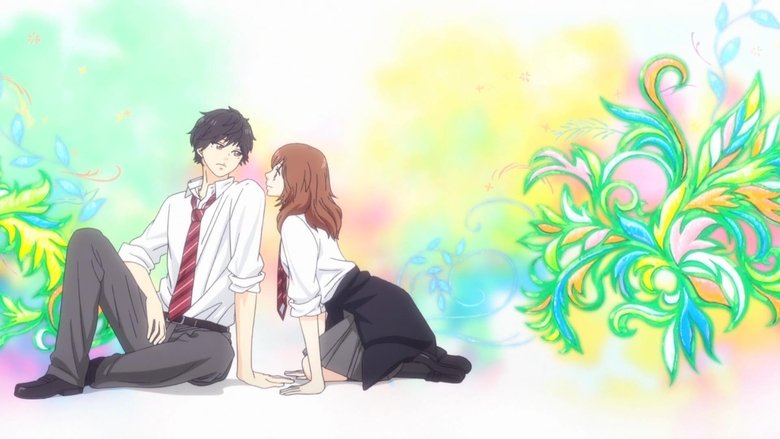
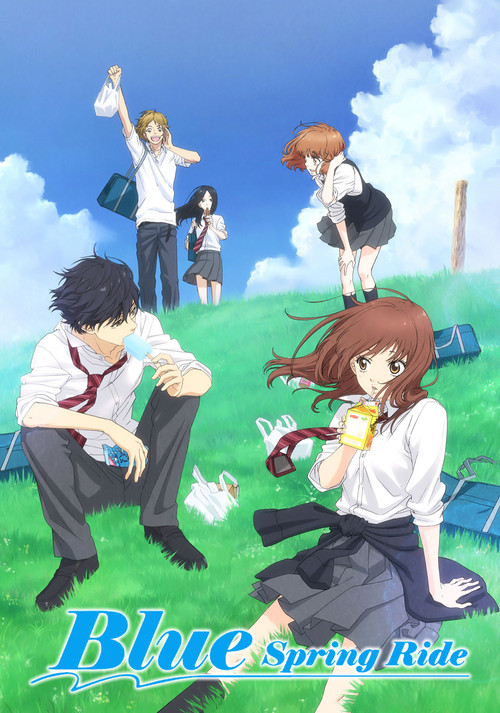
"Blue Spring Ride" follows Futaba Yoshioka, a high school student who is navigating the complexities of friendship and identity. In middle school, she was ostracized by other girls due to her popularity with boys. To avoid a repeat of this, she deliberately acts unladylike in high school. Her life takes an unexpected turn when she reunites with Kou Tanaka, her first love, who disappeared during middle school.
However, the Kou she meets now, who goes by Kou Mabuchi, is not the same gentle boy she remembers. He has become cynical, distant, and sarcastic, changed by family hardships in the intervening years. The series explores Futaba's attempts to reconnect with Kou and understand the new person he has become, while also forming genuine friendships with others for the first time. Together, Futaba, Kou, and their new friends navigate the challenges of their pasts, their budding feelings, and the difficult process of opening up to one another.

Core Meaning
The core meaning of "Blue Spring Ride" revolves around the themes of second chances, personal growth, and the courage to be authentic. The title itself, "Ao Haru Ride," is a Japanese portmanteau created by the author, combining "Ao Haru" (blue spring), which signifies youth, with "Ride," representing the journey. The series posits that youth is a journey filled with struggles, misunderstandings, and regrets, but it is also a time of profound connection and self-discovery. It conveys the message that you cannot truly move forward without confronting the past, and that genuine relationships require vulnerability and communication. The story emphasizes that while people change, the core of who they are and the connections they forge can endure, and that it's never too late to start over and build meaningful bonds by being true to oneself.
Thematic DNA
The Inevitability of Change and the Past
A central theme is the tension between the past and the present. Futaba desperately wants to reconnect with the Kou she knew, while Kou is adamant that they can never go back. His change in name from Tanaka to Mabuchi symbolizes this complete shift in his life due to his mother's illness and death. The series explores how past traumas and regrets shape a person's present identity, and the difficult process of accepting that people—including oneself—are not static. Futaba must learn to love the person Kou is now, not just the memory of who he was.
Friendship vs. Romance
"Blue Spring Ride" places a strong emphasis on the formation of genuine friendships as a precursor to romance. Having been isolated in middle school, Futaba's primary goal is to have real friends. This desire is tested when she and her new friend, Yuri Makita, both fall for Kou. The series thoughtfully explores the complexities of jealousy and rivalry within a friendship, ultimately highlighting the maturity required to prioritize their bond over a romantic interest. It suggests that a strong foundation of friendship and trust is essential for any relationship to flourish.
Authenticity and Self-Acceptance
Futaba begins the series by creating a false, unladylike persona to fit in and avoid being ostracized by other girls. Kou's return and his blunt criticism of her "fake friendships" act as a catalyst for her to re-evaluate her life choices. The narrative follows her journey of shedding this facade and learning to be comfortable with her true self. This theme is mirrored in Kou, who puts up walls and pushes people away to avoid getting hurt again. Their mutual journey is about learning to accept themselves and allowing others to see who they truly are.
Grief and Healing
Kou's cold and distant personality is a direct result of the trauma of his mother's illness and death, and the guilt he carries. The series delicately handles the theme of grief, showing how it can lead someone to shut themselves off from the world. Futaba's persistent efforts to break down his walls and the support of their friend group become instrumental in his slow process of healing and opening up about his pain. It explores the idea that overcoming loss is not a solitary journey, but one that requires connection and support from others.
Character Analysis
Futaba Yoshioka
Maaya Uchida
Motivation
Initially, her motivation is to fit in and be liked by her female peers. However, after reuniting with Kou, her motivation shifts. She becomes driven by a desire to understand the changes in him and to recapture the honest connection they once shared. This evolves into a deeper motivation to break down the walls he has built around himself and to help him heal.
Character Arc
Futaba's arc is a journey from social chameleon to an authentic individual. In the beginning, she suppresses her true personality to maintain superficial friendships, a defense mechanism born from her middle school isolation. Kou's reappearance challenges her to stop pretending. Throughout the season, she learns to stand up for her friends, like Yuri, even if it means being disliked. She transitions from someone who passively accepts her situation to someone who actively pursues what she wants—be it genuine friendship or understanding Kou's pain—demonstrating significant growth in courage and self-worth.
Kou Mabuchi
Yuki Kaji
Motivation
Kou's primary motivation is self-preservation through emotional detachment. He believes that by not getting close to anyone, he can avoid the pain of loss he experienced with his mother. He pushes Futaba away despite his lingering feelings for her as a way to protect himself. His motivation slowly evolves as he realizes that this isolation is also a source of deep loneliness.
Character Arc
Kou's arc is one of confronting grief and learning to let others in. The kind, gentle boy from middle school has been replaced by a cynical and aloof teenager due to his mother's death and family turmoil. He intentionally keeps people at a distance to avoid pain and responsibility. Through Futaba's persistence and the formation of their friend group, Kou slowly begins to shed his defensive exterior. By the end of the season, he starts to acknowledge his pain and takes the first steps toward opening up to his friends and estranged brother, signaling the beginning of his healing process.
Yuri Makita
Ai Kayano
Motivation
Yuri's motivation is to find genuine friendship and acceptance without having to change who she is. She is tired of being isolated for being herself. She is drawn to Futaba's kindness and Kou's quiet nature, and her actions are driven by a desire for sincere connections.
Character Arc
Yuri starts as a parallel to Futaba's middle school self: a cute, feminine girl who is ostracized by other girls out of jealousy. Initially shy and isolated, her arc begins when Futaba befriends her. Yuri's development centers on finding the strength to maintain her friendships even when faced with romantic rivalry. When she also develops feelings for Kou, she and Futaba navigate their complex situation with honesty, choosing to preserve their friendship over competing, which showcases her growth into a confident and loyal friend.
Shuuko Murao
Mikako Komatsu
Motivation
Her main motivation is her unrequited love for Tanaka-sensei, which causes her to keep others at a distance. She believes other relationships are secondary to this singular focus. As the series progresses, a new motivation to be part of a friend group emerges, challenging her isolated worldview.
Character Arc
Shuuko is initially portrayed as a classic 'ice queen'—beautiful, aloof, and solitary. She harbors a one-sided love for Kou's older brother, Tanaka-sensei. Her arc is about learning to trust and open up to her peers. Through her interactions with the main group, particularly the cheerful Aya Kominato, she slowly begins to lower her guard and participate in friendship, moving beyond her solitary crush to form meaningful bonds with others.
Aya Kominato
KENN
Motivation
Aya is motivated by a desire for a lively and fun school life and a genuine crush on Shuuko. He is also motivated by a strong sense of friendship; he dislikes seeing his friends, particularly Kou, isolated and unhappy, and often goes out of his way to include them.
Character Arc
Aya is the outgoing, cheerful, and slightly goofy member of the group. His arc involves revealing the depth and loyalty beneath his carefree exterior. While he seems primarily interested in pursuing Shuuko, he also proves to be a surprisingly perceptive and supportive friend, especially to Kou. He actively works to bring the group together and is often the one to break the tension. His development shows him moving from a simple comic relief character to the group's essential social glue.
Symbols & Motifs
Rain
Rain symbolizes the beginning of Futaba and Kou's connection and their shared past. It represents a time of innocence and budding feelings, a nostalgic memory that both characters hold onto.
Their first significant bonding moment in middle school happens while taking shelter from a sudden rain shower at a shrine. This memory is frequently revisited in flashbacks throughout the series, serving as a benchmark for how much they have changed and the connection they are trying to recapture.
The Train
The train symbolizes the forward momentum of life, missed opportunities, and the desire to reconnect. It represents the quiet, unspoken moments and the internal turmoil of the characters as they navigate their feelings side-by-side.
One of the most iconic scenes in the anime involves Futaba and Kou on a train. Kou falls asleep on Futaba's shoulder, a moment of vulnerability that allows her to feel close to him again. The train's movement reflects their own journey, moving forward even as they are stuck in their unspoken emotions. It's a pivotal scene that deepens their complex relationship without words.
The Clock at the Park
The clock symbolizes their broken promise and the time they lost. It is a physical reminder of their planned first date to the summer festival that never happened, which marks the turning point in their relationship and their subsequent separation.
In middle school, Kou asked Futaba to meet him at 7 o'clock by the park clock for the summer festival. He never showed up, and she soon learned he had moved away. This location becomes a poignant symbol of their missed connection and the unresolved feelings that linger between them years later.
Memorable Quotes
Sometimes people put up walls, not to keep others out, but to see who cares enough to break them down.
— Futaba Yoshioka
Context:
This is one of Futaba's internal monologues as she reflects on Kou's guarded nature throughout the series. It's not tied to a single scene but represents her evolving understanding of him across multiple episodes in Season 1.
Meaning:
This quote encapsulates a central theme of the series. It reflects Futaba's realization about Kou's distant behavior. She understands that his coldness isn't a true rejection, but a defense mechanism and a subconscious cry for help. It defines her determination to understand and reach him.
If you keep bad-mouthing someone, you might feel like you are on a higher position than that person. But in actual fact, it's completely wrong to do that!
— Futaba Yoshioka
Context:
Futaba says this in Season 1, Episode 2, when she confronts her so-called friends who are bad-mouthing Yuri Makita. This act solidifies her friendship with Yuri and severs ties with her old group.
Meaning:
This quote signifies a major turning point in Futaba's character arc. It's the moment she rejects her superficial friendships and her own inauthentic behavior. She stands up for Yuri, realizing that true friendship is more valuable than fitting in with a crowd that thrives on negativity.
To let my heart be moved, to laugh from the bottom of my heart, to find meaning in everyday life. I wanted to be given permission.
— Kou Mabuchi
Context:
This is a key line from Kou's internal thoughts, revealed towards the end of Season 1, particularly in episodes 11 and 12, as Futaba finally learns the full extent of his past and he begins to confront his feelings.
Meaning:
This poignant quote reveals the depth of Kou's inner turmoil. After his mother's death, he felt he didn't have the right to be happy or enjoy life. It's a confession of his self-imposed emotional prison and his deep-seated desire to be free from his guilt.
Episode Highlights
Page.1
The first episode masterfully sets up the series' core conflict. It establishes Futaba's past with Kou in middle school through nostalgic, soft-hued flashbacks and contrasts it with her present-day, inauthentic high school life. The fated reunion with a now-changed Kou immediately introduces the central mystery and emotional hook.
This episode is crucial as it lays the entire foundation for the characters' motivations and the central plot. It establishes the themes of change, regret, and the desire to reconnect, which drive the narrative for the rest of the season.
Page.2
Futaba makes a definitive choice to abandon her superficial friends by defending Yuri Makita from their bullying. This act of courage solidifies her new, genuine friendship with Yuri and signals the true beginning of her character development and her quest for authenticity.
This episode marks Futaba's first major step in her character arc. Her decision to prioritize genuine connection over social acceptance is a pivotal moment that sets the stage for the formation of the main friend group.
Page.4
During a leadership camp, the five main characters—Futaba, Kou, Yuri, Shuuko, and Aya—are forced to work together. Their initial inability to cooperate gives way to moments of bonding and understanding. This episode is where they begin to transition from being classmates to becoming a cohesive group of friends.
This episode is the catalyst for the formation of the central friend group. It's the first time all five characters interact meaningfully, and their shared experience at the camp establishes the group dynamic that is central to the rest of the series.
Page.11
Futaba finally learns the full truth about Kou's absence and his change in personality: his mother's illness and death. The episode is emotionally charged as Kou confronts his grief and guilt, breaking down in a raw moment of vulnerability. Futaba, in turn, realizes the depth of his pain.
This is the emotional climax of the season. It provides the long-awaited explanation for Kou's behavior, transforming him from a mysterious love interest into a deeply empathetic character. It shifts the series' focus from simple romance to themes of grief and healing.
Page.12
In the final episode, Kou begins to take steps to open up, encouraged by Futaba's unwavering support. He starts to mend his relationship with his brother and accept the friendship of the group. While their romantic relationship remains unresolved, the ending is hopeful, focusing on Kou's first steps toward healing and the strength of their new bonds.
The finale provides a sense of closure for the season's primary emotional arc—Kou's isolation—while leaving the romance open-ended. It reinforces the series' core message that healing and forming genuine connections are the most important parts of the journey, ending on a hopeful note about the future.
Philosophical Questions
Can you ever truly go back to the way things were?
The series constantly grapples with this question. Futaba's initial desire is to return to the simple, sweet connection she had with the middle school version of Kou. However, she is forced to confront the reality that time and trauma have irrevocably changed him. The series explores the idea that nostalgia can be a trap, and that trying to recapture the past is futile. Instead, it suggests that the only way forward is to build a new relationship based on who people are in the present, acknowledging and accepting their changed selves. The 'ride' of the title implies continuous forward motion, not a return trip.
What is the nature of an authentic identity?
Futaba's journey is a direct exploration of this question. She begins by performing an identity she thinks will make her life easier, but finds it hollow. The series asks what it means to be 'yourself'. Is it being the person you were, or the person you are now? For both Futaba and Kou, their 'true' selves are not static. Their identities are shaped by past experiences, present choices, and the influence of their friends. The series posits that authenticity isn't about reverting to a past self, but about making conscious choices to be honest and vulnerable in the present.
Alternative Interpretations
While the central narrative is a romance, one alternative interpretation is that the series is primarily a story about the formation of a found family. The romantic feelings between Kou and Futaba act as the catalyst, but the true emotional core of the anime is the creation of a stable, supportive friend group for five individuals who were previously isolated. Each character—Futaba with her fake friends, Kou with his grief, Yuri and Shuuko with their solitary natures, and Aya with his goofy facade—finds a place of belonging. The unresolved romantic ending reinforces this interpretation, suggesting that the establishment of this secure, platonic support system was the story's most important achievement.
Another reading focuses on the story as a critique of traditional shoujo romance tropes. While it uses the 'traumatized, cold male lead' trope, it spends more time deconstructing it than glorifying it. Futaba's journey is not just about 'fixing' Kou. She repeatedly gets frustrated with his lack of communication and focuses on her own growth and friendships. The series can be seen as arguing that a healthy relationship is impossible until both individuals have done the hard work of healing and becoming their authentic selves, a departure from narratives where love alone conquers all trauma instantly.
Cultural Impact
"Blue Spring Ride" emerged in 2014 as a significant and emotionally resonant title within the shoujo genre. While it follows many classic shoujo tropes—a high school setting, a fated reunion with a first love—it was widely praised for its grounded and realistic depiction of teenage relationships, grief, and the importance of friendship. Unlike many romance anime that focus solely on the central couple, the series dedicates significant time to developing a core friend group and exploring the complexities of platonic love, jealousy, and mutual support.
Critically, the anime was well-received for its beautiful, soft watercolor-like art style that faithfully adapted Io Sakisaka's manga, and for its nuanced character development, particularly that of Kou and Futaba. However, a common point of criticism from both critics and audiences was its abrupt and inconclusive ending. The 12-episode series only adapts a small fraction of the source material, leaving viewers to turn to the manga for the story's true resolution. This has led to a persistent demand from the fanbase for a second season or a full reboot to do the complete story justice. Despite its short run, "Blue Spring Ride" remains a beloved and influential modern shoujo classic, often recommended as a prime example of a character-driven, emotionally intelligent teen drama.
Audience Reception
"Blue Spring Ride" was met with a very positive reception from audiences, who praised it for its relatable characters, heartfelt emotional drama, and beautiful visual aesthetic. Futaba's journey of self-discovery and her efforts to form genuine friendships resonated strongly with viewers. The complex and realistic portrayal of Kou's grief and his slow journey toward healing was also a frequent point of praise. The chemistry between Futaba and Kou, filled with witty banter and poignant, unspoken moments, was highlighted as a major strength.
The most significant and widespread criticism from the audience, however, is directed at the anime's ending. Many viewers felt the 12-episode run was too short, ending abruptly just as the central emotional conflicts were being resolved. The lack of a definitive romantic conclusion was a source of frustration, with many fans feeling it served more as a lengthy advertisement for the manga than a complete story. Despite this, the overall verdict from the audience is overwhelmingly positive, and it remains a highly recommended shoujo series, with a strong, lingering hope for a continuation.
Interesting Facts
- The title "Ao Haru Ride" is a word created by the manga author, Io Sakisaka. It combines the Japanese words 'Ao Haru' (Blue Spring), which is synonymous with 'youth', and 'Ride', to signify that the story is a ride through youth for all the characters.
- The anime adaptation only covers roughly the first 15 chapters of the 49-chapter manga series, leaving many major plot points and character developments, including the conclusion of the romantic storylines, unresolved.
- The series was created by Io Sakisaka, a well-known shoujo manga artist famous for other works like "Strobe Edge" and "Love Me, Love Me Not".
- Production I.G, the studio behind the anime, is more famously known for action and sci-fi series like "Ghost in the Shell" and "Psycho-Pass", making a soft, dramatic shoujo series like "Blue Spring Ride" a notable entry in their portfolio.
- The anime had a promotional tie-in with the cosmetics brand Ettusais, with the brand's products making appearances within the show itself.
⚠️ Spoiler Analysis
Click to reveal detailed analysis with spoilers
Frequently Asked Questions
Explore More About This Movie
Dive deeper into specific aspects of the movie with our detailed analysis pages
Comments (0)
No comments yet. Be the first to share your thoughts!