The Misfit of Demon King Academy
An epic fantasy symphony of overwhelming power and quiet compassion, where a reincarnated king's heartbeat shatters prejudice like flawed glass.
The Misfit of Demon King Academy

The Misfit of Demon King Academy

魔王学院の不適合者 ~史上最強の魔王の始祖、転生して子孫たちの学校へ通う~

04 July 2020 — 25 July 2024 Japan 2 season 37 episode Ended ⭐ 8.5 (834)
Cast: Nene Hieda, Yuko Natsuyoshi, Tomori Kusunoki, Takuma Terashima, Sayumi Watabe
Animation Sci-Fi & Fantasy Action & Adventure
Challenging Prejudice and Social Hierarchy The Nature of True Power Truth vs. Fabricated History The Power of Belief and Bonds

Overview

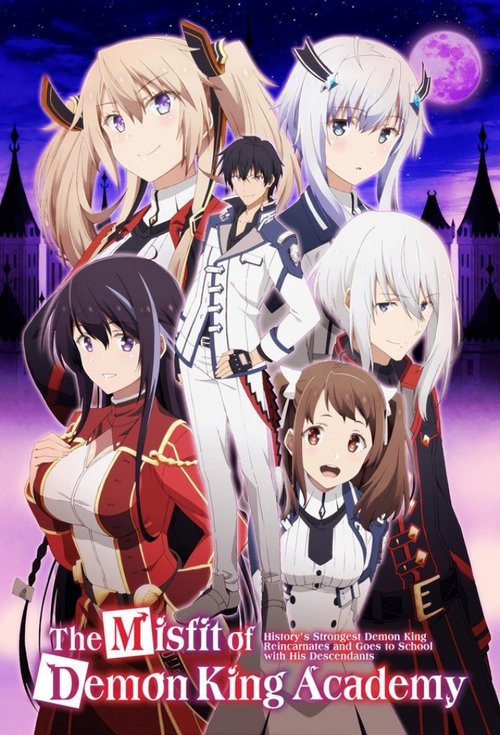
"The Misfit of Demon King Academy" follows the story of Anos Voldigoad, the legendary and immensely powerful Demon King of Tyranny, who reincarnates 2,000 years after sacrificing his life to bring peace to the world. He enrolls in the Demon King Academy, an institution founded to find his reincarnation, only to discover that his descendants have grown weak and the version of history they're taught is a fabrication. Labeled a 'misfit' because his incredible power cannot be measured by modern standards, Anos must navigate a society rife with prejudice that favors pure-blood royals over hybrids.

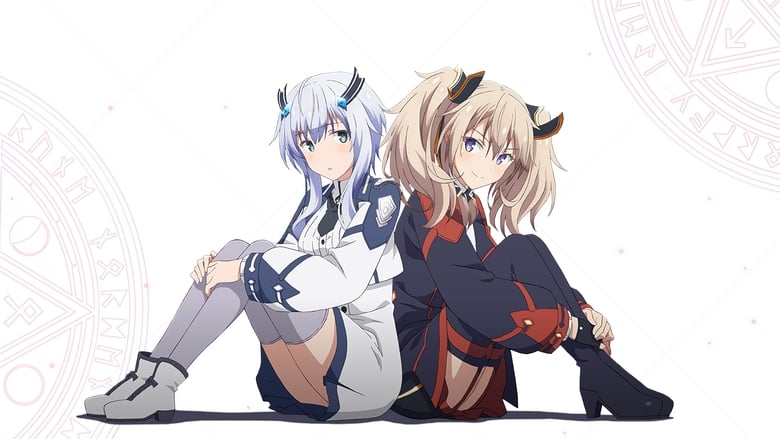
Across two seasons, Anos, with his unwavering confidence and surprising compassion, gathers loyal followers, including the twin sisters Misha and Sasha Necron. He systematically dismantles the corrupt systems and false beliefs that have taken root in his absence, all while uncovering a deep-seated conspiracy to erase his true legacy and reignite the flames of war. The series chronicles his journey to reclaim his title, protect his loved ones, and teach the new generation the true meaning of power and kingship, challenging altered histories and confronting ancient gods along the way.
Core Meaning

The core meaning of "The Misfit of Demon King Academy" is a critique of judging others based on prejudice, lineage, and falsified history rather than their inherent worth and actions. The series posits that true power is not just overwhelming strength, but the conviction to protect others, defy unjust systems, and forge one's own destiny. Anos Voldigoad embodies this principle; despite being the most powerful being, his primary goal is to correct the prejudiced social hierarchy (Royals vs. Hybrids) that has corrupted his kingdom and to establish a world of genuine peace. The show repeatedly emphasizes that titles, rumors, and history can be manipulated, but a person's character and their bonds with others are the ultimate measure of their value.

Thematic DNA

Challenging Prejudice and Social Hierarchy 35%
The Nature of True Power 30%
Truth vs. Fabricated History 20%
The Power of Belief and Bonds 15%

Challenging Prejudice and Social Hierarchy

The most prominent theme is the conflict between the pure-blood demon royalty and the lower-class hybrids. Demon society 2,000 years after Anos's time has become a rigid caste system where worth is determined by bloodline. Anos, despite being the true founder, is branded a misfit and a hybrid, forcing him to constantly prove his superiority through action, not lineage. He directly confronts and dismantles the discriminatory beliefs held by figures like Emilia Ludowell and the Royal families, championing the idea that power and worth are independent of one's birth.

The Nature of True Power

While Anos possesses immeasurable destructive magic, the series argues that true power lies in the ability and will to protect and show compassion. He can resurrect his followers, heal fatal wounds, and even defy fate itself to save those he cares about, such as Misha and Sasha Necron. His famous quote, "Did you really think that killing me would be enough to make me die?" is less about invincibility and more about his resolve to overcome any obstacle for the sake of his people. This contrasts with his enemies, who wield power for domination and personal gain.

Truth vs. Fabricated History

A central mystery of the series is why Anos's name and deeds have been altered in the historical record, replaced by a fictional Demon King named Avos Dilhevia. This theme explores how history is written by the victors and can be manipulated to serve a specific agenda. Anos's quest is not just to reclaim his title but to restore the truth of the past: that he sacrificed himself for peace in an agreement with the human hero, Kanon. The series shows that blindly accepting established narratives without question can lead to persecution and repeating the mistakes of the past.

The Power of Belief and Bonds

Anos consistently values loyalty and the bonds he forms with others above all else. The unwavering belief of his friends (Misha, Sasha, Lay) and even his fan club often provides him with a different kind of strength. His power is amplified by their support, and in turn, his belief in them helps them grow stronger and overcome their own limitations. This theme is highlighted when he saves Misha and Sasha from their predetermined fate, proving that genuine connection can rewrite destiny.

Character Analysis

Anos Voldigoad

Tatsuhisa Suzuki (Season 1), Yūichirō Umehara (Season 2)

Archetype: Antihero / Benevolent Ruler
Key Trait: Unflinching Confidence

Motivation

Initially, Anos is motivated by curiosity about how the world has changed and a desire to reclaim his rightful title. This quickly evolves into a deeper motivation: to dismantle the corrupt, prejudiced society his descendants have built and expose the lies that have twisted his legacy. Ultimately, his core motivation is to protect the peaceful world he sacrificed himself to create and ensure the happiness of those who believe in him, from his parents to his closest friends.

Character Arc

Anos begins as an overwhelmingly powerful and confident individual, almost arrogant in his dismissal of the weakened world he reincarnates into. His primary arc is not one of growing in power, but in rediscovering connection. Having been a solitary, feared ruler, his reincarnation allows him to experience family, friendship, and loyalty on a personal level for the first time with his parents and classmates. He evolves from a king who abstractly protects his people to an individual who actively fights for the happiness of his loved ones, learning to temper his tyrannical methods with genuine compassion.

Misha Necron

Tomori Kusunoki

Archetype: The Innocent
Key Trait: Quiet Devotion

Motivation

Misha's primary motivation is her deep love for her sister, Sasha. Initially, her actions are all geared towards ensuring Sasha's happiness, even at the cost of her own existence. As the series progresses, her motivation expands to include protecting Anos and her newfound friends. She wants to live and become stronger to stand by their side, a desire born from the connections she forges after being accepted for who she is.

Character Arc

Misha starts as a quiet, emotionless girl who is ostracized and considered a 'doll' or an inferior being. Her arc is one of finding her identity and voice. Through her bond with Anos, who treats her as an individual with worth from their first meeting, she learns to express her own desires. The major turning point is the revelation that she was created as a temporary being destined to fuse back with her sister, Sasha. By defying this fate with Anos's help, she solidifies her existence and becomes a powerful individual in her own right, no longer just a shadow of her sister.

Sasha Necron

Yuko Natsuyoshi

Archetype: The Tsundere / The Protector
Key Trait: Fiery Loyalty

Motivation

Sasha's core motivation, hidden at first, is to save her sister Misha from ceasing to exist on their 15th birthday. All of her seemingly cruel actions are driven by this desperate, selfless goal. Once that fate is averted, her motivation shifts to supporting Anos, whom she recognizes as the true Demon King, and protecting the peaceful life she can now share with her sister. She strives to become strong enough to be a valuable ally to him.

Character Arc

Sasha is introduced as an arrogant and cruel royal who bullies her sister, Misha. Her character arc is a complete reversal of this initial persona. It is revealed that her cruelty was an act designed to push Misha away and sever their bond, believing it would save Misha from the pain of their fated fusion. After Anos intervenes, Sasha is freed from this burden and her true personality emerges: a deeply caring, fiercely protective, and loyal friend. She learns to be honest with her feelings, especially her love for her sister and her growing affection for Anos.

Symbols & Motifs

Demon King Castle Delsgade

Meaning:

The castle symbolizes Anos's true authority and legacy. It physically represents his power and history. When others fail to command it or are rejected by it, it serves as tangible proof of their inadequacy and the falsehood of their claims to his title. For Anos, summoning it is a reclamation of his identity.

Context:

Used throughout the series, most notably in early episodes. Anos effortlessly summons and manipulates the castle during academy tests, shocking students and faculty who believe it to be impossible. This is one of the first major signs that he is the true Demon King of Tyranny.

The Name 'Avos Dilhevia'

Meaning:

This name symbolizes the manipulation of history and the creation of a scapegoat. It is a fabricated identity for the Demon King meant to perpetuate hatred between humans and demons, thereby undermining the peace Anos sacrificed himself to create. The name represents a lie so powerful it has reshaped an entire society's belief system.

Context:

The name is a central plot point throughout Season 1. The academy and the demon world await the return of 'Avos Dilhevia,' not Anos Voldigoad. The climax of the season involves revealing who created this name and why, exposing a 2,000-year-old conspiracy.

Demon Eyes of Destruction

Meaning:

These eyes symbolize immense, uncontrollable power that can be perceived as either a curse or a gift. For Sasha, they earn her the moniker 'Witch of Destruction' and are a source of fear. For Anos, they are merely one tool among many. The symbol explores how power is defined by its user's intent and control.

Context:

Introduced early in Season 1 with Sasha Necron. She is feared for this ability. Anos reveals he also possesses these eyes, but his are far more powerful, demonstrating the difference between innate talent and true mastery. The concept is a recurring element when discussing a character's magical prowess.

Memorable Quotes

Did you really think that killing me would be enough to make me die?

— Anos Voldigoad

Context:

First spoken in Season 1, Episode 4, during his fight with the Elder Demon Emperor Ivis Necron. After Ivis seemingly destroys Anos's source, Anos nonchalantly resurrects himself and utters this line, demonstrating the sheer futility of trying to defeat him through normal means.

Meaning:

This iconic quote encapsulates Anos's overwhelming power and his absolute refusal to be bound by conventional limitations, including death itself. It signifies that his existence and will transcend physical destruction, making him an unstoppable force against those who oppose him.

Whether it is providence, fate, or miracle, before my eyes, it simply prostrates and vanishes.

— Anos Voldigoad

Context:

Said in Season 1, Episode 3, to Sasha Necron when she is despairing over her and Misha's sealed fate of having to fuse together. Anos makes this statement to calm her fears and promise her that he will shatter that destiny for them.

Meaning:

This quote demonstrates Anos's philosophy that abstract concepts like 'fate' or 'destiny' have no power over him. It is a declaration of his ultimate authority over reality itself, reassuring his allies that no predetermined outcome can stand in the way of his will.

Don't wish. Don't pray. All you need to do is walk behind me. And I'll obliterate every injustice that stands in your way!

— Anos Voldigoad

Context:

This is a recurring sentiment throughout the series, often said to his followers when they face overwhelming odds or societal prejudice. It serves as his core promise to those who are loyal to him.

Meaning:

This line highlights Anos's role as a protector. He doesn't ask for faith or worship; he asks for trust in his actions. It's a promise to his followers that he will personally dismantle any obstacle or unfairness they face, embodying his nature as a benevolent, albeit tyrannical, king.

Episode Highlights

The Misfit of Demon King Academy

S1E1

This episode establishes the show's entire premise and tone. Anos Voldigoad reincarnates, enrolls in the academy, befriends Misha, and immediately demonstrates his overwhelming power by effortlessly defeating a prideful royal named Zepes. His confidence and nonchalant displays of godlike magic set the stage for the rest of the series.

Significance:

It perfectly introduces the central conflict of Anos being an unrecognized, underestimated 'misfit' despite his true identity. It also establishes the theme of challenging the corrupt royal hierarchy and introduces the core relationship between Anos and Misha.

The Witch of Destruction

S1E2

Anos is challenged to a team battle by Sasha Necron, Misha's arrogant older sister. Anos, with only Misha on his team, easily defeats Sasha's entire group by turning her own castle against her. The episode introduces Sasha's character and her seemingly cruel relationship with her sister.

Significance:

This episode lays the groundwork for the first major character arc of the season involving the Necron sisters. It deepens the mystery of their relationship and further solidifies Anos's reputation as an unstoppable force who operates outside the academy's norms.

15th Birthday

S1E4

The climax of the Necron sisters' arc. Anos travels back in time to alter the moment of their birth, defying their predetermined fate to fuse into one being. He confronts Ivis Necron and utters his most famous line, "Did you really think that killing me would be enough to make me die?" He successfully saves both sisters, allowing them to exist as separate individuals.

Significance:

This is a pivotal episode that cements Anos's compassionate nature beneath his tyrannical exterior. It proves his power transcends not just physical destruction but the very laws of time and fate, and it solidifies Misha and Sasha's unwavering loyalty to him.

Let the World Be Filled With Love

S1E13

The season finale reveals the full conspiracy behind the altered history. The hero Kanon is revealed to be Lay, and the true enemy is Jerga, a human whose hatred for demons transcended his death. Anos teams up with Lay to defeat the manifestation of Jerga's hatred, finally bringing the truth to light and restoring peace.

Significance:

This episode resolves the central mystery of Season 1, exposing the lie of 'Avos Dilhevia' and reaffirming the pact of peace Anos made 2,000 years ago. It brings the themes of truth vs. history and overcoming hatred to a powerful conclusion.

The Misfit

S2E12

The finale of the first cour of Season 2. Anos confronts the god Nousgalia and the fake Demon King, Avos Dilhevia, who is revealed to be a creation born from Misa's hope and Lay's power. Anos defeats the god by demonstrating that his power can even destroy the divine order, saving Misa and restoring balance.

Significance:

This episode significantly expands the scale of the conflict, moving from internal demon politics to direct confrontation with the gods. It resolves the Great Spirit Arc and establishes the new threats and cosmic rules that will govern the rest of the season.

Philosophical Questions

What is the true measure of an individual's worth?

The series constantly explores this question by contrasting the demon world's value system with Anos's actions. The society Anos returns to believes worth is determined by bloodline—'royals' are inherently superior to 'hybrids'. Anos systematically dismantles this idea. He demonstrates that power, intelligence, and nobility of character are independent of one's ancestry. He champions misfits and hybrids, proving their potential and judging individuals solely on their actions, loyalty, and character. The ultimate answer the series provides is that worth is defined by one's deeds and the strength of their convictions, not the circumstances of their birth.

Can absolute power be wielded benevolently?

Anos Voldigoad is a walking embodiment of this question. As the 'Demon King of Tyranny,' his power is absolute and terrifying. He can destroy anything, resurrect anyone, and even erase the laws of reality. However, his use of this power is almost entirely benevolent. He uses his tyrannical strength not to conquer, but to protect, to teach, and to correct injustice. He is a ruler who takes full responsibility for the well-being of his people. The series suggests that absolute power is not inherently corrupting; rather, its effect is determined by the user's character and goals. Anos remains a 'tyrant' in method, but a savior in purpose.

Alternative Interpretations

One alternative interpretation of the series frames Anos's journey not as a simple reclamation of power, but as a commentary on generational decline and the corruption of ideals. From this perspective, Anos is a founder figure returning to find his legacy squandered and his teachings twisted into a dogma of prejudice. His overwhelming power is less a fantasy and more a narrative tool to instantly bypass the corrupted systems, suggesting that some societal decay is so entrenched that only an external, irresistible force can reset it. His actions are not just about correcting history, but about forcibly reminding his 'children' of the original principles they have forgotten: that strength is for protecting, not for oppressing.

Another reading focuses on the nature of identity. Anos, the true Demon King, is labeled a 'misfit,' while a false idol, Avos Dilhevia, is revered. This can be interpreted as an exploration of how public perception and propaganda can create an 'identity' for an entire people that is completely detached from reality. Anos's struggle is to prove that true identity is inherent and demonstrable through action, not defined by popular consensus or manipulated historical texts. The resolution where the Hero Kanon (as Lay) helps Anos restore the truth suggests that breaking these false identities requires collaboration even from former enemies who are dedicated to the truth.

Cultural Impact

"The Misfit of Demon King Academy" emerged in 2020 as a prominent and well-received entry in the popular 'overpowered (OP) protagonist' subgenre of fantasy anime. While not subverting the genre, it is often praised for perfecting its tropes. Unlike many self-insert protagonists in isekai or fantasy, Anos Voldigoad is not a relatable everyman but a fully-realized character whose immense power is matched by his charisma, intelligence, and surprisingly strong moral compass.

The series gained popularity for its sheer entertainment value, particularly Anos's creative and often dismissive ways of dispatching arrogant foes, which generated numerous memes and discussion points (e.g., killing an opponent with his heartbeat). However, its cultural conversation also touches on themes of prejudice and misinformation. The core conflict, rooted in a society that judges individuals based on a fabricated history and blood purity, offers a simple yet effective allegory for real-world social issues.

Critically, the first season was widely praised for its confident execution, fast pacing, and satisfying power fantasy. The reception for the second season was more mixed, with criticism aimed at its confusing plot, a noticeable dip in animation quality, and significant production delays that hampered its momentum. The change in the main character's voice actor between seasons was also a major point of discussion among the fanbase. Despite these hurdles, the series maintains a dedicated following and is considered a significant modern example of how to execute the OP protagonist archetype with style and a surprising amount of heart.

Audience Reception

Audience reception for "The Misfit of Demon King Academy" has been generally positive, particularly for its first season, which was widely praised as a highly entertaining and satisfying power fantasy. Viewers lauded the protagonist, Anos Voldigoad, for being a refreshing take on the 'overpowered' archetype. Instead of being bland or passive, he is charismatic, confident, and proactive, with his ridiculously powerful feats becoming a major source of enjoyment and memes. The straightforward plot, fast pacing, and clear themes of anti-prejudice also resonated well with audiences.

The second season received a more polarized response. Many viewers were critical of a perceived drop in animation quality and a more convoluted, confusing plot compared to the first season. The significant production delays, which led to the season being split and re-aired, further damaged its momentum and frustrated a portion of the audience. The change in Anos's voice actor was also a point of contention, with some fans preferring the original performance. Despite these criticisms, a loyal fanbase remains, primarily drawn to the core appeal of Anos's character and the original light novel's story. Overall, the first season is often regarded as a modern classic of its genre, while the second is seen as a troubled but still watchable continuation.

Interesting Facts

  • The original web novel was written by an author named Shu and published on the user-generated novel site Shōsetsuka ni Narō before being picked up for a light novel release.
  • The voice actor for the main character, Anos Voldigoad, was changed between Season 1 and Season 2. Tatsuhisa Suzuki was replaced by Yūichirō Umehara.
  • The manga adaptation of the series was cancelled prematurely in July 2021 after the tragic passing of its artist, Kayaharuka, from pancreatic cancer.
  • The second season of the anime suffered significant production delays, reportedly due to the impact of COVID-19. This caused the season to be a split-cour with a long hiatus in between, and the first part had to restart its broadcast from the first episode after a lengthy pause.
  • In certain key episodes, such as Episode 4 and the finale of Season 1, a special version of the opening theme song was used, sung by Anos's original voice actor, Tatsuhisa Suzuki.

⚠️ Spoiler Analysis

Click to reveal detailed analysis with spoilers

Frequently Asked Questions

Explore More About This Movie

Dive deeper into specific aspects of the movie with our detailed analysis pages

Comments (0)

Leave a comment

No comments yet. Be the first to share your thoughts!