Skip to content
Bob's Burgers
A sunlit seaside slice of working-class comedy brimming with defiant warmth and quirky tenderness, where a sputtering flat-top grill anchors an eccentric family weathering life’s financial storms inside an unbreakable embrace.
Bob's Burgers

Bob's Burgers

09 January 2011 — 17 May 2026 United States of America 16 season 313 episode Returning Series 7.8 (1,115)

Cast: H. Jon Benjamin, John Roberts, Kristen Schaal, Eugene Mirman, Dan Mintz

Animation Comedy Working-Class Precarity vs. Passion Radical Acceptance and Individuality Familial Solidarity and Mutual Respect The Nuance of Community and Belonging

Overview

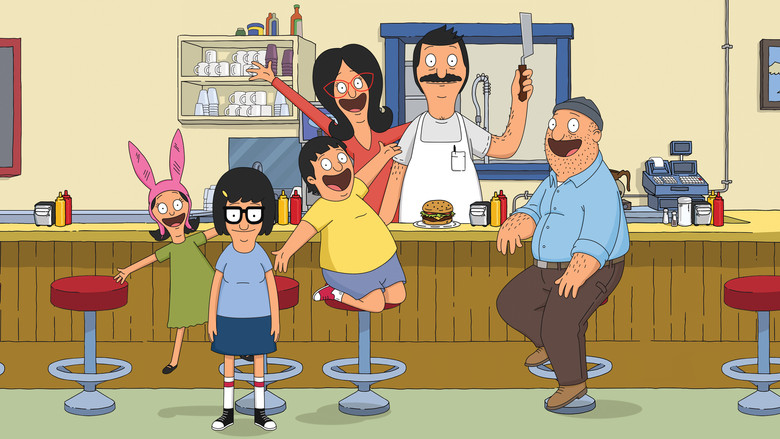
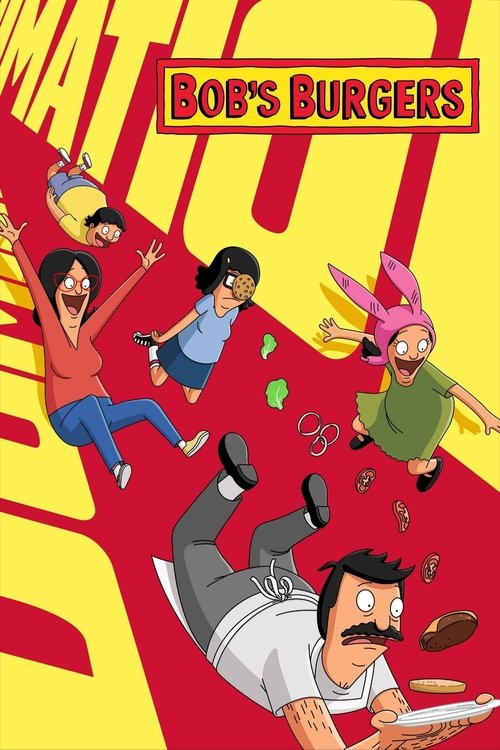
Bob's Burgers centers on the eccentric Belcher family—composed of patriarch Bob, his irrepressibly optimistic wife Linda, and their three uniquely odd children, Tina, Gene, and Louise—who live in an apartment directly above their small, perpetually struggling burger restaurant in a quirky, unnamed coastal town (often referred to by production as Seymour's Bay). Across its extensive run spanning 16 seasons and over 300 episodes, the show chronicles the family’s daily battles against delinquent rent, ruthless landlord quirks, aggressive rival restaurateurs, eccentric townspeople, and the chaotic trials of adolescent awkwardness.

Rather than relying on continuous high-stakes melodrama, the overarching narrative presents a serialized tapestry of working-class survival anchored by familial unity. While the restaurant hovers on the knife-edge of bankruptcy, Bob pursues his culinary craft with stubborn artistic integrity. Meanwhile, Linda serves as the emotional bedrock and community cheerleader, and the children carve out vibrant adventures in the surrounding seaside town.

As the seasons progress, the world expands into a rich community ecosystem featuring school administrators, local carnies, oddball neighbors, and wealthy eccentrics. The overarching arc is one of gradual emotional deepening: the family does not get rich or escape their financial precariousness, but their mutual loyalty, self-acceptance, and creative resilience become richer, proving that happiness is forged through connection rather than conventional material success.
Core Meaning

The core thesis of Bob's Burgers is that unconditional love, creative authenticity, and acceptance within a family unit constitute true wealth, transcending socioeconomic hardship and the pressures of societal conformity. Created by Loren Bouchard, the series serves as a heartfelt antidote to cynical sitcom satire, asserting that being an unapologetic oddball is not a flaw to be corrected, but a source of strength when nurtured by a supportive community and family.

Thematic DNA

Working-Class Precarity vs. Passion 30%
Radical Acceptance and Individuality 25%
Familial Solidarity and Mutual Respect 25%
The Nuance of Community and Belonging 20%

Working-Class Precarity vs. Passion

Throughout all seasons, financial anxiety is a grounding constant—rent checks bounce, appliances break, and the restaurant is frequently on the verge of eviction. In early seasons, this manifests as Bob's stress and cynicism; over time, the show deepens the theme by highlighting Bob's refusal to sell out his artisanal culinary vision for cheap commercial gimmicks.

Radical Acceptance and Individuality

Each Belcher child expresses extreme idiosyncrasies—Tina’s zombie and erotic fanfiction obsessions, Gene’s sound-effect musical chaos, and Louise’s Machiavellian mischief. Across the seasons, the parents never attempt to suppress or 'fix' their children’s quirks, evolving into a narrative model of parenting where strange passions are celebrated and validated.

Familial Solidarity and Mutual Respect

Unlike many adult animated comedies where family members undercut or abuse one another, the Belchers genuinely like and support each other. As the series moves into later seasons, character dynamics shift from chaotic bickering to empathetic teamwork during crises.

The Nuance of Community and Belonging

Early seasons frame the town as a backdrop of antagonistic forces (health inspectors, landlords, business rivals). As the show expands past Season 5 and into Seasons 10–16, these secondary characters are humanized, transforming Seymour's Bay into a warm, interdependent community.

Character Analysis

Bob Belcher

H. Jon Benjamin

Archetype: The Striving Artist / Reluctant Hero Key Trait: Deadpan integrity and culinary dedication.

Motivation

To maintain culinary integrity and sustain his business; evolves to prioritizing family well-being above personal pride.

Character Arc

Evolves from a weary, easily exasperated cynic into a more patient, self-aware mentor who recognizes that his family is his greatest life success.

Linda Belcher

John Roberts

Archetype: The Enthusiastic Matriarch / Comic Spark Key Trait: Unflappable optimism and spontaneous song-making.

Motivation

To support her family and inject theatrical joy into daily life; matures into recognizing when to give her children space.

Character Arc

Retains her joyful, Broadway-tinged energy while learning to balance her over-involvement in others' affairs with healthy emotional boundaries.

All 5 characters and cast

Symbols & Motifs

The Burger of the Day Chalkboard

Meaning:

Symbolizes Bob’s tireless creative expression and humor in the face of financial despair.

Context:

Featured in each episode as a pun-based recipe representing Bob's artistic culinary identity.

Louise’s Pink Bunny Ears

Meaning:

Represents her armor of youth, security, and stubborn independence; her extreme attachment to them masks a deeply buried vulnerability and fear of growing up.

Context:

Worn constantly by Louise across the series as her signature accessory and emotional defense mechanism.

The Casio SK-5 Keyboard

Meaning:

Symbolizes Gene's noisy, unfiltered zest for life and non-traditional artistry.

Context:

Used by Gene to turn ambient farts and dog barks into comedic musical compositions throughout the show.

Tina’s Glasses and Blue Barrette

Meaning:

Signifies her earnest, unvarnished gaze at the world and her transition through the awkward terrain of teenage puberty, sexuality, and romance.

Context:

Worn consistently by Tina as core components of her visual character design and identity.

Wonder Wharf

Meaning:

Serves as a motif for capitalism, gentrification, illusion, and childhood wonder looming over the town.

Context:

The seaside amusement park run by the family's eccentric landlord, Calvin Fischoeder.

Holiday Turkeys (Thanksgiving Motifs)

Meaning:

Symbolizes Bob's perfectionism and his desire to curate an ideal moment of warmth and abundance for his loved ones.

Context:

Explored through Bob's obsessive culinary preparation across recurring annual Thanksgiving holiday episodes.

Memorable Quotes

Look at how you stand. People who had good childhoods don't stand like that.
— Linda Belcher

Context

Season 3, Episode 3 (Bob Fires the Kids), delivered after Bob receives his childhood 'toys' made of household trash.

Meaning

Highlights the tragicomic honesty between Bob and Linda regarding his upbringing and his determination to provide a better life for his own children.

You're my angel... dust. Sorry, that's a drug.
— Bob Belcher

Context

Season 5, Episode 10 (Late Afternoon in the Garden of Bob and Louise).

Meaning

Captures Bob’s awkward yet profoundly loving communication style when trying to comfort Louise, showing his unpolished tenderness.

All 4 quotes

Episode Highlights

Human Flesh

S1E1

The pilot episode where Louise starts a rumor that their restaurant's meat comes from the neighboring mortuary.

Significance:

Establishes the foundational premise and family dynamics while setting up the recurring struggle between public reputation, health inspections, and the restaurant’s survival.

Bob Day Afternoon

S2E2

Bob gets drawn in to deliver burgers when a bank robber takes hostages in the bank across the street.

Significance:

A milestone episode that cemented the show's blend of high-concept comedic situations with grounded working-class stakes.

Bob Fires the Kids

S3E3

Bob fires his children so they can have a 'real childhood,' only for them to join a clandestine weed-farming operation.

Significance:

Explores Bob's childhood trauma and reconciles the children's preference for family restaurant chaos over conventional freedom.

Best Burger

S5E5

During a high-profile burger contest, Gene must deliver Bob’s forgotten black garlic ingredient under tight time pressure.

Significance:

Deepens the bond of trust and mutual respect between Bob and his eccentric son.

Roamin' Bob-iday

S9E16

The Belcher family forces a burnout-plagued Bob to take a day off from the restaurant.

Significance:

Reveals Bob's compulsive need to work and his core realization that cooking is his ultimate way of expressing love.

The Plight Before Christmas

S13E10

Linda and Bob navigate a triple scheduling conflict on Christmas Eve to support each child’s separate school performance, culminating in Louise reading a heartfelt poem about family.

Significance:

Celebrated as a holiday masterpiece that represents the emotional maturation and profound mutual devotion of the Belcher family.

Amelia

S13E22

Louise struggles with a school presentation on Amelia Earhart, confronting gender expectations and self-worth.

Significance:

Features a poignant conversation between Linda and Louise about maternal love and resilience, marking a major milestone in Louise's character growth.

To Catch a Beef

S14E15

Explores Bob's culinary interactions, artisanal pride, and local restaurant conflicts.

Significance:

Highlights Bob's enduring culinary craftsmanship and his ongoing rivalry and reluctant kinship with local peers.

Philosophical Questions

What constitutes a successful life?

The show questions whether success is measured by financial accumulation or by creative autonomy, moral integrity, and loving personal bonds.

How does an individual preserve identity within a family?

It examines the delicate equilibrium between extreme personal quirks and collective family cohesion, showing how individuality thrives when supported by a collective.

Is optimism an illusion or an act of courage?

Through Linda's relentless positivity in the face of financial struggle, the series argues that optimism is a vital survival mechanism rather than naive denial.

Alternative Interpretations

Critics and viewers have explored several prominent readings of the series:

Full ending explanation

Cultural Impact

Debuting on Fox's 'Animation Domination' block in 2011 alongside The Simpsons and Family Guy, Bob's Burgers quietly engineered a stylistic revolution in adult animation. At a time when network adult cartoons relied heavily on shock value, violence, cutaway gags, and cynical satire, Bob's Burgers introduced a slower, character-driven rhythm grounded in mumblecore-style pacing and authentic family affection.

Over its 16 seasons, the show earned multiple Primetime Emmy Awards, spawned a feature film (The Bob's Burgers Movie, 2022), and generated bestselling cookbooks based on Bob's real culinary puns. Its legacy lies in demonstrating that adult animation can be critically acclaimed, commercially successful, and laugh-out-loud funny while celebrating radical kindness, working-class dignity, and emotional sincerity.

Audience Reception

Audience reception has evolved across distinct eras:

  • Seasons 1–3 (Edgy Cult Emergence): Met with cautious curiosity, praised for its deadpan comedy and unique comedic timing, though some early reviewers initially found it slightly crude.
  • Seasons 4–9 (Golden Age & Critical Peak): Universally acclaimed for hitting its stride with sharp dialogue, musical ambition, escalating heart, and Emmy award recognition.
  • Seasons 10–16 (Tonal Maturation & The Wholesome Shift): Audience reception split slightly between fans missing the raunchier, chaotic early edge and those embracing the warm, heartfelt comfort style. Nevertheless, late-season standout episodes like 'The Plight Before Christmas' and 'Amelia' have garnered some of the highest critical ratings in series history.

Interesting Facts

  • Loren Bouchard initially pitched the show to Fox as a Sweeney Todd-style dark comedy where the family running a burger shop secretly ground human flesh to make ends meet before executives asked for a more relatable family sitcom.
  • The plot of the pilot episode ('Human Flesh') serves as a self-referential homage to Loren Bouchard's original cannibalism pitch.
  • Unlike standard animated series where voice actors record lines in solo booths, the main cast regularly records ensemble dialogue together in the same room to foster organic crosstalk and improvisation.
  • Both Linda and Tina are voiced by male actors; John Roberts based Linda's voice on impressions of his own mother.
  • Writing, storyboards, and audio production take place in Los Angeles, while digital coloring and final animation rendering are handled by overseas partner studios, primarily in South Korea.
  • The show's expansive library of original musical compositions led to official album releases containing over 100 songs through indie label Sub Pop Records.

Easter Eggs

The Triple Opening Gag

Every standard opening features three rotating gags: the changing store next door pun, the exterminator van pun, and the chalkboard burger pun inside.

Seymour's Bay Lore

While unnamed on screen, the production staff informally designated the coastal setting as 'Seymour's Bay,' modeling it after northeastern shore towns.

Daniel Belcher in the Unaired Pilot

In the original unaired demo pilot, Tina was originally a boy named Daniel voiced by Dan Mintz before being recast as a teenage girl while retaining Mintz's deadpan voice performance.

Archer Crossover

Because H. Jon Benjamin voices the lead in both shows, Archer opened Season 4 with an amnesiac Archer believing he is Bob running the burger diner with the Belcher family.

Frequently Asked Questions

Explore More About This Movie

Dive deeper into specific aspects of the movie with our detailed analysis pages

Comments (0)

Leave a comment

No comments yet. Be the first to share your thoughts!

Similar Movies