Skip to content
Bones
A forensic crime drama enveloped in clinical coldness and deep human warmth, where skeletal remains illuminate the shadows of mortality while two polar opposites stitch together a tapestry of logic, faith, and undeniable love.
Bones

Bones

"Every body has secrets."

13 September 2005 — 28 March 2017 United States of America 12 season 246 episode Ended 8.2 (3,547)

Cast: Emily Deschanel, David Boreanaz, Michaela Conlin, T.J. Thyne, Tamara Taylor

Drama Crime Rationality vs. Faith / Mind vs. Heart Found Family and Community Belonging Human Dignity and Mortality Justice, Morality, and Systemic Vulnerability Growth Through Trauma and Resilience

Overview

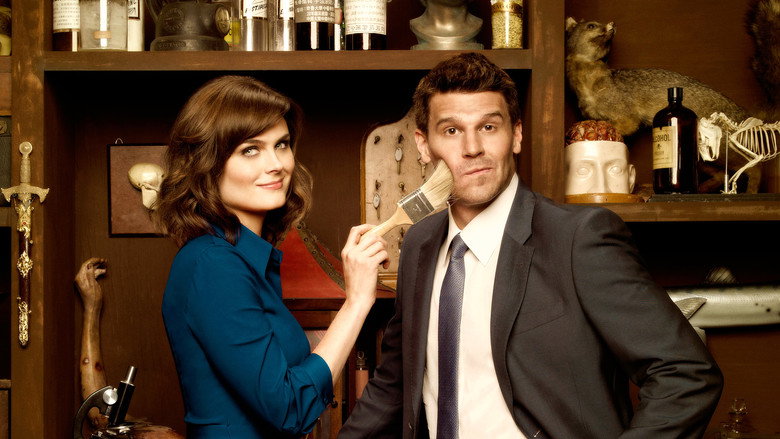
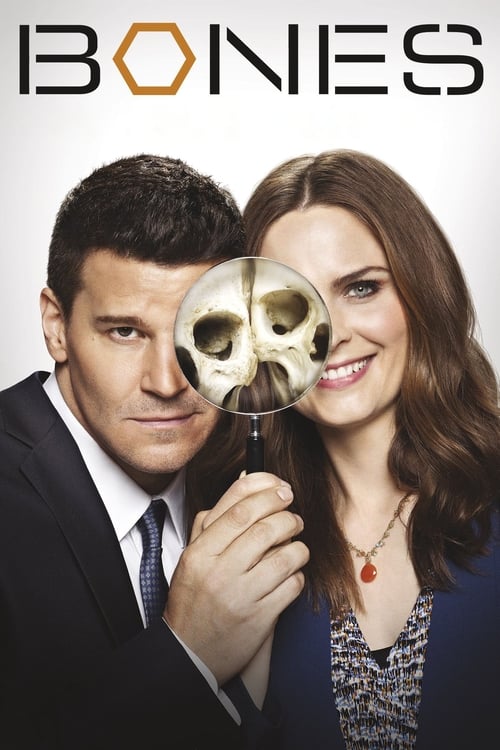
Bones (2005–2017) is a 12-season, 246-episode procedural drama created by Hart Hanson for Fox, inspired by the real-life forensic anthropologist and author Kathy Reichs. The series centers on Dr. Temperance "Bones" Brennan, a hyper-rational, world-renowned forensic anthropologist at the Jeffersonian Institution in Washington, D.C., and FBI Special Agent Seeley Booth, a devout Catholic, former Army sniper, and intuitive homicide investigator. Together, along with Brennan's eccentric team of specialized scientists at the Medico-Legal Lab—affectionately dubbed "squints"—they are brought in to solve murder cases where the victim's remains are decomposed, burned, or reduced entirely to bones.

Beyond its episodic "case-of-the-week" structure, the overarching arc of the show traces the evolution of human connection. Brennan, isolated by childhood trauma and shielded behind objective logic, gradually learns to open her heart to emotional vulnerability. Booth, who carries the psychological weight of his past as a military sniper, finds redemption and moral grounding in Brennan’s uncompromising devotion to absolute truth. Over 12 seasons, their dynamic shifts from contentious professional partners to deep personal confidants, and ultimately into a romantic and domestic partnership.

Parallel to the central dynamic between Booth and Brennan is the workplace family created inside the Jeffersonian lab. Characters navigate personal losses, professional triumphs, terrifying encounters with recurring serial killers, and life-altering transformations. The series maintains a tonal balance between gruesome forensic investigation, lighthearted banter, comedic eccentricities, and profound emotional drama.

Core Meaning

The core thesis of Bones is that human life possesses intrinsic value, and that truth is found not in science or faith alone, but in their union. Through Brennan’s rigorous empirical science and Booth’s gut intuition and spiritual faith, the creators assert that human existence cannot be reduced merely to biological matter, nor can it be understood through blind belief without evidence.

Across all 12 seasons, the series emphasizes that even after death when flesh and memory have eroded, bones retain a voice that deserves to be heard. Giving a victim back their identity and telling their final story is an act of restoration and respect. Furthermore, Bones explores how deeply traumatized, flawed individuals can build a meaningful life not through isolation or detachment, but by choosing to trust others and build a "found family" rooted in shared purpose and unconditional support.

Thematic DNA

Rationality vs. Faith / Mind vs. Heart 30%
Found Family and Community Belonging 25%
Human Dignity and Mortality 20%
Justice, Morality, and Systemic Vulnerability 15%
Growth Through Trauma and Resilience 10%

Rationality vs. Faith / Mind vs. Heart

The primary thematic tension running throughout the entire series is the ongoing debate between Dr. Brennan's strict, empirical worldview and Agent Booth's faith-driven, emotional approach to life. Initially, Brennan dismisses religious belief and emotion as illogical, while Booth mistrusts hyper-intellectual squints. Over the seasons, neither forces the other to abandon their core tenets; instead, they learn to synthesize both perspectives, recognizing that empirical logic needs human empathy, and faith needs moral accountability.

Found Family and Community Belonging

Almost every major character in Bones carries a history of trauma, abandonment, or isolation. Brennan was abandoned by her parents; Booth grew up with an abusive father; Sweets bounced between foster homes; Hodgins struggled with his vast wealth and social isolation. The Jeffersonian lab becomes a sanctuary where these disparate personalities form a resilient family unit that survives severe tragedies, including loss of teammates, paralysis, and frame-ups.

Human Dignity and Mortality

The series treats death not merely as a narrative hook for a murder mystery, but as a profound disruption to human value. The team's work is driven by the conviction that every human being, regardless of status, deserves to have their story told and their killer brought to justice. Examining bones becomes an act of bearing witness to human suffering and restoring dignity to the dead.

Justice, Morality, and Systemic Vulnerability

Throughout the series, justice is rarely straightforward. Confronting complex, ideological antagonists (such as the Gravedigger, Gormogon, Pelant, and corrupt government officials) forces the team to grapple with the limits of the legal system, personal vengeance, and the systemic corruption that exists within powerful institutions.

Growth Through Trauma and Resilience

Characters consistently endure severe physical and psychological trauma—from kidnappings and explosions to paralysis and imprisonment. The show explores how individuals rebuild their identities after devastating events, demonstrating that strength comes from emotional openness rather than invulnerability.

Character Analysis

Dr. Temperance "Bones" Brennan

Emily Deschanel

Archetype: The Hyper-Rational Genius / The Emotionally Guarded Hero Key Trait: Uncompromising honesty and razor-sharp empirical observational skills

Motivation

Seeking objective truth and providing a voice for the forgotten dead. Evolves into protecting her family and nurturing the people she loves.

Character Arc

Begins as a socially awkward, hyper-literal scientist who uses absolute logic and clinical detachment as a defense mechanism against childhood abandonment trauma. Over 12 seasons, she learns to embrace irrational human emotion, accepts love, becomes a devoted mother and wife, and realizes that love does not compromise her intellectual brilliance.

Special Agent Seeley Booth

David Boreanaz

Archetype: The Moral Protector / The Intuitive Hero with a Troubled Past Key Trait: Deep emotional intelligence, patriotism, and unyielding protective instinct

Motivation

Atonement and upholding justice and moral duty. Evolves into protecting his family and maintaining faith in the face of widespread corruption.

Character Arc

Starts as a gut-driven FBI agent burdened by guilt over his past as an Army sniper, seeking to balance his "cosmic balance sheet" by catching murderers. Through his partnership with Brennan, he learns to respect scientific rigor, overcomes deep institutional betrayals, copes with severe physical and psychological trauma, and becomes a loving partner and father.

All 5 characters and cast

Symbols & Motifs

Bones / The Human Skeleton

Meaning:

Skeletons symbolize the immutable truth of a person’s biological and narrative history. While flesh decays and lies can be told, bones retain physical evidence of how a person lived, loved, suffered, and died.

Context:

The central motif of the show, examined continuously in the lab to unravel murder mysteries and uncover the final story of victims.

The Angelator / Angelatron

Meaning:

Symbolizes technological empathy—bridging the gap between objective data and the living human identity of the victim.

Context:

Created by Angela Montenegro, this holographic computer system turns cold forensic measurements into lifelike 3D facial reconstructions and crime scene simulations.

4:47 (The Recurring Time)

Meaning:

Symbolizes fate, turning points, and moments where Booth and Brennan's lives permanently alter.

Context:

A recurring numerical Easter egg appearing on clocks at pivotal moments of vulnerability, romance, or crisis throughout the series (e.g., the coma dream, major intimate encounters).

Insects and Particulates

Meaning:

Bugs, spores, and soil represent the hidden ecosystem of life thriving within death. For Hodgins, they symbolize that even the smallest, most overlooked elements of the world hold answers to massive mysteries.

Context:

Hodgins' scientific specialty, utilized during forensic investigations to establish timelines, locations, and trace evidence.

The Royal Diner

Meaning:

Represents normal life, human warmth, communion, and grounding away from the gruesome reality of death.

Context:

The recurring setting where the team gathers outside the lab to share meals, discuss cases, and bond personally.

Memorable Quotes

Guatemala. Genocide. How are you scary after that?
— Dr. Temperance Brennan

Context

Season 1, Episode 1 ("Pilot"). Brennan is detained by Homeland Security at the airport and remains completely unfazed.

Meaning

Sets Brennan’s unflappable character and past experience examining mass graves, highlighting her emotional immunity to petty intimidation.

Being a sniper, I took a lot of lives. What I'd like to do before I'm done is try and catch at least that many murderers.
— Special Agent Seeley Booth

Context

Season 1, Episode 1 ("Pilot"). Booth explains to Brennan why he takes his FBI work so personally.

Meaning

Establishes Booth's core internal conflict and redemption arc, showing that his law enforcement career is driven by a desire to balance his moral balance sheet.

All 5 quotes

Episode Highlights

The Woman in Limbo

S1E22

Brennan examines unknown skeletal remains that turn out to belong to her mother, Christine Brennan.

Significance:

Unravels the mystery of her parents' disappearance, introduces her father Max, and drives Brennan's personal character arc for seasons to come.

Aliens in a Spaceship

S2E9

Brennan and Hodgins are buried alive in a car underground by serial killer The Gravedigger.

Significance:

Demonstrates supreme scientific ingenuity under threat of death and cements the deep bond among the entire team as Booth works frantically to rescue them. Widely regarded as one of the series' finest hours.

Pain in the Heart

S3E15

Season 3 finale revealing that Brennan’s brilliant apprentice, Zack Addy, was manipulated into becoming the accomplice of cannibalistic serial killer Gormogon.

Significance:

A controversial twist that devastates the lab, leaves Zack institutionalized, and establishes a rotating system of "Squinterns" for the remainder of the series.

The End in the Beginning

S4E26

An AU concept episode set inside Booth's coma-dream while undergoing brain surgery, imagining Booth and Brennan as a married couple running a nightclub.

Significance:

Explores the deep, subconscious romantic desire between the partners, setting up Booth's realization of his feelings upon waking.

The Parts in the Sum of the Whole

S5E16

The landmark 100th episode, directed by David Boreanaz. A flashback reveals Booth and Brennan's true first case years earlier and Booth's initial confession of love, which Brennan rejected out of fear.

Significance:

Provides vital psychological depth to why their slow-burn romance took years to materialize.

The Hole in the Heart

S6E22

Rogue sniper Jacob Broadsky shoots and kills beloved intern Vincent Nigel-Murray inside the Jeffersonian lab.

Significance:

Grief drives Brennan to seek comfort in Booth's arms that night, leading to her pregnancy and their permanent union as a romantic couple.

The Recluse in the Recliner

S9E24

Booth uncovers a high-level government conspiracy, resulting in a bloody assault on his house by Delta Force operatives.

Significance:

Booth is critically wounded, framed for murder, and arrested, setting up a dark, serialized narrative transition for Season 10.

The Conspiracy in the Corpse

S10E1

FBI psychologist Dr. Lance Sweets is brutally murdered while helping Booth expose the government conspiracy.

Significance:

A traumatic loss for the entire cast that permanently alters the dynamic of the show and spurs Booth to exonerate himself.

The End in the End

S12E12

Series finale. Following a devastating bomb explosion that destroys the Jeffersonian lab and temporarily impairs Brennan's cognitive faculties, the team tracks down serial killer Mark Kovac.

Significance:

Brings emotional closure to 12 seasons; Brennan recovers her mind, Hodgins becomes permanent "King of the Lab," and Booth and Brennan walk forward together into the future.

Philosophical Questions

Is Human Worth Empirical or Metaphysical?

Bones constantly asks whether human identity is merely a collection of calcium phosphate, DNA, and physical trauma, or if there is an intangible, sacred soul that transcends biological matter.

Can Absolute Logic Coexist with True Empathy?

The series examines whether total objectivity isolates human beings from moral action, or if logic requires emotional empathy to render true justice.

Does Justice Require Law, or Does the Legal System Obstruct Justice?

Through plotlines involving government corruption and vigilante killers, the show questions whether legal systems truly deliver closure or if they merely manage institutional power.

Is Fate Real, or Do We Construct Our Own Meaning?

Booth’s belief in signs and cosmic balance collides with Brennan’s belief in randomness, leaving viewers to ponder whether life events are guided by destiny or human choice.

Alternative Interpretations

The Dialectic Synthesis of Science and Faith: One prominent analytical reading views Bones as a philosophical trial between Enlightenment rationalism (Brennan) and Christian humanism (Booth). Rather than one worldview "winning," the series posits that pure rationalism leads to cold isolation, while unexamined faith leads to emotional blindness. Truth and moral integrity exist only where both intersect.

Full ending explanation

Cultural Impact

Bones debuted in 2005 during a golden era of procedural television dominated by cold, hyper-technical shows like CSI. What distinguished Bones was its decision to prioritize character chemistry, humor, and romantic tension over purely bleak crime solving.

It served as a major cultural pioneer in presenting a prime-time female lead who was openly neurodivergent in coding, hyper-intellectual, unapologetically confident, and scientifically authoritative. Running for 12 seasons and 246 episodes, it became Fox's longest-running one-hour drama series, establishing a gold standard for the "comfort procedural" that seamlessly blended light comedy, graphic forensic science, and multi-season romantic arcs.

Audience Reception

Bones enjoyed sustained audience affection and solid critical reviews throughout its 12-season run.

  • Praised Aspects: Critics and viewers consistently lauded the magnetic chemistry between Emily Deschanel and David Boreanaz, the witty banter, the strong supporting ensemble ("the Squints"), and the unique blend of gruesome forensic science with lighthearted workplace comedy.
  • Points of Criticism: Some later seasons faced criticism for overly convoluted super-villain storylines (particularly Christopher Pelant) and repetitive procedural formulas. The sudden death of Dr. Lance Sweets in Season 10 shocked and angered many fans initially, though sentiment softened upon learning it was required by actor John Francis Daley's directing schedule. The twist in Season 3 making Zack Addy a killer's apprentice remains one of the most debated plot decisions in the show's history.
  • Overall Verdict: Retains a loyal cult following and is praised as one of the most satisfying, heart-driven procedural dramas in modern television history.

Interesting Facts

  • Bones is inspired by the life and novels of real-life forensic anthropologist Kathy Reichs, who served as a producer on the show. In a meta-twist, TV character Brennan writes successful crime novels starring a fictional forensic anthropologist named 'Kathy Reichs'.
  • Creator Hart Hanson noted that during auditions, Emily Deschanel won the role over other preferred candidates because of her immediate, undeniable onscreen chemistry with David Boreanaz.
  • Emily Deschanel’s real-life commitment to a vegan/vegetarian diet was integrated into Dr. Brennan's storyline in Season 1.
  • Hart Hanson explicitly stated in interviews that Dr. Brennan’s character was based on a friend of his with Asperger’s syndrome. However, FOX network executives asked him not to label Brennan with Asperger's on air to keep the show accessible to broad network audiences.
  • The cast and crew ran a long-standing Friday tradition where everyone could chip in $5 into a bucket, with one name drawn at wrap to win the entire pool.
  • The show featured multiple family members of the cast and crew. David Boreanaz's father, Hart Hanson's father, and Emily Deschanel's father (cinematographer Caleb Deschanel, who also directed S2E20) all made appearances or participated in production.

Easter Eggs

The 4:47 Timestamp

Appears consistently across multiple seasons on alarm clocks, digital displays, and watches during moments of deep emotional or narrative significance for Booth and Brennan. Showrunners called it their "little smoke monster" homage to mysterious TV motifs.

The Homer Simpson Skull

In Season 5, Episode 7 ("The Dwarf in the Dirt"), Dan Castellaneta (the voice of Homer Simpson) guest-stars. In a lab scene, intern Nigel-Murray walks past an X-ray display showing a skull with a tiny brain and a single hair coil—unmistakably Homer Simpson's anatomy.

Episode 206 ("The Big Beef in the Royal Diner")

To celebrate the landmark 206th episode (matching the 206 bones in the adult human body), the script explicitly references all 206 human bones throughout the episode.

Sleepy Hollow Crossover

Season 11 featured a two-part crossover event with Sleepy Hollow (S11E5 "The Resurrection in the Remains"), combining forensic science with supernatural folklore.

BoJack Horseman Mention

Emily Deschanel made a cameo voice appearance in BoJack Horseman, referencing Bones as a pop culture staple.

Frequently Asked Questions

Explore More About This Movie

Dive deeper into specific aspects of the movie with our detailed analysis pages

Comments (0)

Leave a comment

No comments yet. Be the first to share your thoughts!

Similar Movies