Skip to content
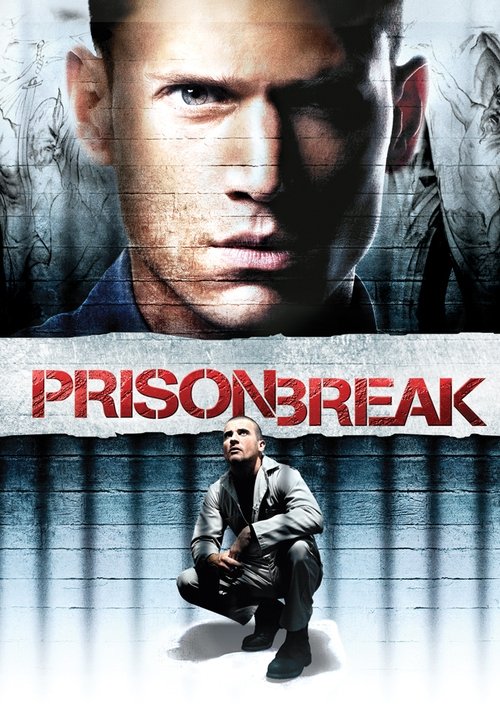
Prison Break
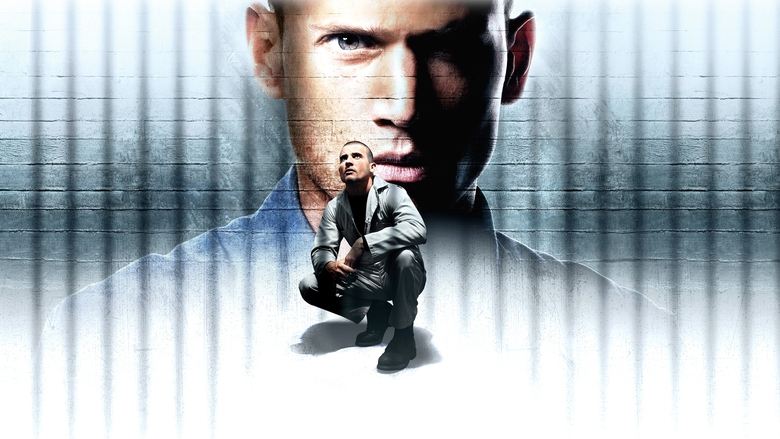
A high-octane architectural thriller steeped in desperate devotion, where a brother’s labyrinthine mind becomes a living map against impossible stone walls, trading innocence for freedom in a breathless race against execution.
Prison Break

Prison Break

"Just have a little faith."

29 August 2005 — 30 May 2017 United States of America 5 season 88 episode Ended 8.1 (6,100)

Cast: Wentworth Miller, Dominic Purcell, Robert Knepper, Amaury Nolasco, Wade Williams

Drama Crime Action & Adventure Brotherhood and Familial Sacrifice The Fallibility of Justice and Systemic Corruption The Moral Cost of Intellect and Collateral Damage Rehabilitation, Redemption, and Human Duality Determinism vs. Free Will / The Illusion of True Freedom

Overview

Prison Break (created by Paul Scheuring) is an adrenaline-fueled serialized thriller centered on the unbreakable bond between two brothers, Michael Scofield and Lincoln Burrows. When Lincoln is framed for a high-profile political assassination and sentenced to death, Michael—a brilliant structural engineer with low latent inhibition—deliberately commits an armed robbery to get incarcerated alongside his brother at Fox River State Penitentiary. Armed with the prison's complete blueprints tattooed invisibly across his torso, Michael orchestrates an impossible escape while navigating ruthless inmates, corrupt guards, and a shadowy institutional conspiracy known as The Company.

Across five seasons, the overarching narrative expands far beyond Fox River's walls. The story evolves from an intense prison escape into a nationwide manhunt, a lethal survival game within the lawless Panamanian penitentiary Sona, an espionage heist targeting the corporate cabal controlling global intelligence, and ultimately an international geopolitical conspiracy spanning the Middle East. At its core, the series follows an ever-shifting alliance of fugitives, lawmen, and loved ones who must continuously outmaneuver systemic corruption to reclaim their identities and freedom.
Core Meaning

The central thesis of Prison Break is that true entrapment is not merely physical stone and iron, but the systemic, psychological, and moral prisons humans construct around themselves. The narrative asserts that pure institutional power and systemic corruption can only be dismantled through extraordinary sacrifice, moral resilience, and fierce human loyalty. Through Michael Scofield’s journey, the creators argue that intellect paired with empathy can overcome brute force, but every calculated evasion of reality extracts an unavoidable moral toll—demanding that individuals confront whether breaking out of one cage forces them to build another.

Thematic DNA

Brotherhood and Familial Sacrifice 30%
The Fallibility of Justice and Systemic Corruption 25%
The Moral Cost of Intellect and Collateral Damage 20%
Rehabilitation, Redemption, and Human Duality 15%
Determinism vs. Free Will / The Illusion of True Freedom 10%

Brotherhood and Familial Sacrifice

The primary emotional engine of the entire series. Michael’s decision to sacrifice his thriving career and freedom to save Lincoln establishes that blood loyalty supersedes self-preservation. As the series progresses through Panama, corporate espionage, and Michael's faked death, this theme widens to chosen family—Sara, Sucre, and C-Note—proving that mutual loyalty is the only enduring armor against destruction.

The Fallibility of Justice and Systemic Corruption

The legal and penal systems are repeatedly shown to be vulnerable to corporate manipulation and political power plays. From Lincoln’s framed death sentence to covert CIA rogue cells (Poseidon) framing Michael, the series critiques institutional infallibility, showing how the powerful treat human lives as expendable pawns.

The Moral Cost of Intellect and Collateral Damage

Michael possesses a rare, photographic intellect paired with low latent inhibition, allowing him to see all possible outcomes. However, executing his plans forces him to ally with murderers like T-Bag and unleash unintended havoc on innocent bystanders. The series continually forces Michael to reckon with the heavy ethical cost of playing chess with human lives.

Rehabilitation, Redemption, and Human Duality

Characters continually vacillate between villainy and grace. Figures like Alexander Mahone, Brad Bellick, and Paul Kellerman begin as antagonists driven by duty or cruelty but evolve into tragic heroes who sacrifice themselves for moral restitution.

Determinism vs. Free Will / The Illusion of True Freedom

Even when outside physical walls, characters remain fugitives running from trauma, debt, and societal expectations. The narrative questions whether true freedom exists in a world ruled by surveillance, trauma, and guilt.

Character Analysis

Michael Scofield

Wentworth Miller

Archetype: The Architect / Tragic Mastermind Hero Key Trait: Genius-level structural intelligence combined with hyper-empathy (Low Latent Inhibition)

Motivation

Originally to save Lincoln from execution; evolves into dismantling systemic conspiracies, protecting Sara and his son, and securing genuine domestic tranquility.

Character Arc

Begins as an idealistic structural engineer confident in his ability to engineer moral solutions without bloodshed. Across Fox River, Sona, and his battle with The Company, his soul is battered by the collateral damage of his plans. In Season 5, stripped of his name as "Kaniel Outis," he finally transitions from a self-sacrificing martyr into a father reclaiming his rightful identity and peace.

Lincoln Burrows

Dominic Purcell

Archetype: The Wronged Heavy / Fierce Protector Key Trait: Raw physical grit, direct moral instinct, and absolute loyalty

Motivation

To survive and clear his name for the sake of his son LJ; later, to protect and rescue Michael at any cost.

Character Arc

Starts as a reckless, condemned death-row convict resigned to execution. As Michael rescues him, Lincoln steps up to become Michael’s physical protector and grounding moral rock. Over five seasons, Lincoln evolves from a brute-force street brawler into a mature, responsible patriarch who moves mountains to liberate Michael in return.

All 5 characters and cast

Symbols & Motifs

Origami White Cranes

Meaning:

In Japanese folklore, the crane symbolizes peace, hope, healing, and fidelity; for Michael, it serves as a silent calling card signifying "I have a plan" and conveying pure romantic and fraternal devotion without revealing details to authorities.

Context:

Michael leaves origami swans and cranes for Sara Tancredi and Lincoln throughout their incarceration and separation.

The Full-Body Tattoos

Meaning:

Symbolizes the total physicalization of Michael's mind, turning his skin into a living blueprint and representing the permanent scarring that salvation requires.

Context:

Worn by Michael across his torso and arms, concealing blueprints, chemical formulas, emergency phone numbers, and contingency escape routes.

The Broken Watch / Pocket Watch

Meaning:

Represents how time is both the ultimate enemy on death row and a weapon that can be bent to one’s will through meticulous discipline.

Context:

Used by Michael in Fox River to calculate guard shift rotations down to the exact second.

The Chessboard / "English, Fitz, or Percy"

Meaning:

A motif demonstrating Michael’s analytical view of the world, where complex social and spatial environments are dynamic chess problems and every piece must move according to calculated necessity.

Context:

Invoked as Michael orchestrates complex diversion tactics and systemic prison navigations.

Scylla (The Data Matrix)

Meaning:

Named after the mythological multi-headed monster, Scylla represents the elusive, multi-tiered machinery of modern global corruption that consumes everyone attempting to wield or expose it.

Context:

The central MacGuffin in Season 4, consisting of a high-tech hard drive storing The Company's secrets.

The "Kaniel Outis" / Odysseus Motif

Meaning:

References Homer’s Odyssey where "Outis" translates to "Nobody" (Odysseus’s trick on the Cyclops), symbolizing Michael erasing his own soul to journey across an unforgiving ocean of conflict back to Ithaca (Sara and his son Mike).

Context:

Used in Season 5 as Michael’s covert identity during his imprisonment and covert missions in Yemen.

Memorable Quotes

I'm getting you out of here. / It's impossible. / Not if you designed the place, it isn't.
— Michael Scofield & Lincoln Burrows

Context

Delivered during Michael and Lincoln's initial conversation inside Fox River in Season 1, Episode 1 ("Pilot").

Meaning

Establishes the entire core premise and tone of the show in one concise exchange, revealing Michael’s audacity and structural genius.

I kneel only to God. I don't see him here.
— John Abruzzi

Context

Abruzzi’s final stand against Agent Mahone and the FBI in Season 2, Episode 4 ("First Down").

Meaning

Encapsulates Abruzzi's unyielding mobster pride and religious fatalism before dying in a hail of gunfire.

All 5 quotes

Episode Highlights

Pilot

S1E1

Sets the gold standard for pilot execution, introducing Michael's calculated bank robbery, Lincoln's impending execution, and the reveal of the full-body blueprint tattoo.

Significance:

Hooked a massive global audience and established the series' relentless pacing.

Riots, Drills and the Devil: Part 1 & 2

S1E6

Michael intentionally triggers a lockdown/riot using the HVAC temperature system to buy time to drill through a crucial wall, while Sara is trapped in the sickbay.

Significance:

Deepens the emotional stakes between Michael and Sara while illustrating how chaotic variables test Michael's precision calculations.

Go

S1E21

The culmination of 21 episodes of preparation as the Fox River Eight squeeze through the cell hole, hospital pipes, and scale the exterior wall.

Significance:

Regarded as one of the finest suspense hours in television history, executing the breakout with breathtaking tension.

Flight

S1E22

The season finale where the escapees reach the airfield only to see their getaway plane take off without them, forcing them on foot into the dark woods.

Significance:

Completely shifts the premise from an interior prison breakout to a raw survival manhunt.

Manhunt

S2E1

Introduces Special Agent Alexander Mahone, an intellectual adversary capable of deciphering Michael's tattooed riddles.

Significance:

Re-energized the cat-and-mouse tension, establishing the intellectual duel that defined Season 2.

Sona

S2E22

Michael sacrifices his freedom to save Lincoln and Sara, getting thrown into Penitenciaría Federal de Sona—a Panamanian prison where guards patrol only the perimeter while inmates rule the interior.

Significance:

Upends the rules entirely, setting up a radically grittier and chaotic environment for Season 3.

Selfless

S4E12

The team successfully steals all six keys of Scylla, only for Homeland Security Agent Don Self to betray them and take Scylla for personal profit.

Significance:

The dramatic pivot of Season 4, shattering the team’s deal for exoneration and forcing them back into rogue fugitive status.

Behind the Eyes

S5E9

The Season 5 revival finale where Michael completely outsmarts Jacob Ness (Poseidon) using a reconstructed crime-scene warehouse, framing Poseidon for the exact murder Michael was framed for.

Significance:

Grants Michael full official exoneration, an authentic name, and reunion with Sara and Mike.

Philosophical Questions

Does the noble end ever truly justify immoral means?

Michael must unleash vile criminals like T-Bag and cause institutional chaos to save one innocent man; the series questions whether saving a life can balance the scale for the lives ruined in the process.

Can a human being ever be fully rehabilitated, or is morality fixed?

Through characters like Mahone, Bellick, and T-Bag, the story investigates whether redemptive acts can erase a lifetime of violence.

What defines true freedom?

The narrative explores whether an exonerated person on the run is truly freer than a peaceful mind behind bars.

Alternative Interpretations

The Existentialist Reading: The entire saga represents the impossibility of absolute freedom. Each prison (Fox River, Sona, Ogygia, The Company) is merely an external manifestation of the characters’ internal psychological entrapments. Breaking out of one physical facility only lands them in a wider societal panopticon.

Full ending explanation

Cultural Impact

When Prison Break debuted in autumn 2005, network television was undergoing a golden era of high-concept, heavily serialized drama spearheaded by Lost, Desperate Housewives, and 24. Prison Break arrived as an immediate sensation, drawing over 10 million viewers per week and earning Golden Globe and People's Choice nominations.

The show fundamentally shaped modern cliffhanger pacing. Each episode was constructed as a countdown puzzle where every solution spawned a deadlier complication. While Season 1 received universal acclaim for its airtight construction and claustrophobic tension, later seasons faced critical debate: Season 2 was praised for evolving into a tense fugitive chase, Season 3 was disrupted by the 2007–2008 Writers Guild of America strike (shortened to 13 episodes), and Season 4 leaned into high-tech espionage capers.

Globally, Prison Break became an unprecedented international phenomenon—particularly across Europe, the Middle East, China, and Latin America—helping pioneer early digital binge-watching culture through DVD box sets and early streaming platforms.

Audience Reception

Critical & Audience Consensus:

  • Season 1: ★★★★★ (Universal Acclaim; masterclass in suspense and blueprint architecture)
  • Season 2: ★★★★☆ (Strongly Praised; seamless transition to fugitive road manhunt)
  • Season 3: ★★★☆☆ (Mixed; raw visceral Sona setting cut short by WGA strike)
  • Season 4: ★★★☆☆ (Divisive; high-tech heist shift, but emotional finale lauded)
  • Season 5: ★★★☆☆ (Fan Nostalgia; thrilling action, but condensed 9-episode pace)

Praises: Wentworth Miller’s calm, razor-sharp performance; William Fichtner’s electric entrance as Mahone; Robert Knepper’s magnetic portrayal of T-Bag; exceptional cliffhangers; and the sheer mathematical precision of Season 1’s escape mechanics.

Criticisms: Narrative fatigue in late Season 4; repetitive capture-and-escape cycles; and increasingly improbable conspiracy plot twists.

Overall Legacy: Celebrated as one of the most suspenseful and addictive serialized network thrillers of the 2000s, retaining an immense global cult following.

Interesting Facts

  • Paul Scheuring pitched the concept in 2003 as a 14-episode miniseries, but Fox passed until the success of Lost and 24 prompted them to greenlight it in 2004.
  • Fox River scenes were filmed at Joliet Correctional Center in Illinois, where Lincoln's cell scenes took place in the block where serial killer John Wayne Gacy was once held.
  • Applying Michael's full-body tattoo took between 4.5 to 5 hours using decals and transfers, and would cost over $20,000 and take years to complete in real life.
  • Wentworth Miller was cast just one week before filming began, while Dominic Purcell was cast only three days before shooting.
  • The series was officially banned in at least 13 correctional facilities across the United States over fears of breakout inspiration.
  • Dominic Purcell suffered a broken nose and severe skull fractures when an iron set bar fell on him while filming Season 5 in Morocco.
  • Ramin Djawadi composed the electronic-orchestral score, earning a Primetime Emmy nomination in 2006.

Easter Eggs

Presidential Naming Scheme

Multiple key characters are named after U.S. Presidents and prominent political figures, including Lincoln Burrows (Abraham Lincoln), Michael Scofield (Edward Schofield), Theodore Bagwell (Theodore Roosevelt), and Paul Kellerman.

Homer’s Odyssey Parallels in Season 5

Season 5 serves as a direct modern adaptation of Homer’s Odyssey: Michael assumes the alias "Kaniel Outis" (translating to "No one"), faces a terrorist named "Cyclops," stays in "Phaeacia," and strives to return home to "Ithaca, New York."

T-Bag Crosses into Breakout Kings

Robert Knepper reprised his role as Theodore "T-Bag" Bagwell in Season 1, Episode 3 of A&E's Breakout Kings, formally linking the two series within a shared fictional universe.

Real Blueprint Easter Egg

Michael's tattoo features the text "Allen Schweitzer 11121147", encoding the Allen hex bolt, the Schweitzer toilet fixture, and the chemical/timing sequence needed to corrode the cell pipe.

Frequently Asked Questions

Explore More About This Movie

Dive deeper into specific aspects of the movie with our detailed analysis pages

Comments (0)

Leave a comment

No comments yet. Be the first to share your thoughts!

Similar Movies