Skip to content
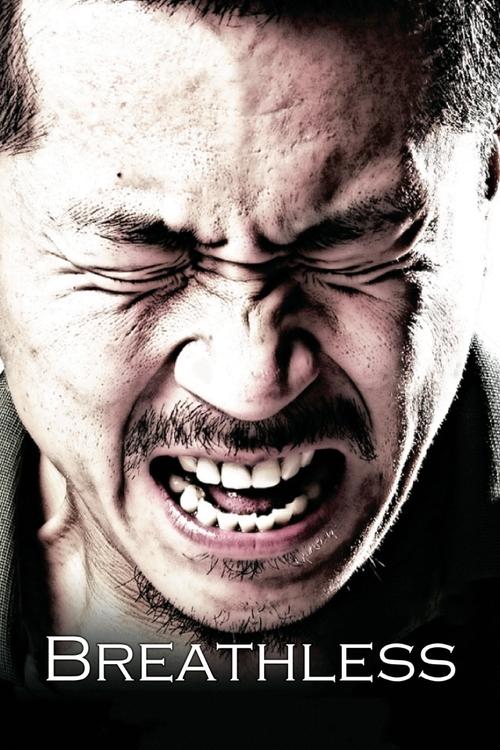
Breathless
A raw, bruising crime drama where fists and curses are the only language left, and a flicker of tenderness struggles to breathe in a city thick with smoke, blood and unpaid debts.
Breathless

Breathless

똥파리

"The world is like shit and blood hurt so bad. but here is the man who touches your heart."

16 April 2009 South Korea 130 min 7.1 (150)

Director: Yang Ik-june

Cast: Kim Kkob-bi, Lee Hwan, Yang Ik-june, Park Jeong-soon, Lee Seung-yeon

Drama Crime Cycle of Violence Family trauma and fatherhood Unlikely kinship and tenderness Masculinity and social brutality Redemption and its cost

Overview

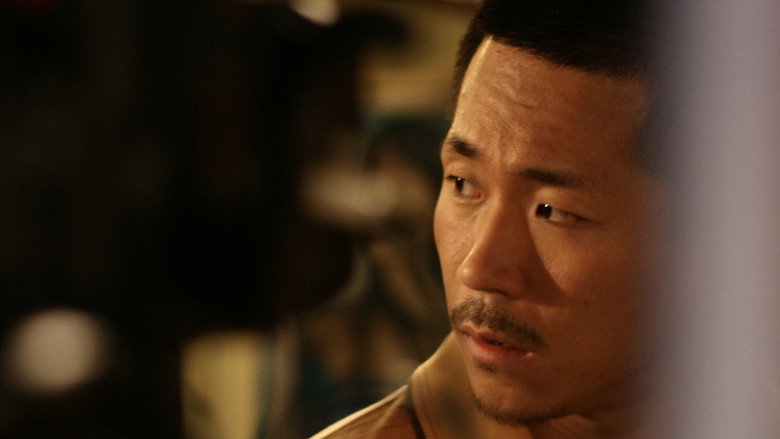
Breathless (Ddongpari, literally "dung fly" or "shitfly") is the debut feature of Yang Ik-june, who wrote, directed, produced and stars in it. Sang-hoon is a foul-mouthed enforcer for a loan-shark operation run by his friend Man-sik. He lashes out at debtors, colleagues, strangers and family, and the violence seems to be his way of living.

His routine is disrupted when he spits on a high-school student, Yeon-hee, who refuses to be cowed. She is as fearless and abrasive as he is. Both come from homes shaped by abuse, and an odd companionship grows between them. Around them are his sister, his young nephew and his father, who has returned after years in prison.

The film mixes extreme brutality with unexpected moments of tenderness. It asks whether a man shaped entirely by violence can step outside it, and what that would cost him.
Core Meaning

The film is about the cycle of domestic violence. Abuse is inherited and passed on to the next generation, and it spreads outward into the street and the workplace. Critics noted that Sang-hoon finds domestic violence abhorrent, yet the only way he can express that disgust is through more violence. Yang has said he has a lot of anger towards his family and that making the film was cathartic. In a Q&A he described killing Sang-hoon as a way of leaving the past behind.

The film does not offer easy redemption. It suggests that breaking the cycle is possible but that the damaged person may not survive to benefit. The survivors, Yeon-hee and the children, are left with a chance to live differently.

Thematic DNA

Cycle of violence 35%
Family trauma and fatherhood 25%
Unlikely kinship and tenderness 20%
Masculinity and social brutality 10%
Redemption and its cost 10%

Cycle of violence

Abuse passes from father to son and from one household to another. Sang-hoon beats his father, treats his nephew roughly and brutalizes strangers. Reviewers noted that the film's repetitive, circling structure mirrors this trap.

Family trauma and fatherhood

Sang-hoon's father is responsible for the deaths of his mother and sister. Yeon-hee's father is violent and mentally ill. Both young people are marked by failed fathers, and each ends up seeking a surrogate bond in the other.

Unlikely kinship and tenderness

Two abrasive people recognise their own wounds in each other. Their friendship, and Sang-hoon's growing care for his nephew, show glimmers of humanity beneath the rage.

Masculinity and social brutality

The thugs are a heightened version of a wider patriarchal culture of casual abuse. Sang-hoon's line about fathers in the country sums this up.

Redemption and its cost

Sang-hoon begins to doubt his violent life, but the film questions whether change can come without paying for past sins.

Character Analysis

Sang-hoon

Yang Ik-june

Archetype: Tragic antihero Key Trait: Explosive, profane rage hiding a capacity for tenderness

Motivation

To escape or numb the pain of his mother's and sister's deaths and his hatred of his father.

Character Arc

He begins as a relentless thug and, through his bond with Yeon-hee and his nephew, starts to contemplate a different life. This change is cut short.

Yeon-hee

Kim Kkot-bi

Archetype: Fearless young survivor Key Trait: Tough, unintimidated resilience

Motivation

Belonging and a father-like figure, after a violent, unwell father and a victimised mother.

Character Arc

She stands up to Sang-hoon, becomes his companion and softens him. She is left to build a life after tragedy.
All 5 characters and cast

Symbols & Motifs

The dung fly

Meaning: The lowest, most despised creature, feeding on filth. It stands for Sang-hoon's self-image and his place at the bottom of society.
Context: It is the film's Korean title. It frames him as a repulsive hero whom the audience gradually comes to understand.

Spit and slaps

Meaning: Contempt and the reflexive transmission of violence. They are the first contact between people before any empathy.
Context: Sang-hoon spits on the schoolgirl, and in the opening he spits at and slaps a beaten woman for taking the abuse.

Street food stall

Meaning: The lost mother and the vulnerable family life that violence destroyed.
Context: In the closing sequence Yeon-hee sees her brother wrecking a street stall like her late mother's.

Shared meals

Meaning: Fragile, fleeting family and community.
Context: Late in the film the characters dine together at Man-sik's newly opened restaurant.

The hammer

Meaning: Violence returning to its source: you reap what you sow.
Context: Violence comes back on Sang-hoon in the climax, as one reviewer noted with a hammer in the background.

Memorable Quotes

Fathers in this country's all fucked up.
— Sang-hoon

Context

Said after beating up an abusive husband and father. This is the English subtitle as listed on IMDb.

Meaning

A summary of the film's critique of patriarchal abuse, delivered as he beats a wife-batterer.

Philosophical Questions

Can someone shaped by violence ever escape it?

Sang-hoon's attempts to change are real but are overtaken by the consequences of his past.

Do victims of abuse bear responsibility for the harm they cause?

The film asks us to understand Sang-hoon without excusing him, since we cringe at his deeds yet empathise with him.

Is family a source of salvation or of damage?

Blood ties cause the wounds, but chosen and rebuilt bonds offer the only relief.

How It Ends

Alternative Interpretations

Some read the ending as bleak fatalism: the cycle of violence consumes anyone who tries to change, and the world moves on without him. Others, including the director's own comments, see hope. Sang-hoon's death clears the past, and the remaining characters seem to get a chance to start afresh.

Full ending explanation

Cultural Impact

The film emerged as a landmark of Korean independent cinema, made on a small budget by a previously minor actor. It won the Tiger Award at Rotterdam, the Jury Prize for Best Film and Best Male Performance at Fantasia, and the Best Film award and Critics' Prize at Deauville. It was also named Best Debut Feature at the 2009 New York Asian Film Festival.

Critics compared it to Nil by Mouth and Blood and Bones. Its violence is unstylised and grotesque, and one reviewer contrasted it with Park Chan-wook's work. Reviewers also read the thugs as an exaggerated version of wider patriarchal abuse in South Korean society. The film made Yang a star director.

Audience Reception

Viewers praised the raw performances by Yang and Kim Kkot-bi, the emotional power of the final act, and the film's authenticity. IMDb users called it among the best Korean films. Criticisms included relentless profanity and brutality, a repetitive and somewhat loose middle, overbearing flashbacks, shaky handheld camerawork that some found amateurish, and melodrama near the end. At a Q&A, one angry audience member reportedly insulted Yang, a sign of how strongly it affected some viewers. The overall verdict was that it is a punishing but moving debut.

Interesting Facts

  • Yang Ik-june wrote, directed, produced and starred in the film.
  • The film premiered at the 2008 Busan International Film Festival and was released in South Korea on April 16, 2009.
  • It was selected for the Asian Cinema Fund, which provided post-production support.
  • It won 23 prizes on the festival circuit, including a Tiger Award at Rotterdam.
  • Yang raised money from many sources, including his parents, and reportedly mortgaged his house to fund the low-budget picture.
  • The film is described as semi-autobiographical, and Yang said he has a lot of anger towards his family.
  • It had over 100,000 admissions in South Korea and a box office of about US$686,703.
  • The UK two-disc collector's edition included interviews with Yang and Kim Kkobbi, and Rotterdam behind-the-scenes footage.

Frequently Asked Questions

Explore More About This Movie

Dive deeper into specific aspects of the movie with our detailed analysis pages

Comments (0)

Leave a comment

No comments yet. Be the first to share your thoughts!

Similar Movies