Skip to content
Castle
A witty, romantic neo-noir procedural glowing with playful banter and simmering longing, where a labyrinth of shadowed city streets and blood-stained manuscripts gradually unspools into a deeply redemptive portrait of shared healing and enduring partnership.
Castle

Castle

"A whole new chapter in crime solving."

09 March 2009 — 16 May 2016 United States of America 8 season 173 episode Canceled 8.0 (2,134)

Cast: Nathan Fillion, Stana Katic, Molly C. Quinn, Jon Huertas, Seamus Dever

Drama Crime Trauma, Justice, and Healing Storytelling, Imagination, and Empathy in Deduction The Transformative Power of Partnership and Romance Family, Loyalty, and Found Community

Overview

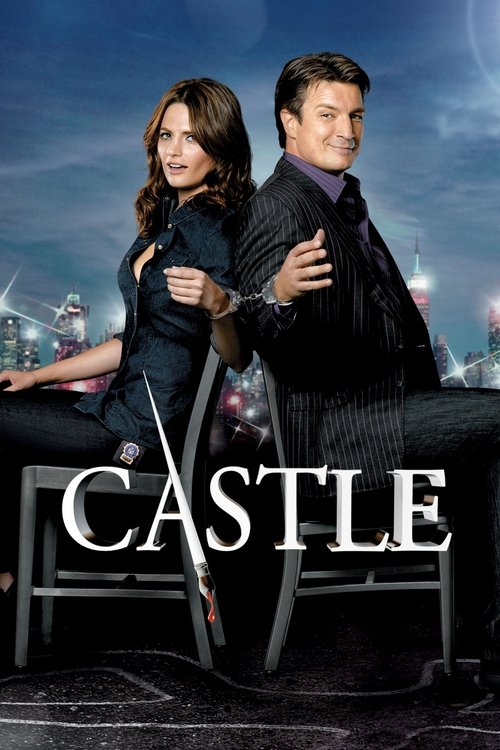
Created by Andrew W. Marlowe, Castle (2009–2016) is a character-driven crime mystery comedy-drama centered on Richard Castle, a best-selling mystery novelist suffering from creative burnout, and Kate Beckett, an exceptionally driven NYPD homicide detective. Their partnership begins when a copycat killer replicates murders from Castle’s novels, leading Castle to pull political strings with the Mayor of New York to shadow Beckett as research for a new book series featuring a heroine named Nikki Heat. Although Beckett is initially frustrated by Castle’s irreverence and childlike demeanor, his keen narrative instinct and outside-the-box deduction prove invaluable to her precinct squad, while Beckett’s grounded tenacity provides Castle with both a muse and a renewed sense of purpose.

Over the course of eight seasons and 173 episodes, the episodic murder investigations are interwoven with long-term serialized mythologies. The emotional spine of the narrative revolves around solving the cold-case conspiracy behind the assassination of Beckett’s mother, Johanna Beckett, alongside battling recurring nemeses such as the enigmatic serial killer Jerry Tyson ("3XK"). Parallel to the crime-solving, the dynamic between Castle and Beckett matures from adversarial tension and a slow-burning "will-they-won’t-they" flirtation into deep mutual trust, romantic commitment, and marriage. Supported by Castle’s family—his daughter Alexis and mother Martha—as well as fellow detectives Javier Esposito and Kevin Ryan and medical examiner Lanie Parish, the series explores how love, loyalty, and storytelling can illuminate truth in the face of institutional corruption and personal trauma.
Core Meaning

At its core, Castle posits that human connection, truth, and empathy are the ultimate antidotes to paralyzing trauma and cynicism. Through the pairing of an imaginative fiction writer and a pragmatic law enforcement officer, the series illustrates that neither cold logic nor unfettered fantasy alone can solve human puzzles; it requires narrative empathy to understand the motivations of both killers and victims. Furthermore, the show argues that the pursuit of justice is not merely an institutional obligation, but a deeply personal, healing endeavor. Healing from grief—whether Beckett’s unresolved mourning for her mother or Castle’s search for identity and belonging—is only possible when one is willing to tear down emotional walls, embrace vulnerability, and build an unshakeable partnership.

Thematic DNA

Trauma, Justice, and Healing 30%
Storytelling, Imagination, and Empathy in Deduction 25%
The Transformative Power of Partnership and Romance 25%
Family, Loyalty, and Found Community 20%

Trauma, Justice, and Healing

Revealed primarily through Beckett’s obsessive pursuit of her mother’s killers. In early seasons, Beckett’s grief acts as a suit of emotional armor that isolates her; over time, her definition of justice shifts from bitter personal vengeance to institutional accountability and closure, allowing her to finally live fully in the present.

Storytelling, Imagination, and Empathy in Deduction

The juxtaposition of Castle’s narrative theories against standard police procedure. Castle treats every crime scene as an unfinished manuscript, demonstrating that discovering "why" a crime happened requires understanding psychological human flaws, vanity, love, and desperation.

The Transformative Power of Partnership and Romance

The evolution of "Caskett" from reluctant colleagues to domestic partners and soulmates. The theme examines how romantic and platonic partnerships challenge individuals to mature: Castle shifts from a self-indulgent playboy to a dedicated husband and protector, while Beckett learns to trust another person completely.

Family, Loyalty, and Found Community

Explored through the warm multigenerational dynamics of the Castle household (Castle, Alexis, Martha) and the brotherhood within the 12th Precinct (Ryan and Esposito). The show emphasizes that unwavering loyalty within chosen and biological families provides the emotional safety net required to confront the world’s darkest realities.

Character Analysis

Richard Castle

Nathan Fillion

Archetype: The Charismatic Trickster / The Unlikely Hero Key Trait: Boundless creative imagination paired with innate charm and observational wit.

Motivation

Initially driven by excitement, fame, and curiosity; evolves into protecting his family and bringing genuine justice to victims.

Character Arc

Begins as an arrogant, hedonistic novelist chasing adrenaline and new material after killing off his popular character Derrick Storm. Across eight seasons, his exposure to real human tragedy and his love for Beckett transform him into a selfless, disciplined, and deeply loyal husband, father, and investigator.

Kate Beckett

Stana Katic

Archetype: The Wounded Crusader / The Modern Detective Key Trait: Uncompromising moral tenacity and keen investigative sharpness.

Motivation

Starts with seeking retribution for her mother’s death; evolves into standing up for systemic justice and preserving the life and family she built with Castle.

Character Arc

Starts as a guarded, fiercely independent NYPD homicide detective defined and constrained by the unsolved trauma of her mother's murder. Through Castle's warmth and unwavering support, she learns to break down her defenses, conquer internal darkness, rise through NYPD leadership to become Captain, and choose happiness without forfeiting her integrity.

All 5 characters and cast

Symbols & Motifs

The Nikki Heat Book Series

Meaning:

Symbolizes Castle’s evolving perception of Beckett. In early novels like Heat Wave, the fictional alter-ego Jameson Rook and Nikki Heat reflect Castle's superficial attraction and bravado; as the series progresses, the novels mirror his deepening reverence, understanding, and love for her.

Context:

Used throughout the series as Castle's ongoing writing project based directly on shadowing Beckett's homicide cases.

Johanna Beckett’s Ring and Watch

Meaning:

Represent the dual forces driving Beckett's life: the ring worn around her neck symbolizes her mother's life and the unsolved murder, while her father’s watch symbolizes the life saved from alcoholism and the present duty to protect others.

Context:

Worn continuously by Detective Kate Beckett as personal daily talismans during her investigations.

The "WRITER" Vest

Meaning:

A humorous yet poignant motif representing Castle’s outsider status turned essential asset. It highlights his unique identity as a civilian observer whose power lies in words and deduction rather than a badge.

Context:

Worn by Castle at active crime scenes and tactical operations alongside detectives wearing "POLICE" body armor.

The Word "Always"

Meaning:

An emblem of enduring commitment, devotion, and unconditional love across separations, near-death experiences, and wedding vows.

Context:

Originating in Season 3 when Castle promises to always have Beckett’s back, serving as a recurring verbal anchor and mutual vow between the two leads.

The Poker Games

Meaning:

Serve as a motif for Castle’s professional grounding and act as a Greek chorus providing external perspective on his murder cases and personal dilemmas.

Context:

High-stakes recurring card games held at Castle's loft featuring real-life famous mystery authors.

Memorable Quotes

There are two kinds of folks who sit around thinking about how to kill people: psychopaths and mystery writers. I’m the kind that pays better.
— Richard Castle

Context

Spoken in the opening scenes of Season 1, Episode 1 ("Flowers for Your Grave").

Meaning

Sets up Castle's cynical wit, self-awareness, and the foundational premise of viewing crime through a writer's lens.

To the possibility for joy.
— Kate Beckett

Context

Featured in Season 3, Episode 24 ("Knockout") and recurring as an emotional touchstone.

Meaning

Represents Beckett’s emotional struggle to let go of her protective trauma armor and allow herself to experience happiness and vulnerability.

All 5 quotes

Episode Highlights

Flowers for Your Grave

S1E1

Establishes the foundational premise, tone, and instant chemistry between the novelist and skeptical detective as a murder scene replicates a killing from Castle's book.

Significance:

Sets the dynamic for all 173 episodes and introduces the overarching Johanna Beckett murder mythology.

Sucker Punch

S2E13

Beckett discovers the hitman who murdered her mother (Jack Coonan) is linked to a larger conspiracy, but Coonan is killed before he can talk.

Significance:

Elevates the Johanna Beckett case from a cold street mugging into a high-stakes organized crime conspiracy, deepening Castle’s commitment to helping Beckett find the truth.

3XK

S3E6

Introduces serial killer Jerry Tyson ("3XK"), who outsmarts both Castle and the NYPD.

Significance:

Establishes the show's most dangerous recurring psychopathic villain, leading to multiple high-stakes confrontations spanning several seasons.

Knockdown

S3E13

Castle and Beckett share their first undercover kiss while pursuing a lead on her mother’s case, and the word "Always" is coined between them.

Significance:

A major turning point where latent romantic attraction shifts into acknowledged feelings.

Knockout

S3E24

Roy Montgomery is revealed to have a historic connection to Johanna Beckett's death and sacrifices his life; Beckett is shot by a sniper at Montgomery's funeral, prompting Castle to confess his love as she bleeds out.

Significance:

A dramatic narrative reset that introduces the shadow conspiracy of Senator William Bracken and forces Castle and Beckett into a tense emotional aftermath.

Always

S4E23

After nearly falling to her death pursuing Cole Maddox and resigning from the NYPD, Beckett arrives at Castle's apartment; the two finally consummate their romantic relationship.

Significance:

Resolves four seasons of "will-they-won't-they" tension, permanently transitioning the series into a committed romance.

Veritas

S6E22

Beckett finally uncovers the hidden tape recording that incriminates Senator William Bracken, arresting him directly for the murder of Johanna Beckett.

Significance:

Delivers closure to the central six-season core mythology, vindicating Beckett and her family.

The Time of Our Lives

S7E6

After Castle experiences an alternate dimension where he and Beckett never met, the pair realize life is too fragile to delay happiness and marry in the Hamptons.

Significance:

Fulfills the emotional arc of the central couple, uniting them in marriage.

Crossfire

S8E22

Series finale; Castle and Beckett expose the LokSat conspiracy and defeat Caleb Brown, but both are shot inside Castle's loft before a flash-forward reveals them alive with three children seven years later.

Significance:

Concludes the series abruptly after ABC cancelled plans for a ninth season.

Philosophical Questions

Does the pursuit of justice bring peace, or does it perpetuate trauma?

Explored across Beckett’s obsession with her mother’s murder, examining whether unearthing buried truths leads to closure or threatens to consume a person's present and future in bitterness.

Can empathy and imagination understand evil better than empirical data?

Pitted against conventional forensic methodology, Castle’s storytelling approach queries whether human criminality is best unraveled through cold facts or through understanding flawed psychological motives.

What constitutes a true family?

Examined through the unconventional Castle household (Richard, Martha, Alexis) and the 12th Precinct squad, illustrating how chosen community and loyalty rival traditional biological family structures.

Alternative Interpretations

One prominent critical interpretation views the entire series as Richard Castle's living novel, wherein mundane or painful crimes are deliberately reframed through romanticism, conspiracy, and myth to explore humanity's psychological need to impose narrative order onto a chaotic world.

Full ending explanation

Cultural Impact

Premiering in 2009 during an era dominated by grim procedurals like CSI and Law & Order: SVU, Castle revitalized the lighthearted "blue sky" mystery comedy-drama format reminiscent of Moonlighting and Remington Steele. It demonstrated that a procedural could successfully balance high-stakes political conspiracy thrillers with romantic comedy and family dynamics.

The series amassed a passionate global fanbase that helped drive its real-world tie-in books onto international bestseller lists, established Nathan Fillion as a major network lead, and launched Stana Katic to worldwide prominence. Its cross-media execution of publishing actual novels under the fictional protagonist's name remains a benchmark in modern transmedia television marketing.

Audience Reception

Seasons 1–4 are widely celebrated as the show's golden era, earning critical acclaim and robust ratings for sharp banter, compelling murder mysteries, and the palpable chemistry between Castle and Beckett culminating in the landmark finale "Always".

Seasons 5–6 maintained positive reception by defying the "Moonlighting curse" through a mature romantic partnership and providing satisfying payoff to the Johanna Beckett mythology in "Veritas".

Seasons 7–8 experienced critical and audience decline due to the departure of creator Andrew W. Marlowe, convoluted plotlines like Castle's disappearance, and forced marital friction in Season 8. The controversial LokSat conspiracy and the network's short-lived plan to continue without Stana Katic caused severe backlash, leading fans to welcome the show's cancellation over an altered Season 9.

Interesting Facts

  • Over 125 actresses auditioned for the role of Detective Kate Beckett before Stana Katic was cast after an immediate chemistry read with Nathan Fillion.
  • The tie-in Nikki Heat and Derrick Storm novels shown in the series were ghostwritten primarily by Tom Straw and published in real life by Hyperion Books, frequently reaching the New York Times Best Seller list.
  • Seamus Dever (Detective Kevin Ryan) is married in real life to Juliana Dever, who played his on-screen wife Jenny Ryan.
  • Detective Ryan is frequently seen reading or holding a different real-world Richard Castle novel across background scenes.
  • Show creator Andrew W. Marlowe and executive producer Terri Edda Miller stepped down after Season 6 and departed after Season 7, transferring showrunning duties to Alexi Hawley and Terence Paul Winter for Season 8.
  • Widely reported off-screen friction between leads and an initial plan to produce Season 9 without Stana Katic and Tamala Jones triggered intense fan backlash that led ABC to cancel the show.
  • Because cancellation occurred just days before the Season 8 finale aired, production utilized an emergency backup flash-forward epilogue to avoid a tragic cliffhanger.

Easter Eggs

Firefly Costumes, Dialogue, and Props

Honors Nathan Fillion’s lead role in Joss Whedon's Firefly: Castle dresses in his Malcolm Reynolds "Space Cowboy" costume in "Vampire Weekend" (S02E06), speaks Chinese, uses the term "Shiny!" while referencing "that Joss Whedon show" in "The Final Frontier" (S05E06), and keeps a Firefly engine catalyzer prop on his office bookshelf.

Real Mystery Authors at the Poker Table

Literary titans Stephen J. Cannell, James Patterson, Michael Connelly, and Dennis Lehane make cameo appearances as themselves playing poker with Castle and critiquing his investigative theories.

Whedonverse Cast Cameos

Features guest appearances by Nathan Fillion’s former Firefly co-stars Adam Baldwin (as Detective Ethan Slaughter) and Gina Torres (as Penelope Foster).

Marvel Comic Book Adaptations

Real Marvel comic artists and writers collaborated with the series production to release published graphic novel adaptations of Castle's fictional character Derrick Storm.

Frequently Asked Questions

Explore More About This Movie

Dive deeper into specific aspects of the movie with our detailed analysis pages

Comments (0)

Leave a comment

No comments yet. Be the first to share your thoughts!

Similar Movies