Skip to content
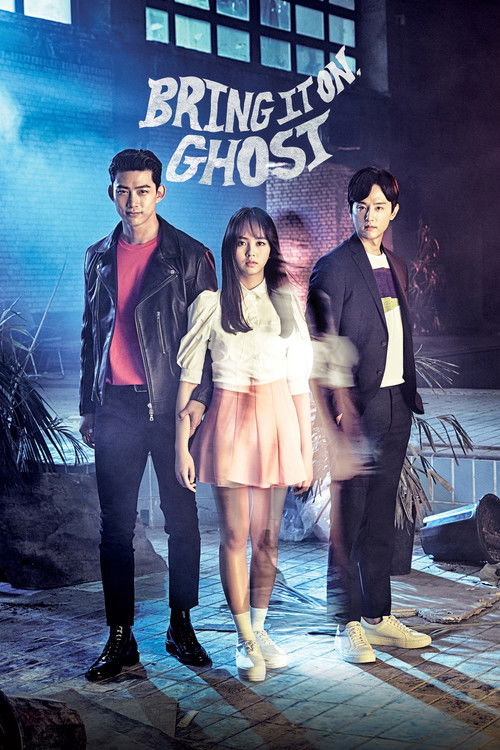
Bring It On, Ghost
A supernatural action-romance where two lonely wanderers punch through physical and spiritual shadows to anchor their bruised souls.
Bring It On, Ghost

Bring It On, Ghost

싸우자 귀신아

11 July 2016 — 30 August 2016 South Korea 1 season 16 episode Ended 8.0 (128)

Cast: Kim So-hyun, Ok Taec-yeon, Kwon Yul, Kim Sang-ho, David Lee

Drama Sci-Fi & Fantasy Mystery The Living vs. The Dead: Unfinished Business and Grief Isolation, Chosen Family, and Healing Connection The Corruption of Resentment and Malevolence Identity, Memory, and Reclamation of the Self

Overview

Bring It On, Ghost follows Park Bong-pal, an introverted and emotionally guarded college student who has possessed the supernatural ability to see, hear, and physically interact with spirits since childhood. To earn enough money for an experimental procedure that he hopes will eliminate his spiritual vision, Bong-pal works as an underground exorcist-for-hire, physically brawling with malevolent ghosts to banish them. His isolated routine is shattered when an exorcism job brings him face-to-face with Kim Hyun-ji, a spirited, amnesiac ghost who has wandered the mortal realm for five years without any recollection of her past life or her death.

After an accidental collision triggers a brief flash of Hyun-ji's lost memories, she convinces Bong-pal to form an unlikely partnership. In exchange for her combat assistance and intuition in identifying other ghosts' weaknesses during paid jobs, Bong-pal agrees to let her stay at his apartment and help her uncover the mystery of her identity. As they take on various supernatural cases, they form an offbeat paranormal investigation squad alongside two eccentric upperclassmen from the university's failing ghost-hunting club, Sundae Soup.

Beneath the episodic ghost hunts and playful domestic bickering lies a dark, overarching conspiracy. An ancient, malevolent spirit responsible for the death of Bong-pal's mother and the fracture of his family has embedded itself in the human world under the guise of Joo Hye-sung, a charming and revered university veterinary professor. As Bong-pal and Hyun-ji's bond deepens into romance, their entangled pasts resurface, forcing them and their eccentric mentor, Monk Myung-chul, into a confrontation against a cunning demonic force.
Core Meaning

The fundamental message of the series is that the deepest human darkness does not originate from the supernatural realm, but from unchecked resentment, isolation, and malice in the living heart. While ghosts are visually terrifying, they are merely victims of unresolved earthly trauma—such as domestic violence, online cyberbullying, unrequited grief, or sudden injustice.

Through Bong-pal's emotional arc, the show argues that true healing from trauma does not come from surgically removing one's vulnerabilities or running away from painful truths, but from forming genuine connections, learning to mourn, and choosing empathy over hatred.

Thematic DNA

The Living vs. The Dead: Unfinished Business and Grief 30%
Isolation, Chosen Family, and Healing Connection 25%
The Corruption of Resentment and Malevolence 25%
Identity, Memory, and Reclamation of the Self 20%

The Living vs. The Dead: Unfinished Business and Grief

The narrative portrays ghosts not as inherently evil entities, but as lingering consciousnesses bound by profound grief, injustice, or remorse. Each episodic ghost case reflects an unresolved human crisis—from high school pressure and cyberbullying to domestic abuse and tragic accidents. The series evolves from treating exorcism as brute combat to an act of spiritual release, demonstrating that listening to someone's pain is often the real cure for lingering suffering.

Isolation, Chosen Family, and Healing Connection

Both Bong-pal and Hyun-ji start from places of complete emotional estrangement: Bong-pal avoids close human contact to conceal his supernatural eyesight, while Hyun-ji is literally unseen by almost the entire living world. Through their partnership with Monk Myung-chul, Cheon-sang, and In-rang, the show illustrates how a patchwork group of outcasts can assemble into a protective, chosen family that breaks generational cycles of trauma.

The Corruption of Resentment and Malevolence

The demonic presence that possesses Professor Joo Hye-sung thrives on human vulnerability, loneliness, and latent hatred. Hye-sung’s tragic origins—abused by an alcoholic father and neglected by his mother—made him an easy vessel for darkness. The theme highlights how unchecked hatred consumes its host from the inside out, contrasting sharply with Bong-pal, who overcomes resentment toward his absent father through love and forgiveness.

Identity, Memory, and Reclamation of the Self

Hyun-ji's search for her lost identity drives the initial mystery of the plot. As the truth emerges that she is not a deceased ghost but a comatose living soul caught in a spiritual limbo, the series explores how memories shape emotional identity. Her journey shifts from uncovering why she died to actively fighting to awaken, reclaim her real life, and choose her own destiny as a thriving adult student.

Character Analysis

Park Bong-pal

Ok Taec-yeon

Archetype: The Reluctant Hero / Wounded Exorcist Key Trait: High martial competence masked behind a calm, deadpan exterior.

Motivation

Originally to save 1 billion KRW for medical surgery to cure his eyes; shifts to uncovering his family's past and protecting Hyun-ji.

Character Arc

Bong-pal begins as a defensive, emotionally closed-off economics student burdened by childhood trauma and ghost harassment. Over the series, his transactional mindset turns into genuine heroism as he embraces his abilities to protect his loved ones and accepts his role as a compassionate protector.

Kim Hyun-ji

Kim So-hyun

Archetype: The Spunky Amnesiac / Supernatural Catalyst Key Trait: Relentless optimism and martial arts ferocity.

Motivation

To uncover who she was, discover why she died or vanished, and live a normal life.

Character Arc

Starts as a feisty, meat-craving ghost stranded in high school purgatory. After waking from her five-year coma with no memories of her ghost adventures, she relearns her romantic feelings for Bong-pal, passes her university entrance exam, and reclaims her independent life.

All 5 characters and cast

Symbols & Motifs

The Buddhist Ritual Bracelet (Prayer Beads / Weapon)

Meaning:

Inherited through Bong-pal's mother and preserved by Monk Myung-chul, this blessed talisman symbolizes spiritual protection, maternal sacrifice, and spiritual heritage.

Context:

It functions throughout the series as both a spiritual shield and the ultimate physical weapon used in the finale to destroy the evil spirit.

The High School Name Tag / Uniform

Meaning:

Visual markers representing stolen youth and deferred dreams in a state of suspended existence.

Context:

Worn constantly by Hyun-ji during her wandering spirit phase, lingering until she awakens from her five-year coma and replaces it with collegiate clothing.

Sundae Gukbap (Blood Sausage Soup)

Meaning:

An earthy, warm motif symbolizing domesticity, community, and the simple grounding pleasures of mortal life.

Context:

The namesake and signature dish shared repeatedly by Bong-pal, Hyun-ji, Cheon-sang, and In-rang throughout their team bonding.

The Missing Father’s Letters

Meaning:

Symbolizes Bong-pal's repressed abandonment issues and emotional defensive wall.

Context:

Kept unopened in a desk drawer until Bong-pal's emotional breakthrough, where opening them corresponds to uncovering the truth of his past and forgiving his family.

Black Smoke / Shadow Swarms

Meaning:

Represents virulent hatred, spiritual corruption, and parasitic manipulation of human trauma.

Context:

Serves as the visual manifestation of the ancient demonic entity possessing Professor Joo Hye-sung.

Memorable Quotes

귀신보다 무서운 게 사람이야.
— Monk Myung-chul (Kim Sang-ho)

Context

Delivered during an early-series warning to Bong-pal regarding the dangers of interacting with both living humans and the spirit world.

Meaning

Embodying the philosophical core of the series, this line asserts that human malice and deceit cause far more destruction than wandering souls.

싸우자, 귀신아!
— Park Bong-pal (Ok Taec-yeon) & Kim Hyun-ji (Kim So-hyun)

Context

Used as the recurring battle cry before engaging in physical combat with malevolent spirits.

Meaning

Functions as the central motto of the show, shifting from a crude survival reflex into an empowered declaration of partnership and courage.

All 4 quotes

Episode Highlights

Episode 1

S1E1

Introduces Bong-pal’s double life as an exorcist and his chaotic martial encounter with Hyun-ji at the haunted girls’ school. An accidental kiss during a stairwell brawl causes Hyun-ji’s first fleeting flash of mortal memories.

Significance:

Establishes the episodic exorcism formula, comedic timing, dynamic fight choreography, and the central mystery of Hyun-ji's past.

Episode 4

S1E4

The ghost-hunting club Sundae Soup is officially formed when Cheon-sang and In-rang join forces with Bong-pal after an exorcism in a haunted sauna. In-rang catches a glimpse of Hyun-ji and immediately falls in love.

Significance:

Shifts the overall series tone toward ensemble camaraderie, anchoring the core investigative team dynamics.

Episode 7

S1E7

Joo Hye-sung coldly kills a stray cat and subsequently strangles a female student who uncovers his cruelty. Meanwhile, Hyun-ji and Bong-pal enjoy an amusement park date where Bong-pal presents Hyun-ji with a gift.

Significance:

Signals a stark genre shift from lighthearted romantic horror-comedy to a darker psychological thriller, fully exposing the antagonist's true nature to the audience.

Episode 11

S1E11

Hyun-ji begins vanishing due to destabilized spiritual energy. Concurrently, Monk Myung-chul discovers that Hyun-ji is not deceased: her physical body is lying comatose in a hospital bed from a five-year-old hit-and-run, and she suddenly awakens.

Significance:

Serves as the major dramatic turning point of the series, upending the tragic human loves a ghost trope and establishing the possibility of a real-world mortal future.

Episode 13

S1E13

Post-coma Hyun-ji suffers from amnesia regarding her time as a wandering ghost and fails to recognize Bong-pal. Hye-sung infiltrates the hospital, maneuvering into Hyun-ji’s confidence to retrieve the missing ritual weapon.

Significance:

Rebuilds emotional and romantic tension while placing the vulnerable female protagonist in immediate physical peril.

Episode 15

S1E15

Hye-sung kidnaps Hyun-ji and takes her to an abandoned temple to extract the location of the ritual weapon. Monk Myung-chul and Bong-pal decipher the full tragedy surrounding Bong-pal's parents and launch a rescue mission.

Significance:

Converges all personal backstories and overarching plot threads together for the climactic final conflict.

Episode 16

S1E16

Bong-pal uses the sacred Buddhist ritual bracelet to strike and obliterate the dark entity possessing Hye-sung, leading to Hye-sung's arrest. Hyun-ji passes her college entrance exam, enrolls at Bong-pal's university, and joins the Sundae Soup exorcist team.

Significance:

Delivers a cathartic, cheerful conclusion blending resolved domestic romance with ongoing paranormal team adventures.

Philosophical Questions

Does trauma define identity, or does our response to it?

Explored through the contrasting paths of Bong-pal and Hye-sung. Both experienced early childhood trauma involving evil spirits and parental loss; Bong-pal chose empathy, love, and community, whereas Hye-sung succumbed to hatred, isolation, and demonic corruption.

What constitutes true justice when the perpetrator is also a victim?

Raised explicitly by Bong-pal in Episode 16 when evaluating Hye-sung, debating whether the professor was a purely monstrous murderer or merely an abused, broken vessel manipulated by an ancient demonic force.

Is human isolation a choice or a societal defense mechanism?

Explored through Bong-pal's defensive shell, demonstrating how fear of rejection, difference, and vulnerability leads individuals to preemptively alienate themselves from society.

Alternative Interpretations

The series can be analyzed through several distinct interpretive lenses:

  • Psychological Metaphor for Overcoming Social Stigma: Bong-pal's supernatural sight can be interpreted as an allegory for neurodivergence or the stigma of childhood trauma. His journey is not about removing his difference through surgery, but integrating it productively into a fulfilling social life and chosen community.
  • The Liminality of Youth: Hyun-ji's five-year coma represents the suspended adolescence of students trapped under relentless academic pressure, unable to grow up until they wake up to genuine human connection.
  • The Moral Responsibility of the Living: A sociological reading questions whether the living bear direct responsibility for the creation of vengeful spirits, emphasizing that supernatural monsters are cultivated through human cruelty rather than random accidents.

Full ending explanation

Cultural Impact

The series is deeply rooted in the Korean broadcast tradition of Napryang Teukjip (납량특집), where chilling horror broadcasts air during late July and August to help viewers cool off in the summer heat. Bring It On, Ghost embraced this format by balancing slapstick campus comedy with spooky urban creature effects.

Furthermore, the show offers sharp critiques of contemporary South Korean societal pressures:

  • Academic Stress: Hyun-ji's initial sorrow stems from having studied relentlessly for the Suneung (college entrance exam) without ever experiencing adulthood, university life, or romance.
  • Cyberbullying: Episode 3 explicitly tackles the severe real-world repercussions of cyber-witch hunts and online celebrity harassment.
  • Domestic Neglect: Hye-sung's backstory criticizes domestic abuse and highlights the severe psychological fallout of familial neglect.

Audience Reception

Bring It On, Ghost enjoyed steady domestic cable viewership averaging between 3.5% and 4.3% (peaking around 4.5%), ranking among the top 10 most-watched cable dramas in South Korea in 2016.

Praise: Viewers widely praised the effortless comedic and romantic chemistry between Ok Taec-yeon and Kim So-hyun, alongside the stellar comedic timing of supporting actors Kang Ki-young and David Lee. The innovative blend of bare-knuckle martial arts brawling with supernatural exorcism was singled out as uniquely entertaining.

Critiques: Webtoon purists and critics noted that the television adaptation significantly toned down the psychological depth and graphic horror of the original comic in favor of conventional romantic comedy tropes. Additionally, some viewers felt the post-coma amnesia arc in episodes 12–14 slowed the narrative momentum leading up to the climax.

Interesting Facts

  • The drama is adapted from the popular Naver webtoon Let's Fight, Ghost (싸우자 귀신아) by Im In-seu, which was serialized from 2007 to 2010.
  • Directed by Park Joon-hwa (What's Wrong with Secretary Kim, Alchemy of Souls) and written by Lee Dae-il (Life on Mars).
  • Lead actress Kim So-hyun was 17 years old during filming, while Ok Taec-yeon was 27; to address public commentary regarding the age gap, romantic scenes were kept lighthearted, playful, and chaste.
  • Ok Taec-yeon performed most of his own physical stunts and fight choreography after intensive stunt academy training for the bare-knuckle exorcism scenes.
  • The television adaptation significantly softened the dark, graphic tone of the original webtoon into a summer romantic horror-comedy.
  • Aired in tvN’s late-night slot (23:00 KST) and ranked as the 9th most-watched cable drama in South Korea during 2016.
  • The series received an official Thai television drama remake titled Let's Fight Ghost (คู่ไฟท์ไฝว้ผี) in 2021.

Easter Eggs

Yoon Doo-joon (Highlight / BEAST) cameo in Episode 16

Appears as Gu Dae-young, reprising his famous foodie character from director Park Joon-hwa’s Let's Eat series to recruit Hyun-ji into a college food club.

Kwon Yul's casting as the villain

An intentional meta-reference by director Park Joon-hwa, as Kwon Yul previously starred as the gentle romantic second lead in Park's Let's Eat 2.

Cameos by Lee Se-young and Lee Jung-eun

Lee Se-young cameos in Episode 1 as a ghost in Bong-pal's apartment, while veteran actress Lee Jung-eun appears in Episodes 2 and 16 as an inquisitive apartment resident.

MMA fighter Choi Hong-man cameo

The famous Korean kickboxer and MMA fighter makes a comedic appearance in Episode 1 as a massive, towering ghost who overpowers Bong-pal at a bar.

Woo Hyun and Han Bo-reum guest appearances

Woo Hyun appears as a ghost in Episode 1, while Han Bo-reum cameos in Episode 3 as Mizu, an idol singer driven to suicide by malicious online comments.

Shim Hyung-tak university professor cameo

Appears in Episodes 1, 5, and 16 as a quirky, eccentric university professor.

Frequently Asked Questions

Explore More About This Movie

Dive deeper into specific aspects of the movie with our detailed analysis pages

Comments (0)

Leave a comment

No comments yet. Be the first to share your thoughts!

Similar Movies