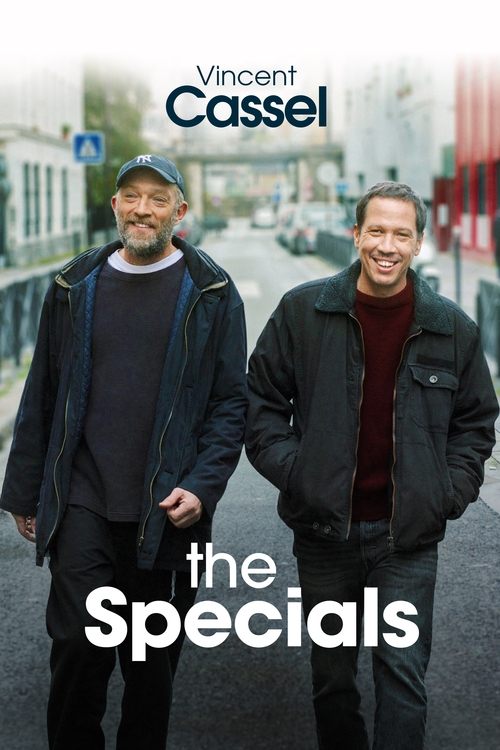
The Specials
A kinetic social drama pulsing with frantic compassion, where the jagged edges of severe autism meet the boundless patience of two men building a sanctuary from the system's discarded fragments.
The Specials

The Specials

Hors Normes

23 October 2019 Belgium 114 min ⭐ 7.8 (964)
Director: Éric Toledano Olivier Nakache
Cast: Vincent Cassel, Reda Kateb, Hélène Vincent, Bryan Mialoundama, Alban Ivanov
Drama Comedy
Systemic Failure vs. Individual Action Cross-Cultural and Inter-Religious Solidarity Social Inclusion and Mentorship The Ethics of Care

Overview

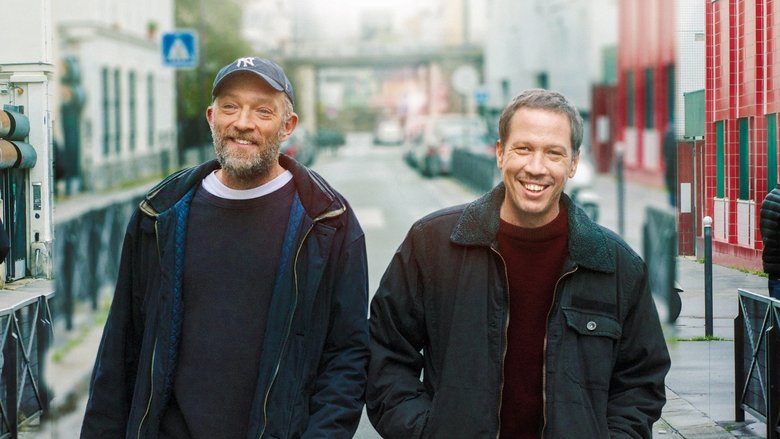
The Specials (Hors Normes) follows Bruno and Malik, two men who have spent twenty years operating in the shadows of the French healthcare system. Bruno runs an organization for children and adolescents with severe autism, while Malik trains underprivileged youth from rough neighborhoods to serve as their one-on-one caregivers. Their partnership creates a unique ecosystem of care for those deemed "too complex" for traditional institutions.

The film’s narrative engine is fueled by an impending government inspection. Because Bruno’s facility operates without an official license and employs uncertified staff, the General Inspectorate of Social Affairs (IGAS) threatens to shut them down. As the inspectors probe their methods, the movie navigates the chaotic, often violent, but deeply moving daily lives of the patients and the young mentors trying to find their own place in the world.
Core Meaning

The core of the film lies in its title, Hors Normes (literally "Outside the Norms"). Directors Éric Toledano and Olivier Nakache aim to challenge society's definition of "normal" and expose the systemic failure of a bureaucracy that prioritizes regulations over human dignity. The film serves as a tribute to the "invisible" workers and patients, arguing that the most "abnormal" thing is a society that turns its back on its most vulnerable members. It posits that compassion and human connection are more vital than any official diploma.

Thematic DNA

Systemic Failure vs. Individual Action 30%
Cross-Cultural and Inter-Religious Solidarity 25%
Social Inclusion and Mentorship 25%
The Ethics of Care 20%

Systemic Failure vs. Individual Action

The film highlights the gap between rigid state bureaucracy and the messy reality of care. While the government demands licenses and certifications, Bruno and Malik provide the actual labor of love that the state refuses to fund or manage, showing that individual initiative often steps in where the system fails.

Cross-Cultural and Inter-Religious Solidarity

The deep friendship between Bruno (a Jewish man) and Malik (a Muslim man) is presented without fanfare. Their collaboration demonstrates that shared humanity and a common mission to help others can transcend the deepest religious and social divides in modern France.

Social Inclusion and Mentorship

The film parallels the struggle of the autistic children with the struggle of the caregivers—at-risk youth from the banlieues. By caring for the "unwanted," these young men find purpose, discipline, and a sense of belonging, suggesting that social healing is a two-way street.

The Ethics of Care

Through the character of Joseph and Valentin, the film asks what it means to truly care for someone. It explores the physical and emotional toll of caregiving, emphasizing patience, physical presence, and the acceptance of non-linear progress.

Character Analysis

Bruno Haroche

Vincent Cassel

Archetype: The Devoted Servant
Key Trait: Relentless altruism

Motivation

To ensure that no child is left on the street or locked in a psychiatric ward, regardless of the legality of his methods.

Character Arc

Bruno begins and ends the film as a man entirely consumed by his mission. His arc is less about personal change and more about the external recognition of his worth as he faces the threat of being shut down. His only personal struggle is a comedic, failed attempt at dating through shidduchs.

Malik

Reda Kateb

Archetype: The Mentor
Key Trait: Sturdy pragmatism

Motivation

To provide a future for the underprivileged youth of Paris while supporting Bruno’s mission.

Character Arc

Malik balances the emotional chaos of the care center with discipline. He focuses on the development of the young caregivers, teaching them that punctuality and respect are the first steps toward social integration.

Joseph

Benjamin Lesieur

Archetype: The Innocent
Key Trait: Literal-mindedness

Motivation

To navigate a world that is sensory-overwhelming while seeking connection with his mother and Bruno.

Character Arc

Joseph’s path involves a delicate attempt at professional integration. His breakthrough comes during the final dance performance, where he finds a way to express himself within a structured social setting.

Dylan

Bryan Mialoundama

Archetype: The Growing Youth
Key Trait: Developing empathy

Motivation

To escape a cycle of unemployment and trouble by succeeding in Malik's training program.

Character Arc

A tough teen from the projects who initially lacks discipline but gradually develops a deep, protective bond with Valentin, learning empathy through the burden of care.

Symbols & Motifs

The Metro Fire Alarm

Meaning:

Symbolizes the impulsive, uncontrollable nature of Joseph’s autism and the constant tension between his desire for independence and his need for supervision.

Context:

Joseph has a recurring compulsion to pull the emergency alarm on the Paris Metro, which causes chaos for commuters but represents a small, fixable "glitch" in his social integration that Bruno patiently manages.

Valentin's Helmet

Meaning:

Represents the physical and metaphorical barrier between the severely autistic child and the world, as well as the ever-present threat of self-harm.

Context:

Valentin wears a protective helmet because he frequently bangs his head against walls. The moment he is able to remove the helmet or be held without it marks a significant emotional breakthrough.

The "On n'est pas loin" (We're nearly there) Mantra

Meaning:

A symbol of the incremental, exhausting nature of their work where victory is measured in tiny, fleeting steps.

Context:

Bruno uses this phrase constantly to reassure staff and patients, even when a solution seems impossible, reflecting the film's theme of persistent hope.

Memorable Quotes

La plupart des encadrants sont pas diplômés. Vous connaissez beaucoup de diplômes qui préparent à se manger des droites toute la journée ?

— Malik

Context:

Said to the government inspectors questioning the lack of certifications among his staff.

Meaning:

Highlights the reality that formal education cannot prepare one for the visceral, physical challenges of caring for severe autism.

On n'est pas loin.

— Bruno

Context:

Used by Bruno throughout the film to calm distressed patients or reassure worried parents.

Meaning:

The film's mantra of persistent, incremental hope.

Si on n'est pas là, qui les prend ?

— Bruno

Context:

Bruno’s defensive plea during the final interrogation by the IGAS inspectors.

Meaning:

The central moral question of the film, challenging the authorities to provide a better alternative.

Philosophical Questions

Does moral necessity override legal regulation?

The film pits Bruno’s illegal but effective care against the inspectors' legal but ineffective rules, asking if doing 'good' is enough of a justification for breaking the law.

What defines a life 'outside the norm'?

By showing the humanity and joy in the most 'extreme' cases of autism, the film questions whether society's definition of a 'normal' life is unnecessarily narrow and exclusionary.

Alternative Interpretations

While widely praised as a "feel-good" humanitarian drama, some critics offered more cynical readings. One statist interpretation suggests the film unintentionally glorifies the "uberization" of social work, where the state abdicates its responsibility to private charities and unlicensed individuals. Another cinematic critique argues that the film uses a "calculated sentimentality" (typical of Toledano and Nakache) to manipulate the audience into overlooking the genuine danger and ethical murkiness of Bruno's unlicensed operation. Lastly, a philosophical reading sees the film as an exploration of the 'Abject'—societal elements that are cast out because they remind the 'normal' world of its own fragility and lack of control.

Cultural Impact

The Specials had a profound impact on the French public discourse regarding autism. It shed light on the "forgotten" cases—those with severe behavioral issues who are often rejected by hospitals. Following the film's success, the French government faced increased pressure to reform the Plan Autisme. Critically, the film was praised for its authenticity, particularly the decision to cast individuals with autism rather than relying solely on professional actors. It won the Audience Award at the San Sebastián International Film Festival, proving its universal emotional resonance despite its specific French social context.

Audience Reception

Audience reception was overwhelmingly positive, particularly in France where it was a box office hit. Viewers praised the chemistry between Cassel and Kateb and the film's ability to balance humor and heartbreak without becoming maudlin. Critics lauded the documentary-style realism and the respectful treatment of the autistic characters. Some minor criticism was directed at the subplot involving Bruno's dating life, which some felt was a distracting 'tonal break' from the main drama, though others appreciated it as a way to humanize Bruno's character beyond his work.

Interesting Facts

  • The film is based on the real-life work of Stéphane Benhamou (Le Silence des Justes) and Daoud Tatou (Le Relais IDF).
  • Benjamin Lesieur, who plays Joseph, is a non-professional actor who is actually on the autism spectrum.
  • 5% of the film's profits were donated to the two associations that inspired the story.
  • Directors Toledano and Nakache spent two years observing the real associations before filming began.
  • Marco Locatelli, who plays the severely autistic Valentin, has a brother with autism in real life.
  • The film was the closing night feature at the 2019 Cannes Film Festival.

⚠️ Spoiler Analysis

Click to reveal detailed analysis with spoilers

Frequently Asked Questions

Explore More About This Movie

Dive deeper into specific aspects of the movie with our detailed analysis pages

Comments (0)

Leave a comment

No comments yet. Be the first to share your thoughts!