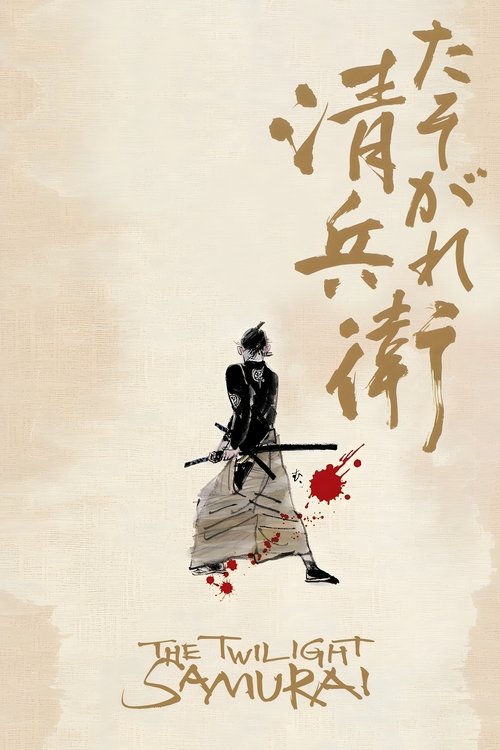
The Twilight Samurai
たそがれ清兵衛
Overview
Set in mid-19th century Japan during the waning years of the Edo period, The Twilight Samurai follows Seibei Iguchi, a low-ranking samurai who works as a weary bureaucrat in a grain warehouse. Widowed and burdened by the debts from his wife’s lavish funeral, Seibei spends his evenings caring for his two young daughters and senile mother, earning the derisive nickname "Twilight Seibei" from colleagues who mock his refusal to socialize after work.
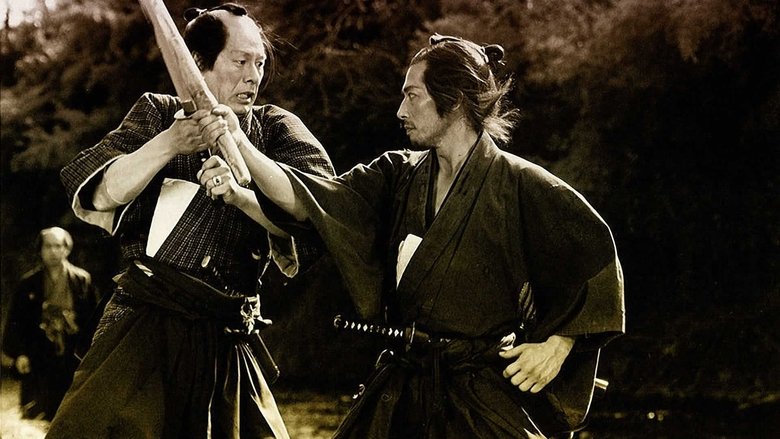
His monotonous but peaceful life is disrupted when he reconnects with Tomoe, a childhood friend who has recently fled an abusive marriage. When Seibei is forced to defend Tomoe’s honor in a duel—using only a wooden practice sword—his long-dormant martial skills are revealed to his clan superiors. This leads to a perilous assignment: he is ordered to assassinate a rogue samurai, a mission that threatens the humble family life he has struggled so hard to protect.

Core Meaning
Director Yoji Yamada redefines the jidaigeki (period drama) by stripping away the romanticized myth of the samurai. The film’s core message is that true honor does not reside in feudal loyalty or blood-soaked glory, but in the mundane, sacrificial acts of love and family care. It posits that being a "hero" is less about the skill of the sword and more about the courage to remain human and compassionate within a rigid, crumbling social system.
Thematic DNA
Duty vs. Personal Fulfillment
The film juxtaposes the crushing weight of the bushido code with Seibei’s simple desire for domestic peace. His struggle to balance the clan’s demands for violence with his role as a nurturing father serves as a critique of institutional loyalty that disregards individual humanity.
Social Inequality and Class Decay
Seibei’s poverty—depicted through his unkempt appearance and tattered clothes—highlights the stark reality of the lower-caste samurai. The film explores how the feudal structure failed those at the bottom even as the era itself began to dissolve.
The Ending of an Era
The "Twilight" of the title refers both to Seibei's routine and the broader historical transition toward the Meiji Restoration. The introduction of Western firearms and the obsolescence of the sword symbolize a world where the old ways are no longer sustainable.
Familial Love and Legacy
The narrative is framed by the voiceover of Seibei’s daughter, emphasizing that his greatest achievement wasn't a military victory, but the lasting love and education he provided his children.
Character Analysis
Seibei Iguchi
Hiroyuki Sanada
Motivation
Driven by an unwavering love for his daughters and a desire to provide them with a life of dignity despite their low social standing.
Character Arc
Initially resigned to a life of poverty and ridicule, Seibei finds the strength to reclaim his dignity not for his own sake, but to protect those he loves, eventually accepting his lethal skills as a tool for securing his family's future.
Tomoe Iinuma
Rie Miyazawa
Motivation
Seeking a life of genuine connection and kindness away from the cruelty of her high-ranking ex-husband.
Character Arc
Escaping a domestic nightmare, she seeks refuge in Seibei’s household, evolving from a victim of her status to a vital pillar of support for Seibei’s family.
Zenemon Yogo
Min Tanaka
Motivation
Survival and a weary, cynical defiance against a clan that treats him as a disposable "errand boy."
Character Arc
A high-ranking samurai who has lost everything and refused to commit seppuku. He serves as a dark reflection of what Seibei could become: a man destroyed by the very system he served.
Symbols & Motifs
The Bamboo Sword / Wooden Stick
Symbolizes Seibei’s rejection of the samurai’s traditional "soul" (the katana) in favor of practical survival and peace. It also represents his superior skill, showing he can defeat an armed opponent without lethal intent.
Seibei sells his steel katana to pay for his wife's funeral and later uses a wooden sword to disarm Tomoe's abusive ex-husband.
Twilight (Tasogare)
A metaphor for the fading relevance of the samurai class and the literal time of day when Seibei finds his only true joy—returning home to his family.
The nickname given to him by mocking coworkers who do not understand his priorities.
The Garden
Represents a pocket of order, growth, and life that Seibei nurtures amidst the chaos and decay of the outside world.
Seibei is frequently seen meticulously tending his small plot of land to supplement his family's food supply.
Memorable Quotes
たそがれ清兵衛は不運な男だったとおっしゃるのをよく聞きましたが、私はそんな風には思いません。
— Ito (Narrator)
Context:
The closing monologue of the film, spoken by Seibei's daughter as an old woman at his grave.
Meaning:
Challenges the societal perception of success, asserting that Seibei’s life was rich because he was loved, despite his lack of rank or wealth.
窮鼠猫を噛む (Kyuso neko o kamu)
— Seibei Iguchi
Context:
Said during his internal preparations for the final confrontation with Yogo.
Meaning:
Translates to "A cornered mouse will bite the cat." It reflects Seibei’s realization that even the most peaceful man will fight when pushed to the limit.
Philosophical Questions
What constitutes a 'fortunate' life?
The film asks whether success is measured by social status and wealth (the clan's view) or by the depth of one's personal relationships (Ito's view).
Can a person truly escape their social destiny?
Through Seibei's struggle to be a father first and a samurai second, the film explores the conflict between individual identity and the roles imposed by society.
Alternative Interpretations
Some critics interpret the final duel not as a battle of good versus evil, but as a shared tragedy. Seibei and Yogo are essentially the same man at different stages of life, forced into a death match by a bureaucracy that views them both as obsolete. Another reading suggests that Seibei’s eventual death in the Boshin War is the film’s final irony: despite choosing a life of love and family, the momentum of history is an inescapable force that ultimately claims the individual.
Cultural Impact
The Twilight Samurai marked a significant shift in Japanese cinema, leading a wave of 'revisionist jidaigeki' that moved away from flashy choreography toward humanistic realism. In Japan, it resonated deeply with the 'salaryman' culture, as middle-aged men saw their own daily struggles reflected in Seibei’s office-like samurai life. Internationally, its Academy Award nomination for Best Foreign Language Film helped introduce a global audience to a more nuanced, intimate side of Japanese history beyond the 'warrior' stereotype.
Audience Reception
The film was a critical and commercial phenomenon in Japan, praised for its 'gentle' approach to a violent genre. Audiences were particularly moved by Hiroyuki Sanada’s restrained performance. Western critics, including Roger Ebert, lauded the film for its emotional depth and historical texture, often calling it one of the greatest samurai films ever made because of its focus on character over combat.
Interesting Facts
- The film was the first samurai movie directed by Yoji Yamada, who was previously famous for the long-running 'Tora-san' series.
- It won an unprecedented 12 Japanese Academy Awards, including Best Picture, Director, Actor, and Actress.
- The film is the first entry in Yamada's 'Samurai Trilogy,' followed by 'The Hidden Blade' (2004) and 'Love and Honor' (2006).
- Hiroyuki Sanada performed the final sword fight without a stunt double, utilizing his extensive martial arts background.
- The duel between Seibei and Yogo was praised by historians for its realistic depiction of the cramped conditions inside a traditional Japanese house.
Easter Eggs
Literary Fusion
The film is not based on a single book but is an adaptation of three short stories by Shuhei Fujisawa: 'The Bamboo Sword,' 'Twilight Seibei,' and 'The Celebration of the Full Moon.'
Kurosawa Connection
The costume design was handled by Kazuko Kurosawa, the daughter of the legendary director Akira Kurosawa, bridging the gap between classic and revisionist samurai cinema.
⚠️ Spoiler Analysis
Click to reveal detailed analysis with spoilers
Frequently Asked Questions
Explore More About This Movie
Dive deeper into specific aspects of the movie with our detailed analysis pages
Comments (0)
No comments yet. Be the first to share your thoughts!