Skip to content
Captain Tsubasa
A sunlit sports epic of boyish devotion, where every pass carries a dream across continents and a battered ball glows like a small, loyal sun.
Captain Tsubasa

Captain Tsubasa

キャプテン翼

03 April 2018 — 30 June 2024 Japan 2 season 91 episode Ended 8.2 (750)

Cast: Yuko Sanpei, Kenichi Suzumura, Ayaka Fukuhara, Mutsumi Tamura, Takuya Sato

Drama Animation Comedy Friendship and the ball as companion Rivalry as mutual growth Teamwork and leadership Dreams and perseverance Sportsmanship and shared victory

Overview

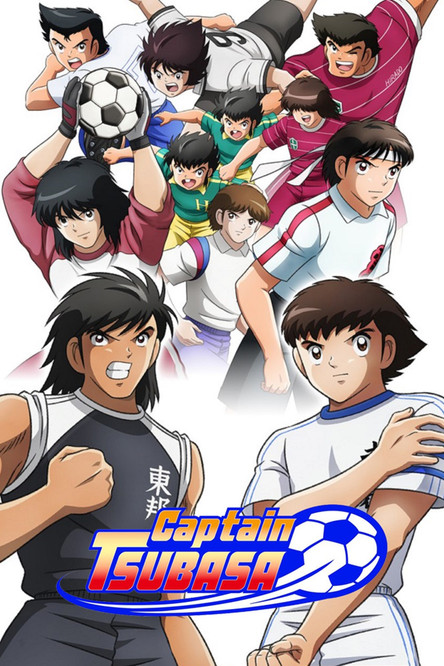
Captain Tsubasa (2018) is a David Production reboot of Yoichi Takahashi's 1981-1988 football manga. It retells the story from the beginning, starting with the infant Tsubasa Ozora, saved from a truck by the ball he was holding. It follows him as a boy who loves football above all else and wants to win the World Cup for Japan.

The first season runs 52 episodes, from April 2018 to April 2019. It covers his rivalries and partnerships in Japan: Genzo Wakabayashi, the "Golden Duo" with Taro Misaki, and above all Kojiro Hyuga, in the national elementary and middle school tournaments. A second season, Junior Youth Arc, premiered in October 2023 with 39 episodes. It was made by Studio KAI under a new director, and it adapts the manga's J Boys' Challenge arc, in which Japan's youth team goes to the international junior tournament in Paris.

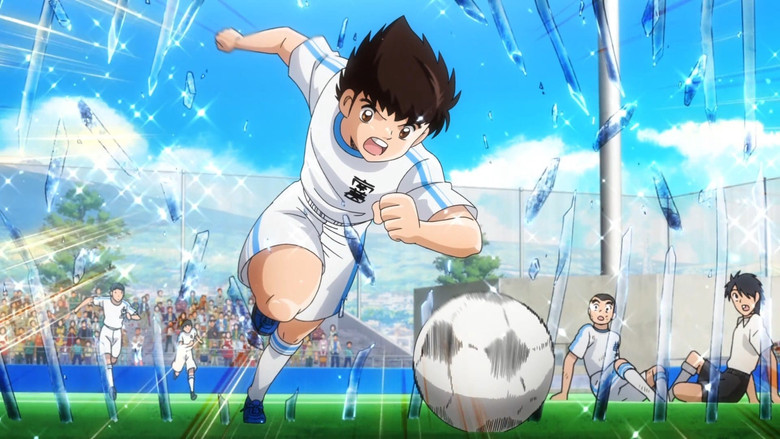
The tone is earnest and traditional. It is a team-sport tale of friendship, rivalry and hard training, with exaggerated, almost superhuman special shots and long, drawn-out matches.
Core Meaning

The series says that football is a language of friendship. Talent matters, but it grows through rivals who push you and teammates who trust you. Tsubasa's motto, "the ball is my friend," treats the game as a relationship. It is something you love rather than something you conquer.

The story also carries an optimistic, nationalist-in-the-best-sense dream: a small boy from a country with no football tradition believes it can stand on the world stage. Winning matters less than playing fully, and the finale of the first season shows that rivals can share a victory.

Thematic DNA

Friendship and the ball as companion 30%
Rivalry as mutual growth 25%
Teamwork and leadership 20%
Dreams and perseverance 15%
Sportsmanship and shared victory 10%

Friendship and the ball as companion

From Tsubasa's first scene, where the ball saves his life, the ball is a friend. In season 1 it also becomes a bridge to teammates such as Misaki and, through rivalry, to Wakabayashi and Hyuga. Season 2 carries the same bond into an international setting.

Rivalry as mutual growth

Wakabayashi, Hyuga and later Schneider force Tsubasa to improve, and he does the same for them. Matches become dialogues in which each side finds new techniques, such as Hyuga's Tiger Shot.

Teamwork and leadership

The title makes Tsubasa a captain who leads by joy and example. Duos like the Golden Duo and ensembles such as Nankatsu and the national youth side show that individual brilliance needs a collective.

Dreams and perseverance

Tsubasa's goal of winning the World Cup for Japan drives the story. Injuries, setbacks and tough opponents test him but never dim the dream, and season 2 widens the stage from Japan to the world.

Sportsmanship and shared victory

The season 1 finale ends in a tie, with respect for opponents rather than humiliation. The series insists that rivals are partners in the same game.

Character Analysis

Tsubasa Ozora

Yuko Sanpei

Archetype: Hero Key Trait: Boundless love of football

Motivation

He wants to win the World Cup for Japan. The motive is love of the game at first and grows into a responsibility to teammates and country.

Character Arc

He begins as a football-obsessed boy who moves to Shizuoka and charms everyone with his talent. Through season 1 he overcomes rivals and an injury-hampered final, learning that victory can be shared. In season 2 he becomes a leader on the international stage.

Genzo Wakabayashi

Kenichi Suzumura

Archetype: Rival and guardian Key Trait: Fearless goalkeeping

Motivation

To be the best keeper and to prove himself against Tsubasa.

Character Arc

The great goalkeeper starts as Tsubasa's first big challenge. He becomes both a rival and a trusted ally, and in season 2 he is one of Japan's pillars.

All 4 characters and cast

Symbols & Motifs

The soccer ball

Meaning: Friendship, destiny and innocence; Tsubasa's life partner.
Context: The opening shows the toddler Tsubasa saved from a truck by the ball he holds, and the motto 'the ball is my friend' keeps coming back throughout both seasons.

Tiger Shot and Drive Shot

Meaning: The distinct fighting philosophies of Hyuga (raw power, the tiger) and Tsubasa (spin, flair).
Context: Their special shots define the Nankatsu-Toho rivalry in season 1, including the equalising goal in the finale.

The Japan jersey and number 10

Meaning: National aspiration and the weight of leadership.
Context: Tsubasa's number 10 and the national team uniforms in season 2 stand for the dream of the World Cup for Japan.

The captain's armband

Meaning: Responsibility and the ability to inspire others.
Context: It reflects the title's idea of leadership; Tsubasa is the heart of every team he plays for.

Memorable Quotes

ボールは友だち
— Tsubasa Ozora

Context

Tsubasa's catchphrase across the franchise; it originates in his childhood, when the ball he held cushioned the impact of a bus or truck. It recurs throughout both seasons.

Meaning

The series' motto. It expresses the idea that football is a lifelong friend and a way of relating to others.

Episode Highlights

Season 1 premiere

S1E1

Introduces Tsubasa as a toddler saved by his ball and then as a 12-year-old arriving in Shizuoka before Nankatsu Middle School.

Significance:

Establishes the earnest, faithful retelling tone and the central motto.

Season 1 finale

S1E52

The final match between Nankatsu and Toho ends in a tie, with Hyuga's equalising Tiger Shot and Tsubasa playing hurt. It also contains hints of the Europe arc, with brief Misaki and Wakabayashi scenes.

Significance:

Concludes the middle-school tournament with a shared victory, an ending reviewers found divisive but fitting.

Season 2 friendly versus Paraguay

S2E37

Japan plays a friendly against Paraguay, which replaces the manga's Gremio FBPA, and the coach is referred to only as 'Coach'.

Significance:

Shows the adaptation changes in the second season's closing stretch.

Season 2 final episode

S2E38

Shingo Aoi is glimpsed in the crowd cheering for Tsubasa.

Significance:

Closes the Junior Youth Arc with a cameo.

Philosophical Questions

Is a shared victory a real victory?

The first season finale ends in a tie, asking whether competition's purpose is to determine a single winner or to honour both sides' effort.

Can a game be both friendship and rivalry?

Tsubasa treats opponents as friends, and rivals like Hyuga and Wakabayashi become teammates in the national squad in season 2.

How It Ends

Alternative Interpretations

The tied finale can be read as a heartwarming statement that everyone is a winner, or as a cop-out that denies Toho a clear win. Some reviewers took it as a defining moment of the show's philosophy; others saw it as an anticlimax after an overlong match.

Full ending explanation

Cultural Impact

The Captain Tsubasa manga ran in Weekly Shonen Jump from 1981 to 1988 and an earlier anime aired from 1983 to 1986. The 2018 reboot is a new generation's retelling of this classic. Reviewers noted it looks and feels like a traditional take rather than a modern update. The franchise's long influence on football culture is well known. Season 2 was added by Netflix in 2025 and Viz Media announced a DVD release.

Audience Reception

Early reviewers welcomed the first episode as snappy, confident and faithful to the old-school spirit. Criticism focused on exaggerated pacing in long matches. One finale review called the tie perhaps the biggest cop-out in anime history while still respecting it, and praised Hyuga's equaliser. Some fans were disappointed that season 1 covered only two arcs. Season 2 continued the story after a gap and a change in studio.

Interesting Facts

  • The 2018 anime premiered in April 2018 on TV Tokyo and retells Yoichi Takahashi's manga from the beginning.
  • The first season was produced by David Production with Toshiyuki Kato as director and ended at episode 52 in April 2019.
  • Season 2, Junior Youth Arc, premiered on October 1, 2023, with Katsumi Ono directing at Studio KAI, replacing David Production.
  • Atsuhiro Tomioka oversaw scripts and Hajime Watanabe was character designer and chief animation director across both seasons.
  • Jun Fukuyama joined season 2 as Karl Heinz Schneider.
  • Season 2 has 39 episodes and adapts the J Boys' Challenge arc, and its opening theme in some episodes is 'As One' by Johnny's West.
  • Season 1 covers only two manga arcs in 52 episodes, which disappointed some fans who hoped for more.

Easter Eggs

Shingo Aoi cameos among the crowd in the season 2 final episode.

A nod to another character of the franchise.

Frequently Asked Questions

Explore More About This Movie

Dive deeper into specific aspects of the movie with our detailed analysis pages

Comments (0)

Leave a comment

No comments yet. Be the first to share your thoughts!

Similar Movies