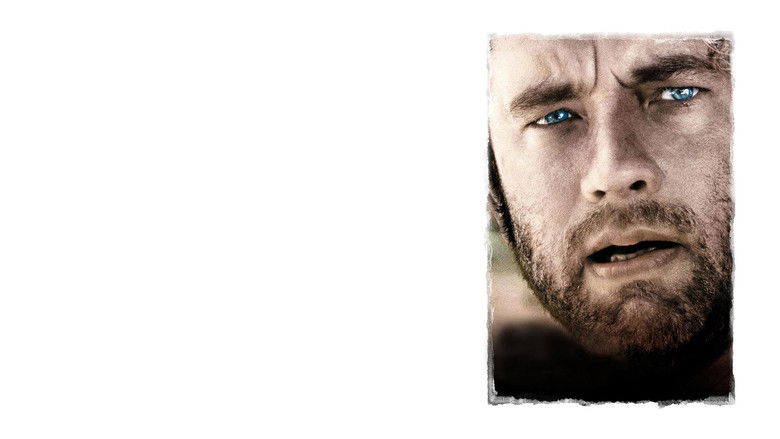
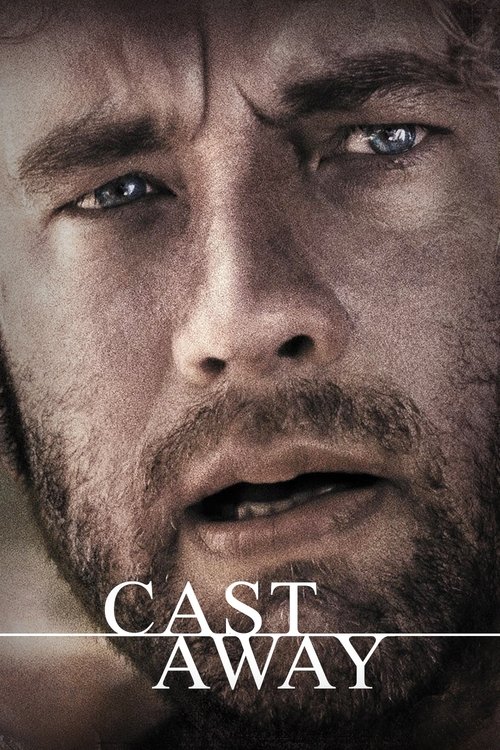
Cast Away
A profound survival drama where isolation strips away the tyranny of time, leaving only the raw human will to live. A bloody handprint on a volleyball becomes the ultimate lifeline.
Cast Away

Cast Away

"At the edge of the world, his journey begins."

22 December 2000 United States of America 143 min ⭐ 7.7 (12,086)
Director: Robert Zemeckis
Cast: Tom Hanks, Helen Hunt, Chris Noth, Paul Sanchez, Lari White
Drama Adventure
The Tyranny of Time vs. Timelessness The Necessity of Human Connection Perseverance and the Will to Live Acceptance and Relinquishing Control
Budget: $90,000,000
Box Office: $429,632,142

Overview

Cast Away follows Chuck Noland, an obsessively punctual FedEx systems engineer who travels the globe optimizing delivery times. His fast-paced, clock-driven life is abruptly shattered when his cargo plane crashes in the South Pacific during a violent storm, leaving him as the sole survivor on a remote, uninhabited island. Suddenly, a man whose life was defined by the minute must learn to survive in a place where time has seemingly stopped.

Stripped of modern conveniences and human contact, Chuck faces grueling physical and psychological challenges over four years. He learns to build fire, catch food, and manage agonizing dental pain, but his greatest struggle is the crushing weight of isolation. To maintain his sanity, he creates an imaginary companion out of a blood-stained volleyball he names Wilson, and clings to a pocket watch containing a photo of his fiancée, Kelly, as well as one unopened FedEx package bearing angel wings.

The film shifts from a harrowing tale of physical survival to a poignant exploration of resilience, letting go, and the unpredictable nature of fate. Without relying on extensive dialogue or a musical score during the island sequences, the narrative powerfully conveys Chuck's internal transformation from a man attempting to control time to one who must surrender to the uncontrollable tides of life.
Core Meaning

At its core, Cast Away is a philosophical exploration of the human condition, specifically our relationship with time, control, and connection. Director Robert Zemeckis uses Chuck Noland's journey to highlight the "tyranny of time" in modern society—how we are enslaved by schedules and the illusion of control. When the island strips away this structure, Chuck is forced to confront the raw essence of existence.

The film ultimately teaches a stoic lesson about acceptance and perseverance. Chuck learns that he cannot control the future, the ocean, or the people he loves. He can only control his will to keep breathing and survive the present moment. It posits that true salvation does not come from mastering the world, but from surrendering to its unpredictable tides, maintaining hope, and appreciating the simplest of gifts.

Thematic DNA

The Tyranny of Time vs. Timelessness 30%
The Necessity of Human Connection 25%
Perseverance and the Will to Live 25%
Acceptance and Relinquishing Control 20%

The Tyranny of Time vs. Timelessness

Chuck's pre-crash life is dictated by the clock, reflecting a modern obsession with efficiency. On the island, time loses its structural meaning, forcing Chuck to adapt to the natural rhythms of the sun and tides, ultimately realizing that time cannot be micromanaged, only experienced.

The Necessity of Human Connection

The devastating psychological toll of isolation is explored through Chuck's relationship with Wilson. The film illustrates that the human need for social and emotional connection is as essential to survival as food and water.

Perseverance and the Will to Live

Chuck's sheer determination to survive pushes him past his physical and mental limits. Whether it's knocking out an infected tooth with an ice skate or holding onto a broken pocket watch, he manufactures purpose to keep himself breathing.

Acceptance and Relinquishing Control

A distinctly stoic theme emerges when Chuck realizes he has power over nothing—not even his own suicide, when the tree branch breaks. He must let go of his need for control, accepting whatever the tide brings him next.

Character Analysis

Chuck Noland

Tom Hanks

Archetype: The Survivor / The Everyman
Key Trait: Resourceful and Determined

Motivation

Initially driven to master time and efficiency; later, motivated simply to survive, hold onto his sanity, and return to the woman he loves.

Character Arc

Chuck transforms from an arrogant, fast-paced corporate manager who believes he can micromanage time, into a humbled, patient survivor who accepts the unpredictability of fate and the loss of his former life.

Kelly Frears

Helen Hunt

Archetype: The Anchor
Key Trait: Loyal but Pragmatic

Motivation

To find stability and peace after a traumatic loss, while keeping Chuck's memory alive in her heart.

Character Arc

Kelly is left behind to grieve the presumed death of the man she loves. She eventually moves forward, marries, and has a child, but is emotionally shattered when Chuck miraculously returns, forcing her to confront her lingering love.

Wilson

A Volleyball

Archetype: The Confidant / The Imaginary Friend
Key Trait: Silent and Enduring

Motivation

To serve as a psychological coping mechanism for a deeply isolated man.

Character Arc

Transitioning from a mundane piece of sporting equipment to a fully personified companion, Wilson "listens" to Chuck's plans and arguments, acting as his tether to humanity before tragically drifting away at sea.

Symbols & Motifs

Wilson the Volleyball

Meaning:

Wilson represents the fundamental human need for connection, companionship, and a sounding board for sanity. He acts as a psychological mirror and Chuck's anchor to his own humanity.

Context:

Created from a bloody handprint after Chuck angrily throws the ball, Wilson becomes his constant companion for four years. Losing him to the ocean currents serves as the film's most heartbreaking emotional climax.

The Unopened FedEx Package (Angel Wings)

Meaning:

It symbolizes hope, salvation, and a manufactured sense of purpose. It acts as a physical promise to himself that he will eventually return to civilization to complete the delivery.

Context:

While Chuck opens every other washed-up package to survive, he leaves this one sealed. He eventually delivers it at the film's end, crediting the box with saving his life.

The Broken Pocket Watch

Meaning:

The watch symbolizes Chuck's connection to Kelly and his past life. Because it is stopped, it also serves as a metaphor for a relationship and a version of time that has run its course.

Context:

Kelly gives it to Chuck before his doomed flight. He keeps her faded photo inside it open in his cave to motivate him, but respectfully returns it to her when he realizes their time together has passed.

The Crossroads

Meaning:

The physical crossroads represent infinite possibilities, true freedom, and the unknown future. Having lost his old life and his rigid schedule, Chuck is now free to choose any direction.

Context:

Appears in the final scene of the movie in Texas, after Chuck delivers the angel wings package and meets the woman who points out the various routes he can take.

Memorable Quotes

I know what I have to do now. I got to keep breathing. Because tomorrow the sun will rise. Who knows what the tide could bring?

— Chuck Noland

Context:

Spoken by Chuck to his friend Stan upon returning to civilization, reflecting on the realization he had after his failed suicide attempt on the island.

Meaning:

This quote encapsulates the film's core stoic philosophy: accepting powerlessness over the universe while maintaining the hope and resilience to face another day.

We live or we die by the clock. We never turn our back on it.

— Chuck Noland

Context:

Chuck is giving a passionate, high-energy motivational speech to Russian FedEx workers at the very beginning of the film.

Meaning:

It establishes the "tyranny of time" that governs modern corporate society, sharply contrasting with the timeless, survival-focused reality Chuck will soon face.

I'm so sad that I don't have Kelly. But I'm so grateful that she was with me on that island.

— Chuck Noland

Context:

Chuck delivers an emotional monologue to his friend Stan after he meets with Kelly and realizes they can no longer be together.

Meaning:

This line demonstrates deep maturity and acceptance. Chuck acknowledges his grief over losing her to another man, but appreciates how her memory fueled his will to survive.

I had power over nothing. And that's when this feeling came over me like a warm blanket. I knew, somehow, that I had to stay alive.

— Chuck Noland

Context:

Chuck recounts how he tried to hang himself on the island, but the tree branch broke under the weight of the test log, saving his life.

Meaning:

This moment highlights the paradox of surrender. By accepting his complete lack of control over his fate, Chuck finds a profound inner peace and a renewed will to live.

Philosophical Questions

To what extent does our society's obsession with time rob us of actual living?

The film aggressively contrasts Chuck's hyper-scheduled, clock-watching existence with the timeless vacuum of the island. It asks the audience to consider whether being constantly busy equates to a meaningful life, or if true appreciation of existence only happens when the clock stops.

What makes us fundamentally human when stripped of all societal constructs?

When removed from his job, his technology, and his social status, Chuck's immediate instinct is to anthropomorphize a volleyball. The film posits that our fundamental humanity lies not in our tools or achievements, but in our desperate, intrinsic need for emotional connection and love.

Is hope a rational choice or an evolutionary survival mechanism?

Chuck admits that logic dictated he would die on the island, yet he kept breathing anyway. The film explores whether hope is a logical fallacy we tell ourselves to avoid despair, or a vital, intangible force that physically keeps us alive until the 'tide brings something in'.

Alternative Interpretations

The contents of the unopened package have sparked immense debate. While symbolically representing "hope," some interpret the package as a literal cosmic joke—that it contained something that could have easily saved him. A popular fan theory, fueled by a 2002 Super Bowl commercial parody, suggests the box contained a satellite phone or a survival kit, highlighting the tragic irony of Chuck's reverence for it.

Another prominent interpretation surrounds the film's ambiguous ending at the crossroads. While on the surface it represents infinite possibilities for Chuck, many viewers interpret the lingering shot of the woman in the truck (Bettina) as a suggestion of a future romance. Because Bettina sent the package, and the package saved Chuck's life, some audiences believe fate orchestrated the crash to bring two people who were in failing relationships together. The filmmakers intentionally left this open-ended to avoid a cliché romantic resolution.

Cultural Impact

Cast Away left an indelible mark on pop culture, largely due to Tom Hanks's transformative performance and the creation of "Wilson." Wilson the volleyball became a cultural icon in its own right, parodied and referenced in countless television shows, movies, and internet memes as the ultimate symbol of isolation and imaginary companionship. The manufacturer, Wilson Sporting Goods, even created special edition volleyballs featuring the bloody handprint, which remained top sellers for decades.

The film also served as one of the most successful examples of brand integration in cinematic history. Although FedEx did not pay for product placement, their deep cooperation resulted in a massive boost in global brand recognition, inextricably linking the company to themes of reliability and global connectivity. In the realm of filmmaking, Zemeckis's bold choice to strip away dialogue and musical score for a large portion of a Hollywood blockbuster challenged conventional narrative structures, proving that visual storytelling and physical acting could hold mainstream audiences captivated.

Audience Reception

Cast Away was a massive critical and commercial success, grossing over $429 million worldwide. Audiences universally praised Tom Hanks for his physically and emotionally demanding performance, which earned him a Golden Globe and an Oscar nomination. Viewers were deeply moved by his ability to carry the entire middle act of the film almost entirely alone, making an inanimate volleyball evoke genuine tears from theatergoers.

However, the film did face some points of criticism. A segment of the audience felt that the ending was emotionally frustrating, wishing for a more traditional romantic reunion between Chuck and Kelly. Additionally, some critics noted that the heavy presence of FedEx branding bordered on a corporate commercial, despite the artistic integration. Nevertheless, the overall verdict cements it as a modern classic of the survival genre, lauded for its mature, bittersweet conclusion and masterful visual storytelling.

Interesting Facts

  • Production was famously paused for an entire year so Tom Hanks could lose 50 pounds and grow out his hair and beard to look authentically stranded.
  • During the year-long production hiatus, director Robert Zemeckis used the exact same film crew to shoot the supernatural thriller 'What Lies Beneath' starring Harrison Ford.
  • There is absolutely no musical score during the island scenes until Chuck finally escapes on his raft, a deliberate choice by Zemeckis to emphasize the profound psychological isolation.
  • Screenwriter William Broyles Jr. deliberately stranded himself on an isolated beach for a week to research survival skills. During this time, a washed-up volleyball inspired the creation of Wilson.
  • Despite prominent screen time for its brand and logistics, FedEx paid absolutely no money for product placement in the film.
  • When asked what was in the unopened FedEx package, director Robert Zemeckis joked it was a waterproof, solar-powered satellite phone. An early draft actually had it containing two bottles of salsa verde to spice up a couple's relationship.
  • One of the original Wilson volleyball props used in the film was sold at a Heritage Auctions event in December 2024 for an astounding $162,500.

Easter Eggs

Bettina's Farm Gate

At the beginning of the film, the metal gate at the Texas farm reads 'Bettina and Dick'. At the very end of the film, when Chuck delivers the package, the gate simply reads 'Bettina', implying that her relationship ended just like Chuck's did while he was on the island.

Elvis Presley Connections

The film contains several nods to Elvis, tying into the Memphis setting and serving as a subtle homage to Hanks and Zemeckis' previous collaboration, Forrest Gump. Chuck listens to Elvis in his car, and his friends mention putting Elvis CDs in his coffin.

The Sailing Certificate

Early in the film, the camera briefly pans across Chuck's desk to reveal a sailing certificate. This subtle detail foreshadows his later ability to calculate wind, navigate tides, and successfully build a raft to escape the island.

⚠️ Spoiler Analysis

Click to reveal detailed analysis with spoilers

Frequently Asked Questions

Explore More About This Movie

Dive deeper into specific aspects of the movie with our detailed analysis pages

Comments (0)

Leave a comment

No comments yet. Be the first to share your thoughts!