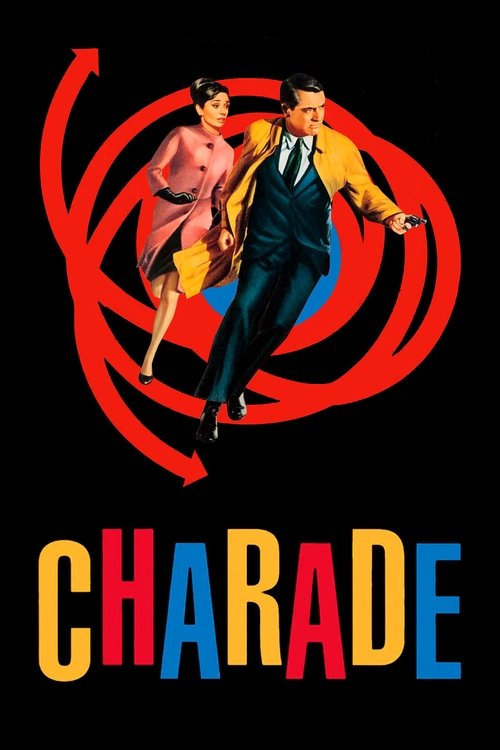
Charade
A sparkling romantic thriller where elegance meets peril. It's a dizzying dance of shifting identities and misplaced trust, set against a glamorous Parisian backdrop where every shadow hides murder and mischief.
Charade

Charade

"Is anyone really who they seem to be?"

01 December 1963 United Kingdom 113 min ⭐ 7.7 (1,501)
Director: Stanley Donen
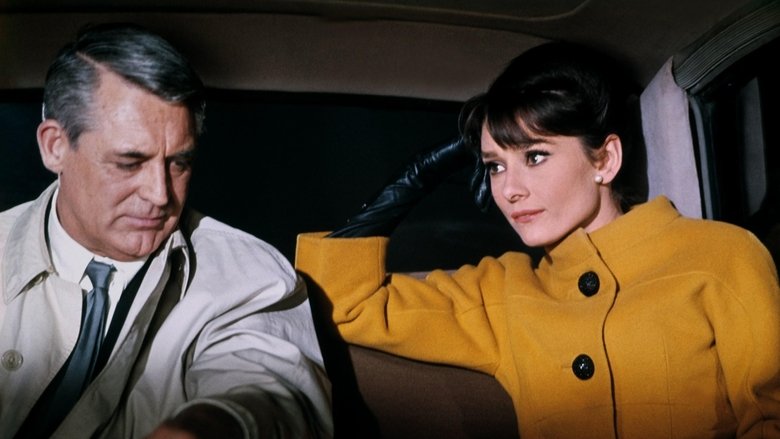
Cast: Cary Grant, Audrey Hepburn, Walter Matthau, James Coburn, George Kennedy
Comedy Mystery Romance
Trust and Deception Greed and Materialism The Fluidity of Identity Romance Amidst Peril
Budget: $4,000,000
Box Office: $13,475,000

Overview

While on a skiing holiday in the French Alps, Regina Reggie Lampert contemplates divorcing her enigmatic husband, Charles. However, upon returning to Paris, she finds her apartment stripped bare and learns from the police that Charles was murdered after liquidating all their assets. Soon, Reggie discovers her late husband was part of a World War II OSS unit that stole $250,000 in gold, and his former accomplices are convinced she knows where the missing fortune is hidden.

As she navigates a treacherous web of greed and deceit, Reggie is aided by the suave but mysterious Peter Joshua, a man who repeatedly changes his name and backstory. Simultaneously, she is contacted by a CIA administrator who warns her that she is in grave danger from her husband's surviving squad mates.

With a cast of menacing thugs trailing her every move through the picturesque streets of Paris, Reggie must solve the mystery of the missing money while trying to determine who, if anyone, she can actually trust.
Core Meaning

At its core, Charade explores the deceptive nature of appearances and the inherent risks of trust. The film suggests that true identity is fluid and that romantic love ultimately requires an irrational leap of faith into the unknown, as one can never entirely know the secrets of another person.

Thematic DNA

Trust and Deception 40%
Greed and Materialism 25%
The Fluidity of Identity 20%
Romance Amidst Peril 15%

Trust and Deception

The plot is entirely driven by lies, aliases, and hidden motives. Cary Grant's character famously changes his identity four times, forcing Reggie to constantly re-evaluate who to trust [1.9]. The theme emphasizes that in a world of espionage, trust is both dangerous and essential.

Greed and Materialism

The relentless pursuit of the stolen $250,000 corrupts nearly every character in the film. The World War II veterans betray their country and each other, showcasing how greed destroys loyalty and morality.

The Fluidity of Identity

Identities are treated as costumes that can be swapped at will. Reggie's late husband lived a quadruple life with multiple passports, and her new romantic interest cycles through the names Peter, Adam, Alex, and Brian.

Romance Amidst Peril

The film brilliantly juxtaposes lethal danger with lighthearted, screwball flirtation. Even when facing imminent death, the characters engage in witty repartee, highlighting love as a powerful force of escapism.

Character Analysis

Regina 'Reggie' Lampert

Audrey Hepburn

Archetype: The Innocent / Everywoman
Key Trait: Witty and observant

Motivation

To survive the killers hunting her, uncover the truth behind her husband's death, and find out if the man she is falling in love with is friend or foe.

Character Arc

Reggie transforms from a naive, unhappy wife relying on her husband to a proactive, courageous protagonist who must outsmart professional killers and solve a complex mystery [1.4].

Peter Joshua / Brian Cruikshank

Cary Grant

Archetype: The Shapeshifter / Protector
Key Trait: Charming and enigmatic

Motivation

To recover the stolen government funds and protect Reggie from the ruthless men pursuing her.

Character Arc

He begins as a mysterious stranger, morphs into a suspected thief and murderer through his various aliases (Adam, Alex), and finally reveals himself to be a dedicated government agent and loyal lover.

Hamilton Bartholomew / Carson Dyle

Walter Matthau

Archetype: The False Mentor / Hidden Villain
Key Trait: Deceptively bureaucratic

Motivation

Utter greed and vengeance; he is determined to steal the $250,000 and eliminate anyone who stands in his way.

Character Arc

He poses as a helpful CIA administrator guiding Reggie, but is ultimately unmasked as Carson Dyle, the vengeful mastermind who survived a WWII ambush and wants the gold entirely for himself.

Symbols & Motifs

The Rare Stamps

Meaning:

The stamps, particularly the Gazette Maldave, symbolize how true value is often hidden in plain sight [1.19]. They represent the deceptive nature of appearances, as millions of dollars are disguised as everyday postage.

Context:

The stamps are attached to a mundane letter in Reggie's late husband's travel bag. They remain unnoticed by the ruthless killers who tear apart rooms looking for bulk cash or gold.

The Water Pistol

Meaning:

It symbolizes the film's unique tonal blend of mortal danger and playful comedy. It establishes that in this narrative, threats are not always what they seem.

Context:

In the opening scene in the French Alps, a gun is ominously pointed at Reggie, only to reveal a young boy holding a water pistol.

The Empty Theatre

Meaning:

The theatre acts as a metaphor for the performance, acting, and charades that all the characters have been engaging in throughout the story.

Context:

The film's dramatic climax occurs on the stage of the Théâtre-Français, complete with trapdoors and dramatic lighting, emphasizing the theatricality of the villain's deception.

Memorable Quotes

Do you know what's wrong with you? ... Nothing!

— Reggie Lampert and Peter Joshua

Context:

Reggie asks Peter this question in a flirtatious moment, asserting her attraction to him despite the surrounding danger and mystery.

Meaning:

This iconic exchange perfectly captures the sparkling, effortless chemistry between Hepburn and Grant, highlighting the romantic comedy elements of the film [1.19].

I already know an awful lot of people, and until one of them dies I couldn't possibly meet anyone else.

— Reggie Lampert

Context:

Reggie says this to Peter when he tries to introduce himself during their first meeting at the ski resort in the French Alps.

Meaning:

A brilliant showcase of the script's dark, witty humor. It establishes Reggie's sharp tongue and defense mechanisms.

Oh, I love you, Adam... Alex... Peter... Brian... Whatever your name is. I hope we have a lot of boys and we can name them all after you.

— Reggie Lampert

Context:

Reggie says this near the end of the film after the mystery is resolved, fully accepting his true identity as Brian Cruikshank.

Meaning:

This humorous line summarizes the film's running gag about Grant's shifting aliases and emphasizes that Reggie has fallen for the essence of the man, not his identity.

Philosophical Questions

Can we ever truly know the people we love?

The film explores this by having Reggie constantly discover new, contradictory information about her late husband and her new lover. It posits that human identity is inherently mysterious and layered [1.8].

Is trust a rational decision or an irrational leap of faith?

Reggie is presented with logical reasons to distrust everyone around her, including Grant's character. Ultimately, the film suggests that romantic trust defies logic and requires a leap of faith.

Alternative Interpretations

While typically viewed as a straightforward romantic thriller, Charade can be interpreted as a meta-commentary on Hollywood romance and espionage tropes. The film constantly winks at the audience, acknowledging the absurdity of its own plot twists, especially through Cary Grant's ever-changing aliases which parody the suave, infallible spy archetype.

Another reading focuses on the film's feminist undertones. Because the script was rewritten to have Reggie pursue the male lead, she exhibits a rare sense of agency for a 1960s heroine. She is not merely a damsel in distress; she actively drives the romantic narrative, making her a thoroughly modern protagonist navigating a world of untrustworthy men.

Cultural Impact

Stanley Donen's Charade stands as a masterclass in the romantic comedy-thriller genre, expertly bridging the gap between Golden Age Hollywood glamour and the more cynical, twist-driven narratives of modern cinema. Released mere weeks after the JFK assassination in late 1963, the film provided audiences with a much-needed dose of escapist sophistication, wrapped in the glamorous allure of Parisian locales and Henry Mancini's unforgettable score.

Often dubbed 'the best Hitchcock movie Hitchcock never made', the film heavily influenced the spy and romantic thriller genres. It demonstrated how to successfully balance witty, screwball-style repartee with genuine suspense and surprisingly graphic violence for its era. Furthermore, it cemented Audrey Hepburn's status as a fashion icon and served as one of Cary Grant's final, defining romantic lead performances.

Audience Reception

Audiences and critics alike have long praised Charade for its effortless charm, largely driven by the electric, witty chemistry between Cary Grant and Audrey Hepburn. The witty screenplay by Peter Stone, the stylish Parisian cinematography by Charles B. Lang Jr., and Henry Mancini's hauntingly beautiful score are frequently cited as absolute high points.

While universally beloved, some minor critiques point to the plot's convoluted nature, with its relentless twists and shifting identities occasionally bordering on the absurd. However, most viewers agree that this dizzying complexity is entirely intentional—a playful feature rather than a flaw—that perfectly complements the film's deceptive tone.

Interesting Facts

  • Cary Grant initially turned down the role because he felt his age (59) compared to Audrey Hepburn (33) made the romantic dynamic inappropriate. The script was rewritten to make Hepburn's character the romantic aggressor [1.16].
  • The film is famously referred to by critics and fans as 'the best Hitchcock movie Hitchcock never made' due to its seamless blend of suspense, mistaken identities, and romance.
  • Audrey Hepburn's elegant and iconic wardrobe for the film was entirely designed by Hubert de Givenchy.
  • In 2022, the film was selected for preservation in the United States National Film Registry by the Library of Congress for being culturally, historically, or aesthetically significant.
  • The film was shot on location in Paris and the French Alps, with twelve truckloads of equipment hauled over Alpine roads for the spectacular opening sequences.

Easter Eggs

Maurice Binder's animated opening titles

The opening title sequence features spiraling pinwheels and continuously overlapping arrows. This abstract, geometric animation cleverly foreshadows the film's dizzying plot twists, shifting alliances, and 'comedically-wonderful confusion' [1.10].

Subtle musical foreshadowing

Henry Mancini's iconic, suspenseful theme song plays subtly in the background of several early scenes before it is fully introduced, acting as an auditory Easter egg setting the film's tone.

⚠️ Spoiler Analysis

Click to reveal detailed analysis with spoilers

Frequently Asked Questions

Explore More About This Movie

Dive deeper into specific aspects of the movie with our detailed analysis pages

Comments (0)

Leave a comment

No comments yet. Be the first to share your thoughts!