Skip to content
Chicago Med
A high-octane medical crucible of pulse-pounding trauma bays and fractured moral compasses, where compassionate healers desperately mend shattered lives under blinding surgical lights while quietly hemorrhaging their own emotional sanity.
Chicago Med

Chicago Med

"Welcome home."

17 November 2015 — 13 May 2026 United States of America 12 season 220 episode Returning Series 8.3 (1,273)

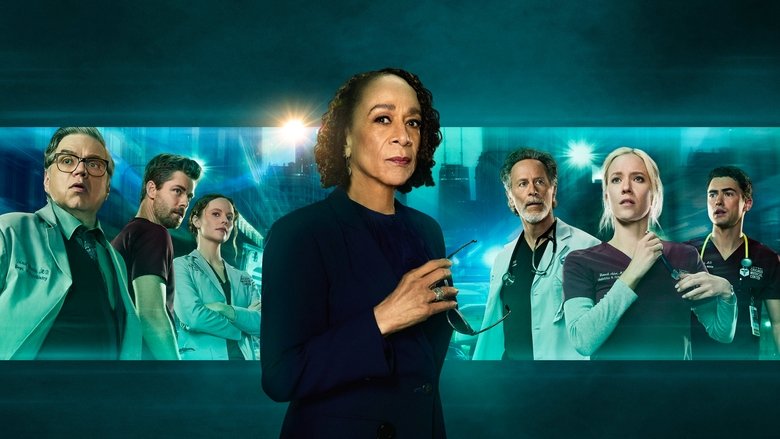
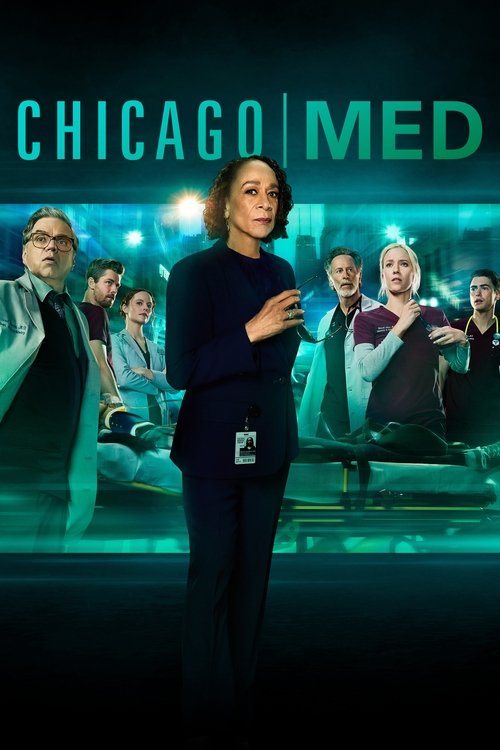
Cast: S. Epatha Merkerson, Oliver Platt, Marlyne Barrett, Nick Gehlfuss, Lorena Diaz

Drama Medical Ethics vs. Institutional Protocol The Psychological Burden and Trauma of Caregiving Healthcare Commodification and Class Disparity Addiction, Forgiveness, and Personal Reform Family Duty, Loyalty, and Unspoken Trauma

Overview

Created by Dick Wolf and Matt Olmstead as the third pillar of NBC's expansive One Chicago franchise, Chicago Med centers on the chaotic Emergency Department and operating suites of the fictional Gaffney Chicago Medical Center. Premiering in November 2015, the series captures the grueling day-to-day realities of doctors, trauma nurses, surgeons, and psychiatric evaluators who confront complex medical crises, bureaucratic obstacles, and life-or-death ethical crossroads.

Across its multi-season run, the overarching narrative documents the evolution of a major metropolitan hospital under shifting leadership, advancing biomedical technologies, and institutional pressures. The personnel navigate the tension between institutional protocol, economic realities, and Hippocratic duties. From mass-casualty train derailments and toxic chemical threats to internal staff battles, substance recovery, and administrative privatization battles, the hospital serves as both an urgent haven and a testing ground for human resilience.

The workplace dynamic operates as a high-pressure family ecosystem where personal romance, deep rivalries, and shared trauma intersect. As senior leadership fights to maintain ethical standards amidst corporate takeovers, younger physicians and nurses struggle to preserve their empathy against emotional burnout, institutional cynicism, and the ever-present weight of mortality.

Core Meaning

The fundamental thesis of Chicago Med is that healing is an imperfect, human endeavor inextricably bound to ethical ambiguity. The show posits that modern medicine is not a flawless science of definitive cures, but an ongoing compromise between scientific limits, systemic failures, human fallibility, and empathy. Through every procedural conflict, the creators assert that a caregiver's greatest virtue is not infallible technical precision, but the courage to remain vulnerable and morally accountable in a broken healthcare system.

Thematic DNA

Medical Ethics vs. Institutional Protocol 30%
The Psychological Burden and Trauma of Caregiving 25%
Healthcare Commodification and Class Disparity 20%
Addiction, Forgiveness, and Personal Reform 15%
Family Duty, Loyalty, and Unspoken Trauma 10%

Medical Ethics vs. Institutional Protocol

The constant friction between what is legally mandated or hospital-sanctioned and what is morally just for an individual patient. The series consistently interrogates the boundaries of informed consent, paternalistic medicine, and regulatory obedience.

The Psychological Burden and Trauma of Caregiving

Explores compassion fatigue, secondary traumatic stress, and mental illness among healthcare workers. Characters regularly grapple with acute depression, grief, and the psychological scars left by patient loss.

Healthcare Commodification and Class Disparity

Highlights the socio-economic disparities embedded in American healthcare—contrasting underinsured inner-city patients with elite private donors, and dramatizing the catastrophic effects of converting public healthcare into profit-driven enterprises.

Addiction, Forgiveness, and Personal Reform

Examines addiction as a medical disease rather than a moral failure, showing doctors and patients navigating relapse, recovery, societal stigma, and redemption in clinical spaces.

Family Duty, Loyalty, and Unspoken Trauma

Traces how personal upbringings, filial obligations, military backgrounds, and familial estrangement color clinical judgment in high-stakes environments.

Character Analysis

Dr. Daniel Charles

Oliver Platt

Archetype: The Mentor / Wounded Healer Key Trait: Quiet empathy paired with penetrating emotional intelligence.

Motivation

To alleviate psychological suffering and treat patients with unconditional dignity.

Character Arc

Gaffney’s Chief of Psychiatry serves as the hospital's emotional anchor. Despite guiding others through mental health crises, he battles severe chronic depression, marital estrangements, the trauma of being shot by a former patient, and the illness of his loved ones. His arc demonstrates that profound psychological insight does not grant immunity from human pain.

Sharon Goodwin

S. Epatha Merkerson

Archetype: The Guardian / Diplomat Key Trait: Resolute moral spine beneath diplomatic pragmatism.

Motivation

To keep Gaffney's doors open to the underserved without sacrificing institutional integrity.

Character Arc

A former nurse who rose to Chief of Patient and Medical Services, Goodwin stands at the intersection of boardroom fiscal demands, legal liability, and bedside clinical care. Throughout multiple administrative overhauls, personal diabetic health issues, and board disputes, she shields her staff and champions patient advocacy.

All 5 characters and cast

Symbols & Motifs

The Trauma Bay / ED Glass Doors

Meaning:

Symbolizes the porous boundary between the volatile outside world and clinical control.

Context:

Passing through them forces characters to strip away personal biases to confront unfiltered human suffering.

Dr. Charles’ Office & Glasses

Meaning:

Functions as a sanctuary of emotional processing away from the sensory overload of the ED.

Context:

Adjusting or removing his glasses often marks his transition from clinical psychiatrist to empathetic fellow human.

O.R. 2.0 (The AI Operating Suite)

Meaning:

Represents technological advancement divorced from human empathy and ethical restraint, embodying the risk of reducing human life to algorithms and corporate prestige.

Context:

Introduced as a costly, flawed AI surgery system installed during the hospital's privatization.

The Charge Nurse Desk (Maggie's Station)

Meaning:

Symbolizes the central nervous system and moral backbone of Gaffney, representing order, practical wisdom, and frontline advocacy amidst administrative bureaucracy.

Context:

Occupied by Charge Nurse Maggie Lockwood as the command hub of the Emergency Department.

Lanyards and Access Badges

Meaning:

Symbolize institutional sanction, power dynamics, and the cost of moral defiance.

Context:

Frequently handed in or confiscated during ethical disputes and administrative confrontations.

Memorable Quotes

He's gone, Doctor. Let it go.
— Recurring ED Doctors / Senior Staff

Context

The signature emergency room refrain spoken across numerous seasons to distraught colleagues.

Meaning

It captures the recurring trauma of resuscitation efforts and the painful boundary between clinical perseverance and accepting mortality.

We treat the patient, not the policy.
— Dr. Will Halstead

Context

Uttered during Season 1, Episode 3 in an ethical standoff regarding experimental patient care, recurring as his philosophy.

Meaning

Encapsulates Will's career-long defiance of administrative regulations in favor of human life.

All 4 quotes

Episode Highlights

Derailed

S1E1

Gaffney's ED grand opening is shattered by a mass-casualty train crash, introducing the core ensemble under fire.

Significance:

Establishes the clinical and ethical baselines of the series.

Love Hurts

S2E23

Season 2 finale where Dr. Charles is ambushed and shot outside the hospital by a disgruntled psychiatric patient.

Significance:

Catalyzes prolonged trauma storylines and redefines Dr. Charles’ relationship with psychiatric care and justice.

Never Let You Go

S4E19

An armed teenager takes the ED hostage demanding to see his baby, forcing hospital lockdown.

Significance:

Tests emergency protocols and Sharon Goodwin's leadership under extreme crisis.

With a Brave Heart

S4E22

Season 4 finale featuring Dr. Rhodes' father's murder and the unveiling of Dr. Ava Bekker’s obsessive descent.

Significance:

Leads directly to the tragic exit of Connor Rhodes and Ava Bekker, shifting surgical leadership.

Infection: Part II

S5E4

Massive three-show One Chicago crossover dealing with a weaponized flesh-eating necrotizing fasciitis outbreak across the city.

Significance:

Showcases Gaffney’s role in citywide public health and disaster response within the shared franchise.

This Could Be the Start of Something New

S8E9

Dr. Ethan Choi and April Sexton tie the knot and depart Gaffney to open a community mobile clinic.

Significance:

Marks the emotional culmination of two foundational Season 1 lead arcs toward community medicine.

Does One Door Close and Another Open?

S8E22

Will Halstead tampers with O.R. 2.0 to prevent corporate malfeasance, resigns from Gaffney, and reunites with Natalie Manning in Seattle.

Significance:

Concludes the eight-season journey of original central protagonist Dr. Will Halstead.

Philosophical Questions

The Limits of Autonomy

Explores when a physician's duty to preserve life supersedes a patient's right to refuse care or make self-destructive choices.

The Ethics of Scarcity

Examines how medical professionals can equitably distribute finite life-saving resources when systemic inequality dictates survival.

The Morality of Deception in Healing

Investigates whether a doctor is ever morally justified in breaking hospital regulations, misleading authorities, or breaking the law if it saves an innocent patient.

The Healer’s Paradox

Contemplates whether a caregiver can truly maintain clinical objectivity without sacrificing the personal empathy that makes them human.

Alternative Interpretations

The Institutional Critique Reading: Viewed through this lens, the hospital itself is the central antagonist. The administrative board, insurance constraints, and venture capital takeovers systematically penalize compassion, turning doctors into moral casualties of an indifferent healthcare infrastructure.

Full ending explanation

Cultural Impact

Premiering during a major renaissance of mid-2010s network procedural drama, Chicago Med helped cement Dick Wolf’s One Chicago as a dominant Wednesday-night ratings titan for NBC. The series distinguished itself from romance-centric medical soaps and heightened diagnostic mysteries by grounding its narratives in high-volume urban trauma care, public hospital economics, and contemporary social realities.

The show tackled ripped-from-the-headlines issues: the opioid epidemic, veteran PTSD, bioethics in advanced AI surgery, healthcare worker burnout during epidemics, and the tension between public health and corporate privatization. Its procedural format, combined with cross-show narrative events, established a blueprint for modern broadcast franchise worldbuilding.

Audience Reception

Early Seasons (Seasons 1–3): Solidified high broadcast ratings. Critics praised the energetic pacing, authentic emergency room chaos, and Oliver Platt’s grounded psychiatric presence, though some noted similarities to classic hospital procedural formulas.

Mid-Run Peak & Melodrama (Seasons 4–6): Garnered strong engagement during major crossover events and dramatic storylines, though storylines like the toxic romance and demise of Dr. Ava Bekker divided viewers over tonal shifts toward sensationalism.

Transition & Modern Era (Seasons 7–Present): Successfully managed major cast turnovers (departures of Rhodes, Manning, Sexton, Choi, and Halstead) by introducing fresh dynamics through characters like Dr. Dean Archer and Dr. Hannah Asher. The Season 8 privatization storyline and OR 2.0 arc were praised for refocusing on contemporary systemic healthcare dilemmas.

Overall Verdict: A resilient, top-tier network medical drama celebrated for its pacing, ensemble chemistry, and consistent willingness to engage with complex bioethical dilemmas.

Interesting Facts

  • Wolf Entertainment employs practicing trauma doctors and surgical nurses on set to supervise procedures, teach suture techniques, and write accurate jargon into scripts.
  • Unlike many network procedurals filmed on soundstages in Los Angeles, Chicago Med is produced on location at Cinespace Chicago Film Studios and locations across Chicago, Illinois.
  • S. Epatha Merkerson holds a historic multi-decade collaboration with Dick Wolf, having previously starred for 17 seasons as Anita Van Buren on Law & Order before stepping into the lead administrative role on Med.
  • Surgery sequences utilize custom-built silicone bodies filled with pressurized faux blood conduits to recreate realistic pulsatile bleeding and real-time surgical incisions.
  • Coordinating production across Chicago Med, Chicago Fire, and Chicago P.D. requires a unified master schedule to ensure cast members can seamlessly film scenes across different sets in the same week.

Easter Eggs

One Chicago Family Ties

Dr. Will Halstead is the biological brother of Chicago P.D. Detective Jay Halstead (Jesse Lee Soffer), creating continuous cross-series personal and narrative crossovers.

Molly’s Bar

The iconic watering hole owned by Chicago Fire personnel serves as the regular social gathering spot where Med doctors, Firehouse 51 firefighters, and Intelligence officers debrief and unwind.

Jason Beghe Multi-Show Appearances

Hank Voight has made recurring appearances across Med, reinforcing the clinical-legal nexus when criminal cases enter the trauma center.

Law & Order Shared Multiverse

Due to crossover episodes linking Chicago P.D. to Law & Order: SVU, Chicago Med exists within the wider Dick Wolf television multiverse spanning over three decades of television.

Frequently Asked Questions

Explore More About This Movie

Dive deeper into specific aspects of the movie with our detailed analysis pages

Comments (0)

Leave a comment

No comments yet. Be the first to share your thoughts!

Similar Movies