Skip to content
Climax
A hypnotic, neon-drenched psychological horror where primal artistic euphoria curdles into claustrophobic delirium, swirling like an uncontrolled flame consuming a kaleidoscope of twisting, helpless bodies in a frozen wasteland.
Climax

Climax

"Birth and death are extraordinary experiences. Life is a fleeting pleasure."

19 September 2018 France 97 min 7.0 (2,365)

Director: Gaspar Noé

Cast: Sofia Boutella, Romain Guillermic, Souheila Yacoub, Kiddy Smile, Claude-Emmanuelle Gajan-Maull

Drama Horror Music Breakdown of Social Order and Primal Regression Art vs. Chaos / Creation vs. Destruction The Impossibility of Human Coexistence Loss of Control and Altered Perception Paranoia and Scapegoating
Budget: $2,900,000
Box Office: $1,696,075

Overview

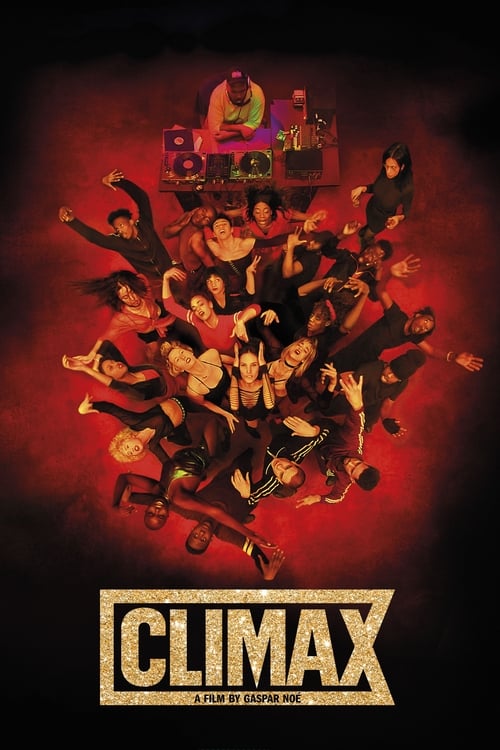
Set during a snowy winter night in 1996, Climax follows an exceptionally talented, multicultural group of twenty French urban dancers—comprising voguing, krumping, and waacking artists—who gather in a remote, disused vocational school surrounded by dense woods. After spending three days in intense isolation perfecting a complex, exhilarating dance routine for an upcoming tour in the United States, the troupe decides to celebrate the end of rehearsals with a late-night afterparty.

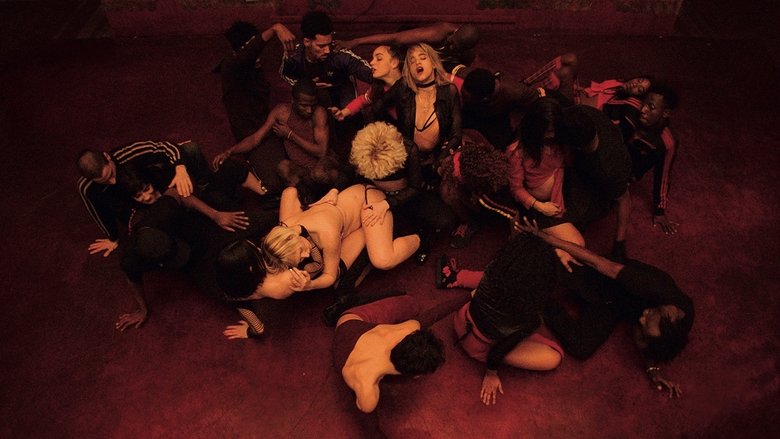
The celebration begins with intoxicating energy, characterized by joyous dance battles, flirty banter, and mutual creative admiration, centered around a large bowl of sangria prepared for the group. DJ Daddy spins vibrant house and disco tracks, and the atmosphere feels like a triumph of collective artistic harmony. However, as the night progresses, the mood undergoes a subtle, sinister shift as individual dancers begin to experience frightening sensory distortions, sudden bouts of irrational rage, and acute paranoia.

Realizing that someone has secretly spiked the sangria with massive doses of liquid LSD, the trapped dancers succumb to mass hysteria. Cut off from the outside world by a blizzard and unable to escape their own altering minds, their professional discipline and social inhibitions rapidly disintegrate. The party transforms into a nightmarish labyrinth of paranoia, violent accusations, sexual transgression, and survivalist chaos.
Core Meaning

At its core, Gaspar Noé uses Climax to demonstrate how thin, fragile, and artificial the veneer of human civilization and social harmony truly is. The director's central message—distilled in the prominent intertitle "Life is a collective impossibility"—posits that while individual human beings can briefly achieve transcendent unity through art (symbolized by the meticulously synchronized opening dance routine), long-term peaceful coexistence is inherently impossible.

When pushed by fear, intoxication, or stress, civilized human behavior instantly regresses to primal, reptilian survival instincts. The film functions as a dark parable about the breakdown of order, the destructive nature of paranoia, and how quickly communities turn inward to scapegoat and destroy themselves from within.

Thematic DNA

Breakdown of Social Order and Primal Regression 30%
Art vs. Chaos / Creation vs. Destruction 25%
The Impossibility of Human Coexistence 20%
Loss of Control and Altered Perception 15%
Paranoia and Scapegoating 10%

Breakdown of Social Order and Primal Regression

The narrative documents the total decay of social structures. As the LSD takes hold, social etiquette, professional respect, and empathy vanish, replaced by territorial aggression, mob mentalities, and basic instinct.

Art vs. Chaos / Creation vs. Destruction

The film contrasts the beauty of disciplined artistic collaboration with the terrifying physical anarchy of losing control. Dance transitions from an expression of freedom into a grotesque, involuntary spasm of madness.

The Impossibility of Human Coexistence

Reflecting Noé’s philosophical thesis, the characters’ attempt to build a harmonious community collapses under the weight of suppressed jealousies, prejudices, and hidden desires.

Loss of Control and Altered Perception

The horror stems not from an external monster, but from losing agency over one's own mind and body, illustrating how perception constructs reality—and how easily that reality can be shattered.

Paranoia and Scapegoating

When tragedy strikes, the group’s immediate impulse is not to help one another, but to find someone to blame, leading to immediate mob violence against vulnerable members.

Character Analysis

Selva

Sofia Boutella

Archetype: The Falling Leader / Tragic Heroine Key Trait: Expressive physical intensity and fragile authority

Motivation

To maintain creative order and survive the nightmare.

Character Arc

Begins as a confident, highly capable choreographer guiding the troupe, but deteriorates into a terrified, sobbing victim wandering neon-lit corridors as her grasp on reality shatters.

Lou

Souheila Yacoub

Archetype: The Innocent / Tragic Bystander Key Trait: Sobriety and vulnerability amid collective madness

Motivation

To protect her unborn child and survive the night unharmed.

Character Arc

Refuses to drink sangria because she is pregnant, making her the only sober person in the troupe; she becomes the primary victim of the group's mob paranoia, enduring physical attacks and severe trauma.

All 5 characters and cast

Symbols & Motifs

The Spiked Sangria Bowl

Meaning:

Symbolizes corrupting force and the loss of innocence.

Context:

It acts as a literal catalyst that strips away inhibitions and exposes hidden human dark sides.

The French Flag (Tricolor)

Meaning:

Symbolizes liberty, equality, and fraternity.

Context:

Hanging prominently on the wall of the main hall, its presence during the descent into anarchy serves as an ironic commentary on the fragility of national unity and European ideals.

The TV Shelf with VHS Tapes and Books

Meaning:

Symbolizes the director's artistic DNA and prepares the viewer for the transgressive, existential journey ahead.

Context:

Displayed during the opening interviews.

Snow / The Freezing Exterior

Meaning:

Represents absolute isolation and death.

Context:

The snowy landscape creates an inescapable perimeter: staying inside means facing human madness, while going outside means freezing to death.

The Inverted Camera / Upside-Down Shots

Meaning:

Visually symbolizes the complete inversion of reality, moral order, and spatial control.

Context:

Used during the height of the trip.

Neon Red Lighting

Meaning:

Symbolizes a literal descent into hell or an inferno.

Context:

Washes over the hallways where the most shocking acts of self-harm, aggression, and panic occur.

Memorable Quotes

Birth is a unique opportunity.
— Gaspar Noé

Context

Intertitle card written by Gaspar Noé appearing on screen mid-way through the film.

Meaning

It frames human entry into the world as a rare gift, contrasting sharply with the destructive behavior displayed by the characters.

Life is a collective impossibility.
— Gaspar Noé

Context

Intertitle card written by Gaspar Noé displayed near the climax/end of the film.

Meaning

It acts as the ultimate philosophical summary of the story, asserting that human beings are fundamentally incapable of living together in lasting peace.

All 5 quotes

Philosophical Questions

Is human social order merely a temporary illusion hiding primal savagery?

Explored through the sudden, total regression of civilized, supportive artists into violent mobs once fear and chemical imbalance take over.

Can art truly unite humanity, or is collective coexistence an impossibility?

Explored by contrasting the transcendent, perfectly synchronized dance routine at the start with the inevitable, horrific dissolution of the group by the end.

Where does moral responsibility lie when human agency is stripped away involuntarily?

Explored through characters committing terrible acts under involuntary drug intoxication, blurring the line between victim and perpetrator.

Alternative Interpretations

Political Allegory of France and Europe: The diverse troupe represents multicultural France under the French flag. The spiked sangria acts as an allegory for socio-political anxiety and xenophobia, demonstrating how quickly national unity fractures into tribal violence when crisis strikes.

Full ending explanation

Cultural Impact

Set in 1996, the film pays tribute to the peak of the French Touch electronic music movement (Daft Punk, Thomas Bangalter) and the underground club scene that brought together diverse subcultures through dance.

Climax premiered at the 2018 Cannes Film Festival (Directors' Fortnight) to widespread acclaim, winning the prestigious Art Cinema Award. Critics praised its virtuosic camera work, exhilarating choreography, and pulse-pounding soundtrack, viewing it as one of Noé’s most energetic and accessible works.

The film revitalized interest in dance-horror hybrids and showcased how real-time long takes could be combined with physical dance styles (krumping, voguing) to build unbearable cinematic tension.

The story draws heavily on Thomas Hobbes’ theory of the state of nature (a war of all against all) and the biblical story of the Tower of Babel—where humanity attempts to construct something divine together, only to be struck down by confusion, language loss, and internal collapse.

Audience Reception

Praised Aspects: Critics and viewers universally lauded the breathtaking 10-minute opening dance sequence, Benoît Debie’s masterclass long-take cinematography, the thumping 90s electronic soundtrack, and Sofia Boutella's raw, committed performance.

Main Points of Criticism: Some audience members found the second half repetitive, exhausting, and thin on narrative depth, feeling overwhelmed by nearly forty minutes of continuous screaming and chaotic flailing.

Controversial Moments: Key points of controversy included the brutal mob assault on pregnant Lou resulting in severe self-harm, locking young Tito in an electrical box leading to his accidental death, and subplots involving sibling incest.

Overall Verdict: Considered a polarizing triumph of French Extremity—hailed by cinephiles as an immersive visual and auditory masterpiece, while challenging general viewers with its relentless sensory assault.

Interesting Facts

  • Shot in Just 15 Days: The entire feature was prepped, rehearsed, and filmed in approximately two weeks inside an abandoned school in Paris on a tight budget.
  • No Traditional Script: Gaspar Noé wrote only a 5-page narrative outline. The vast majority of the dialogue and character interactions were completely improvised on set by the performers.
  • Non-Actor Dancers: Aside from Sofia Boutella and Souheila Yacoub, the cast consisted of real-life professional dancers (Voguers, Krumpers, Waackers) recruited from ballrooms, dance battles, and YouTube, with no prior acting experience.
  • Chronological Shooting: The film was shot almost entirely in chronological order so that the cast could authentically experience and build upon the escalating fatigue, energy, and madness.
  • Continuous 42-Minute Take: The second half of the film features an uninterrupted long take lasting over 40 minutes, navigating the entire building without hidden cuts or CGI transitions.
  • Rare Unreleased Daft Punk Track: Electronic musician Thomas Bangalter (half of Daft Punk) contributed to the soundtrack and specifically unearthed an unreleased 1995 track titled "Sangria" from his archives for the film.
  • Complete Post-Production ADR: Because heavy house music was blasted on set to keep dancers in rhythm, almost all dialogue, screams, and ambient sound had to be re-recorded and mixed in post-production by sound designer Ken Yasumoto.
  • Subverted Credit Sequence: The film intentionally disrupts narrative structure by displaying full end credits at the very beginning of the movie and title cards in the middle.

Easter Eggs

The TV Shelf Video & Book Collection

Surrounding the monitor during the audition tapes are VHS tapes of landmark transgressive films (Suspiria, Possession, Eraserhead, Salò, Un Chien Andalou, Querelle, Metropolis) and books by Nietzsche, Bataille, Sade, Cioran, and Kafka, laying out Noé's artistic influences.

Psyché’s Audition Interview Foreshadowing

In her VHS interview, Psyché mentions leaving Berlin to escape drugs because her former roommate used liquid LSD drops directly in his eyes. In the final scene, she applies LSD eye-drops to herself, confirming her connection to the drug.

Spiking the Sangria on Camera

Around minute 20, during a sweeping shot of the party, Psyché can be seen in the background standing near the punch bowl, subtly dropping liquid into the container while others dance around her.

Gaspar Noé's Voice Cameo

The off-screen interviewer asking questions during the opening VHS audition tapes is voiced by Gaspar Noé himself.

Homage to Possession (1981)

Sofia Boutella’s intense hallway breakdown sequence—where she screams, contorts her body, and flails against walls—is a homage to Isabelle Adjani’s subway breakdown scene in Andrzej Żuławski’s cult film Possession (which is also visible on VHS next to the TV).

Frequently Asked Questions

Explore More About This Movie

Dive deeper into specific aspects of the movie with our detailed analysis pages

Comments (0)

Leave a comment

No comments yet. Be the first to share your thoughts!

Similar Movies