Skip to content
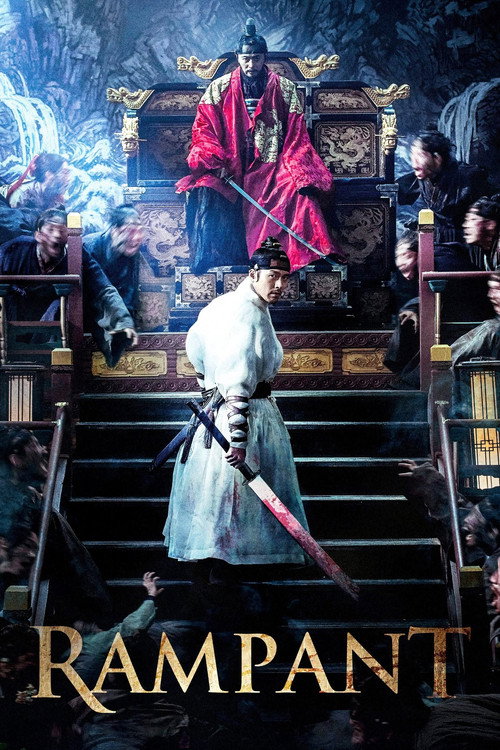
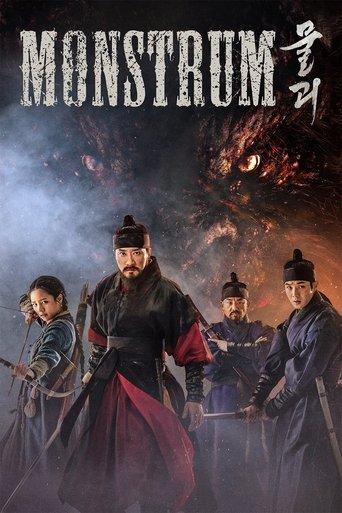
Rampant
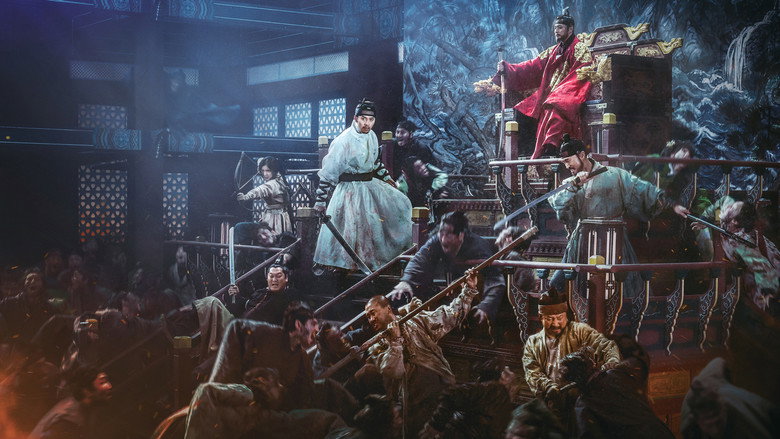
A Joseon-era nightmare in which a kingdom rots from within before the first corpse ever rises — moonlit steel, screaming courtyards, and a prince forced to choose a throne he never wanted.
Rampant

Rampant

창궐

"A darkness looms over the kingdom."

25 October 2018 South Korea 122 min 6.8 (243)

Director: Kim Sung-hoon

Cast: Hyun Bin, Jang Dong-gun, Jo Woo-jin, Jeong Man-sik, Lee Sun-bin

Drama Fantasy Action Horror Sovereignty and national humiliation Corrupt power and the enemy within Reluctant heroism and inherited duty Contagion as social collapse The people as the true nation

Overview

Rampant (창궐, Chang-gwol) is a 2018 South Korean period action-horror film directed by Kim Sung-hoon from a screenplay by Hwang Jo-yoon. Set during the Joseon dynasty, at a time when the Korean kingdom survives as a vassal of the Manchu Qing empire, it imagines a plague of flesh-hungry creatures — the "Night Demons" — spreading through a nation whose court is already hollowed out by fear and collaboration.

Prince Lee Chung (Hyun Bin) has spent years in Qing as a political hostage, cultivating an easy cynicism and a formidable talent with a sword. He returns home only after learning that his elder brother, Crown Prince Lee Young, has taken his own life — and arrives to find the port of Jemulpo and the country beyond it convulsing with an infection that only stirs after dark. Standing against him, and against the throne itself, is Kim Ja-joon (Jang Dong-gun), the Minister of War, whose ambitions run far deeper than containing a disease.

Running roughly two hours, the film braids three genres at once: a swordplay spectacle, a palace-intrigue thriller, and the story of a man who keeps refusing the destiny handed to him. The horror is national as much as personal — the question is never only whether the living can outfight the dead, but whether a kingdom this compromised is still worth saving.
Core Meaning

Kim Sung-hoon uses the zombie as a political diagnosis rather than a monster-movie gimmick. The Night Demons are the visible symptom of an invisible rot: a court that has already traded sovereignty for survival, a Minister of War who would rather rule ashes than serve a living king, and a hostage prince whose exile is the kingdom's shame made flesh.

The film's central argument is that a nation is destroyed by its rulers long before it is destroyed by its plague. Lee Chung's arc — from a sardonic pleasure-seeker who wants nothing to do with Joseon to a man who picks up his brother's burden — insists that legitimacy is not inherited but earned by the willingness to stand between the people and the dark. Against Kim Ja-joon's belief that power belongs to whoever is ruthless enough to seize it, Rampant answers that authority means nothing unless it is exercised on behalf of those with no power at all.

Thematic DNA

Sovereignty and national humiliation 25%
Corrupt power and the enemy within 25%
Reluctant heroism and inherited duty 20%
Contagion as social collapse 17%
The people as the true nation 13%

Sovereignty and national humiliation

Joseon exists as a vassal of the Qing empire, and Lee Chung's own body is the proof — a prince sent abroad as a political hostage, a living receipt for his country's submission. The plague arrives as a second invasion the state is too weakened to resist, and the film repeatedly asks whether a kingdom that has already surrendered its dignity can find the will to defend its life.

Corrupt power and the enemy within

Kim Ja-joon, the Minister of War, manipulates the royal family into doubting Lee Chung's claim to the throne, treating the outbreak as an opportunity rather than a catastrophe. The most dangerous predator in the film wears court silk and speaks in daylight; the Night Demons merely finish what ambition has begun.

Reluctant heroism and inherited duty

Lee Chung returns for a funeral, not a crusade. Introduced as arrogant and self-interested — a man whose plans extend no further than taking a bride back to China — he is dragged toward responsibility by his brother's death and by the ordinary people of Jemulpo who fight without titles. The throne becomes something he must deserve rather than receive.

Contagion as social collapse

The infection spreads from the port inward, tracking the routes of trade and traffic, and the state's response — concealment, quarantine, denial — accelerates it. The horror lies in watching institutions choose reputation over rescue until the distinction between the governed and the devoured disappears.

The people as the true nation

Fighters like the archer Deok-hee, a protector of Jemulpo, and the commoners who take up arms beside her carry the moral weight the palace has abandoned. The film locates Joseon not in the court but in the ones who keep swinging at the dark after the court has fled.

Character Analysis

Lee Chung

Hyun Bin

Archetype: Reluctant hero / prodigal prince Key Trait: Sardonic detachment masking an exceptional swordsman's discipline

Motivation

Initially self-preservation and freedom from a country that discarded him; later, honoring his brother's sacrifice and protecting the commoners no one else will.

Character Arc

Begins as an arrogant royal hostage in Qing whose ambitions reach no further than personal pleasure and taking a bride back with him to China. His brother's suicide brings him home; the Night Demons and the people of Jemulpo keep him there. He moves from disowning Joseon to accepting that its defense is his to shoulder.

Kim Ja-joon

Jang Dong-gun

Archetype: Villain / usurper Key Trait: Icy, theatrical ambition that never mistakes itself for patriotism

Motivation

Absolute power — a conviction that a humiliated, vassal Joseon deserves a ruler willing to do anything, and that he is that man.

Character Arc

The corrupt Minister of War, who works to convince the royal family that Lee Chung is not the rightful heir. As the plague spreads he treats the collapse as a ladder rather than a disaster, escalating from courtly manipulation to open confrontation with the prince.

All 3 characters and cast

Symbols & Motifs

The Night Demons (야귀)

Meaning:

Not simply the undead but a national affliction — subjects consumed by the very country that failed to protect them, rising to devour what remains. They embody a populace turned into an ungovernable force by neglect.

Context:

Named as "Night Demons" rather than zombies, they are creatures of darkness who go still in daylight, so the film's calendar of terror is measured in sunsets and the desperate business conducted between them.

Night and daybreak

Meaning:

The cycle of dark and dawn stands for the kingdom's political fortunes: truth and violence emerge at night, while daylight is the fragile window in which order can be rebuilt.

Context:

The central action set pieces are staged after dark, lit by torch and moon, with survival structured around the race to reach morning — an arc that culminates in the film's climactic reckoning.

The sword

Meaning:

Lee Chung is established as an exceptional swordsman, and his blade tracks his transformation: first a mercenary's skill, then a prince's instrument, finally a shield held over other people.

Context:

His fighting style is showcased in the martial-arts sequences that anchor the film's action, contrasted with Kim Ja-joon's colder, more calculating use of force and of the army he commands.

The port of Jemulpo

Meaning:

A threshold between Joseon and the outside world — the point where foreign power, foreign goods and foreign infection all enter. It symbolizes a border the state can no longer control.

Context:

The outbreak takes hold at the port and the harbor community mounts its own defense, making Jemulpo the film's first image of a people governing themselves in the absence of government.

The dead Crown Prince

Meaning:

Lee Young's suicide is the film's absent center: an heir who chose death over complicity, a conscience the court could not accommodate.

Context:

News of his death is what pulls Lee Chung home from Qing, and the brother's unfinished purpose becomes the inheritance Lee Chung must decide whether to accept.

The throne

Meaning:

An empty seat that everyone in the film defines themselves against — coveted by Kim Ja-joon, refused by Lee Chung, vacated in spirit by a court that rules nothing.

Context:

The conspiracy to discredit Lee Chung's claim runs parallel to the outbreak, so every political maneuver happens while the country beyond the palace walls is being eaten alive.

Philosophical Questions

Is a nation worth saving when its rulers have already sold it?

Lee Chung's contempt for Joseon is earned — the state traded him away as a hostage and drove his brother to suicide. The film answers him not with an argument about the crown but with the people of Jemulpo, suggesting that loyalty is owed to a populace rather than to an institution.

Does legitimacy come from blood or from action?

Kim Ja-joon's conspiracy turns on persuading the court that Lee Chung is not the rightful heir, making the question literal. The narrative resolves it by demonstration: the man who fights for the living is the one who earns the title, whatever the lineage records say.

What separates a monster from a man who chooses monstrousness?

The Night Demons act without will; Kim Ja-joon acts with total deliberation. By placing an unthinking horde beside a calculating minister, the film proposes that moral horror requires intent, and that the courtier is the worse creature precisely because he could choose otherwise.

Can violence ever be redemptive?

Lee Chung is introduced as the greatest swordsman of his age — a skill developed in exile for no purpose beyond himself. The film tests whether that lethal facility becomes something else when it is turned toward protection, and whether skill can be laundered into virtue by the ends it serves.

Alternative Interpretations

Political allegory. The most common reading treats the Night Demons as the Joseon people themselves — abandoned by a vassal court, transformed into a destructive force by the very neglect that was supposed to be governance. On this view the plague is a consequence, not a cause, and Kim Ja-joon is simply the disease's political form.

Full ending explanation

Cultural Impact

Rampant arrived at a peak moment for Korean zombie storytelling. Following the international breakout of Train to Busan (2016), it pushed the national obsession backward in time, and it sits alongside the contemporaneous wave of Joseon-era undead fiction that would shortly be defined for global audiences by Netflix's Kingdom. Its lasting significance is less commercial than formal: it remains one of the more ambitious attempts to fuse sageuk costume drama, wuxia-style swordplay and Western zombie-siege grammar into a single film.

Commercially the gamble did not pay off. Against a ₩17 billion (US$15 million) budget the film took about $12.4 million worldwide and was widely written up as a box office bomb, with mixed notices from critics. Internationally, however, it found a steady second life on streaming and physical release, where genre audiences drawn by Hyun Bin's action turn and Jang Dong-gun's villainy have treated it more generously than its domestic run suggested.

Culturally, the film also participates in a familiar Korean historical argument — the memory of subjugation to the Qing and the recurring cinematic accusation that the country's ruling class has repeatedly sold its people's safety for its own position. That the monsters are subjects, and that the real antagonist holds a ministry, places it squarely in a national tradition of horror-as-political-critique.

Audience Reception

Praised: Viewers consistently single out Hyun Bin's physical performance and the sword choreography, Jang Dong-gun's relish as Kim Ja-joon, and the sheer production value of the night-set siege sequences — the film's budget is visible on screen. The opening act and the climax are the most frequently admired stretches, with the nocturnal creature attacks widely regarded as the standout material.

Criticized: The dominant complaint concerns structure. The film attempts to function as zombie action, political thriller and character study at once, and many felt the 122-minute runtime cannot reconcile those ambitions — the middle section in particular is faulted for sagging as palace intrigue displaces momentum. Tonal whiplash between comic relief and horror, and comparisons unfavorable to Train to Busan, recur throughout audience discussion.

Controversial: Whether the political plot enriches the horror or smothers it; whether the villain is magnetically theatrical or overplayed; and whether the film's sageuk conventions sit comfortably with imported zombie grammar.

Verdict: Mixed reviews and a domestic box office failure, but a durable genre curiosity — an imperfect, visually ambitious hybrid that international viewers have tended to rate more warmly than its commercial performance implies, reflected in scores around 6.3/10.

Interesting Facts

  • Rampant was released in South Korea on October 25, 2018, and runs approximately 122 minutes.
  • The screenplay was written by Hwang Jo-yoon, with Kim Sung-hoon directing.
  • Principal photography began on September 1, 2017 and wrapped on February 13, 2018 — a shoot spanning more than five months.
  • The film was made on a reported budget of ₩17 billion (about US$15 million), a substantial figure for a Korean period production.
  • It grossed roughly $12.4 million worldwide against that budget and is generally classified as a box office bomb.
  • The undead of the film are called "Night Demons" (야귀) rather than zombies, in keeping with its Joseon-era setting.
  • The story is set while Joseon existed as a vassal state of the Manchu Qing empire, which is why the prince protagonist begins the film as a political hostage abroad.
  • Critical response was mixed; the film holds an audience score around 6.3/10 on IMDb, with reviewers frequently praising the opening stretch and the finale while faulting the middle act's competing plotlines.

Frequently Asked Questions

Explore More About This Movie

Dive deeper into specific aspects of the movie with our detailed analysis pages

Comments (0)

Leave a comment

No comments yet. Be the first to share your thoughts!

Similar Movies