Skip to content
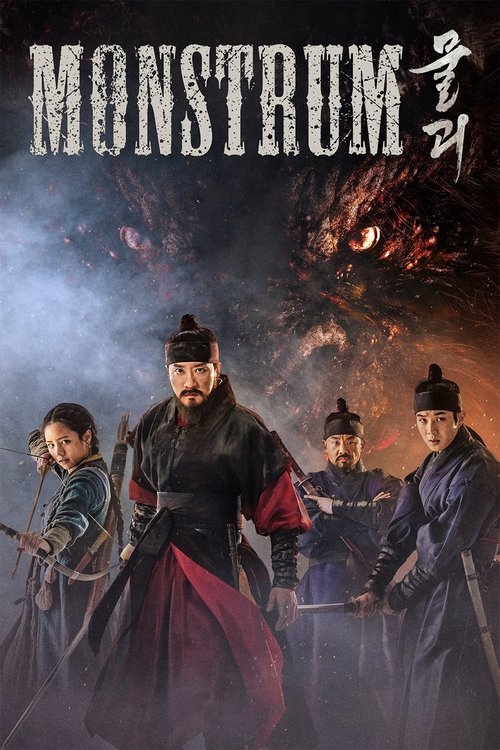
Monstrum
A plague-choked Joseon kingdom where the deadliest beast may be the rumor itself — a gore-slicked period creature feature in which fear spreads faster than any claw, and the palace casts the longest shadow.
Monstrum

Monstrum

물괴

"An ancient man-eating monster awakens."

12 September 2018 South Korea 106 min 6.5 (205)

Director: Huh Jong-ho

Cast: Kim Myung-min, Kim In-kwon, Lee Hye-ri, Choi Woo-shik, Lee Kyung-young

Drama Fantasy Action Horror Fear as a political weapon Plague, contagion and the search for a culprit Loyalty, duty and the cost of serving power Chosen family against inherited hierarchy The monster that people made
Box Office: $5,577,666

Overview

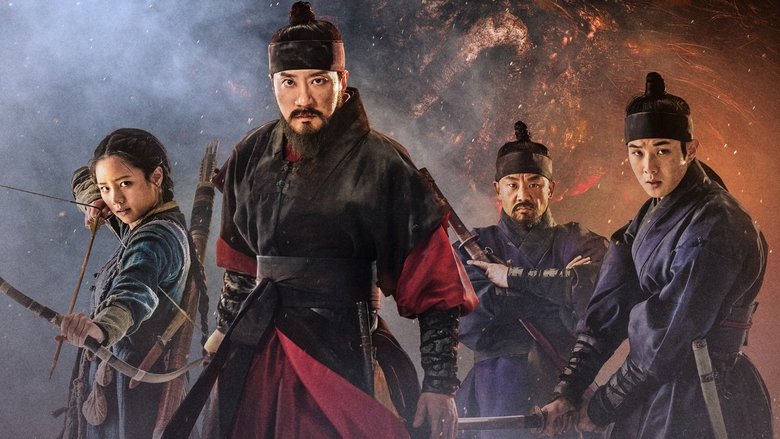
Monstrum (물괴) unfolds in 1527, the 22nd year of King Jungjong's reign, as a plague creeps through Joseon and panic outruns the physicians. Bodies turn up torn rather than diseased, and whispers harden into certainty: a man-eating creature — the Monstrum — is stalking the capital and carrying the sickness in its bite. With the court paralyzed and the streets tipping toward riot, the king recalls the one man he still trusts, General Yoon Gyeom, who long ago walked away from the palace to live quietly in the countryside.

Yoon returns with the small found family he built in exile: his daughter Myung, his loyal right hand Sung-han, and the young royal guard Heo, who is assigned to the investigation. What begins as a hunt for a beast quickly becomes something more tangled, because the panic is useful to someone. While Yoon's group follows tracks and corpses toward an abandoned royal menagerie, the Minister Sim Woon and his faction find that a terrified population is an easy population to steer.

Directed by Huh Jong-ho and billed as the first Korean creature feature set in the Joseon era, the film braids sageuk court intrigue, wuxia-adjacent swordplay and CGI monster carnage. The result moves fast, spills a great deal of blood, and keeps two questions running in parallel: what exactly is out there in the dark, and who benefits from everyone believing in it.
Core Meaning

At its center, Monstrum is a film about fear as an instrument of government. Its premise plays with the idea that a population can be controlled — and political power seized — by convincing people that a terrible threat is bearing down on them that only their leaders can hold back. The monster is real in the fiction, but the film is careful to show that the monster is also a story, circulated deliberately, and that the story does more damage than the teeth.

Against that, Huh Jong-ho sets an older-fashioned value: loyalty that is chosen rather than commanded. Yoon Gyeom has already refused the court once. His return is not obedience to the throne but protection of the people in front of him, and the film's sympathies rest with the improvised family he has assembled over the bloodline and rank that the palace worships.

The third strand is authorship of truth. In a kingdom where the Annals record what happened, the film asks who gets to write the record — and suggests that the creature in the margins of history may be less a discovery than a confession about the people who made it.

Thematic DNA

Fear as a political weapon 30%
Plague, contagion and the search for a culprit 22%
Loyalty, duty and the cost of serving power 20%
Chosen family against inherited hierarchy 18%
The monster that people made 10%

Fear as a political weapon

The film's engine is the court's discovery that terror is governable. As plague and monster rumors merge, the faction around Minister Sim Woon profits from the turbulence, positioning itself as the only thing standing between the people and annihilation. Every escalation of public panic is an escalation of someone's leverage, and the film makes the contemporary rhyme obvious: manufactured threats, weaponized rumor, a frightened public that will trade anything for the promise of safety.

Plague, contagion and the search for a culprit

An epidemic with no visible cause is unbearable, so the kingdom invents a face for it. The Monstrum is said to carry the disease in its bite, which conveniently converts an act of nature into an enemy that can be hunted. The film tracks how a society under contagion reaches for a monster rather than a mirror, and how quarantine, superstition and scapegoating arrive as a package.

Loyalty, duty and the cost of serving power

Yoon Gyeom retired to the country after events that soured him on the palace; his recall reopens the question of what a soldier owes a throne that has already betrayed him. Sung-han's devotion to Yoon and the young guard Heo's earnest service offer contrasting models — loyalty to a person, loyalty to an institution — and the film consistently rewards the former.

Chosen family against inherited hierarchy

Yoon, his daughter Myung, and Sung-han are a household assembled by circumstance rather than birth, and Heo is absorbed into it over the course of the hunt. Joseon's rigid ladder of rank and bloodline is set against this small unit that functions on affection and competence — and the film's emotional climaxes belong entirely to the family, not to the court.

The monster that people made

The trail leads toward Jojun Hall, the hall where the old king kept his rarest beasts, and toward an old keeper whose job was to feed the creature. The horror is progressively relocated from the wilderness to the palace: whatever the Monstrum is, human hands were involved in producing and maintaining it. Monstrosity in this film is a byproduct of power, not an intrusion upon it.

Character Analysis

Yoon Gyeom

Kim Myung-min

Archetype: Reluctant hero / exiled warrior called back Key Trait: Weathered integrity

Motivation

Protecting the small circle he loves, and a residual sense of responsibility toward ordinary people the court treats as expendable.

Character Arc

Introduced as a general who abandoned the capital after a bruising series of events years earlier, living in rural quiet with his daughter. Summoned back by a desperate king, he re-enters a court he distrusts and must decide whether he is hunting a beast or exposing a conspiracy. The climax has him lead the Monstrum into an explosive trap set by Sung-han and detonate it at apparent cost to himself; he survives, and three years later withdraws to the mountains again — this time by choice rather than injury.

Sung-han

Kim In-kwon

Archetype: Loyal companion / comic relief with steel Key Trait: Resourceful loyalty

Motivation

Unqualified devotion to Yoon and to Myung, whom he has helped raise.

Character Arc

Yoon's trusted right hand and the household's practical engine, he provides the film's humor while steadily proving indispensable. His trajectory runs from sidekick to decisive actor: the explosive trap that resolves the monster plot is his construction, and he ends the film accompanying Yoon into the mountains rather than settling down.

All 5 characters and cast

Symbols & Motifs

The Monstrum itself

Meaning:

A composite of everything the kingdom refuses to look at directly — plague, court rot, and the violence the state does in its own basement. Designed after the haetae, the mythical guardian beast of Korean and Chinese tradition, it inverts that figure completely: the creature meant to guard justice at the palace gate has become the thing eating the city.

Context:

Kept off screen through the early sections as pure rumor and mutilated evidence, then unleashed as a full CGI predator. Its lineage as a corrupted guardian is underscored by the trail back to the royal menagerie.

Plague and the sealed capital

Meaning:

Contagion as the visible symptom of a diseased polity. Bodies rot in the streets because the body politic has already rotted at the top.

Context:

The 1527 epidemic frames the whole narrative, pushing the king to recall Yoon and giving Sim Woon's faction the crisis it needs.

Jojun Hall and the royal menagerie

Meaning:

The palace's literal cage — proof that the crown collected and fed monsters for its own purposes. It symbolizes institutional secrecy: the beast was always indoors, on the payroll.

Context:

An old man who once fed the beast leads Yoon's group there, converting the monster hunt into an inquiry into the court's past.

Rumor

Meaning:

The film's true contagion, moving faster than plague and doing more structural damage. It shows belief functioning as infrastructure: once enough people carry the story, it becomes policy.

Context:

Rumors of the Monstrum precede any sighting, and the film opens on a kingdom already convinced.

The mountain retreat versus the capital

Meaning:

Two moral geographies — the mountains as integrity, autonomy and family; the capital as intrigue, rank and rot.

Context:

Yoon's exile begins there, the story drags him to the city, and the film's resolution pointedly returns its survivors to the mountains.

The general's sword

Meaning:

Authority that has been withdrawn from the state and re-aimed. Once the king's instrument, it becomes the protector of four people who matter to its bearer.

Context:

Yoon is disarmed of his court role at the start and re-armed only on his own terms, culminating in the trap-and-detonation climax.

Philosophical Questions

If a threat is invented but people die from the panic, was the threat real?

The film runs the rumor and the creature on parallel tracks and keeps blurring them. Deaths attributable to plague, to the beast, and to political violence become impossible to separate — which is the point. Fear produces material consequences regardless of its accuracy, and the film treats belief as a causal force in its own right.

What does a soldier owe a state that has already betrayed him?

Yoon Gyeom left the capital for reasons that soured him on service, and the plot forces him to answer the question a second time. He returns — but the film carefully withholds any restoration of rank or reconciliation with the throne, and the resolution sends him back to the mountains. Duty is redefined as owed to persons, never institutions.

Who is the monster: the thing with claws, or the men who fed it?

The investigation's trajectory answers this structurally. It moves from wilderness to palace, from tracks in the dirt to Jojun Hall and the keeper who fed the beast, steadily converting a hunt into an indictment. The creature acts on instinct; the humans act on calculation.

Can truth survive when the people who record history are the ones who benefit from lying?

Set in a dynasty famous for its meticulous Annals and spun out of a single ambiguous line in them, the film is quietly self-aware about historiography. Sim Woon's faction shapes what the capital believes in real time; the film suggests the written record is downstream of whoever held power when the ink dried.

Is family something you inherit or something you assemble?

Joseon's rigid hierarchy of blood and rank is set against a household of a general, his daughter, his retainer, and eventually a young guard who has no claim on any of them. The epilogue distributes its happiness entirely within that assembled unit, leaving the court out of the frame.

Alternative Interpretations

The political reading. The most widely shared interpretation treats the monster as almost incidental. The film is about how a population can be controlled, and power gained, by persuading people that a terrible threat exists that only their leaders can manage. Under this reading the creature is a MacGuffin, and Sim Woon's court faction is the true subject.

Full ending explanation

Cultural Impact

Monstrum arrived in September 2018 as a deliberate genre hybrid: Korean cinema had produced monster hits (The Host) and prestige sageuk in quantity, but this was promoted as the first Korean creature feature set in the Joseon era. Its ambition was to naturalize the monster movie inside period costume drama, and its commercial result was modest — a budget north of US$11 million against roughly US$5.5 million worldwide, with 723,622 domestic admissions — which effectively closed the door on it becoming a franchise.

Its afterlife has been stronger than its theatrical run. Genre festivals embraced it: it competed at the Sitges International Fantastic Film Festival in October 2018 and took the Panorama Fantàstic Audience Award, and international sales through Finecut carried it to Western streaming and physical release, where reviewers in 2020 found it unexpectedly timely.

That timing is the film's most striking cultural accident. Reaching English-language audiences during a global pandemic, its plot about an epidemic, a rumored plague-carrying beast, and a court faction using public terror to seize power read as rife with irony for contemporary audiences attuned to themes of pandemics, fake news and "deep state" subversion. A 2018 Korean court intrigue became, retroactively, a parable about misinformation.

Culturally, it also sits inside the broader revival of Korean folk mythology in mainstream entertainment, putting the haetae — a figure most Koreans know from palace statuary and Seoul's civic iconography — on screen as a horror antagonist.

Audience Reception

Overall verdict: divisive but affectionately received by genre audiences. The film holds a middling 6.1 on IMDb, yet won the Panorama Fantàstic Audience Award at Sitges — a gap that captures its reception precisely. Festival crowds and creature-feature fans embraced it; general and critical audiences were cooler.

Praised: the monster design and the splashy special effects were the most consistently cited strength, along with the sheer novelty of a Joseon-era creature film. Reviewers found it very silly, very gory and wildly entertaining, with the common caveat that it works best with your brain in "entertainment mode" and no expectation that it will approach The Host. The action, the pace and the chemistry of the central quartet drew warmth, and Kim Myung-min's gravity anchors the sillier material.

Criticized: the plot was widely called predictable, and the court-intrigue scaffolding struck several reviewers as familiar sageuk boilerplate bolted onto a monster movie. Tonal whiplash between comedy, political drama and gore was a recurring complaint, and some found the CGI uneven despite the strong creature concept.

Most contested moment: the ending. Yoon's survival of his own explosive trap — and the tidy three-years-later epilogue of marriage and mountain retirement — split viewers hard. Critics of it argued the film "pulls a rabbit out of a hat," abandoning its gloomy fantasy register for a stereotypical happy ending that contradicts what precedes it; defenders take it as earned crowd-pleasing after a relentlessly grim second act.

Interesting Facts

  • The story grew from a single brief entry in the Annals of the Joseon Dynasty recording that a strange monster haunted the royal palace in 1527, during the reign of King Jungjong; the king ordered his men to hunt it down, without success.
  • It was promoted as the first Korean creature feature set in the Joseon era, combining sageuk period drama with monster-movie spectacle.
  • Director Huh Jong-ho stated at a promotional press conference that the film features an imaginary creature: "We made the monster based on our own imagination."
  • The creature's design draws on the haetae, the mythical guardian beast of Korean and Chinese tradition traditionally associated with justice and protection.
  • The production carried a budget of over US$11 million, with worldwide box office reported around US$5.5 million.
  • In South Korea the film drew 723,622 admissions and roughly US$4.17 million at the domestic box office.
  • Lee Hye-ri — Hyeri of the K-pop group Girl's Day — made her feature film debut as Myung.
  • Park Hee-soon plays King Jungjong, the historical monarch whose reign supplies the film's 1527 setting.
  • Korean sales company Finecut handled international rights to the film.
  • Monstrum opened in South Korea on 12 September 2018 and screened at the Sitges International Fantastic Film Festival on 13 October, where it won the Panorama Fantàstic Audience Award.

Easter Eggs

The haetae as the monster's blueprint

The Monstrum is modeled on the haetae, the legendary beast of Korean and Chinese mythology that guards against disaster and injustice — statues of it flank Gyeongbokgung Palace, and it is a familiar civic emblem in Seoul. Turning the palace's protector into the palace's predator is the film's sharpest buried joke.

The 1527 Annals entry

The premise is lifted from a real line in the Annals of the Joseon Dynasty about a strange creature troubling the palace during Jungjong's reign and an unsuccessful royal hunt. Viewers who know the record will recognize that the film is essentially a speculative expansion of a historical footnote.

Jojun Hall, the old king's beast collection

The detail that a former monarch kept his rarest animals in a dedicated hall, with a keeper employed to feed them, plants the film's real reveal in plain sight well before the plot confirms it.

The shadow of The Host

Critics repeatedly measured Monstrum against Bong Joon-ho's The Host (2006), the benchmark for Korean creature cinema — a comparison the film's government-conspiracy-plus-family-unit structure openly invites.

Frequently Asked Questions

Explore More About This Movie

Dive deeper into specific aspects of the movie with our detailed analysis pages

Comments (0)

Leave a comment

No comments yet. Be the first to share your thoughts!

Similar Movies