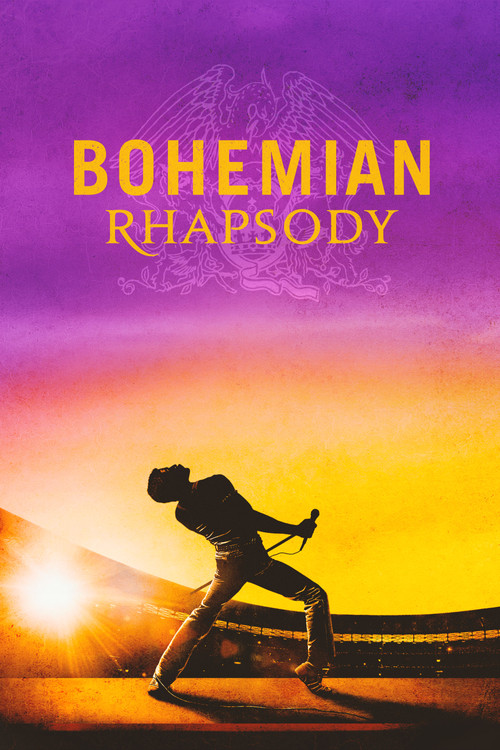
Bohemian Rhapsody
"Fearless lives forever."
Overview
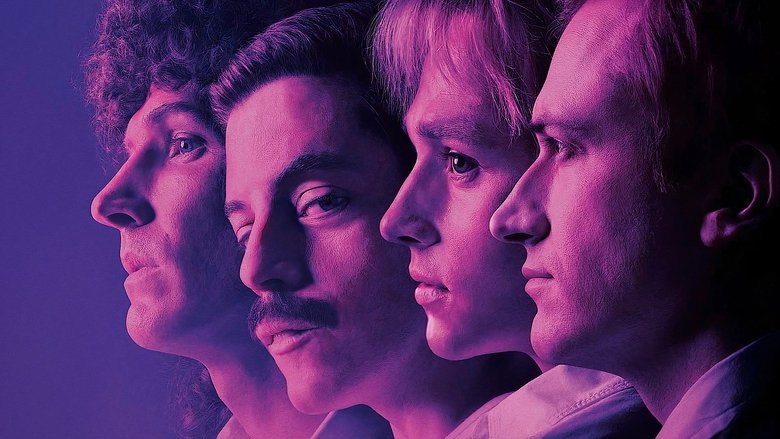
"Bohemian Rhapsody" is a biographical drama that chronicles the story of the iconic British rock band Queen, with a primary focus on the life of its legendary frontman, Freddie Mercury. The film traces the band's formation in 1970, their early struggles, and their eventual meteoric rise to global stardom. It delves into the creative process behind some of their most famous songs and showcases their revolutionary sound and theatrical performances.
The narrative explores Freddie Mercury's personal life, from his relationship with Mary Austin to his struggles with his sexuality and identity. As Queen reaches unprecedented heights of success, Freddie finds himself grappling with the pressures of fame and the excesses of a rock and roll lifestyle, leading to a period of isolation and conflict within the band.
The film culminates in Queen's historic performance at the Live Aid concert in 1985, a triumphant reunion that solidifies their legacy as one of the greatest rock bands in history. It is a celebration of Queen's music and of a man who dared to be different and live life on his own terms.
Core Meaning
"Bohemian Rhapsody" is a celebration of individuality, artistic rebellion, and the enduring power of music to unite people. The director, through the lens of Freddie Mercury's life, explores the complexities of identity, the loneliness that can accompany fame, and the profound importance of finding one's chosen family. The film's core message is about embracing one's true self, even in the face of societal prejudice and personal struggles. It champions the idea of being a misfit and finding a sense of belonging with other outcasts, as Freddie puts it, "We're four misfits who don't belong together, playing for the other misfits." Ultimately, the film is a testament to Freddie Mercury's legacy as a performer who broke conventions and whose music continues to inspire generations.
Thematic DNA
Identity and Self-Acceptance
The film deeply explores Freddie Mercury's journey of self-discovery, from his Parsi immigrant background as Farrokh Bulsara to his reinvention as the flamboyant rock icon, Freddie Mercury. It portrays his internal conflict and struggle with his sexuality during a time of widespread prejudice. His journey is one of learning to accept all facets of his identity, culminating in his powerful declaration before Live Aid: "I decide who I am."
The Loneliness of Fame
Despite being surrounded by adoring fans and living a life of excess, the film portrays Freddie as an often lonely figure. His mansion, the setting for wild parties, is also depicted as a place of isolation. This theme is highlighted in his relationships and his eventual estrangement from the band, suggesting that fame can create a profound sense of solitude.
Family and Belonging
The film emphasizes the theme of family in two significant ways: Freddie's relationship with his biological family and the surrogate family he finds in his bandmates. His initial disconnect and eventual reconciliation with his parents and sister is a poignant subplot. More centrally, the bond between the members of Queen is portrayed as a brotherhood, a family that creates, quarrels, and ultimately supports one another. Freddie's repeated assertion, "We're family," underscores this crucial theme.
Artistic Innovation and Rebellion
"Bohemian Rhapsody" celebrates Queen's defiance of musical conventions. The band is shown consistently pushing boundaries, mixing genres, and refusing to be pigeonholed by record executives. The creation of the titular song, a six-minute operatic rock masterpiece, serves as a central example of their audacious creativity and their belief in their unique artistic vision.
Character Analysis
Freddie Mercury
Rami Malek
Motivation
To transcend his humble beginnings and become a legend. He is driven by a deep need for love and acceptance, both from the audience and from those close to him. His primary motivation is to create groundbreaking music and to be a performer who gives people "a touch of the heavens."
Character Arc
Freddie begins as Farrokh Bulsara, a shy baggage handler with a powerful voice and grand ambitions. He transforms into the charismatic and flamboyant frontman of Queen, embracing a hedonistic lifestyle that leads to fame, loneliness, and alienation from his bandmates. After a period of isolation and a devastating AIDS diagnosis, he reconciles with his band and family, culminating in a triumphant and redemptive performance at Live Aid, solidifying his legacy as a rock god before his tragic death.
Brian May
Gwilym Lee
Motivation
To create innovative and timeless rock music. He is motivated by a passion for his craft and a deep loyalty to his bandmates, whom he considers family.
Character Arc
Brian is the steady, intellectual force in the band. He is a supportive friend to Freddie and often acts as a peacemaker during conflicts. His arc is less about personal transformation and more about his role as a constant, grounding presence within the turbulent dynamics of the band. He is instrumental in creating Queen's signature sound with his innovative guitar work.
Roger Taylor
Ben Hardy
Motivation
To achieve rock and roll stardom and to maintain the integrity of the band's sound. He is also motivated by a desire to be heard and respected within the creative process.
Character Arc
Roger is the fiery and often outspoken drummer of the band. He is quick to voice his opinions and frequently clashes with Freddie over the band's musical direction and Freddie's behavior. His arc shows him maturing from a hot-headed young rocker to a loyal friend who stands by Freddie in his time of need.
John Deacon
Joseph Mazzello
Motivation
To provide the solid musical foundation for the band and to maintain harmony within the group. He is a family man who values stability and loyalty.
Character Arc
John, or "Deaky," is the quiet and unassuming bassist who often serves as the band's silent anchor. He is a keen observer of the group's dynamics and contributes some of their biggest hits. His arc is subtle, but he evolves from the new guy to an integral and respected member of the Queen family.
Mary Austin
Lucy Boynton
Motivation
Her primary motivation is her deep love and concern for Freddie. She wants to see him happy and safe, and she remains a constant source of support for him throughout his tumultuous life.
Character Arc
Mary starts as Freddie's girlfriend and fiancée, and later becomes his lifelong best friend and confidante. Her arc is one of unconditional love and acceptance. Even after their romantic relationship ends, she remains the most important and grounding person in Freddie's life, the one person he truly trusts.
Symbols & Motifs
Freddie's Teeth
Freddie's prominent teeth, which he was self-conscious about, symbolize his initial insecurities and his unique, larger-than-life persona. He believed his extra incisors gave him a greater vocal range, thus turning a perceived flaw into a source of his extraordinary talent.
The film makes a point of Freddie's teeth from the beginning. When he first meets Brian May and Roger Taylor, he addresses his overbite. Later, he explains his theory about his vocal range to the band. The prosthetic teeth worn by Rami Malek were a crucial part of his physical transformation into the character.
Cats
Freddie's many cats represent unconditional love, companionship, and a sense of home and normalcy amidst his chaotic life. They are his loyal, non-judgmental family who he showers with affection.
Throughout the film, Freddie is shown to be a devoted cat owner. In various scenes at his home, he is seen talking to and pampering his feline companions. During his phone calls with Mary while on tour, he often asks her to say hello to his cats, highlighting their importance in his life.
The Stage
The stage is a powerful symbol of transformation and liberation for Freddie. It's the one place where the shy and insecure Farrokh Bulsara can fully become the confident, flamboyant, and universally adored Freddie Mercury. It represents his true calling and the source of his power.
The film features numerous concert scenes, from early pub gigs to the massive Live Aid performance. In each instance, the stage is where Freddie is most alive and in his element. The final, extended Live Aid sequence is the ultimate depiction of the stage as his kingdom, where he commands an audience of thousands and solidifies his legendary status.
Memorable Quotes
Roger, there's only room in this band for one hysterical queen.
— Freddie Mercury
Context:
During the stressful and creatively intense recording sessions for "A Night at the Opera," drummer Roger Taylor complains about the multiple takes required for the high-pitched "Galileo" parts of "Bohemian Rhapsody." Freddie delivers this line to diffuse the tension with a joke.
Meaning:
This witty retort perfectly encapsulates Freddie's flamboyant personality and his role as the band's charismatic, and sometimes dramatic, frontman. It's a moment of humor that also asserts his unique position within the group.
We're four misfits who don't belong together, playing for the other misfits.
— Freddie Mercury
Context:
Freddie says this to John Reid, their manager, early in their career. He is explaining what makes Queen different from other bands and why they will be successful. He identifies their audience as fellow outcasts who find solace and identity in their music.
Meaning:
This quote powerfully defines Queen's identity and their deep connection with their audience. It speaks to the idea that the band provided a sense of belonging for those who felt like outsiders, creating a community through their music.
I'm not the leader of Queen, I'm only the lead singer.
— Freddie Mercury
Context:
During a press conference where reporters are grilling him about his personal life, Freddie deflects the attention and emphasizes the collaborative spirit of the band. It's a moment that showcases his loyalty and humility.
Meaning:
This quote, taken from a real-life statement by Freddie, highlights the democratic nature of the band and his respect for his fellow musicians. Despite his larger-than-life stage presence, he saw himself as one part of a whole, not the sole creative force.
Good thoughts, good words, good deeds.
— Bomi Bulsara and Freddie Mercury
Context:
Freddie's father, Bomi, says this to him early in the film as a piece of fatherly advice. Later, on the day of Live Aid, as he reconciles with his family, Freddie repeats the phrase, signifying that he has come full circle and reconnected with his roots.
Meaning:
This Zoroastrian maxim, repeated by Freddie's father and later by Freddie himself, represents a connection to his family, his heritage, and a moral compass. It becomes a mantra for him as he seeks redemption and prepares for the Live Aid performance.
Philosophical Questions
To what extent does artistic license in a biopic betray the truth of a person's life?
"Bohemian Rhapsody" sparked considerable debate about its historical accuracy. The film alters timelines, composites characters, and simplifies complex relationships to fit a conventional cinematic narrative. This raises the question of whether a film's primary responsibility is to factual accuracy or to capturing the emotional truth and spirit of its subject. The filmmakers and cast have defended their choices as necessary for a dramatic retelling, not a documentary. However, critics argue that these changes, particularly regarding Freddie's AIDS diagnosis and his relationship with the band, distort his legacy and the historical context of the AIDS crisis.
Can one be a public spectacle and a private person simultaneously?
The film portrays a stark contrast between Freddie's flamboyant and confident stage persona and his private struggles with loneliness and identity. It explores the immense pressure faced by celebrities whose personal lives are subject to intense public scrutiny. Freddie's journey highlights the difficulty of navigating authentic personal relationships and self-acceptance while living under the constant gaze of the media and the public, raising questions about the cost of fame and the possibility of maintaining a private self in the public eye.
What is the nature of family, and can a chosen family be as powerful as a biological one?
Freddie's story in the film is a powerful exploration of the concept of family. He struggles to connect with his traditional Parsi family, who disapprove of his lifestyle. In Queen, he finds a surrogate family of fellow "misfits" who understand and support him. The film posits that this chosen family, forged through shared experience and creative passion, is just as, if not more, significant than his family of origin. This is a central theme, culminating in the band's reconciliation and powerful unity at Live Aid.
Alternative Interpretations
While the film presents a largely celebratory and redemptive narrative, some interpretations view it through a more critical lens. One perspective is that the film, by condensing and altering the timeline of Freddie's life, particularly his AIDS diagnosis, creates a somewhat misleading and overly sentimentalized portrait of the artist. Critics have argued that this narrative choice frames his illness as a form of karmic punishment for his lifestyle, a problematic trope in the depiction of LGBTQ+ characters and the AIDS crisis.
Another interpretation focuses on the film's portrayal of the band's internal dynamics. While the movie depicts Freddie as the one who temporarily breaks up the band to pursue a solo career, in reality, all the members had worked on solo projects. This suggests an alternative reading where the narrative was shaped to create a more conventional story of conflict and reunion, potentially at the expense of a more nuanced and accurate representation of the band's history. This has led some to view the film as a carefully curated legacy project by the surviving members of Queen, rather than an objective biopic.
Cultural Impact
"Bohemian Rhapsody" was a global box office phenomenon, becoming the highest-grossing musical biopic of all time. Its success reignited mainstream interest in Queen's music, introducing their catalog to a new generation of fans and sending their songs back to the top of the charts. Rami Malek's transformative performance as Freddie Mercury was widely acclaimed and earned him numerous accolades, including the Academy Award for Best Actor.
The film was praised by audiences for its celebratory tone and exhilarating concert sequences, particularly the meticulous recreation of the 1985 Live Aid performance. However, it also faced criticism for its historical inaccuracies and its perceived sanitization of Freddie Mercury's life, particularly his sexuality and his battle with AIDS. Critics and some viewers felt the film took dramatic liberties with the timeline of events, such as Freddie's AIDS diagnosis, to heighten the emotional impact of the Live Aid finale. Despite these critiques, the film's overwhelming popularity demonstrated a powerful public appetite for stories that celebrate iconic musicians and their enduring legacies. It has been credited with revitalizing the musical biopic genre and paving the way for other similar films.
Audience Reception
Audience reception for "Bohemian Rhapsody" was overwhelmingly positive, leading to its massive box office success. Viewers were particularly captivated by Rami Malek's Oscar-winning performance as Freddie Mercury, which was almost universally praised as a stunning and accurate portrayal. The film's musical sequences, especially the climactic recreation of the Live Aid concert, were lauded for their energy and emotional impact, with many fans finding the experience deeply moving.
The main points of criticism from audiences and critics alike centered on the film's historical inaccuracies and its conventional biopic structure. Many felt that the film took too many liberties with the timeline of events, particularly Freddie Mercury's AIDS diagnosis, for the sake of dramatic effect. Some also criticized the film for what they perceived as a sanitized and somewhat shallow exploration of Mercury's sexuality and the darker aspects of his life. Despite these critiques, the overall verdict from the audience was that the film was a powerful and entertaining celebration of Queen's music and Freddie Mercury's incredible talent.
Interesting Facts
- Rami Malek wore prosthetic teeth to replicate Freddie Mercury's famous overbite, which he kept and later had cast in gold.
- The film's iconic Live Aid performance was the first scene to be shot, a decision made to allow the cast to bond and build chemistry early in production.
- The singing voice heard in the film is an amalgamation of Rami Malek's own voice, recordings of Freddie Mercury, and singer Marc Martel, who is known for his vocal resemblance to Mercury.
- Director Bryan Singer was fired towards the end of production due to on-set conflicts and was replaced by Dexter Fletcher, though Singer retained the sole directing credit.
- The character of EMI executive Ray Foster, played by Mike Myers, is fictional but is likely inspired by real music executives who were skeptical of the song "Bohemian Rhapsody." Myers' casting is an easter egg, as he famously headbanged to the song in the 1992 film "Wayne's World."
- To prepare for the role, Rami Malek worked extensively with a movement coach to perfect Freddie Mercury's distinctive stage presence and mannerisms.
- The actors who played the band members learned to play their respective instruments for the film.
- Queen's actual members, Brian May and Roger Taylor, served as creative and musical consultants on the film.
Easter Eggs
Mike Myers, who famously rocked out to "Bohemian Rhapsody" in the movie "Wayne's World," plays a fictional EMI executive named Ray Foster who dismisses the song, claiming "no one will play Queen" and that teenagers won't appreciate the operatic section.
This is a significant and ironic piece of meta-casting. The scene in "Wayne's World" is credited with repopularizing "Bohemian Rhapsody" in the United States in the 1992. Myers' character in this film is hilariously proven wrong by his own real-life cinematic history.
Adam Lambert, the current lead singer for Queen, has a brief cameo appearance in the film.
Lambert appears as a truck driver who Freddie Mercury makes eye contact with at a truck stop, an early hint at Freddie's exploration of his sexuality. It's a subtle nod to the man who has been carrying on Freddie's vocal legacy with the band in recent years.
During the recording of "We Will Rock You," Brian May is shown explaining to the band that he wants to create a song that the audience can perform.
This scene accurately reflects the real-life inspiration for the song. Brian May has stated that he wrote "We Will Rock You" and "We Are the Champions" as anthems that would directly involve the audience in their live shows, a revolutionary concept at the time.
⚠️ Spoiler Analysis
Click to reveal detailed analysis with spoilers
Frequently Asked Questions
Explore More About This Movie
Dive deeper into specific aspects of the movie with our detailed analysis pages
Comments (0)
No comments yet. Be the first to share your thoughts!