Skip to content
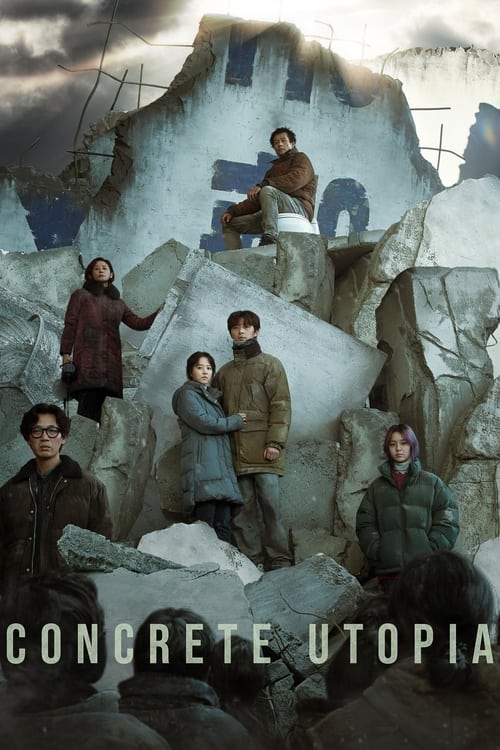
Concrete Utopia
An icy, post-apocalyptic thriller where human empathy freezes beneath the concrete monolith of self-preservation, stripping civilization down to a trembling, brutalist fortress of shared delusion.
Concrete Utopia

Concrete Utopia

콘크리트 유토피아

"We believe we are chosen."

09 August 2023 South Korea 130 min 6.9 (315)

Director: Um Tae-hwa

Cast: Lee Byung-hun, Park Seo-jun, Park Bo-young, Kim Sun-young, Kim Do-yoon

Action Thriller Tribalism and Dehumanization Real Estate Obsession and Socioeconomic Status Survival Instincts vs. Moral Integrity Authoritarianism, Charisma, and Democratic Illusion
Box Office: $28,900,000

Overview

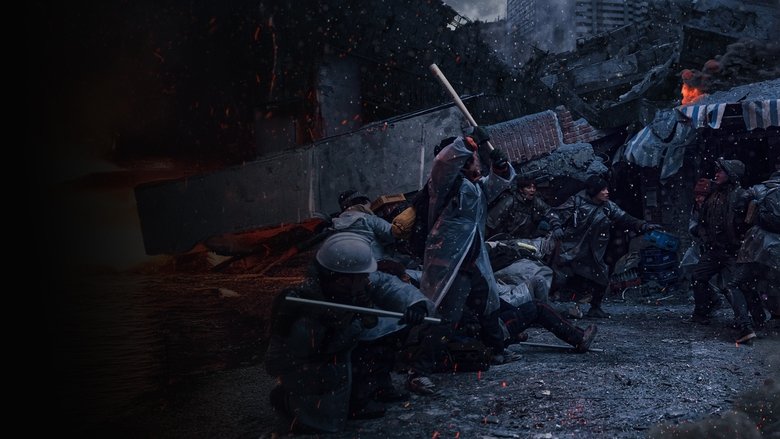
Set in modern-day Seoul, Concrete Utopia begins in the immediate aftermath of an unexplained cataclysmic earthquake that reduces the entire metropolitan landscape to a frozen expanse of crushed rubble and debris. Miraculously, only a single residential high-rise—the Hwang Gung (Imperial Palace) Apartment Building No. 103—remains standing fully intact amid the sub-zero wasteland. As thousands of freezing, displaced survivors from surrounding collapsed neighborhoods converge on the building seeking shelter, warmth, and food, the original tenants quickly realize their finite resources cannot sustain everyone.

Facing escalating panic, civil breakdown, and internal unrest, the tenants organize a formal resident council. After an unassuming tenant named Kim Young-tak single-handedly extinguishes a dangerous fire, the residents elect him as their "Resident Delegate" to lead and protect them. Under Young-tak's decisive and increasingly militant stewardship, the complex institutes strict bylaws, forcibly expelling all non-residents into the deadly cold and transforming the complex into an isolated, fortress-like sanctuary.

The story unfolds primarily through the eyes of a young married couple living in the building: Min-sung, an impressionable former civil servant who joins Young-tak's frontline supply-scavenging militia, and his wife Myeong-hwa, a compassionate nurse who grows horrified by the community's swift descent into dehumanizing cruelty. As outer expeditions grow violent and deep secrets threaten the community's internal foundation, the residents must confront the moral cost of their manufactured utopia.
Core Meaning

Director Um Tae-hwa uses the disaster framework not simply to tell a survival story, but to stage an incisive socio-political parable dissecting the fragility of human civilization, social contracts, and the dark underbelly of South Korea's hyper-capitalist obsession with real estate.

The film's central message argues that totalitarianism and barbarism do not emerge from monstrous anomalies; rather, they arise organically from ordinary, decent citizens who prioritize collective tribalism and property ownership over fundamental human decency when threatened by scarcity. By illustrating how quickly a "democratic consensus" can be weaponized to rationalize ethnic-cleansing-style violence against outsiders, Um demonstrates that a utopia built on the exclusion and suffering of others is merely a dystopia wearing the veneer of order.

Thematic DNA

Tribalism and Dehumanization 30%
Real Estate Obsession and Socioeconomic Status 25%
Survival Instincts vs. Moral Integrity 25%
Authoritarianism, Charisma, and Democratic Illusion 20%

Tribalism and Dehumanization

The moment Hwang Gung residents label displaced refugees as "cockroaches," violence against them becomes systemic and guilt-free. The film tracks how quickly social empathy narrows to include only those within arbitrary, self-designated borders.

Real Estate Obsession and Socioeconomic Status

In modern Korea, apartment ownership signifies social hierarchy and security. The film treats the apartment complex as a sacred altar where tenants believe their property deeds elevate them into "chosen people," exposing how property rights supersede human rights.

Survival Instincts vs. Moral Integrity

Explored through the ideological friction between Min-sung (pragmatic adaptation, securing rations at any moral cost) and Myeong-hwa (uncompromising compassion, resisting moral degradation even under threat of starvation).

Authoritarianism, Charisma, and Democratic Illusion

Democracy is perverted into mob rule via secret pebble voting. The residents willingly surrender their autonomy to a strongman leader because he relieves them of individual moral accountability.

Character Analysis

Kim Young-tak / Mo Se-beom

Lee Byung-hun

Archetype: Tragic Antihero / False Demagogue Key Trait: Ferocious determination masked by stoicism

Motivation

Protecting his claimed "home" and finding a sense of belonging denied to him before the disaster.

Character Arc

Transforms from a quiet, self-effacing outcast into a messianic, ruthless tyrant undone by the exposure of his secret identity.

Min-sung

Park Seo-jun

Archetype: The Everyman / Corrupted Conformist Key Trait: Pragmatic impressionability

Motivation

Ensuring the immediate survival and physical security of his wife.

Character Arc

Devolves from an empathetic civil servant into a violent enforcer for the militia, realizing his lost humanity too late.

All 5 characters and cast

Symbols & Motifs

The Hwang Gung Apartment Complex

Meaning:

Represents South Korea's socioeconomic ladder, middle-class aspiration, and an insular fortress of false entitlement. Its survival is viewed not as sheer luck, but as divine selection.

Context:

Serves as the primary setting and sole standing monolith amid a devastated, flattened Seoul.

The Cockroach Metaphor (Bokee)

Meaning:

Functions as a classic linguistic mechanism of dehumanization to make expulsion and murder palatable.

Context:

Used by apartment tenants and leadership as a derogatory term when referring to non-resident refugees seeking shelter.

Black and White Pebbles

Meaning:

Symbolize the perversion of democratic processes into mechanisms of sanctioned cruelty.

Context:

Used as ballot tokens during tenant council assemblies to vote on evicting non-residents into the freezing cold.

The 1982 Pop Song "Apartment" (아파트) by Yoon Soo-il

Meaning:

A bitter cultural irony where a nostalgic party anthem morphs into an eerie, grief-stricken lamentation revealing an internal hollow void.

Context:

Frantically sung by Young-tak during a communal celebratory banquet.

Canned Peaches / Food Rations

Meaning:

Represent transactional humanity, illustrating how morality in extreme crisis is reduced to calorie counting and contribution points.

Context:

Distributed and hoarded as luxury scavenged rations earned by militia members.

The Horizontal Fallen High-Rise

Meaning:

A visual antithesis to Hwang Gung; an overturned building functioning cooperatively without rigid hierarchies, symbolizing an alternative, egalitarian model of human society.

Context:

Featured in the final scene where Myeong-hwa is welcomed into an outside survivor commune.

Memorable Quotes

아파트는 주민의 것!
— Hwang Gung Residents (led by Geum-ae and Young-tak)

Context

Chanted in unison by residents after enacting the bylaws that authorize the forceful eviction of freezing outsiders.

Meaning

Encapsulates the exclusionary, property-centric tribalism that forms the foundation of Hwang Gung's authoritarian governance.

우리의 아파트는 선택받았습니다.
— Kim Young-tak

Context

Addressed to the gathered tenants during a communal meeting to justify their survivalist actions.

Meaning

Instills a pseudo-religious sense of exceptionalism, transforming survival luck into divine justification for cruelty.

All 4 quotes

Philosophical Questions

Is morality a privilege of abundance?

The film questions whether ethics can survive when basic biological survival is threatened, or if human virtues inevitably collapse into animalistic selfishness under extreme scarcity.

Can a democracy legitimately vote away basic human rights?

By showing a democratic pebble ballot used to expel human beings into freezing death, the film interrogates the moral limits of majoritarian rule and democratic consensus.

What truly constitutes a "home"?

The narrative asks whether shelter derives its true meaning from physical concrete walls and legal ownership, or from the community, solidarity, and compassion practiced within it.

Alternative Interpretations

The film invites multiple critical frameworks:

Full ending explanation

Cultural Impact

In South Korea, apartments represent approximately 70%–80% of household wealth and function as the primary determinant of social class, marriage viability, and financial stability. Concrete Utopia tapped directly into contemporary societal anxieties surrounding unaffordable housing, real estate speculation, and inter-neighborhood classism.

Critics praised the film for combining the scale of a disaster epic with biting social commentary reminiscent of Bong Joon-ho's Parasite, while Western critics drew comparisons to J.G. Ballard's High-Rise and William Golding's Lord of the Flies.

Audience Reception

The film received widespread critical and audience acclaim, specifically praising:

  • Lee Byung-hun's performance: Commended for seamlessly toggling between pathetic vulnerability and terrifying ferocity.
  • Subversion of genre tropes: Applauded for refusing sentimental disaster-movie clichés or Hollywood-style heroic rescues.
  • Technical execution: Celebrated for immersive production design, practical set atmosphere, and grounded special effects.

Minor criticisms noted the relentless bleakness and cynical pacing across the second half, as well as occasional heavy-handedness in Myeong-hwa's unbending idealism. Overall, it is regarded as one of the sharpest, most mature Korean dystopian thrillers of the 2020s.

Interesting Facts

  • The screenplay is adapted from the second part (Cheerful Neighbor) of the webtoon Pleasant Bullying (or Pleasant Outcast) written by Kim Soongnyung.
  • The production team constructed a full-scale, three-story exterior facade of the Hwang Gung complex on an open set to maximize spatial realism, utilizing digital extensions for the upper floors.
  • The opening credits feature real historical documentary footage and advertisements tracing South Korea's urban development and apartment building craze from the 1970s and 1980s.
  • Released on August 9, 2023, the film surpassed 3.84 million admissions domestically and grossed over $30 million in South Korea.
  • The film was selected as South Korea's official submission for Best International Feature Film at the 96th Academy Awards.
  • It won Best Picture at the 59th Grand Bell Awards and Best Director for Um Tae-hwa at the 44th Blue Dragon Film Awards.
  • The post-earthquake universe served as the backdrop for a standalone action sequel, Badland Hunters (2024), directed by Heo Myeong-haeng and starring Ma Dong-seok.

Easter Eggs

Yoon Soo-il's 1982 Hit Song "Apartment"

The upbeat 1980s pop song celebrates modern apartment living as a dream of prosperity, creating a dark, layered contrast with the reality that the building has become a literal tomb.

"Dream Palace" vs. "Hwang Gung" Dynamic

Prior to the disaster, upscale Dream Palace residents looked down on Hwang Gung tenants; post-quake, the class hierarchy violently reverses as Dream Palace residents become beggars at Hwang Gung's gates.

Pre-Disaster Real Estate Fraud Backstory

Young-tak's origin as a man swindled of his life savings in a classic Korean jeonse housing scam grounds the apocalyptic narrative in everyday South Korean economic vulnerabilities.

Frequently Asked Questions

Explore More About This Movie

Dive deeper into specific aspects of the movie with our detailed analysis pages

Comments (0)

Leave a comment

No comments yet. Be the first to share your thoughts!

Similar Movies