Skip to content
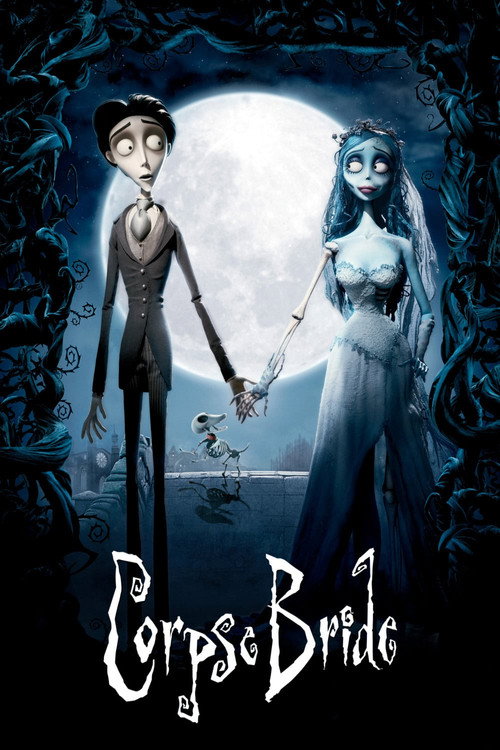
Corpse Bride
Enveloped in a delicate gothic melancholia and tender longing, this macabre stop-motion fable unfurls like an indigo butterfly escaping the rigid monochrome confines of Victorian propriety into a lively spectral underworld.
Corpse Bride

Corpse Bride

"There's been a grave misunderstanding."

12 September 2005 United Kingdom 77 min 7.6 (10,453)

Director: Mike Johnson, Tim Burton

Cast: Johnny Depp, Helena Bonham Carter, Emily Watson, Tracey Ullman, Paul Whitehouse

Animation Fantasy Romance The Stagnation of the Living vs. The Vitality of the Dead Transactional Matrimony vs. Sincere Devotion Sacrifice, Healing, and Letting Go Justice and the Unmasking of Treachery
Budget: $40,000,000
Box Office: $118,133,252

Overview

Set in a somber, strictly stratified Victorian village, the story follows Victor Van Dort, the timid son of newly rich fish merchants, and Victoria Everglot, the gentle daughter of bankrupt aristocrats. Their impending arranged marriage was orchestrated purely for social status and financial survival. Yet, to their mutual surprise, an unexpected spark of genuine affection ignites between the young pair during their awkward first meeting on the eve of the wedding rehearsal.

Paralyzed by severe stage fright and clumsy nerves, Victor wrecks the rehearsal ceremony under the scolding eye of Pastor Gallswells and flees in humiliation into the shadowy winter forest. While wandering among the gnarled trees, he meticulously rehearses his vows, passionately reciting the marital incantations and slipping the wedding band onto an upturned tree branch. The branch, however, turns out to be the skeletal finger of Emily, a deceased young woman wrapped in a decaying bridal gown who dramatically rises from the grave, accepting Victor as her lawful husband.

Whisked away beneath the soil into the Land of the Dead, Victor discovers an unexpectedly buoyant, jazz-infused realm of singing skeletons and jovial ghouls. Caught between his duty to the living world where Victoria awaits him and the tragic, tenderhearted bride who longs for the wedded joy stolen from her in life, Victor must navigate two opposing realms and confront his own capacity for courage, honesty, and selfless devotion.

Core Meaning

At its core, the film delivers a biting yet poetic inversion of conventional values, positing that genuine human vitality, compassion, and emotional authenticity often thrive in places society considers discarded or deceased, while the supposedly living world can be hollowed out by greed, strict social conventions, and transactional relationships.

Through Emily's journey of grief and ultimate release, the directors convey that true love cannot be possessed through coercion or accidental bonds; rather, it finds its highest expression in empathy, selflessness, and the willingness to let go so another may flourish.

Thematic DNA

The Stagnation of the Living vs. The Vitality of the Dead 30%
Transactional Matrimony vs. Sincere Devotion 25%
Sacrifice, Healing, and Letting Go 25%
Justice and the Unmasking of Treachery 20%

The Stagnation of the Living vs. The Vitality of the Dead

The film establishes a satirical dichotomy between Victorian surface propriety and the liberation of the afterlife. The living town is rigid, joyless, and drained of life, governed by utilitarian alliances and repressed emotions, whereas the Land of the Dead is an exuberant, musical haven where social pretense vanishes and spirits celebrate their authentic selves.

Transactional Matrimony vs. Sincere Devotion

Both the Van Dorts and the Everglots view marriage strictly as a financial contract and a stepping stone for social mobility. Against this calculating backdrop, Victor, Victoria, and Emily navigate genuine emotional bonds, challenging institutional cruelty and establishing that marriage requires genuine choice and emotional connection.

Sacrifice, Healing, and Letting Go

Emily's arc centers on coping with devastating heartbreak and unresolved trauma. While she initially clings desperately to Victor to fulfill her shattered romantic dreams, her ultimate transformation occurs when she recognizes Victor and Victoria's bond, choosing self-sacrifice and grace over selfish fulfillment, which finally brings peace to her soul.

Justice and the Unmasking of Treachery

Beneath the romantic fairy tale lies a cautionary murder mystery. Greed and aristocratic masquerade are personified in Lord Barkis Bittern, demonstrating that the real horrors are not rotting cadavers or supernatural rites, but living opportunists who prey on the innocence of others under the guise of nobility.

Character Analysis

Victor Van Dort

Johnny Depp

Archetype: Reluctant Hero / Sensitive Artist Key Trait: Nervous yet deeply empathetic and noble-hearted

Motivation

To escape oppressive social scrutiny, protect those he loves, and live genuinely without being reduced to a social pawn.

Character Arc

Begins as an insecure, stammering young man dominated by his parents' ambitions, but gradually discovers his agency, standing up to malevolent forces and willingly offering his own life to honor a vow before winning true romantic partnership.

Emily, the Corpse Bride

Helena Bonham Carter

Archetype: Tragic Maiden / Supernatural Catalyst Key Trait: Passionate, melancholic, and deeply generous

Motivation

To reclaim the romance and marital vows denied to her through murder, and ultimately find eternal peace.

Character Arc

Starts as a vengeful and heartbroken revenant clinging to an accidental marriage to satisfy her stolen wedding dreams, but evolves into an enlightened spirit who chooses Victor's happiness over her own desires, achieving spiritual transcendence.

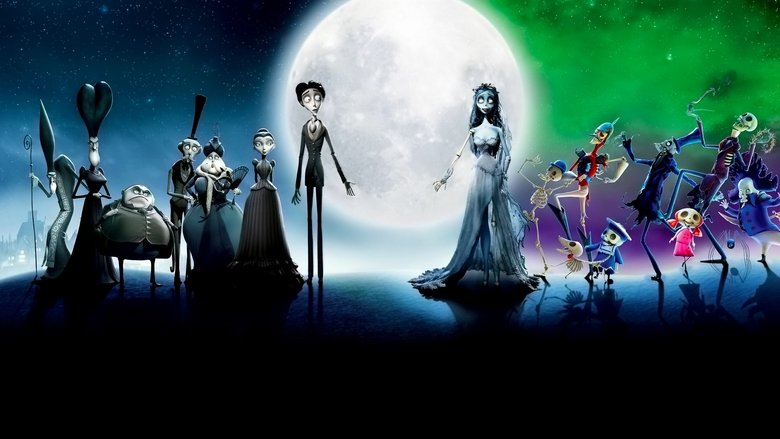
All 4 characters and cast

Symbols & Motifs

The Blue Butterfly

Meaning:

Symbolizes the trapped soul, transformation, metamorphosis, and spiritual liberation [1.3.9].

Context:

Appears at the start when Victor studies and carefully releases a butterfly from a glass jar, and returns in the climax when Emily dissolves into a swarm of luminous blue butterflies fluttering towards the moon after finding peace.

The Wedding Vows and Ring

Meaning:

Represents sacred commitment, intentionality, and moral responsibility.

Context:

Recited repeatedly throughout the film—first clumsily by Victor in the forest, then binding him inadvertently to Emily, and finally repeated when Victor genuinely offers to sacrifice his life for her before Emily releases him.

The Piano Duet

Meaning:

Serves as a surrogate for spoken dialogue, representing emotional harmony, vulnerability, and mutual understanding.

Context:

Victor introduces himself musically to Victoria, breaking their initial silence, and later plays a shared four-hand melody with Emily in the Underworld when spoken apologies fail to mend their rift.

The Wine of Ages / Poison Chalice

Meaning:

Represents irreversible commitment, mortality, and the ultimate test of selfless devotion versus deceitful greed.

Context:

The deadly draught prepared by Elder Gutknecht for Victor to surrender his earthly life willingly, which is ultimately consumed mistakenly as a celebratory toast by the arrogant Lord Barkis.

Scraps the Skeletal Dog

Meaning:

Emphasizes unconditional loyalty and the preservation of pure emotional bonds across the boundary of mortality.

Context:

Presented to Victor as a wedding gift by Emily in the Land of the Dead, proving that affection and memory survive physical decomposition.

Memorable Quotes

With this hand, I will lift your sorrows. Your cup will never empty, for I will be your wine. With this candle, I will light your way in darkness. With this ring, I ask you to be mine.
— Victor Van Dort

Context

Rehearsed by Victor alone in the shadowed forest as he slips his ring over a tree branch that proves to be Emily's hand.

Meaning

The core matrimonial vow of the narrative, establishing devotion and selflessness, whose accidental recitation animates the corpse bride.

I've spent so long in the darkness, that I'd almost forgotten how beautiful the moonlight is.
— Emily

Context

Spoken to Victor upon stepping onto the forest grounds under the open night sky after emerging from the underworld.

Meaning

Reflects Emily's poetic longing, the sorrow of premature death, and her enduring reverence for the wonder of existence.

All 6 quotes

Philosophical Questions

Does death truly dissolve the moral obligations and emotions of human connection?

The narrative probes whether emotional bonds transcend physical existence. Although legalistic dogma states that marriage ends at death, Emily's unyielding heart and genuine affection suggest that love and memory linger beyond bodily cessation.

Can real love be defined by possessing another, or only by relinquishing them?

Emily desires romantic partnership, but realizes that keeping Victor requires robbing Victoria of her happiness and Victor of his mortal life. Her sacrifice asserts that authentic love prioritizes the beloved's well-being over personal possession.

What constitutes true vitality when the living are emotionally deadened?

By depicting the Victorian town as sterile and hypocritical while framing the underworld as joyful and artistic, the film questions whether biological life carries any meaning if lived in emotional repression and greed.

How It Ends

Alternative Interpretations

One prominent feminist reading views the film as a critique of patriarchal commodification and violence. Emily and Victoria represent two sides of female disenfranchisement: Victoria is auctioned off to alleviate bankruptcy, while Emily was murdered for her inheritance. Emily's final transformation is interpreted not merely as romantic resignation, but as a deliberate reclamation of autonomy, rejecting marriage altogether to transcend a system designed to exploit women.

Full ending explanation

Cultural Impact

Premiering at the 62nd Venice International Film Festival in 2005 before earning an Academy Award nomination for Best Animated Feature, Corpse Bride solidified the resurgence of mainstream feature stop-motion animation in the digital age. Alongside Henry Selick's earlier The Nightmare Before Christmas, the film cemented Tim Burton's signature gothic romanticism into global pop culture, inspiring fashion aesthetics, Halloween traditions, and animated dark fantasy.

Technically, its pioneering use of commercial digital SLRs revolutionized the stop-motion industry, setting the modern standard for studios like Laika. Emily remains an enduring cultural icon within alternative, gothic, and cosplay communities as a tragic heroine celebrated for her emotional depth and poignant self-liberation.

Audience Reception

Corpse Bride received widespread critical acclaim and passionate audience appreciation, earning an 84% approval rating on Rotten Tomatoes and grossing over $118 million worldwide against a $40 million budget. Critics lauded its astonishing technical craftsmanship, nuanced character animation, and Danny Elfman's melancholy, witty score. The film was praised for balancing macabre humor with genuine, heart-rending emotion.

Minor criticisms noted that at 77 minutes, the brisk narrative pace left certain supporting characters underdeveloped and the romantic chemistry between Victor and Victoria somewhat hurried compared to Victor's rich dynamic with Emily. Nonetheless, the resolution remains celebrated as one of animated cinema's most poignant and visually stunning conclusions.

Interesting Facts

  • The film was the first full-length stop-motion animated feature to be photographed using commercial digital SLR cameras (Canon EOS-1D Mark II) instead of traditional 35mm film cameras.
  • To adjust facial expressions smoothly without swapping full heads or mouths, puppets were fitted with minute mechanical clockwork gear mechanisms inside their heads, adjusted by miniature keys inserted through the ears and hairline.
  • Tim Burton directed 'Corpse Bride' simultaneously with his live-action blockbuster 'Charlie and the Chocolate Factory' (2005), shuttling between soundstages at Pinewood Studios and 3 Mills Studios in London.
  • The story was adapted from 'The Finger,' a 17th-century Jewish-Russian folktale found in the text 'Shivhei ha-Ari', introduced to Tim Burton by veteran animator and storyboard supervisor Joe Ranft.
  • Composer Danny Elfman voiced the one-eyed underworld skeleton lounge singer Bonejangles himself after struggling to find a vocalist who matched the desired style.
  • Emily's bridal veil was considered one of the film's most arduous technical feats, constructed with treated fine fabric and woven micro-wires to allow animators to pose its flowing movement frame-by-frame.

Easter Eggs

Harryhausen Piano Brand

The grand piano that Victor plays in the Everglot residence prominently features the brand name 'Harryhausen' above the keys, a deliberate tribute to stop-motion animation pioneer Ray Harryhausen.

Bonejangles' Cab Calloway Tribute

The character and musical arrangement of Bonejangles and his skeletal band directly pay stylistic homage to legendary 1930s jazz bandleader Cab Calloway, mirroring classic Fleischer Studios Betty Boop cartoons such as Minnie the Moocher and St. James Infirmary Blues.

Gothic Cast Reunion

The voice cast features veteran British horror icon Sir Christopher Lee as Pastor Gallswells and Michael Gough as Elder Gutknecht, serving as a loving nod to Hammer Film Productions classics that deeply shaped Burton's cinematic sensibilities.

Frequently Asked Questions

Explore More About This Movie

Dive deeper into specific aspects of the movie with our detailed analysis pages

Comments (0)

Leave a comment

No comments yet. Be the first to share your thoughts!

Similar Movies