Skip to content
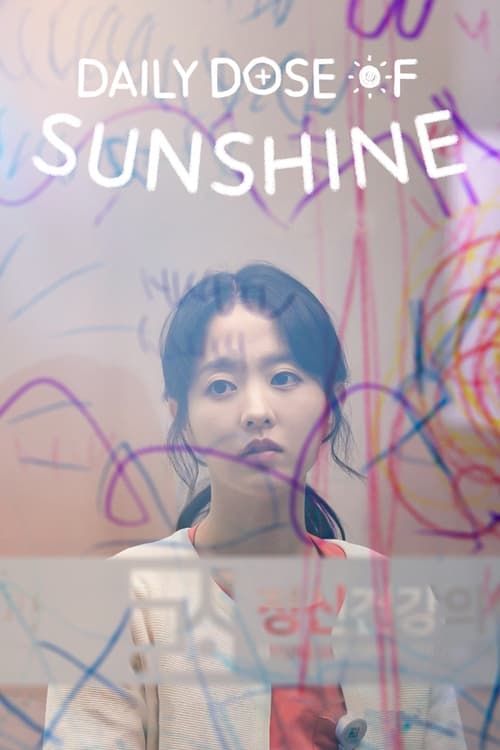
Daily Dose of Sunshine
A tender psychiatric workplace melodrama wrapped in pastel warmth, exploring human fragility through the visual metaphor of morning sunlight piercing through the heaviest storm clouds of the mind.
Daily Dose of Sunshine

Daily Dose of Sunshine

정신병동에도 아침이 와요

"We all cross between day and night throughout our lives."

03 November 2023 — 03 November 2023 South Korea 1 season 12 episode Ended 8.2 (136)

Cast: Park Bo-young, Yeon Woo-jin, Jang Dong-yoon, Lee Jung-eun, Chang Ryul

Drama The Fragile Border Between "Normal" and "Abnormal" Emotional Burnout, Over-Empathy, and Toxic Positivity Societal Stigma and Structural Discrimination Grief, Guilt, and Post-Traumatic Reconstruction

Overview

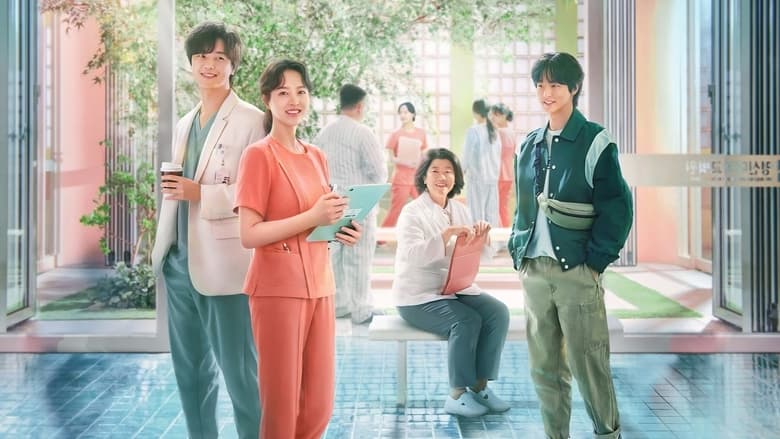
Daily Dose of Sunshine (정신병동에도 아침이 와요) is a 12-episode South Korean television drama created by director Lee Jae-gyoo (Lee JQ) and written by Lee Nam-gyu, Oh Bo-hyun, and Kim Da-hee. Adapted from the autobiographical webtoon by former psychiatric nurse Lee Ra-ha, the series is set inside the neuropsychiatry department (Unit 53) of the fictional Myungshin University Medical Center. It centers on Jung Da-eun, an empathetic third-year nurse transferred from internal medicine to psychiatry, navigating the delicate terrain of acute mental illness.

Throughout the series, each chapter balances episodic patient case studies—including bipolar disorder, panic disorder, obsessive-compulsive tendencies, social anxiety, and severe depression—with the personal struggles of the medical staff. Rather than relying on sensationalism or procedural tropes, the narrative follows Da-eun’s emotional integration into the ward under the mentorship of Head Nurse Song Hyo-jin, accompanied by eccentric proctologist Dong Go-yun and Da-eun's longtime friend Song Yu-chan.

As Da-eun pours her emotional energy into her patients, the series transitions from an outward-looking workplace drama into an intimate examination of burnout, trauma, and internal collapse. Da-eun herself experiences severe clinical depression following a patient tragedy, reversing her role from caregiver to inpatient. Her recovery and subsequent return to Unit 53 serve as an exploration of mental health stigma, self-compassion, and communal healing.

Core Meaning

The fundamental message of Daily Dose of Sunshine is that no one is immune to mental illness, and psychological pain is no different from a physical ailment. The drama deconstructs the societal dichotomy between the "sane caregiver" and the "broken patient," positing that every person is a border-crosser navigating between light and darkness, health and vulnerability.

The creators advocate for institutional empathy, the dismantling of cultural prejudices surrounding mental health in East Asian society, and the realization that recovery is not an instantaneous cure, but an ongoing process of self-recognition and community support.

Thematic DNA

The Fragile Border Between "Normal" and "Abnormal" 35%
Emotional Burnout, Over-Empathy, and Toxic Positivity 25%
Societal Stigma and Structural Discrimination 20%
Grief, Guilt, and Post-Traumatic Reconstruction 20%

The Fragile Border Between "Normal" and "Abnormal"

The show argues that mental illness is not a permanent identity or personal moral failing, but a situational vulnerability. Through medical professionals who themselves battle OCD, panic disorder, and depression, the boundary between doctor/nurse and patient collapses.

Emotional Burnout, Over-Empathy, and Toxic Positivity

Da-eun's initial compulsion to be a "savior" without emotional boundaries leads to severe self-neglect. The drama tracks the hazardous toll of emotional labor, demonstrating that unconditional self-sacrifice is unsustainable and that caregivers must practice self-compassion first.

Societal Stigma and Structural Discrimination

Explored deeply in the latter third of the series through neighborhood protests against psychiatric facilities and workplace hostility directed at healthcare workers who seek psychiatric treatment. It highlights systemic prejudice within corporate Korea and healthcare institutions.

Grief, Guilt, and Post-Traumatic Reconstruction

Following the suicide of a patient, the series portrays the non-linear path of complicated bereavement, survivor's guilt, and cognitive denial, underscoring that healing requires confronting grief rather than rushing past it.

Character Analysis

Jung Da-eun

Park Bo-young

Archetype: The Compassionate Healer / Wounded Caregiver Key Trait: Unfiltered empathy and perseverance

Motivation

To ease the suffering of vulnerable patients, later evolving into learning how to sustain her own mental well-being while advocating for her patients.

Character Arc

Begins as an overly conscientious, people-pleasing nurse whose boundaryless empathy leads to acute psychiatric hospitalization following a patient’s suicide. She evolves from a fragile savior into a resilient, self-aware practitioner who recognizes her own boundaries and embraces her identity as a mental health survivor.

Dong Go-yun

Yeon Woo-jin

Archetype: The Quirky Healer / Unconditional Anchor Key Trait: Emotional sincerity masked by comedic eccentricity

Motivation

Relieving his own internal tension, which shifts toward supporting Da-eun and destigmatizing psychiatric vulnerability.

Character Arc

An eccentric colorectal surgeon dealing with an obsessive-compulsive habit of cracking his knuckles. Meeting Da-eun breaks his mental fixation. Rather than playing a romantic savior, he serves as an empathetic partner who respects Da-eun’s recovery pace and provides non-judgmental stability.

All 5 characters and cast

Symbols & Motifs

Morning Light / Dawn (아침)

Meaning:

Sunshine symbolizes hope, clarity, and the promise that after every dark night of psychological suffering, dawn will inevitably arrive.

Context:

Reflected in the Korean title (Morning Comes to Psychiatric Wards Too) and the architectural reality of Unit 53, which has no curtains to prevent self-harm and is therefore the first department to receive morning sunlight.

The Mud / Quicksand

Meaning:

Visualizes the heavy, paralyzing lethargy of clinical depression where movement and basic survival feel physically impossible.

Context:

Depicted through surreal visual effects during Da-eun’s major depressive episode as a viscous, black mire that slowly rises from her feet to swallow her entire body.

The Rising Water / Suffocating Fish Bowl

Meaning:

Captures the visceral physical sensation of drowning on dry land and the terrifying feeling of acute respiratory distress.

Context:

Used to illustrate acute panic attacks experienced by Song Yu-chan and other characters, visualized as water rapidly flooding an enclosed room, elevator, or street.

Finger Cracking / Joint Popping

Meaning:

Represents unprocessed anxiety, obsessive fixation, and internal tension that subsides only through grounding and genuine human connection.

Context:

Obsessive physical compulsion (OCD) displayed by colorectal surgeon Dr. Dong Go-yun, who compulsively pops his knuckles until they swell.

Fantasy RPG World / Lost Valhalla

Meaning:

Symbolizes an escape mechanism forged by a vulnerable psyche crushed by academic failure, severe societal pressure, and isolation.

Context:

The visual manifestation of civil service examinee Kim Seo-wan’s delusions, rendering his surroundings as pixelated medieval dragons, mages, and quest logs.

The "Compliment Diary" (칭찬 일기)

Meaning:

Symbolizes the grueling, deliberate journey toward self-worth, self-acceptance, and internal validation.

Context:

A therapeutic tool assigned by Dr. Heo Ji-an at Hayan Hospital, where Da-eun is tasked with writing down small daily compliments to herself during inpatient recovery.

Memorable Quotes

우리는 모두 낮과 밤을 오가며 산다. 우리 모두는 정상과 비정상의 경계에 있는 경계인들이다.
— Jung Da-eun

Context

Delivered as a closing voiceover monologue in Episode 12.

Meaning

The concluding thesis statement of the entire drama, summarizing that psychological equilibrium fluctuates throughout life and no one is permanently outside the realm of mental distress.

정신병동은 다른 병동과 달리 아침이 가장 먼저 와요. 커튼이 없거든요. 환자들의 하루를 가장 먼저 깨우는 곳이에요.
— Song Hyo-jin

Context

Spoken in Episode 1 while explaining the physical design of Unit 53 and the absence of curtain cords to prevent self-harm.

Meaning

Turns an institutional safety rule into a powerful metaphor for light, healing, and hope.

All 5 quotes

Episode Highlights

The Darkest Hour Is Just Before the Dawn

S1E1

Introduces Unit 53 and Da-eun's transfer to psychiatry. Establishes the contrast between Oh Ri-na's outwardly perfect life and her severe bipolar disorder triggered by maternal gaslighting.

Significance:

Sets up the series' pastel visual aesthetic, core safety rules of the psychiatric ward, and the visual storytelling style for psychological disorders.

Why Do I Feel Like a Burden?

S1E3

Examines panic disorder and workplace exploitation through Song Yu-chan and a trainee nurse, visualizing panic attacks as drowning in a flooding glass box.

Significance:

Establishes the severe physical toll of psychological trauma and highlights the harmful nature of corporate overwork in contemporary Korean society.

When Life Tells You to Slow Down

S1E5

Centers on pseudo-dementia and burnout in a working mother, while senior nurse Park Soo-yeon confronts the impossible balance between maternal duty and career survival.

Significance:

Marks the thematic shift toward caregiver burnout, self-neglect, and the societal pressures placed on working women.

A Day in the Life of a Mage

S1E6

Reaches the climax of Kim Seo-wan’s narrative arc, contrasting his colorful RPG delusions with the bleak reality of civil service examination failure, culminating in his tragic suicide after discharge.

Significance:

Serves as the primary narrative pivot and turning point of the series, shattering the ward's stability and triggering Da-eun's psychological breakdown.

The Left Behind

S1E7

Explores complicated grief and acute PTSD following Seo-wan’s death, as Da-eun slips into dissociative denial by pretending Seo-wan is still alive.

Significance:

Illustrates the dangerous consequences of emotional over-identification and survivor's guilt among medical caregivers.

I'm a Nurse With Depression

S1E9

Subverts traditional medical drama paradigms by admitting protagonist Jung Da-eun as a closed-ward psychiatric inpatient at Hayan Hospital, using the visual metaphor of rising black mud.

Significance:

Collapses the boundary between healer and patient, offering a raw, de-sensationalized portrayal of severe clinical depression and the slow road to recovery.

And the Journey Continues

S1E11

Da-eun returns to Unit 53 but faces a community petition and guardian protests demanding her expulsion, prompting Head Nurse Song Hyo-jin to deliver a fierce defense of healthcare workers' rights.

Significance:

Directly tackles deep-seated societal prejudice, structural discrimination, and institutional stigma surrounding psychiatric illness.

Daily Dose of Sunshine

S1E12

The finale resolves secondary arcs as Min Deul-re chooses self-determination, Song Yu-chan enforces workplace boundaries, and Da-eun establishes a healthy relationship with Go-yun.

Significance:

Culminates in the "border-crosser" monologue as the ward receives morning light, cementing the message that recovery is an ongoing journey of self-recognition.

Philosophical Questions

Where is the line between healthy empathy and destructive over-identification?

Explored through Da-eun's emotional collapse and major depressive episode following Kim Seo-wan’s suicide after she failed to maintain clinical boundaries.

Can a society claim to value human life while stigmatizing the very people who seek help to preserve it?

Explored through the neighborhood protests and guardian petitions demanding Da-eun's termination once her psychiatric inpatient history is exposed.

Is delusion sometimes a protective psychological defense mechanism against an unbearable reality?

Explored through Kim Seo-wan’s fantasy RPG delusions, which shielded his mind from the unbearable pain of repeated civil service exam failures.

How does one cultivate self-worth when society measures human value solely through productivity and performance?

Explored through Song Yu-chan's recovery from panic disorder and the plight of exhausted civil service examinees.

Alternative Interpretations

The narrative lends itself to several distinct interpretive frameworks:

Full ending explanation

Cultural Impact

South Korea has historically recorded the highest suicide rate among OECD nations, accompanied by pervasive cultural stigmas surrounding mental health care where seeking psychiatric treatment carried risks of employment termination, insurance denial, and social ostracism.

Daily Dose of Sunshine was created to challenge these taboos. Following its late-2023 release, the drama sparked widespread public discussion across Korean media regarding the pressures facing youth, civil service examinees (gosi-saeng), and corporate workers. Mental health advocacy organizations and medical professionals praised the show for educating viewers on panic disorder, pseudodementia, and clinical depression, while international critics praised its balance of accessible drama and destigmatizing social messaging.

Audience Reception

Daily Dose of Sunshine received widespread critical acclaim both domestically and globally, earning an 8.1/10 rating on IMDb and a 100% approval rating on Rotten Tomatoes.

Critics and viewers widely praised its innovative visual metaphors (such as water for panic attacks and black mud for depression), its non-sensationalized portrayal of inpatient psychiatric treatment, and Park Bo-young’s career-defining performance as Jung Da-eun.

Minor criticisms focused on the sharp tonal shift in the second half, where the cozy, lighthearted workplace dynamic turns into heavy depictions of suicide, catatonic depression, and community hostility. A few secondary romantic comedy subplots were also viewed by some critics as conventional compared to the psychiatric narratives.

Interesting Facts

  • The series is based on the semi-autobiographical webtoon by Lee Ra-ha, who worked as a psychiatric nurse in South Korea for nearly six years before creating webtoons to process her clinical experiences.
  • Director Lee Jae-gyoo (who previously helmed Netflix’s zombie hit All of Us Are Dead) revealed that his personal struggles with clinical panic and anxiety disorder motivated him to direct this healing project.
  • The production employed professional psychiatrists and practicing psychiatric nurses on set daily to review medical terminology, restraint protocols, medication dispensation, and DSM-5 diagnostic criteria.
  • The Unit 53 set was deliberately designed with curved corners, soft wood finishes, pastel peach and yellow hues, and wide glass partitions without curtains or sharp fixtures to mirror modern psychiatric hospital safety standards.
  • Park Bo-young prepared for her role by observing nurses in real neuropsychiatric wards in Seoul, shadowing their communication cadence, posture, and note-taking routines.
  • The series won the flagship Best Drama award at the 3rd Blue Dragon Series Awards (2024), where Park Bo-young also won Best Actress.

Easter Eggs

VFX Reality Shifts and Audio Filters

When patients experience acute symptoms, aspect ratios and color grading warp; during panic attacks, the audio dips into an underwater low-pass filter with distorted background ripples to immerse viewers in the sensory experience of panic.

Webtoon Author Homage Caricatures

Small visual motifs across the hospital reception desk and Da-eun's notebook feature hand-drawn animal caricatures referencing Lee Ra-ha’s original webtoon art style.

All of Us Are Dead Cast Cameos

Director Lee Jae-gyoo brought over several actors from his previous Netflix hit, including Lim Jae-hyeok (resident Kong Cheol-woo) and Jeon Bae-soo (caregiver Yoon Man-cheon).

Ward Lighting Progression at Hayan Hospital

During Da-eun’s inpatient recovery, the room's color palette gradually transitions from desaturated slate-blue to warm morning amber as she opens her compliment journal and accepts medication.

Frequently Asked Questions

Explore More About This Movie

Dive deeper into specific aspects of the movie with our detailed analysis pages

Comments (0)

Leave a comment

No comments yet. Be the first to share your thoughts!

Similar Movies