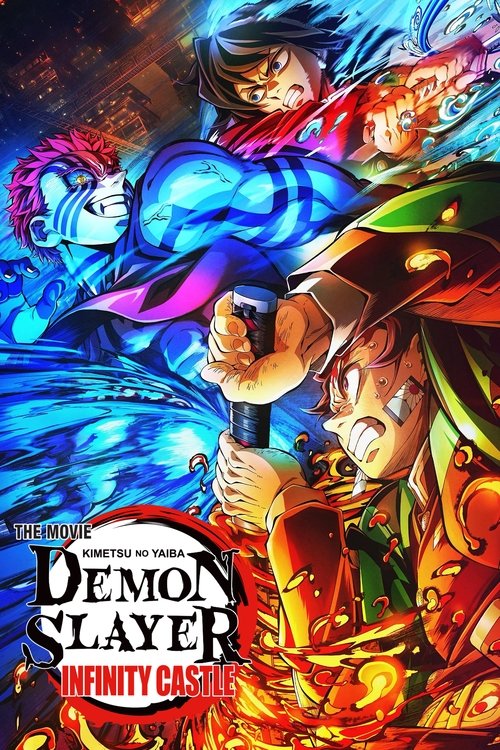
Demon Slayer: Kimetsu no Yaiba Infinity Castle
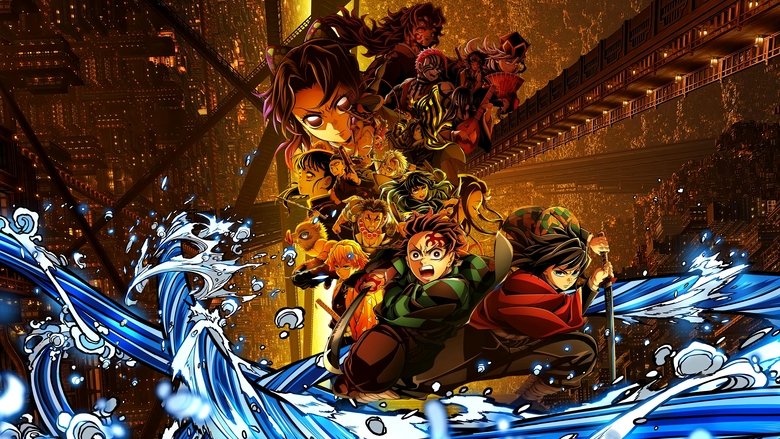
A visually kaleidoscope descent into a labyrinth of shifting gravity and tragic bloodlust. Amidst the dizzying, M.C. Escher-esque architecture of the Infinity Castle, steel clashes with sorrow as the Demon Slayers face their ultimate test, painting a breathtaking elegy of vengeance and redemption.
Demon Slayer: Kimetsu no Yaiba Infinity Castle

Demon Slayer: Kimetsu no Yaiba Infinity Castle

劇場版「鬼滅の刃」無限城編 第一章 猗窩座再来

"It's time to have some fun."

18 July 2025 Japan 156 min ⭐ 7.7 (690)
Director: Haruo Sotozaki
Cast: Natsuki Hanae, Takahiro Sakurai, Akira Ishida, Hiro Shimono, Yoshimasa Hosoya
Animation Fantasy Action
The Human Cost of Vengeance Redemption Through Memory Succession and Growth The Bond of Brotherhood
Budget: $20,000,000
Box Office: $724,279,886

Overview

Picking up immediately after the explosive events of the Hashira Training Arc, the film plunges the Demon Slayer Corps into the dimensional stronghold of Muzan Kibutsuji: the Infinity Castle. Separated and scattered throughout this endless, gravity-defying fortress, the Hashira and the young slayers must navigate a shifting maze of wooden platforms and sliding doors while facing the remaining Upper Rank demons. The narrative is structured around three primary confrontations that test the physical and emotional limits of the protagonists.

The film focuses on three key battles: Shinobu Kocho's deadly duel with the sadistic Upper Rank Two, Doma, who holds the key to her tragic past; Zenitsu Agatsuma's thunderous confrontation with his former senior-turned-demon, Kaigaku; and the climactic, high-octane showdown featuring Tanjiro Kamado and Giyu Tomioka against the martial artist demon, Akaza. As the battles rage, the film weaves in heart-wrenching flashbacks, particularly exploring the sorrowful human origins of Akaza, transforming a monstrous enemy into a figure of profound tragedy before the final blow is struck.

Core Meaning

At its heart, Infinity Castle explores the duality of strength and the tragedy of lost humanity. Director Haruo Sotozaki uses the relentless battles not just as spectacle, but as a vehicle to deconstruct the villains, revealing that beneath every monster lies a broken human story. The film posits that true strength comes not from physical power or regeneration, but from the human capacity to protect, remember, and forgive—contrasting the Slayers' resolve with the demons' hollow pursuit of eternity.

Thematic DNA

The Human Cost of Vengeance 30%
Redemption Through Memory 30%
Succession and Growth 20%
The Bond of Brotherhood 20%

The Human Cost of Vengeance

This theme is embodied by Shinobu Kocho. Her battle with Doma is not just a fight for survival but a calculated, suicidal act of revenge for her sister. The film portrays her sacrifice not as glorious, but as a grim, necessary cost of war, highlighting how deep hatred can drive a kind character to consume themselves for a chance at victory.

Redemption Through Memory

Akaza's arc deconstructs the idea of the irredeemable monster. Through the 'State of Selfless' and the recovery of his human memories, the film suggests that salvation is possible even for demons if they can reconnect with their past loves and regrets. His defeat is ultimately a choice to stop fighting, sparked by the memory of Keizo and Koyuki.

Succession and Growth

Zenitsu's evolution from a coward to a focused warrior highlights the theme of growing up. Facing Kaigaku, who represents the darker path of selfishness and pride, Zenitsu sheds his need for sleep-fighting, symbolizing his awakening as a true successor to the Thunder Breathing style and his master's legacy.

The Bond of Brotherhood

The synergy between Tanjiro and Giyu against Akaza underscores the importance of shared burden. Unlike the demons who fight alone or for selfish gain, the Slayers survive by covering each other's blind spots, reinforcing the series' core message that connection is stronger than solitude.

Character Analysis

Tanjiro Kamado

Natsuki Hanae

Archetype: The Compassionate Hero
Key Trait: Unwavering Empathy

Motivation

To defeat Muzan and turn his sister back to human, while protecting his mentors and friends from suffering the same fate as Rengoku.

Character Arc

Tanjiro transitions from a student to a master-level swordsman. He unlocks the 'Transparent World,' a state of heightened perception, allowing him to bypass Akaza's defenses. Crucially, he maintains his empathy, acknowledging Akaza's tragedy even while delivering the killing blow.

Akaza (Hakuji)

Akira Ishida

Archetype: The Tragic Villain
Key Trait: Martial Honor / Hidden Grief

Motivation

Originally to become the strongest; later revealed to be a twisted desire to cure his loved ones, which morphed into a hatred of the weak.

Character Arc

Starts as a battle-hungry demon obsessed with strength. Through his fight with Tanjiro, he is forced to confront his suppressed human memories of his sick father and murdered fiancée. His arc ends in a heartbreaking suicide where he destroys his own regenerating body to atone for his sins.

Shinobu Kocho

Saori Hayami

Archetype: The Sacrificial Tactician
Key Trait: Deceptive Fragility

Motivation

To kill the demon Doma who murdered her older sister, Kanae, regardless of the personal cost.

Character Arc

Shinobu enacts her final plan against Doma. Knowing she cannot win by strength, she sacrifices her life to be absorbed, setting a trap that will aid her allies later. She accepts her death with a mix of rage and grace.

Zenitsu Agatsuma

Hiro Shimono

Archetype: The Reluctant Warrior
Key Trait: Hidden Competence

Motivation

To avenge his Gramps (Jigoro Kuwajima) who committed seppuku due to Kaigaku's betrayal.

Character Arc

Zenitsu sheds his comic relief persona entirely for this battle. He fights awake and focused, driven by rage and duty to punish Kaigaku for disgracing their master. He invents a new form of Thunder Breathing, proving his own worth.

Symbols & Motifs

The Infinity Castle

Meaning:

Symbolizes the chaotic, endless cycle of violence and Muzan's twisted, controlling mind. Its shifting, gravity-defying structure represents the disorientation of war and the overwhelming odds facing humanity.

Context:

Used as the primary setting, constantly rotating and shifting to separate allies, physically manifesting the 'divide and conquer' strategy of the antagonist.

The Compass Needle

Meaning:

Represents Akaza's martial code and his obsession with sensing 'fighting spirit.' Ironically, it also symbolizes his lost moral compass, which he only regains by remembering his human past.

Context:

Visualized as a snowflake-shaped array under Akaza's feet during combat, dictating his attacks and defense mechanisms.

Wisteria Flower

Meaning:

A symbol of poison and protection, but specifically for Shinobu, it represents her fragility and her lethal determination. It is beautiful but deadly to demons, mirroring her own character design.

Context:

Prominently featured in Shinobu's motifs and attacks, and metaphorically in her physiological modification to defeat Doma.

The Snowflake

Meaning:

Represents Koyuki (whose name means 'Snow'), Akaza's late fiancée. It symbolizes the fragile, pure beauty of his human life that was trampled upon, contrasting with his destructive fire-like demon powers.

Context:

Appears in Akaza's flashbacks and visually integrates into his 'Compass Needle' technique design, hinting at his subconscious attachment to her.

Memorable Quotes

If I don't cut off your head, the spirits of the fallen won't be able to rest!

— Tanjiro Kamado

Context:

Shouted during the intense exchange of blows with Akaza, asserting his resolve to end the cycle of killing.

Meaning:

Highlights Tanjiro's role as the carrier of the will of the dead (like Rengoku), fighting not just for the living but to honor those lost.

You are weak. That is why you lost.

— Akaza

Context:

Said tauntingly to Giyu, before his own memories begin to resurface.

Meaning:

A reflection of Akaza's Darwinian philosophy, which is ironically turned against him when he realizes his own moral weakness in forgetting his human heart.

I created a new form... I wanted to fight alongside you with this.

— Zenitsu Agatsuma

Context:

Spoken after unleashing his original technique, 'Flaming Thunder God,' to defeat Kaigaku.

Meaning:

Reveals the tragedy of the brotherhood that could have been. Zenitsu didn't just want to surpass Kaigaku; he wanted to be his equal and partner.

Rot in hell, you piece of trash.

— Shinobu Kocho

Context:

Her final words (or internal thought projected) to Doma as she is being absorbed/defeated, maintaining her defiance to the end.

Meaning:

Shatters her polite facade completely, delivering her raw, unfiltered hatred to Doma in her final moments.

Philosophical Questions

Does trauma justify monstrosity?

The film juxtaposes the Slayers (who suffered trauma but chose to protect others) with Demons (who suffered trauma and chose to inflict pain). It asks if Akaza's tragic circumstances excuse his actions, ultimately concluding that while his pain is valid, his choices were wrong.

What is the true nature of strength?

Akaza believes strength is physical dominance and immortality. Tanjiro and Giyu prove that strength is the will to endure suffering for others. The film validates the latter when Akaza, despite his physical superiority, admits defeat to the moral fortitude of his human memories.

Alternative Interpretations

Akaza's Suicide vs. Redemption: Some critics argue Akaza wasn't 'redeemed' but simply quit because he realized he had become what he hated (a bully). Others view it as true redemption through the power of love (Koyuki).
The Castle as Purgatory: The Infinity Castle can be interpreted as a literal Purgatory where characters must confront their past sins (Zenitsu's cowardice, Akaza's regret, Shinobu's anger) before they can 'move on' or survive.

Cultural Impact

Infinity Castle solidified Demon Slayer's position as a generation-defining franchise, proving that the 'anime film trilogy' model can be financially viable for canon conclusions. Culturally, it sparked renewed interest in the Taisho era aesthetics and Buddhist concepts of the afterlife (Sanzu River) depicted in the film. Critics praised it for elevating 'shonen battle anime' into high art through its avant-garde cinematography and emotional depth, influencing how future anime adaptations plan their finales—moving away from TV seasons to theatrical events for climactic arcs.

Audience Reception

Praised: Universally acclaimed for Ufotable's animation, particularly the integration of 2D characters with the 3D shifting backgrounds of the castle. The emotional weight of Akaza's backstory was a highlight, often cited as making grown men cry.
Criticized: Some viewers felt the pacing dragged during the flashback sequences, interrupting the flow of the high-stakes battles. The cliffhanger ending (setting up Part 2) left some casual viewers frustrated.
Verdict: A visual masterpiece that satisfies fans but demands prior knowledge of the series.

Interesting Facts

  • The film is the first part of a formally announced trilogy adapting the final arcs of the manga, a strategy designed to maintain theatrical animation quality for the series finale.
  • Ufotable utilized a new proprietary 3D rendering technology to animate the shifting, complex architecture of the Infinity Castle, allowing for dynamic camera movements that were previously impossible.
  • The film set a new opening weekend box office record in Japan for 2025, surpassing the previous record holder by a significant margin.
  • Akira Ishida (Akaza) recorded his lines for the flashback sequences in a separate session from the battle scenes to distinctly separate the voice of 'Akaza' from 'Hakuji'.
  • The subtitle 'Akaza's Return' (猗窩座再来) mirrors the manga chapter titles but also serves as a callback to the 'Mugen Train' arc where he first appeared.
  • The runtime is approximately 155 minutes, making it one of the longest anime feature films in recent history.
  • The character designer Akira Matsushima added extra details to Akaza's tattoos in the close-ups to emphasize their resemblance to criminal markings from the Edo period.

Easter Eggs

Rengoku's Tsuba

Tanjiro's sword guard (tsuba) is prominently focused on during his clash with Akaza. It glows fiercely, symbolizing Rengoku's spirit supporting Tanjiro in finishing the battle he started.

Blue Spider Lily Pattern

In the background of Akaza's flashback regarding the sick father, there is a subtle pattern on a kimono or hanging scroll resembling the Blue Spider Lily, hinting at the irony that the cure Muzan sought was potentially close to Akaza's human life.

Nakime's Biwa Strum

The sound design of the biwa strums matches the musical score's tempo perfectly during scene transitions, diegetically controlling the pacing of the movie itself, just as she controls the castle.

⚠️ Spoiler Analysis

Click to reveal detailed analysis with spoilers

Frequently Asked Questions

Explore More About This Movie

Dive deeper into specific aspects of the movie with our detailed analysis pages

Comments (0)

Leave a comment

No comments yet. Be the first to share your thoughts!