Skip to content
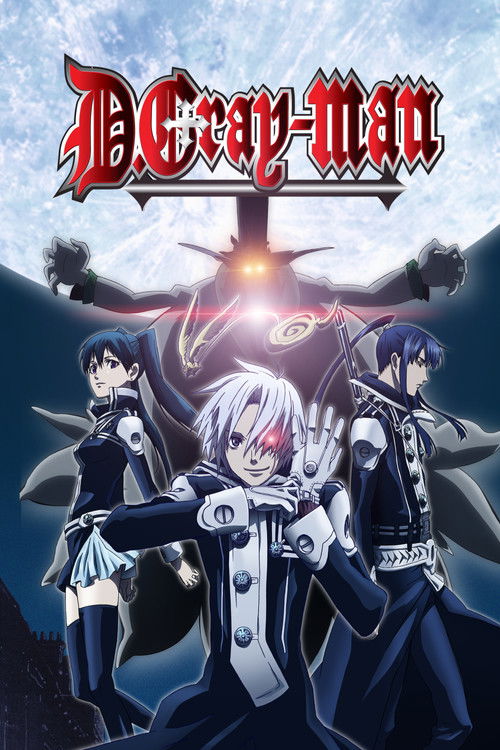
D.Gray-man
A gothic dark-fantasy odyssey of grief and stubborn hope, where a white-haired boy walks a snowbound, ash-gray 19th century with a cursed arm that bleeds light into the dark.
D.Gray-man

D.Gray-man

03 October 2006 — 30 September 2008 Japan 2 season 103 episode Ended 8.0 (172)

Cast: Toshiyuki Morikawa, Katsuyuki Konishi, Sanae Kobayashi, Kenichi Suzumura, Takeshi Aono

Animation Sci-Fi & Fantasy Action & Adventure Mystery Found family and bonds Compassion versus duty Grief, loss and scars Perseverance and the vow to keep walking Faith, fate and the cost of Innocence

Overview

D.Gray-man is a 103-episode anime adapted from Katsura Hoshino's manga. TMS Entertainment produced it, and it aired on TV Tokyo from October 2006 to September 2008. It is set in an alternate 19th century. Allen Walker, a young exorcist, joins the Black Order, an organization that fights the Millennium Earl and his demonic army of Akuma. The Earl intends to destroy humanity. The Order's weapon is Innocence, an ancient substance.

Allen is sent on missions with fellow exorcists: the cold swordsman Kanda, the kind Lenalee, and the cheerful future Bookman Lavi. Episodes mix self-contained missions with larger arcs. Some are comic, such as the mad inventions of Komui, the Order's science chief. Others turn tragic, as Allen sees the souls trapped inside the Akuma. The conflict gradually widens into a war over the world's hidden history.

The anime stopped because it ran out of manga material. According to TV Tropes, it ended in the middle of volume 16. A 13-episode sequel, D.Gray-man Hallow, aired in 2016.
Core Meaning

The series is about staying kind and moving forward in a world that is cruel and dark. Allen's vow to keep walking comes from his love for his lost father, Mana. His wish to save both humans and the Akuma, who are the souls of the dead, is the series' ethical center. It argues that compassion and the refusal to give up matter more than certainty or being on the winning side. The story also shows that wounds heal but scars stay, so healing never means forgetting.

Thematic DNA

Compassion versus duty 30%
Grief, loss and scars 25%
Perseverance and the vow to keep walking 20%
Faith, fate and the cost of Innocence 15%
Found family and bonds 10%

Compassion versus duty

Kanda's view that exorcists are destroyers, not saviors, is set against Allen's wish to be a destroyer who can save. Allen keeps choosing mercy for the souls trapped in the Akuma, even when the Order's mission does not ask it of him.

Grief, loss and scars

Allen's past with Mana, Kanda's search for a person from his past, and Lavi's doubts about his own smile show characters defined by what they lost. Several arcs make the point that wounds heal but scars remain.

Perseverance and the vow to keep walking

Walking forward is the central motif. It starts as a promise to Mana and grows into a chosen path that Allen refuses to give up whatever the cost.

Faith, fate and the cost of Innocence

Innocence is both a gift and a burden. It can judge its wielders, as the Suman arc shows. The series questions the Order's institutional orthodoxy and its use of people as weapons.

Found family and bonds

Comic interludes and shared battles turn a group of damaged exorcists into companions who hold one another up.

Character Analysis

Allen Walker

Katsuyuki Konishi

Archetype: Compassionate hero Key Trait: Unbreakable compassion

Motivation

To keep the promise to Mana to keep walking, and to save both humans and Akuma.

Character Arc

Allen starts as a newly arrived exorcist carrying the guilt of Mana's death. Through the missions he grows from a polite apprentice into someone who defines his own path and holds to his vows under growing pressure.

Yu Kanda

Toshiyuki Morikawa

Archetype: Cold swordsman rival Key Trait: Blunt, prickly loyalty

Motivation

To find a certain person from his past.

Character Arc

Kanda begins as hostile and dismissive of Allen's idealism, which he sees as naive. He gradually becomes a grudging ally while he searches for a person from his past.
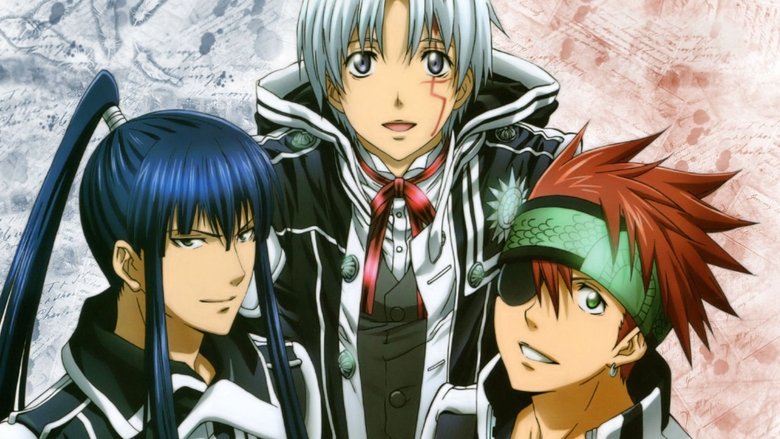
All 4 characters and cast

Symbols & Motifs

Allen's cursed left arm

Meaning: Inherited burden and the double-edged nature of power. It is both a mark of Allen's difference and his means of saving others.
Context: The arm is his Innocence. The series shows its pain and its strain, for example when Allen extracts Suman's Innocence and is left drained.

Walking / the road

Meaning: Perseverance and the promise made to Mana.
Context: Repeated in Allen's vows to keep walking until his life ends.

The Akuma

Meaning: Grief weaponized: the dead called back by the living.
Context: Allen can see the souls trapped inside them. He first met an Akuma when he brought Mana back as one and then had to destroy him.

Snow and gothic imagery

Meaning: Cold, loss and religious solemnity.
Context: The setting uses church-like architecture and religious iconography, which comicbook.com says inspired the mangaka's art. Snow appears in episodes such as 'And Snow Falls Over the Town'.

The Black Order's uniform and cross

Meaning: Institutional faith and the cost of belonging to it.
Context: The exorcists' coat and cross mark them as soldiers of an organization that also treats them as tools.

Memorable Quotes

Because I am a small man, my heart is moved by what's in front of my eyes, not by what the world needs.
— Allen Walker

Context

Said to Kanda in the 'Old Man of the Land and Aria of the Night Sky' arc, as listed on Wikiquote.

Meaning

Allen explains that his power to protect comes from personal, immediate compassion rather than grand ideology.
We're destroyers, not saviors.
— Yu Kanda

Context

Kanda to Allen in the same arc, per Wikiquote.

Meaning

The harsh realism that Allen's idealism is tested against.
All 5 quotes

Episode Highlights

The Black Order Annihilation Incident

S1E8
Komui's robot Sir Komurin II runs amok and chases Allen, and Allen's welcome-home party goes ahead.
Significance: A comic episode that sets the series' mix of dark fantasy and slapstick and shows the Order's eccentric home life.

And Snow Falls Over the Town

S1E12
A winter episode in the early run of missions.
Significance: It is one of the early episodes where snow and loss set the series' tone. I could not confirm its plot from the sources found.

A Scream

S3E4
Suman's Fallen One body disintegrates, destroying a town and killing its people.
Significance: A tragic part of the Suman arc, where an exorcist's Innocence judges him, and one of the series' bleakest moments.

Philosophical Questions

Can one save those one must destroy?

Allen's central ambition, to be a destroyer who can save, runs through the series. He confronts it every time an Akuma's soul is revealed.

Do wounds ever fully heal?

The series says injuries heal while scars remain, and its characters carry memory and loss forward rather than shedding them.

Is faith in an institution the same as faith in a cause?

The Order's treatment of exorcists, including the judgment of an exorcist's Innocence in the Suman arc, tests whether obeying the Order serves the cause it claims to serve.

How It Ends

Alternative Interpretations

Viewers read Allen's mercy for the Akuma in different ways. Some see it as a Christ-like sacrifice. Others see it as a critique of a militarized religion that treats exorcists as weapons. Kanda's realism can be read as either cruelty or protective pragmatism.

Full ending explanation

Cultural Impact

The anime brought Hoshino's manga, one of Shueisha's bestsellers with over 27 million copies in circulation, to a wider audience. It was part of the wave of gothic-flavored shonen action series of the 2000s. Its 103 episodes ended in 2008 when the story caught up with the manga, which was affected by hiatuses. The 13-episode sequel Hallow aired in 2016, and ComicBook.com reports it received criticism for animation quality and pacing. Fans have long hoped for a faithful continuation.

Audience Reception

Viewers praise the gothic atmosphere, the emotional character arcs, and Allen's earnest ethics. The main criticism is that the anime stops partway through the manga's story. The 2016 sequel Hallow drew criticism for poor animation quality and pacing, per ComicBook.com. I did not find aggregated season-by-season ratings in my searches.

Interesting Facts

  • The anime was produced by TMS Entertainment and directed by Osamu Nabeshima, with series composition by Reiko Yoshida and music by Kaoru Wada.
  • It aired 103 episodes on TV Tokyo from October 3, 2006 to September 30, 2008.
  • Twelve theme songs were used in the series: four openings and eight endings.
  • Aniplex released twenty-six DVD compilations between February 2007 and March 2009.
  • According to ComicBook.com, production stopped because the anime ran out of manga material, and TV Tropes says it ended in the middle of volume 16.
  • Because Hoshino was reportedly dissatisfied with TMS's earlier adaptation, TV Tropes says the 2016 sequel Hallow was produced under her supervision.
  • FUNimation licensed the original series, according to the D.Gray-man fandom wiki.
  • Hoshino's manga has over 27 million copies in circulation.

Frequently Asked Questions

Explore More About This Series

Dive deeper into specific aspects of the series with our detailed analysis pages

Comments (0)

Leave a comment

No comments yet. Be the first to share your thoughts!

Similar Movies