Skip to content
Blue Exorcist
A gothic dark fantasy brimming with fraternal angst and incandescent resolve, where cursed azure flames illuminate a fractured youth's desperate climb from demonic pariah to humanity's steadfast shield.
Blue Exorcist

Blue Exorcist

青の祓魔師

17 April 2011 — 23 March 2025 Japan 5 season 73 episode Ended 7.8 (547)

Cast: Hiroshi Kamiya, Jun Fukuyama, Keiji Fujiwara, Nobuhiko Okamoto, Eri Kitamura

Animation Sci-Fi & Fantasy Action & Adventure Mystery Nature vs. Nurture & Identity Determination Fraternal Bond, Resentment, and Projection Institutional Corruption & Dogmatism vs. Personal Morality Grief, Trauma, and Generational Sins

Overview

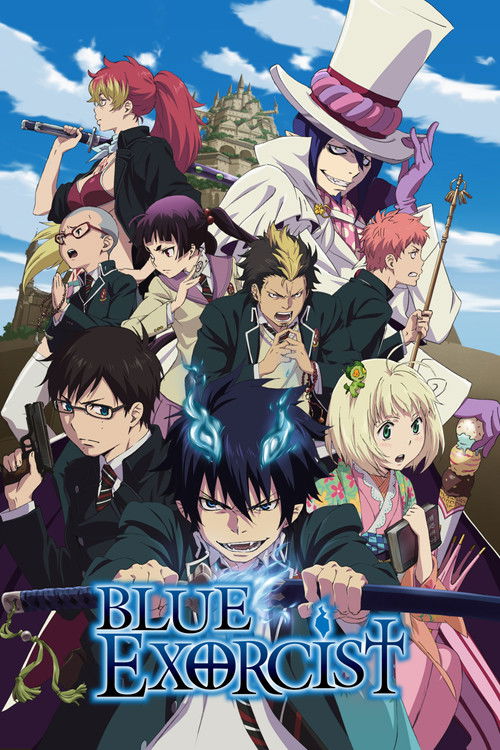
Blue Exorcist (Ao no Exorcist) is a dark fantasy supernatural drama set across two mirrored dimensions: Assiah, the physical world where humans reside, and Gehenna, the void dimension inhabited by demons. The overarching saga centers on Rin Okumura and his younger twin brother Yukio, raised by an esteemed exorcist priest, Father Shiro Fujimoto. Rin discovers that he is the biological son of Satan, the ruler of demons, inheriting lethal blue flames sealed inside a demonic katana. Following Fujimoto's sacrificial death defending them, Rin enters the True Cross Academy to train as an exorcist, determined to carve his own destiny and defeat his demonic progenitor.

Across its successive seasons—spanning Rin's early struggles, the biological and religious crisis of the Kyoto Impure King confrontation, the covert machinations of the Illuminati syndicate in Shimane, and the revelations of the past in Beyond the Snow and The Blue Night—the series expands into a complex global and cosmic conflict. The brothers and their classmates confront espionage within the True Cross Order, traumatic family lineage mysteries, and deep ideological fractures between those seeking human-demon coexistence and apocalyptic fundamentalists.

Ultimately, the overarching narrative progresses from a high-school battle shōnen into a generational tragedy about identity, systemic corruption, and brotherhood. It details how ordinary humans and half-demons navigate an unforgiving world of secrets, dogma, and divine catastrophe.
Core Meaning

The core thesis of Blue Exorcist is that one's origin and inherited nature do not dictate one's moral destiny. The narrative deconstructs biological determinism and explores the pain of bearing ancestral sin. The story argues that true humanity is not defined by physical species or bloodline purity, but by conscious choices, empathy, personal accountability, and the bonds of mutual support forged in adversity. It critiques dogmatic institutions that enforce prejudice in the name of righteousness, while affirming that acknowledging inner darkness is essential to achieving true self-actualization.

Thematic DNA

Nature vs. Nurture & Identity Determination 40%
Fraternal Bond, Resentment, and Projection 25%
Institutional Corruption & Dogmatism vs. Personal Morality 20%
Grief, Trauma, and Generational Sins 15%

Nature vs. Nurture & Identity Determination

Rin is biologically the spawn of ultimate evil yet chooses to act as a protector of mankind. Across the franchise, characters grapple with whether lineage, demonic taintedness, or inherited trauma defines their worth, consistently showing that nurturing love and personal will transcend biological inheritance.

Fraternal Bond, Resentment, and Projection

The psychological tension between Rin and Yukio anchors the drama. Yukio's early maturity and hidden inferiority complex contrast with Rin's raw emotional honesty, evolving over multiple seasons into an exploration of unspoken trauma, mutual jealousy, and deep-seated brotherly devotion.

Institutional Corruption & Dogmatism vs. Personal Morality

The True Cross Order is portrayed not as an unquestioned paragon of justice, but as a bureaucratic apparatus riddled with secrecy, dangerous human experimentation, and internal factions such as the Illuminati. The series highlights the danger of blind zealotry versus compassionate personal ethics.

Grief, Trauma, and Generational Sins

The tragedy of the Blue Night casts an enduring shadow across decades, affecting survivors like Bon's temple family, Izumo's lineage, and Yuri Egin's legacy. The story emphasizes breaking cycles of inherited revenge and finding reconciliation.

Character Analysis

Rin Okumura

Nobuhiko Okamoto

Archetype: The Reluctant Hero / Defiant Outcast Key Trait: Unwavering empathy and fierce determination.

Motivation

Began as revenge against Satan for Shiro's death; matures into protecting all who suffer from institutional oppression and prejudice.

Character Arc

Evolves from an impulsive delinquent into a disciplined Knight exorcist who fully integrates his demonic identity to protect his family and humanity.

Yukio Okumura

Jun Fukuyama

Archetype: The Tragic Foil / Troubled Prodigy Key Trait: Analytical intellect masking internal turmoil.

Motivation

Driven initially to keep Rin safe; mutates into an obsessive desire to prove self-worth without living in his brother's shadow.

Character Arc

Moves from a poised, strict instructor hiding deep insecurity into a severe existential crisis regarding his demonic vulnerability and resentment of Rin.

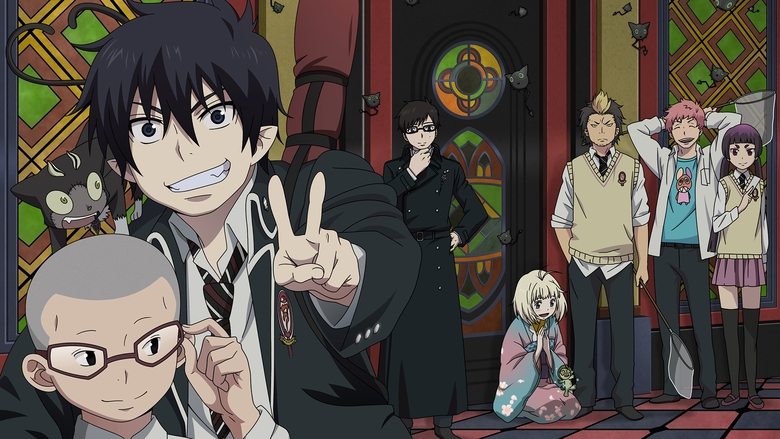
All 5 characters and cast

Symbols & Motifs

The Blue Flames

Meaning:

The direct symbol of Satan's heritage and destructive omnipotence. Initially an untamed curse that sparks terror among allies, the flame gradually transforms into a symbol of Rin's protective warmth and self-mastery.

Context:

Manifests whenever Rin draws Kurikara or experiences heightened emotional states, serving as both a mark of demonic heritage and his weapon as an Exorcist.

Kurikara (The Demon-Slaying Blade)

Meaning:

A spiritual seal that suppresses Rin's demon heart, symbolizing the physical and psychological restraint placed upon one's authentic identity to conform to societal safety.

Context:

Carried by Rin in a red scabbard strap, acting as the physical boundary containing his demonic flames and powers.

Yukio's Glasses and Dual Guns

Meaning:

Symbolizes precision, composure, and emotional armor. Yukio uses clinical detachment and firearms to distance himself from supernatural chaos and conceal his creeping vulnerability.

Context:

Utilized continuously by Yukio in combat and academic teaching as instruments of strict control and emotional barriers.

The Mirrored Dimensions (Assiah and Gehenna)

Meaning:

The foundational cosmic motif representing consciousness versus void, human tangible reality versus raw supernatural instinct. It symbolizes the duality existing within every human soul.

Context:

Framed throughout the series cosmology as overlapping planes separated by dimensional barriers that various factions attempt to bridge or defend.

White Foxes (Byakko) and Inari Shrines

Meaning:

Symbolizes spiritual devotion, tragic familial heritage, and Izumo's suppressed matrilineal power.

Context:

Featured prominently throughout the Shimane Illuminati arc in connection with the Kamiki family's sacred shrine duties and Izumo's familiar summons.

Memorable Quotes

もう人間でも悪魔でもねえ!行くしかねえんだ!俺は祓魔師になる!
— Rin Okumura

Context

Spoken to Mephisto Pheles at Shiro Fujimoto's graveside in Season 1, Episode 2.

Meaning

Proclaims Rin's destiny and defines the premise of his refusal to succumb to despair or rigid biological categorizations.

俺はお前の兄貴だ!お前がどんなになろうと、俺はお前の味方だ!
— Rin Okumura

Context

Delivered during emotional confrontations in the Kyoto Saga and Beyond the Snow.

Meaning

Affirms the core theme that Rin's brotherhood and empathy remain unconditional despite Yukio's descent into isolation and self-doubt.

All 3 quotes

Episode Highlights

The Devil Resides in Human Souls

S1E2

Features Satan possessing Shiro Fujimoto and Shiro committing suicide to protect Rin, triggering Rin to unsheathe Kurikara and awaken his demonic nature.

Significance:

Establishes the central inciting incident and Rin's ultimate goal of becoming an exorcist to defeat Satan.

Act of Kindness

S1E10

Focuses on Kuro, the cat sith familiar who guards the academy gate and mourns Shiro's death until Rin connects with him empathetically.

Significance:

Solidifies Rin's innate ability to understand demon suffering and establishes Kuro as a loyal companion.

Small Beginnings

S2E1

Resets the canonical continuity following the first season's anime-original detour, establishing the tension over Rin's exposed identity among his classmates.

Significance:

Grounded the anime strictly back into Kazue Kato's manga canon.

Candid and Open

S2E12

Rin successfully controls his blue flames with the aid of Ucchusma to incinerate the Impure King without harming his comrades.

Significance:

Mends the rift between Rin and his classmates, proving his flames can protect rather than destroy.

Inauspicious Night

S3E4

Unveils the secret defection of Renzo Shima as a double agent working for the Illuminati and the abduction of Izumo.

Significance:

Shatters the internal trust of the Exwire group and initiates the global war against Lucifer's organization.

Beyond the Snow

S4E12

Culminates the emotional fractures between Yukio and the Order, exploring Yukio's inner demons and leading to Mephisto sending Rin through the temporal corridor.

Significance:

Sets up the definitive confrontation of the franchise and the historical revelations of Section 13.

The Blue Night

S5E1

Rin travels into the past to observe the origin of Shiro Fujimoto, Yuri Egin, Section 13, and the true birth of the Okumura twins.

Significance:

Resolves the decades-long foundational mystery of the entire universe.

Philosophical Questions

Is morality innate or constructed through conscious choice?

Explored through Rin's rejection of his demonic inheritance to protect human life, showing that moral character is defined by actions rather than biological origin.

Can an institution that relies on hidden atrocities ever truly serve justice?

Raised by the discoveries surrounding Section 13, Grigori's ethics, and the Illuminati's roots within the Order's clandestine operations.

What is the true boundary between self-sacrifice and self-destruction?

Highlighted by Shiro Fujimoto's fatal paternal choices and Yukio's dangerous path of isolated martyrdom.

Does complete mutual understanding require dismantling the barriers between opposing worlds?

Examined through Lucifer's radical pursuit of uniting Assiah and Gehenna versus the True Cross Order's policy of total segregation.

Alternative Interpretations

Several critical perspectives provide deeper readings of the narrative:

Full ending explanation

Cultural Impact

Debuting in Jump SQ in 2009 and hitting television screens in 2011, Blue Exorcist became one of the defining dark fantasy shōnen properties of the 2010s, amassing over 25 million copies in circulation. The series pioneered a modern fusion of Judeo-Christian religious iconography, Shinto-Buddhist folklore, and urban fantasy school dynamics. As a female creator dominating a traditionally male-centric shōnen market, Kazue Kato received widespread acclaim for her multi-dimensional female characters and deep psychological character writing. The franchise's resilience—successfully returning to high-tier television animation in 2024–2025 more than a decade after its premiere—proved the enduring cultural resonance of its characters and lore.

Audience Reception

Audience reception across the anime adaptation's history reflects distinct phases:

  • Season 1 (2011): Universally praised for its vibrant character introductions, Hiroyuki Sawano's iconic soundtrack, and dynamic animation; however, the anime-original conclusion (episodes 18–25) drew sharp criticism from manga purists for rushed plotting and inconsistent character logic.
  • Season 2 (Kyoto Saga, 2017): Celebrated for returning faithfully to the source material and giving nuanced development to supporting characters like Suguro and the Myoda sect, though some casual viewers felt disoriented by the abrupt retcon of Season 1's non-canon finale.
  • Seasons 3–5 (Shimane Illuminati, Beyond the Snow, The Blue Night, 2024–2025): Highly praised for their darker emotional maturity, faithful storytelling by Studio VOLN, and the payoff of longstanding mysteries regarding Shiro, Yuri, and the Illuminati.
  • Overall Verdict: Regarded as an emotionally compelling modern classic that overcame complicated early adaptation hurdles to deliver one of the most rewarding lore and character arcs in dark fantasy anime.

Interesting Facts

  • Kazue Kato first developed the core concepts of the series in a 2008 one-shot entitled The Miyama-Uguisu Mansion Incident (Miyama Uguisu Tei Jiken) published in Jump SQ.
  • The anime's initial two seasons and 2012 movie were produced by A-1 Pictures before production transitioned to Studio VOLN starting with the 2024 Shimane Illuminati Saga.
  • Because the 2011 anime adaptation caught up to the monthly manga around Episode 16–17, an anime-original ending was produced for episodes 18–25, which was later bypassed when Kyoto Saga aired in 2017 to maintain manga fidelity.
  • The series features a star-studded voice cast including Nobuhiko Okamoto (Rin), Jun Fukuyama (Yukio), Hiroshi Kamiya (Mephisto), and the late Keiji Fujiwara (Shiro Fujimoto).
  • The musical score was composed by Hiroyuki Sawano (joined later by Kohta Yamamoto), with iconic rock themes performed by Uverworld and Amazarashi.

Easter Eggs

Biblical and Demonological Naming Conventions

The names of high-ranking demons—such as Samael (Mephisto), Lucifer, Azazel, and Amaimon—directly reference real-world Abrahamic, Goetic, and occult grimoire traditions.

Scriptural Incantations for Aria Exorcists

Exorcists of the 'Aria' class cast defensive and offensive spells by reciting specific passages from the Holy Bible and Buddhist sutras tailored to the demon's elemental alignment.

Hojo Family Serpent Naming

In the Kyoto arc, members of the Hojo family are named after venomous and constrictor snakes, such as Mamushi (Japanese pit viper) and Uwabami (python).

Section 13 Cloning Foreshadowing

Background lab equipment and clone tanks shown briefly in early seasons foreshadow the massive reveal regarding Shiro and Lucifer's synthetic vessels.

Kentaro Miura Homage

Kazue Kato has cited Berserk as a significant creative inspiration, reflected in Rin's massive broadsword techniques and the gritty dark-fantasy tone of demon incursions.

Frequently Asked Questions

Explore More About This Movie

Dive deeper into specific aspects of the movie with our detailed analysis pages

Comments (0)

Leave a comment

No comments yet. Be the first to share your thoughts!

Similar Movies