Toy Story 3
"No toy gets left behind."
Overview
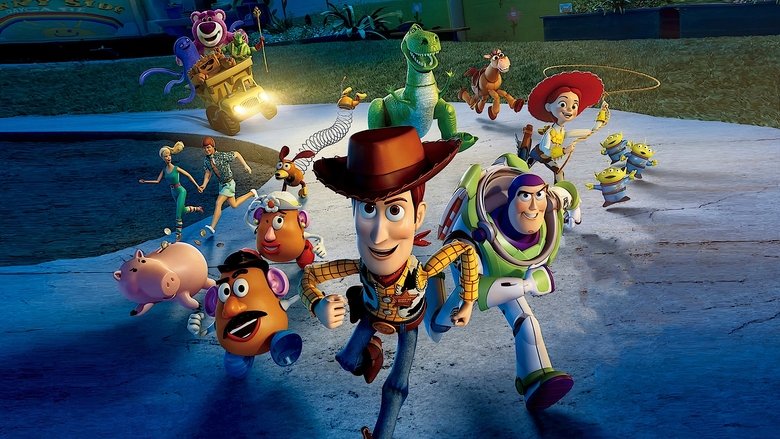
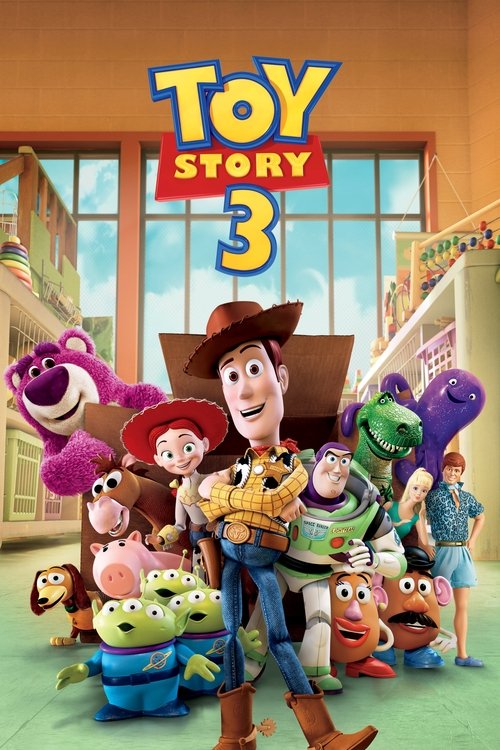
Toy Story 3 follows Woody, Buzz Lightyear, and the rest of the gang as they face an uncertain future. Their owner, Andy, is now seventeen and preparing to leave for college. While Andy intends to put most of his toys in the attic and take only Woody with him, a series of misunderstandings leads the toys to be donated to Sunnyside Daycare.
At first, Sunnyside seems like a paradise where they will never be outgrown, but the toys soon discover it is a prison-like regime run by the seemingly grandfatherly Lotso, a strawberry-scented bear with a dark past. The film chronicles their elaborate prison break and their harrowing journey to return home, forcing them to confront their own mortality and the inevitability of change.
Core Meaning
The core meaning of Toy Story 3 revolves around the necessity of letting go and the evolution of purpose. The director, Lee Unkrich, explores the transition from being needed to being remembered, suggesting that growth requires the courage to move on from the past. The film emphasizes that while relationships change and chapters end, the love and loyalty shared define a meaningful existence, even when faced with the "incinerator" of time.
Thematic DNA
The Pain of Growing Up and Letting Go
The film serves as a poignant metaphor for the transition into adulthood. Andy's departure for college represents the end of childhood innocence, forcing both the owner and his toys to accept that their time together has reached a natural conclusion. The final scene of Andy playing with Bonnie underscores that letting go is a selfless act of love.
Existential Crisis and Utility
The toys struggle with the fear of being "trash"—useless objects without a child to play with them. This theme is explored through the contrast between Woody's unwavering loyalty and Lotso's nihilism, questioning whether a toy (or a person) still has value once their original purpose has been fulfilled.
Loyalty vs. Abandonment
The plot is driven by the tension between Woody's loyalty to Andy and the other toys' feelings of abandonment. Lotso serves as a cautionary tale of what happens when abandonment turns into bitterness, while the main gang's decision to face the incinerator together represents the ultimate triumph of communal loyalty over individual survival.
Authority and Consent
Through the character of Barbie and the hierarchy at Sunnyside, the film touches on political philosophy. Barbie's quote about authority deriving from the consent of the governed highlights the theme of resisting tyrannical leadership and the importance of democratic values even in a play setting.
Character Analysis
Woody
Tom Hanks
Motivation
To protect his toy family and fulfill his duty to Andy, while eventually learning that "being there for a child" can mean a new child.
Character Arc
Woody evolves from being obsessively focused on staying with Andy to realizing that his greatest service is to ensure the toys stay together and find a new child to love. He transitions from a personal possession to a legacy-builder.
Buzz Lightyear
Tim Allen
Motivation
To keep the toys together as a unit and support Woody's leadership, even when his own identity is compromised.
Character Arc
Buzz undergoes a literal identity reset (into Demo Mode and then Spanish Mode), which serves as a comedic yet high-stakes subplot. He eventually regains his true self, reaffirmed by his bond with the gang.
Lots-o'-Huggin' Bear (Lotso)
Ned Beatty
Motivation
To maintain absolute control over Sunnyside and prove that love is a lie to justify his own bitterness.
Character Arc
Lotso does not have a redemption arc. He remains a victim of his own past trauma—being replaced by his owner, Daisy—which curdled into a nihilistic belief that all toys are trash.
Andy Davis
John Morris
Motivation
To successfully transition to college while ensuring his toys are taken care of, rather than simply discarded.
Character Arc
Andy grows from a boy who clings to his past into a young man capable of passing on his most cherished treasures to the next generation, completing his journey into maturity.
Symbols & Motifs
The Incinerator
Symbolizes mortality and the "void." It represents the finality of being discarded and the end of the toys' life cycle.
In the film's climax, the toys find themselves on a conveyor belt heading toward a fiery pit. They stop fighting the inevitable and hold hands, accepting their fate together.
The Claw
Symbolizes a deus ex machina or a divine intervention. For the Aliens, it is a deity; for the rest of the toys, it represents salvation from certain death.
The Little Green Men use a giant industrial claw to rescue the toys from the incinerator, mirroring their introduction in the first film's Pizza Planet claw machine.
Andy's Name on the Boot
Represents identity, belonging, and the mark of being loved. It is the physical manifestation of the toys' purpose.
Woody uses the name on his boot to remind the other toys of their bond with Andy, even when they feel forgotten.
Sunnyside Daycare
Initially presented as a "paradise" or Heaven, it is revealed to be a Purgatory or Inferno, symbolizing a false sense of security and the loss of individual agency.
The daycare is run as a prison camp with assigned roles, surveillance (the monkey), and a strict hierarchy that keeps newcomers in the dangerous "Caterpillar Room."
Memorable Quotes
So long, partner.
— Woody
Context:
Spoken quietly by Woody as he watches Andy's car drive away toward college.
Meaning:
The emotional apex of the trilogy, signifying the final, respectful acceptance of the end of Woody and Andy's journey together.
Our mission with Andy is complete, Woody.
— Buzz Lightyear
Context:
Buzz says this to Woody when they are deciding whether to go to the attic or find a new home.
Meaning:
Highlights the acceptance of a finished chapter and the need to move on to a new purpose.
Authority should derive from the consent of the governed, not from the threat of force!
— Barbie
Context:
Barbie yells this while confronting Ken about the way the daycare is being run.
Meaning:
A surprisingly deep political statement that challenges Lotso's tyrannical regime at Sunnyside.
The thing that makes Woody special is he'll never give up on you… ever.
— Andy
Context:
Andy explains Woody's significance to Bonnie while introducing him to her in the final scene.
Meaning:
Summing up the core character of the protagonist and why he was Andy's favorite.
Philosophical Questions
What gives an object (or a life) value once its primary purpose is gone?
The film explores this through the toys' fear of the trash. It suggests that value is not inherent or static, but can be rediscovered through new relationships and service to others.
Is security more valuable than freedom?
Sunnyside offers the toys the security of "never being outgrown," but at the cost of their freedom and the risk of being abused. The film ultimately sides with freedom, even if it comes with the risk of loss.
Does abandonment justify bitterness?
Through Lotso and Jessie, the film looks at two different reactions to being left behind. Jessie chooses to find a new family, while Lotso chooses to destroy others, suggesting that character is defined by how we handle trauma.
Alternative Interpretations
One popular interpretation parallels the film with Dante's Divine Comedy, viewing Sunnyside as Purgatory, the landfill/incinerator as the Inferno (Hell), and Bonnie's home as Paradise. Another interpretation focuses on the film's political subtext, viewing Sunnyside as a critique of totalitarian regimes where the "elite" live in comfort while the masses (the Caterpillar Room) suffer. Critics have also discussed the film's existentialist reading, where characters like Lotso represent nihilism (the belief that life is meaningless once the "creator" abandons you) versus Woody's choice to create meaning through community and shared purpose even in the absence of a "god-like" owner.
Cultural Impact
Toy Story 3 had a monumental cultural impact as it was the first animated film to earn over $1 billion at the box office and one of the few to be nominated for the Academy Award for Best Picture. It resonated deeply with the "Toy Story Generation"—audiences who were children when the first film came out and were themselves heading to college or starting careers in 2010. Critics praised it for its emotional maturity, often citing the incinerator scene and the final goodbye as some of the most profound moments in cinematic history. It cemented Pixar's reputation for creating films that, while ostensibly for children, address complex human emotions and philosophical questions about aging, mortality, and the passage of time.
Audience Reception
The audience reception was overwhelmingly positive, with a 98% rating on Rotten Tomatoes. Fans particularly praised the film for its emotional honesty and the way it respected the characters' long history. While some parents found the incinerator scene and the "Big Baby" character potentially traumatizing for very young children, most saw it as a necessary weight to the story's high stakes. The ending is frequently cited in popular culture as one of the few movie scenes that "makes grown men cry," reflecting its broad demographic appeal.
Interesting Facts
- John Morris, the original voice of Andy in the first two films, returned to voice the college-aged Andy after ten years.
- The train number in the opening sequence is 95, a reference to 1995, the year the first Toy Story was released.
- To research the incinerator scene, the Pixar team visited real-world waste treatment plants to understand the mechanics of industrial shredders and magnets.
- Ken wears 21 different outfits throughout the movie, modeled after the 'Animal Lovin' Ken' from 1988.
- The character of Lotso was originally planned for the first Toy Story film but was cut due to the technical difficulty of rendering fur at the time.
Easter Eggs
A113 License Plate
Appears on Andy's mom's car; it is a recurring Pixar reference to the classroom at CalArts where many of the animators studied.
Finn McMissile Poster
A poster on Andy's wall features a character from Cars 2, which was Pixar's next theatrical release.
Totoro Cameo
A large plush of Totoro from Studio Ghibli's My Neighbor Totoro appears in Bonnie's room, a tribute to director Hayao Miyazaki.
Buy N Large Batteries
When Buzz is being reset, he is revealed to be powered by 'BnL' (Buy N Large) batteries, the mega-corporation from WALL-E.
Newt Crossing Sign
A sticker on Andy's door references Newt, a Pixar project that was eventually canceled.
⚠️ Spoiler Analysis
Click to reveal detailed analysis with spoilers
Frequently Asked Questions
Explore More About This Movie
Dive deeper into specific aspects of the movie with our detailed analysis pages
Comments (0)
No comments yet. Be the first to share your thoughts!