Skip to content
Digimon Adventure:
A pulse-pounding cyber-fantasy that surges with breathless courage, casting young souls into a shimmering digital abyss where monstrous neon leviathans clash against shadows born from our world's interconnected silence.
Digimon Adventure:

Digimon Adventure:

デジモンアドベンチャー:

"The adventure continues to a new world."

05 April 2020 — 26 September 2021 Japan 1 season 67 episode Ended 7.6 (639)

Cast: Yuko Sanpei, Chika Sakamoto, Daisuke Namikawa, Ryoko Shiraishi, Yumiko Kobayashi

Animation Sci-Fi & Fantasy Action & Adventure Kids Courage in the Face of the Unknown Technological Interconnectivity and Fragility Solidarity, Kinship, and Emotional Symbiosis Light, Void, and Cosmic Renewal

Overview

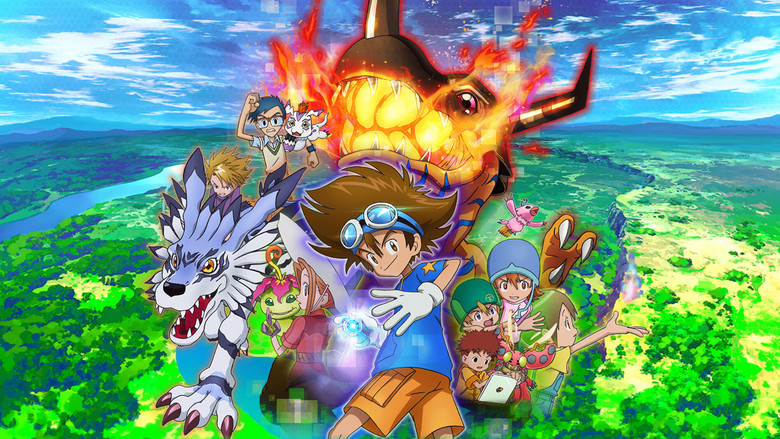
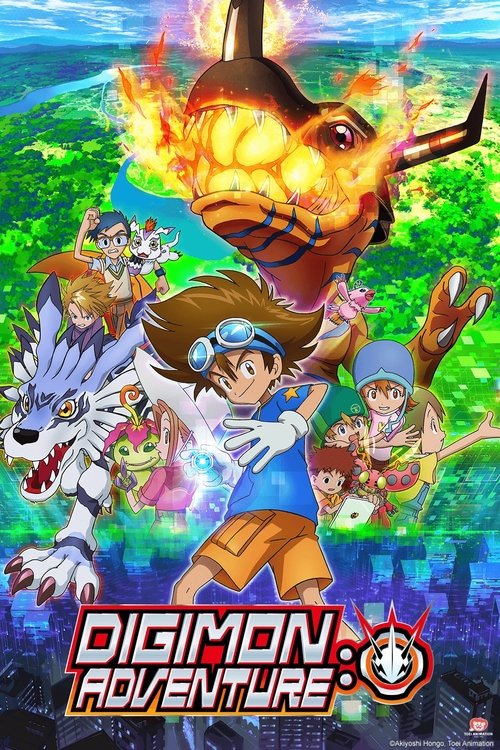
Digimon Adventure: is a complete modern reimagining of the foundational 1999 anime epic, revitalized for a generation living in an era defined by ubiquitous network interconnectivity. Set in the year 2020, Tokyo experiences an escalating sequence of catastrophic cyber incidents, ranging from out-of-control commuter transit networks to national security breaches. Fifth-grader Taichi Yagami, while attempting to rescue his imperiled family, is sucked through a digital threshold into the Network, where he discovers not only fantastical creatures known as Digimon, but his fated partner, Agumon. Alongside fellow elementary schoolers transported across the digital divide, Taichi must traverse an uncharted, dangerous wilderness to restore systemic balance between reality and cyberspace.

As the narrative unfolds across its 67-episode trajectory, the children learn that the digital anomalies plaguing Tokyo are merely ripple effects from an ancient, cosmic conflict echoing through the Digital World. Guided by enigmatic celestial legends and ancient ruins, the Chosen Children encounter forgotten civilizations, corrupted warlords, and primal terrors seeking to plunge both worlds into an all-consuming void. Rather than standard episodic slice-of-life escapades, the series adopts an relentless, high-octane quest structure, pitting the children against overwhelming mechanical and supernatural forces that test the limits of their spirits.

Ultimately, the journey evolves from a localized rescue operation into a philosophical and existential struggle against entropy itself. Through tests of emotional purity, strategic acumen, and indomitable courage, the young heroes unlock dormant evolutionary potential within their digital companions, bridging humanity's emotional fortitude with digital existence to repel primordial darkness and forge an enduring coexistence between flesh and code.
Core Meaning

The core thesis of Digimon Adventure: posits that unyielding courage and authentic connection are humankind's ultimate bulwarks against despair and systemic oblivion. In an increasingly algorithmic world where human life is deeply reliant on invisible technological webs, systemic breakdown is never far away. However, the show contends that true salvation does not stem from colder calculations or total digital control, but from the raw, irrational human spirit—exemplified by bravery, empathy, and sacrificial loyalty. The symbiotic bond between the children and their Digimon proves that organic emotion and technological form must harmoniously integrate to overcome entropy, reaffirming that courage is not the absence of peril, but the moral choice to move forward regardless of fear.

Thematic DNA

Courage in the Face of the Unknown 30%
Technological Interconnectivity and Fragility 25%
Solidarity, Kinship, and Emotional Symbiosis 25%
Light, Void, and Cosmic Renewal 20%

Courage in the Face of the Unknown

The virtue of courage serves as the narrative engine of the entire series. It develops from Taichi's impulsive instinct to charge headlong into danger into a mature, enlightened resolve that recognizes vulnerability yet persists. Across various trials and evolutionary thresholds, courage is framed not as invulnerability, but as the willingness to face devastation, sacrifice one's comfort, and stand up against impossible odds for the sake of others.

Technological Interconnectivity and Fragility

Set firmly in the contemporary digital epoch, the series constantly connects events in the Digital World to immediate, high-stakes crises across Earth's infrastructure. It illustrates how contemporary society's utter reliance on networks creates unprecedented systemic vulnerabilities, reminding audiences that human progress remains tethered to unpredictable underlying systems that require stewardship rather than blind reliance.

Solidarity, Kinship, and Emotional Symbiosis

Evolution throughout the series is fueled directly by the emotional communion between human partners and digital beasts. The narrative reinforces that no singular entity can thwart catastrophic annihilation alone; victory requires the synergy of distinct traits—intelligence, love, sincerity, reliability, hope, light, and friendship—converging to overcome insurmountable darkness.

Light, Void, and Cosmic Renewal

The overarching conflict is framed as an eternal metaphysical cycle between existence and nonexistence. Darkness is manifested as miasma and digital regression, while light is an active, restorative principle. The series explores how ruin carries the seeds of rebirth, and how preserving life requires actively dispelling nihilistic impulses that seek the safety of nothingness.

Character Analysis

Taichi Yagami

Yuko Sanpei

Archetype: The Fearless Hero and Vanguard Key Trait: Indomitable courage

Motivation

Initially driven by the immediate protection of his mother and younger sister Hikari, his purpose expands into an unwavering commitment to safeguard all living beings across digital and physical dimensions.

Character Arc

Taichi starts as a proactive, impulsive elementary student rushing to save his family from a train crisis. Throughout his travels across the Digital World, he matures from a frontline brawler into a selfless, steadfast protector who shoulders the burdens of both worlds. He endures psychological trials by ancient warrior spirits, learning that true courage is quiet perseverance rather than reckless bravado, eventually leading humanity and Digimon against the void.

Agumon

Chika Sakamoto

Archetype: The Loyal Guardian Companion Key Trait: Unconditional loyalty and ferocity

Motivation

To stand alongside Taichi at all costs, acting as his shield and sword to overcome any obstacle together.

Character Arc

From the moment of his awakening, Agumon forms an unbreakable link with Taichi. As challenges mount, Agumon undergoes multiple alternate and higher evolutions—from Greymon to MetalGreymon, the berserk shadow of Mugendramon, BlitzGreymon, and finally WarGreymon and Omegamon. His arc embodies unconditional dedication and the mastery of immense combat strength channeled purely for salvation.

All 5 characters and cast

Symbols & Motifs

The Digivice:

Meaning:

Symbolizes the sacred covenant and spiritual interface uniting human consciousness with digital energy. It channels raw human emotions into transformative evolutionary power.

Context:

Borne by each of the Chosen Children, glowing and altering frequency whenever emotional resonance triggers evolution, serving as both a guiding compass and conduit for miracles.

The Crests

Meaning:

Represent the transcendent virtues of the human soul—such as Courage, Friendship, and Love—which must be understood internally before true physical strength can manifest.

Context:

Carved into ancient monoliths, engraved on the backs of Digivices, and revealed through personal spiritual awakenings during individual character trials in the late stages of the series.

Taichi's Goggles

Meaning:

Embody vision, leadership, and unflinching determination to gaze squarely into danger without averting one's eyes.

Context:

Worn by Taichi Yagami throughout every skirmish, pulled down over his eyes whenever leaping into high-stakes combat or entering critical cyber frontiers.

The Miasma / Digital Void

Meaning:

Represents existential despair, entropy, and the negation of life, turning Digimon feral and eroding the fabric of reality.

Context:

Permeates the territory of Devimon, emanates from Millenniumon's shards, and reaches cosmic proportions through Negamon and Abaddomon.

Holy Feathers and Radiant Pillars

Meaning:

Symbolize hope, divine restoration, and transcendent intervention that purifies spiritual corruption.

Context:

Prevalent during sequences featuring Angemon, Angewomon, and their holy sanctums, often intervening when all hope appears extinguished to cleanse dark miasma.

Memorable Quotes

Agumon, ikuzo!
— Taichi Yagami

Context

Uttered consistently throughout the series, notably in Episode 1 before their first battle against Algomon and echoed before climactic encounters.

Meaning

Encapsulates the relentless, forward-charging momentum of the series, demonstrating that no matter how terrifying the threat, Taichi and Agumon act as a single, resolute unit.

Boku wa Taichi to issho da!
— Agumon

Context

Spoken during critical battle sequences, including Episode 24 when confronting the toxic darkness of DoneDevimon.

Meaning

Signifies the absolute faith Agumon has in his human partner, demonstrating that mutual trust is the primary wellspring of evolutionary power.

All 5 quotes

Episode Highlights

War Game

S1E2

Taichi and Yamato join forces inside the Network to intercept a rogue missile aimed at Tokyo. Faced with a rapidly evolving Algomon, their Digivices synchronize in a miraculous burst of energy, triggering the premature appearance of the legendary holy warrior Omegamon.

Significance:

Established the reboot's willingness to shatter traditional pacing conventions, immediately introducing high-tier cosmic stakes and cinematic combat spectacle.

The Final Stage, DoneDevimon

S1E24

Devimon absorbs miasma to become DoneDevimon, swallowing Taichi into dark miasma. In a blind rage of grief, MetalGreymon devolves into an unstable, berserk silhouette of Mugendramon before Angemon's purifying light intervenes.

Significance:

Served as the dramatic climax of the initial Cloud Continent arc, showcasing the peril of dark evolution and testing the children's psychological endurance.

The Mega Digimon, WarGreymon

S1E30

Surrounded by a colossal army of dark Digimon, Taichi and Agumon channel their collective courage, finally shattering the Mega barrier to debut WarGreymon and decimate the enemy ranks with an enormous Gaia Force.

Significance:

Signified the turning point into the Mega-level tier of power, establishing Taichi and WarGreymon as the frontline anchors against impending cosmic catastrophe.

The End of the World, Millenniumon

S1E50

The resurrected super-dreadnought Millenniumon threatens to obliterate the Digital World. Combining the radiant power of the Holy Digimon and the prayers of allies across both worlds, WarGreymon forges an atmospheric-scale Gaia Force to vanquish the beast.

Significance:

Concluded the massive Millenniumon saga, uniting the entire supporting network of Digimon encountered throughout the journey in a communal triumph.

The Crest of Courage

S1E63

Separated from his allies, Taichi enters an ancient spiritual realm where Valkyrimon subjects his soul to a trial of memories, testing whether his courage can stand unassisted by brute force.

Significance:

Offered a reflective, character-defining meditation on the essence of the Crests before the cosmic endgame, addressing long-standing criticisms regarding shallow characterization.

The End of the Adventure

S1E67

The Chosen Children confront Abaddomon Core, the incarnation of total void. When all physical attacks fail, Omegamon transforms into his Alter-S form to pierce the darkness with restorative light, resetting the cycle of digital life.

Significance:

Brought the 67-episode reimagining to a definitive close, reaffirming the enduring bond between the real world and cyberspace while leaving the path open for future adventures.

Philosophical Questions

Does modern civilization's reliance on digital systems render humanity fundamentally fragile?

Throughout the series, malicious digital interference causes physical catastrophes across Tokyo, from train collisions to missile launches. The narrative constantly examines whether our technological advancement has outstripped our ethical control, leaving society permanently vulnerable to invisible unseen anomalies.

What separates genuine courage from destructive bravado?

Explored through Taichi's trials, notably his encounter with Valkyrimon in Episode 63. The show questions whether true strength lies in the capacity to overpower an enemy or the mental endurance to suffer, protect, and persevere without losing one's humanity.

Can light and darkness ever truly annihilate one another?

Rather than destroying darkness permanently, the conclusion with Abaddomon emphasizes purification and systemic reboot. The series frames light and dark not as moral absolutes capable of mutual extinction, but as complementary cosmic forces where darkness inevitably births the necessity of light.

How It Ends

Alternative Interpretations

Critics and analytical fans frequently interpret Digimon Adventure: not merely as an adventure tale, but as an allegory for contemporary hyper-industrialization and systemic digital burnout. Negamon and the encroaching void of Abaddomon can be read as representations of digital entropy—the inevitable nihilism that arises when humanity generates endless data devoid of emotional substance or purpose. Another prevalent reading views the narrative as an ancient cyclical myth rather than a linear coming-of-age story; because the children are continually thrust into preordained roles left vacant by fallen ancient warrior Digimon, their journey resembles the karmic fulfillment of legendary reincarnation rather than spontaneous childhood discovery.

Full ending explanation

Cultural Impact

Premiering amidst the global disruption of the 2020 pandemic, Digimon Adventure: reflected the zeitgeist of a society suddenly reliant entirely on remote telecommunications and digital infrastructure. By anchoring its narrative in modern smart-city vulnerabilities—such as traffic shutdowns, financial blackouts, and container ship collisions—the series updated late-1990s digital optimism into contemporary technological realism. Within the broader anime landscape, it marked a high-budget effort by Toei Animation to reposition one of its flagship legacy IPs for modern streaming algorithms and international audiences. Furthermore, its continuous synergy with Bandai's newly launched 2020 Digimon Card Game catalyzed a massive franchise resurgence across global hobbyist markets, reinforcing Digimon's footprint in 2020s pop culture.

Audience Reception

Reception to Digimon Adventure: was polarized between commendations for high-tier production values and frustration with narrative composition. Critics and animation enthusiasts widely praised the show's dynamic battle direction, spectacular sakuga animation sequences during Mega evolutions, and the darker, kaiju-scale epic battles against bosses like DoneDevimon and Millenniumon. However, longtime franchise devotees heavily criticized the show for abandoning the intimate character-driven downtime, emotional interpersonal conflict, and ensemble balance that defined the 1999 original. The reboot faced persistent criticism for becoming the 'Taichi and Agumon Show,' as the duo monopolized screentime and major battle solutions while companions like Sora, Joe, and Mimi received comparatively episodic treatment. Nonetheless, it was celebrated as a thrilling, visual-heavy action series that succeeded in modernizing the IP for a younger, action-focused demographic.

Interesting Facts

  • The series was produced to mark the 20th anniversary of the Digimon anime franchise, completely rebooting the continuity rather than following the timeline of previous sequels.
  • Atsuhiro Tomioka served as series composition writer alongside series director Masato Mitsuka, infusing modern kaiju-style cinematic influences into Digimon battle choreography.
  • Production was unexpectedly paused after airing Episode 3 in April 2020 due to the global COVID-19 pandemic, resuming broadcasts from Episode 1 in June 2020.
  • While the human Chosen Children were recast with fresh voice talent such as Yuko Sanpei, veteran voice actors Chika Sakamoto (Agumon) and Mayumi Yamaguchi (Gabumon) returned to their classic monster roles.
  • Legendary Dragon Ball voice actress Masako Nozawa provided the ominous and grand opening narration for the series.
  • For the first time in Fuji TV anime history, television data broadcasting was linked directly to interactive Japanese Virtual Pet devices during weekly airings.
  • The series officially introduced anime-exclusive alternate evolutions for the original team, including BlitzGreymon, CresGarurumon, and Pegasmon.

Easter Eggs

Direct homages to 'Our War Game!' in Episode 2

The cyber-tunnel aesthetic, missile countdown clock, and Algomon encounter in Episode 2 intentionally recreate key shot compositions from Mamoru Hosoda's acclaimed 2000 feature film Digimon Adventure: Our War Game!.

Valkyrimon's voice casting and appearance

Valkyrimon in Episode 63 served as a rich historical nod to Digimon Adventure 02, where Valkyrimon originated as the Mega DNA evolution of Silphymon.

Soundbirdmon and Ghoulmon lore integration

Utilizing obscure entities like Soundbirdmon to orchestrate corruption and Ghoulmon as an ancient commander linked the anime's narrative directly to deep virtual pet lore and early Wonderswan video game continuity.

Frequently Asked Questions

Explore More About This Movie

Dive deeper into specific aspects of the movie with our detailed analysis pages

Comments (0)

Leave a comment

No comments yet. Be the first to share your thoughts!

Similar Movies