Mr. Queen
A whirlwind historical fantasy where a modern man's arrogant soul chaotically pirouettes within a Joseon queen's body, sparking a politically charged and unexpectedly poignant romance.
Mr. Queen

Mr. Queen

철인왕후

"Was I fooled by your deceitful eyes and lies?"

12 December 2020 — 14 February 2021 South Korea 1 season 20 episode Ended ⭐ 8.6 (451)
Cast: Shin Hye-sun, Kim Jung-hyun, Bae Jong-ok, Kim Tae-woo, Seol In-a
Drama Sci-Fi & Fantasy Comedy
Identity and Gender Fluidity Political Satire and Corruption Adaptation and Survival Challenging History and Fate

Overview

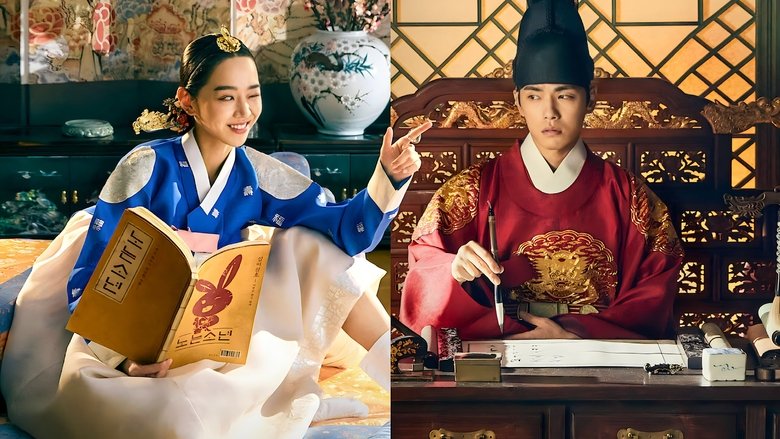
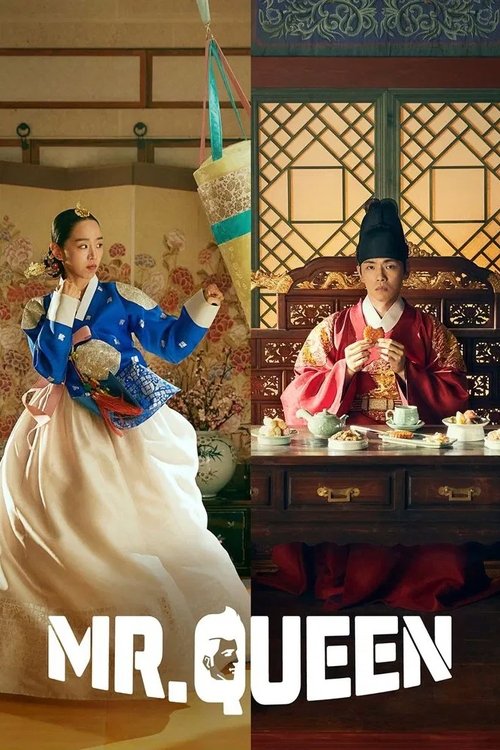
"Mr. Queen" is a historical fantasy and romantic comedy that centers on Jang Bong-hwan, an arrogant and free-spirited male chef working at the Blue House in modern-day Seoul. After a near-fatal accident, he wakes up to find his soul has been transported back in time to the Joseon Dynasty, trapped inside the body of the noble Queen Cheorin, Kim So-yong. Forced to navigate the treacherous court politics and the strict etiquette of the royal palace, Bong-hwan struggles to survive and find a way back to his own time and body.

The series follows his chaotic adjustment to life as a queen, where his modern sensibilities, blunt language, and culinary skills clash spectacularly with Joseon traditions, leading to a series of hilarious and scandalous situations. He forms a complicated alliance and an even more complicated romance with King Cheoljong, a monarch who appears to be a gentle and easily controlled puppet but secretly harbors his own plans to reform the kingdom and wrest power from the corrupt clans controlling the throne. As Bong-hwan's soul and Queen So-yong's memories begin to merge, a genuine connection forms, forcing him to confront questions of identity, love, and destiny while caught in the crossfire of a dangerous power struggle.

Core Meaning

The core meaning of "Mr. Queen" revolves around the themes of identity, empathy, and the ability to enact change from unexpected places. The series uses the body-swap premise not just for comedic effect but to explore the idea that one's true self is not defined by gender, title, or societal expectations. Jang Bong-hwan, a cynical modern man, is forced to live as a woman in a repressive historical era, leading to a profound journey of self-discovery and empathy. He learns to see beyond his own prejudices and understand the struggles of others, particularly women and the oppressed common folk of Joseon. Ultimately, the series suggests that true strength and leadership come from authenticity and the courage to challenge the status quo, proving that a single, unconventional individual can alter the course of history for the better by staying true to their core values, even when trapped in the most unlikely of circumstances.

Thematic DNA

Identity and Gender Fluidity 35%
Political Satire and Corruption 30%
Adaptation and Survival 20%
Challenging History and Fate 15%

Identity and Gender Fluidity

The series constantly plays with the concept of identity. Jang Bong-hwan, a hyper-masculine womanizer, is forced into a queen's body, leading to a comedic and poignant exploration of gender. His initial rejection of femininity gives way to a gradual merging of his own personality with Queen So-yong's memories and emotions. This duality challenges traditional gender roles and explores the idea that identity is more about the soul and personality than the physical body, raising questions about love and attraction that transcend gender norms.

Political Satire and Corruption

Beneath the comedy, "Mr. Queen" is a sharp satire of political power and corruption. The court is dominated by two powerful clans, the Andong Kims and the Pungyang Jos, who manipulate the seemingly weak King Cheoljong for their own gain. Bong-hwan, with his modern-day perspective, sees the absurdity and injustice of the court's machinations. His unconventional methods and blunt honesty serve to expose the hypocrisy and greed of the ruling class, turning palace politics into a source of both high-stakes drama and biting satire.

Adaptation and Survival

A central theme is Bong-hwan's struggle to adapt and survive in a hostile and alien environment. Initially, his only goal is to return to his time. However, to survive the constant threats of assassination and political schemes, he must use his modern knowledge, wit, and culinary skills. This journey of adaptation evolves from a simple quest for survival into a mission to protect those he has grown to care for, demonstrating resilience and the human capacity to find purpose in the most unexpected circumstances.

Challenging History and Fate

The series delves into the idea of whether history is fixed or can be altered by individual actions. King Cheoljong is historically remembered as a puppet king. Bong-hwan's intervention, however, allows Cheoljong to reveal his true, competent nature and strive to become a better ruler. Their combined efforts aim to rewrite a history of corruption and weakness. The ending explores the bittersweet consequences of these changes, questioning the extent to which one can truly change fate.

Character Analysis

Queen Cheorin (Kim So-yong) / Jang Bong-hwan

Shin Hye-sun

Archetype: The Reluctant Hero / The Trickster
Key Trait: Adaptable and Unconventional

Motivation

Bong-hwan's primary motivation is survival and returning to his own body in the 21st century. This singular goal drives his initial chaotic actions. However, as he becomes entangled in palace intrigue and develops feelings for King Cheoljong, his motivation shifts. He becomes driven by a desire to protect the king, ensure justice for the people, and correct the historical record, even at the risk of being trapped in the past forever.

Character Arc

Initially, Jang Bong-hwan is an arrogant, womanizing modern chef. When his soul enters Queen Cheorin's body, his arc is one of profound transformation. He moves from pure selfishness, focused only on returning home, to developing deep empathy and affection for the people of the Joseon era. The experience forces him to confront his own prejudices about gender and class. As he and the original So-yong's memories merge, he evolves into a clever and compassionate leader who uses his modern knowledge to protect the king and fight corruption. The arc is a journey from cynicism to heroism, culminating in him fundamentally changing history and his own character.

King Cheoljong

Kim Jung-hyun

Archetype: The Undercover Ruler
Key Trait: Deceptive and Idealistic

Motivation

Cheoljong's core motivation is to avenge his family's tragic past and dismantle the corrupt power structure of the clans to become a true king for his people. He hides his abilities and ambitions to survive while gathering allies and evidence. His love for Queen Cheorin becomes a new, powerful motivation, as he finds in her a partner who understands his goals and is willing to fight alongside him.

Character Arc

King Cheoljong is introduced as a weak, easygoing figurehead, a puppet controlled by the powerful Andong Kim clan. His arc is one of revealing his true nature. Beneath the facade, he is intelligent, highly skilled in martial arts, and secretly plotting to reclaim his authority to rule for the good of his people. Initially distrustful of his new queen, her bizarre behavior slowly intrigues and then endears him to her. Her influence emboldens him, and their alliance turns into a genuine partnership and romance. He grows from a hidden revolutionary into a confident and righteous king who learns to trust and love.

Grand Queen Dowager Sunwon

Bae Jong-ok

Archetype: The Shadow Ruler / Antagonist
Key Trait: Manipulative and Authoritative

Motivation

Her motivation is the preservation and expansion of her family's (the Andong Kim clan's) power at all costs. She is ruthless in her efforts to maintain control over the throne and the country, viewing any action by the king as a direct threat to her authority. Her political survival is paramount.

Character Arc

As the late King Sunjo's widow, she is the true power behind the throne, wielding immense political influence through her Andong Kim clan. She is a master of political maneuvering and sees King Cheoljong as her pawn. Her arc is less about change and more about the gradual erosion of her power. Queen Cheorin's unpredictable nature and alliance with the king consistently thwart her plans. She remains a formidable antagonist throughout, representing the old, corrupt guard that Cheoljong must overcome. While depicted as a villain, the series also shows her human side, making her a complex and sometimes even likable character.

Kim Jwa-geun

Kim Tae-woo

Archetype: The Ambitious Villain
Key Trait: Ruthless and Ambitious

Motivation

Driven by extreme ambition, his goal is to secure ultimate power for himself and his clan. He is not content to simply be the power behind the throne; he wants the throne itself. This insatiable greed motivates his every move, from political scheming to assassination attempts.

Character Arc

As the younger brother of Grand Queen Dowager Sunwon, Kim Jwa-geun is the embodiment of the Andong Kim clan's ambition and cruelty. He is the primary enforcer of the clan's will and the main antagonist to King Cheoljong's plans. His character arc is a straightforward descent into desperation as he sees his power slipping away due to the king and queen's actions. He becomes increasingly ruthless, culminating in a final, treasonous attempt to seize the throne himself, which ultimately leads to his downfall and humiliation.

Symbols & Motifs

Food and Cooking

Meaning:

Food symbolizes power, innovation, and connection. As a chef, it is Bong-hwan's primary tool for communication and influence. It represents his modern identity clashing with and ultimately charming the traditional Joseon court.

Context:

Throughout the series, Bong-hwan uses his modern culinary skills to win favor, solve problems, and express himself. From creating Joseon-style fast food to introducing new cooking techniques, food becomes his way of navigating and disrupting the palace hierarchy. Memorable scenes often take place in the royal kitchen, where his creations bring joy and forge unlikely friendships, most notably with the Royal Chef.

The Lake

Meaning:

The lake symbolizes a gateway between worlds, death, and rebirth. It is the portal through which Bong-hwan's soul enters So-yong's body and his initial obsession for returning to his time.

Context:

The series begins with So-yong trying to drown herself in the lake and Bong-hwan falling into a pool. Bong-hwan's early episodes are driven by his desperate attempts to refill the drained lake so he can dive in and return to the 21st century. The lake is a site of both despair and hope, and a place where King Cheoljong later saves the Queen, marking a pivotal turning point in their relationship.

The Queen's Dictionary

Meaning:

The 'Queen's Dictionary' symbolizes the merging of two identities and the unspoken communication between souls. It is a tangible record of Bong-hwan's modern slang and perspective within So-yong's world.

Context:

To communicate with his court ladies, Bong-hwan creates a dictionary to explain his modern vocabulary. This book becomes a symbol of his unique presence in Joseon. In the final episode, after Bong-hwan's soul has departed, King Cheoljong touches the dictionary and feels a sense of loss, acknowledging that a part of the person he fell in love with is missing, highlighting the impact Bong-hwan had on him.

Memorable Quotes

오늘부터 1일이다

— King Cheoljong

Context:

In Episode 6, after several misunderstandings and seeing a different side of the queen, Cheoljong kneels before her and earnestly asks for a fresh start for their relationship, declaring, “So today is Day 1.”

Meaning:

Literally translating to "Today is Day 1," this is a modern Korean phrase used to signify the official start of a romantic relationship. Cheoljong says it with complete historical sincerity, intending to start their political and personal relationship anew on a clean slate. The quote's humor and significance lie in the dramatic irony: Bong-hwan, inside So-yong, is horrified because he understands its modern romantic connotation, while Cheoljong is oblivious. It marks the moment Cheoljong consciously decides to try and understand his strange queen, setting their romance in motion.

Episode Highlights

Jang Bong Hwan in Wonderland

S1E1

The pilot episode masterfully sets up the entire premise. We meet the arrogant Blue House chef Jang Bong-hwan, witness his fall from grace, and see his chaotic awakening in the body of Queen Cheorin in the Joseon era. The episode is filled with physical comedy as Bong-hwan tries to comprehend his new female body and the strict palace rules, culminating in his desperate attempts to dive back into the lake to return home.

Significance:

This episode establishes the central conflict, the comedic tone, and the high stakes of the series. It perfectly introduces the fish-out-of-water concept and Shin Hye-sun's brilliant performance, immediately hooking the audience with its unique and hilarious setup.

A Heel That Can Easily Get Hurt

S1E5

King Cheoljong begins to see his queen in a new light after she unexpectedly saves him. Confused by her actions, he finds her dancing joyfully in the rain and, moved, offers her his umbrella. This episode deepens the palace intrigue and showcases the Queen's growing influence and Bong-hwan's reluctant adaptation to his new life.

Significance:

This episode marks a significant turning point in the central relationship. Cheoljong's gesture with the umbrella is one of the first moments of genuine care between the leads. It signals the shift from pure animosity and suspicion to curiosity and the potential for a real connection, laying the groundwork for their future alliance and romance.

Dancing on Top of a Sword

S1E12

At a royal banquet sabotaged by the Kim clan, Queen Cheorin uses her culinary ingenuity to save the day, creating a feast from humble ingredients. However, the event takes a dark turn when Kim Jwa-geun makes a move against the King's royal guards, cornering him politically and forcing him into submission.

Significance:

This episode perfectly balances the show's comedy and drama. It showcases the Queen's resourcefulness as a key political asset while also raising the stakes significantly, demonstrating the real danger the King is in and solidifying the need for their partnership. It's a high point of their teamwork against the corrupt clans.

The Crazy X in This Palace

S1E15

After discovering the truth about a ledger that could expose the Kim clan's corruption, So-yong decides to form a true, strategic alliance with Cheoljong to get revenge on those who tried to kill her. Meanwhile, Cheoljong begins to have strange flashbacks about what truly happened at the well in his childhood, questioning his long-held beliefs about So-yong.

Significance:

This episode solidifies the central alliance, moving it from a temporary truce to a dedicated partnership. The characters' motivations align, and they begin to trust each other fully. It deepens the central mystery of the original So-yong's past and sets the stage for the final confrontation with their enemies.

My Life, My Decision

S1E20

The finale sees Cheoljong and So-yong storming the palace to stop a new enthronement and reclaim the throne. In the climactic battle, Bong-hwan's soul is returned to the future. He wakes up in his own time to discover he has successfully changed history for the better, with Cheoljong remembered as a great reformer. In Joseon, the real So-yong awakens and rules alongside a triumphant Cheoljong, though he feels a mysterious sense of loss.

Significance:

The final episode provides a cathartic, albeit bittersweet, conclusion. It resolves the political plotline with the villains receiving their comeuppance. The ending sparked much debate among viewers but ultimately stayed true to the show's themes of identity and impact, showing that Bong-hwan's journey had a lasting, positive effect on both the past and his own future.

Philosophical Questions

What constitutes the 'self' and identity?

The series constantly explores whether identity is tied to the body, consciousness, memory, or a combination of all three. Jang Bong-hwan insists he is a man, yet he begins to experience Queen So-yong's memories and emotions. The romance with King Cheoljong further complicates this: is it a man loving a man, a man loving a woman, or a king falling for a unique soul regardless of its vessel? The show avoids a simple answer, suggesting that identity is fluid and that love can transcend conventional boundaries of gender and selfhood.

Can one person truly change the course of history?

"Mr. Queen" directly engages with the 'what if' of history. Bong-hwan's modern knowledge and unconventional actions directly alter political events, saving King Cheoljong from assassination and helping him become the strong ruler he was meant to be, thereby changing his negative portrayal in the history books. However, the ending is bittersweet, implying that while he could influence individual fates and reputations, the broader strokes of history (like Cheoljong's early death) might remain unchanged, raising questions about the limits of individual agency against the tide of destiny.

Is empathy born from shared experience?

As a privileged, self-centered man in the 21st century, Jang Bong-hwan lacks empathy. By being forced to live as a woman in a highly patriarchal society, he experiences firsthand the limitations and dangers she faces. This forced perspective shift is the catalyst for his character growth. The series argues that true understanding and empathy cannot be intellectualized; they must be lived. Bong-hwan's journey suggests that walking in another's shoes, quite literally, is the only way to truly comprehend their struggles and develop genuine compassion.

Alternative Interpretations

The ending of "Mr. Queen" sparked considerable debate and led to several alternative interpretations among viewers.

One popular interpretation is that King Cheoljong fell in love with Jang Bong-hwan's soul, not the original Kim So-yong. Proponents of this view argue that the personality, wit, and strength Cheoljong admired were all characteristics of Bong-hwan. The finale, where Bong-hwan returns to the future and Cheoljong feels a sense of loss despite being with So-yong, supports this reading. For these viewers, the ending felt bittersweet and unsatisfying, as the central romantic pairing was ultimately separated.

Another interpretation suggests that So-yong's consciousness was always present and merged with Bong-hwan's. This reading posits that the actions and feelings displayed by the Queen were a blend of both souls. So-yong's own desires and memories influenced Bong-hwan, pushing him to help the king and fall in love. According to this view, Cheoljong fell in love with this new, composite personality. The real So-yong who awakens in the finale has been fundamentally changed and empowered by her experience with Bong-hwan, making the ending a story of her liberation and fulfillment.

A third, more tragic reading views Bong-hwan as a catalyst who was ultimately used and discarded. In this interpretation, his soul was transported to the past solely to save So-yong and Cheoljong, and once his purpose was served, he was sent back to his lonely life, able only to read about the lives he changed. This perspective highlights the sadness of his separation from the relationships he built in Joseon.

Cultural Impact

"Mr. Queen" made a significant cultural impact upon its release, becoming one of tvN's highest-rated dramas and a massive commercial success. Its popularity was driven by its fresh and humorous take on the historical genre, blending slapstick comedy, political intrigue, and a surprisingly touching romance. Shin Hye-sun's stellar performance was particularly lauded and became a major talking point.

However, the series was also mired in controversy. It sparked a national debate in South Korea regarding the dramatic portrayal of historical figures and events. Critics and viewers filed thousands of complaints, citing historical distortion for comically depicting real figures like King Cheoljong and Queen Shinjeong, and for a line that referred to the treasured "Annals of the Joseon Dynasty" as a mere "tabloid." The controversy was amplified because the show was adapted from a Chinese web series whose author had previously made anti-Korean remarks. The producers had to issue multiple public apologies and edit certain elements of the show.

Despite the backlash, the show's overwhelming popularity demonstrated a strong public appetite for fusion genres that playfully reinterpret history. Its legacy is twofold: it is remembered both as a beloved, wildly entertaining series that pushed creative boundaries and as a cautionary tale about the sensitivities of adapting and fictionalizing national history. It highlighted the fine line creators must walk between artistic freedom and cultural-historical reverence in South Korean media.

Audience Reception

"Mr. Queen" was met with overwhelmingly positive audience reception in terms of viewership and engagement, balanced by significant controversy. The series was a massive ratings success, consistently climbing from its premiere and concluding as one of the highest-rated dramas in tvN's history. Audiences widely praised the show for its brilliant humor, engaging plot, and the perfect balance between comedy and high-stakes political drama.

The performances of the lead actors, particularly Shin Hye-sun, received universal acclaim. Viewers lauded her for her masterful comedic timing and her ability to convincingly portray the mannerisms of a man in a woman's body. The chemistry between Shin Hye-sun and Kim Jung-hyun was another frequently praised aspect, with their 'no-touch' romance evolving into a fan-favorite pairing.

However, the series was also a flashpoint for criticism. Many South Korean viewers lodged formal complaints regarding what they perceived as historical distortion and disrespect for cultural heritage, specifically citing scenes that comically depicted real historical figures and disparaged national treasures. The show's connection to a Chinese author with a history of anti-Korean remarks also fueled the controversy. The ending proved to be divisive; while some found it fitting and bittersweet, a significant portion of the audience expressed disappointment and frustration, feeling that the resolution did an injustice to the central romance between the King and Bong-hwan's soul.

Interesting Facts

  • The series is based on the Chinese web series "Go Princess Go" and the novel it was adapted from, "The Promotion Record of a Crown Princess" by Xian Cheng.
  • The show achieved immense popularity, with its final episode recording a 17.371% nationwide viewership rating, making it the eleventh highest-rated drama in Korean cable television history at the time.
  • Despite its success, the series faced controversy in South Korea for historical inaccuracies. Complaints were filed over scenes that comically depicted real historical figures and referred to the Veritable Records of the Joseon Dynasty, a UNESCO Memory of the World heritage, as a "tabloid."
  • The production team issued apologies and made changes, such as altering the names of the powerful clans from the historical 'Andong Kim' and 'Pungyang Jo' to the fictional 'Andong Song' and 'Pungan Jo' in later episodes.
  • The author of the original Chinese novel, Xian Cheng, was also a source of controversy due to alleged negative comments about Koreans in another of her works, a fact the production team claimed they were unaware of when securing the rights.
  • Lead actress Shin Hye-sun received widespread critical acclaim for her performance, praised for her ability to convincingly portray a man trapped in a woman's body through physical mannerisms and comedic timing.

Easter Eggs

Modern slang and references are frequently used by Jang Bong-hwan, creating a comedic clash between past and present.

Bong-hwan's dialogue is littered with 21st-century Korean slang, pop culture references (like dancing to a BLACKPINK song), and English phrases that leave the Joseon court completely baffled. For example, his use of the phrase “Today is Day 1” to start a relationship or referring to his fan club as an “anti” fan club are direct imports from modern Korean culture, serving as a constant, humorous reminder of his true identity.

The name of a Gisaeng house, 'Octajeong', was seen as a parody of a modern Seoul nightclub.

In one episode, a gisaeng house (a historical Korean establishment with female entertainers) was named 'Octajeong'. This was pointed out by viewers as a thinly veiled reference to 'Octagon', a famous and controversial nightclub in Gangnam, Seoul. This modern inside joke contributed to the criticism that the show was disrespectfully parodying its historical setting.

⚠️ Spoiler Analysis

Click to reveal detailed analysis with spoilers

Frequently Asked Questions

Explore More About This Movie

Dive deeper into specific aspects of the movie with our detailed analysis pages

Comments (0)

Leave a comment

No comments yet. Be the first to share your thoughts!