given
A melancholic yet hopeful symphony of burgeoning love and healing from grief, painted with the tender strokes of adolescent connection and the resonant power of music.
given

given

ギヴン

"Can't say goodbye, I'm still drifting with your echoes."

12 July 2019 — 20 September 2019 Japan 1 season 11 episode Ended ⭐ 8.6 (768)
Cast: Shogo Yano, Yuma Uchida, Masatomo Nakazawa, Takuya Eguchi, Fumiya Imai
Drama Animation
Grief and Healing The Power of Music as Expression Love and Relationships Coming of Age

Overview

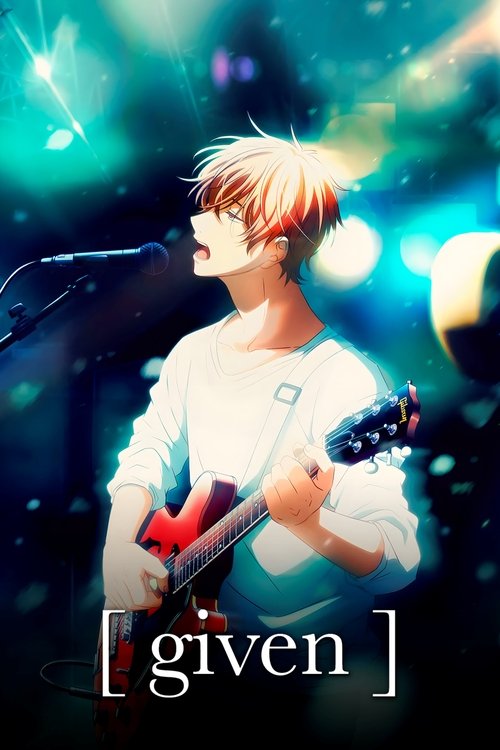
"given" follows the story of Ritsuka Uenoyama, a high school student who has lost his passion for playing the guitar. One day, he meets a shy classmate, Mafuyu Sato, who is carrying a Gibson ES-330 with broken strings. Ritsuka reluctantly agrees to fix the guitar and eventually teach Mafuyu how to play. He soon discovers Mafuyu's incredibly beautiful and haunting singing voice, which reignites his own passion for music.

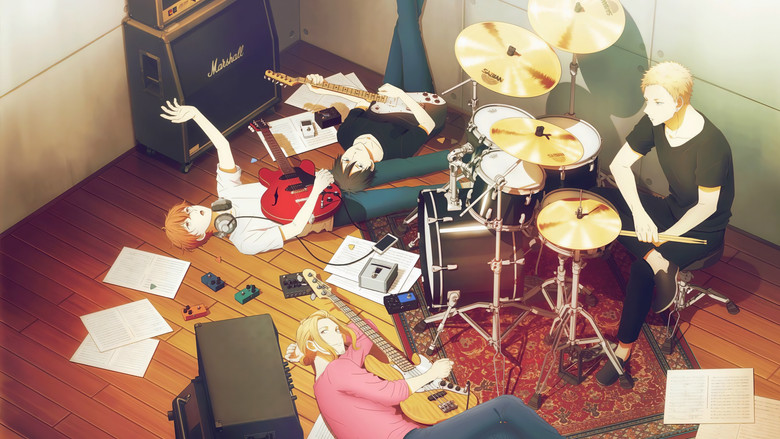
Ritsuka invites Mafuyu to join his band, which includes the older university students Haruki Nakayama (bassist) and Akihiko Kaji (drummer). As Mafuyu slowly opens up, the band members learn that the guitar he carries belonged to his childhood friend and boyfriend, Yuki Yoshida, who died by suicide. The series delicately explores Mafuyu's journey of processing his profound grief and trauma through the therapeutic power of music and the support of his new bandmates. The story is a thoughtful exploration of love, loss, and the formation of new bonds, culminating in an emotional first live performance where Mafuyu is finally able to pour his repressed feelings into a song.

Core Meaning

The core meaning of "given" revolves around the profound and multifaceted process of healing from trauma and grief. It posits that while the past can never be erased, moving forward and finding new love and passion is possible. The series uses music not just as a backdrop, but as the primary vehicle for emotional expression and catharsis. It suggests that art can give voice to feelings that are too difficult to articulate, allowing for connection and understanding. Ultimately, "given" is a message of hope, demonstrating that through supportive relationships and a creative outlet, one can confront immense pain, find closure, and allow their heart to open up once more.

Thematic DNA

Grief and Healing 35%
The Power of Music as Expression 30%
Love and Relationships 25%
Coming of Age 10%

Grief and Healing

The central theme of the series is the journey of healing from the grief of losing a loved one to suicide. This is primarily explored through Mafuyu's character, who is initially trapped in a state of silent melancholy, unable to process the death of his boyfriend, Yuki. Music becomes his therapeutic outlet, a way to finally confront and express his pain, loneliness, and unspoken feelings. The series portrays healing not as forgetting the past, but as integrating it into one's life and finding the courage to move forward and form new bonds.

The Power of Music as Expression

Music is the lifeblood of "given," acting as a language for characters who struggle to communicate their feelings verbally. For Mafuyu, who has difficulty expressing himself, singing becomes the only way he can truly convey the depth of his sorrow and love. For Ritsuka, who had lost his passion, Mafuyu's voice rekindles his love for music. The series beautifully illustrates how creating music can be a collaborative and cathartic process that forges deep emotional connections between people.

Love and Relationships

"given" explores various facets of love, from the tender and burgeoning romance between Mafuyu and Ritsuka to the more complex and sometimes painful relationships of the adult characters, Akihiko and Haruki. The series treats its LGBTQ+ relationships with sensitivity and realism, focusing on the emotional development and mutual support between the characters. It delves into themes of first love, heartbreak, unrequited feelings, and the courage it takes to love again after a profound loss.

Coming of Age

The series is a poignant coming-of-age story for all its main characters. Ritsuka moves from teenage apathy to rediscovering his passion and navigating his first serious romantic feelings. Mafuyu embarks on a difficult journey of self-discovery and emotional healing. Even the older band members, Haruki and Akihiko, are forced to confront their own insecurities and unresolved emotional issues, learning to become more honest with themselves and each other.

Character Analysis

Mafuyu Sato

Shogo Yano

Archetype: The Wounded Hero
Key Trait: Expressive when singing, otherwise reserved

Motivation

Initially, his motivation is a subconscious desire to process his grief and understand the feelings connected to Yuki's guitar. As the series progresses, his motivation shifts towards wanting to express himself through music and to connect with his new friends and with Ritsuka, who he develops feelings for.

Character Arc

Mafuyu begins the series as an introverted and seemingly passive high school student, haunted by the trauma of his boyfriend Yuki's suicide. He is emotionally repressed, unable to cry or properly express his grief. Through his meeting with Ritsuka and joining the band, he slowly finds an outlet for his emotions in music. His arc is a journey of catharsis, culminating in his powerful performance in episode 9, where he finally unleashes his bottled-up feelings. He learns to accept his past, open himself up to a new love with Ritsuka, and find his own voice, both literally and figuratively.

Ritsuka Uenoyama

Yuma Uchida

Archetype: The Reawakened Mentor
Key Trait: Passionate but short-tempered

Motivation

His primary motivation becomes helping Mafuyu learn guitar and write a song, driven by the profound impact Mafuyu's voice has on him. This evolves into a desire to understand Mafuyu better and to be with him romantically.

Character Arc

Ritsuka starts the series bored and apathetic, having lost the passion he once had for playing the guitar. Meeting Mafuyu and hearing his voice acts as a powerful catalyst, reawakening his love for music. He takes on the role of a mentor to Mafuyu, but through teaching him, he himself learns about empathy, patience, and the complexities of love and loss. His arc is about rediscovering his purpose and navigating the overwhelming experience of falling in love for the first time, which both excites and confuses him.

Haruki Nakayama

Masatomo Nakazawa

Archetype: The Nurturing Mediator
Key Trait: Kind-hearted and patient

Motivation

Haruki is motivated by a deep love for the band and a desire to keep its members together and happy. He also longs for his feelings for Akihiko to be reciprocated, which influences many of his actions and his patient demeanor.

Character Arc

As the oldest member and bassist of the band, Haruki is the gentle, stabilizing force. His arc in the TV series is more subtle, focusing on his long-standing, unrequited love for Akihiko and his role as the band's supportive 'mom'. He often mediates conflicts and provides a calm presence. While his story is more deeply explored in the movie, the series establishes his kind nature, his insecurities about his musical talent compared to others, and his quiet yearning for love and acceptance.

Akihiko Kaji

Takuya Eguchi

Archetype: The Troubled Charmer
Key Trait: Charismatic but emotionally conflicted

Motivation

Akihiko is motivated by his passion for music, but he is also driven by a complex web of unresolved feelings for Ugetsu. He seeks emotional and physical intimacy, but often in self-destructive ways, until he begins to see a path toward a healthier relationship with Haruki.

Character Arc

Akihiko is the band's charismatic and confident drummer, who is knowledgeable about music and relationships. However, his outward charm masks a tumultuous inner life and a destructive, complicated relationship with his roommate and ex-boyfriend, the violin prodigy Ugetsu Murata. His arc, which is also more fully developed in the movie, involves confronting the toxicity of his past relationship and learning to be a better man, particularly as he becomes aware of Haruki's feelings for him.

Symbols & Motifs

Yuki's Gibson Guitar

Meaning:

The guitar symbolizes Mafuyu's grief, his unspoken feelings, and his lingering connection to Yuki. It is a physical manifestation of the emotional baggage he carries. Initially, its broken strings represent his own broken emotional state and his inability to move forward.

Context:

The guitar is a central object from the very first episode. Ritsuka fixing the strings is the catalyst for their relationship and symbolizes the beginning of Mafuyu's healing process. Learning to play the guitar and eventually using it to perform the song about Yuki represents Mafuyu taking ownership of his past and transforming his pain into art.

The Stairwell

Meaning:

The stairwell where Ritsuka and Mafuyu first meet is a symbol of their private, liminal space—a place of transition. It's where their relationship begins and where they often retreat to connect, away from the rest of the world. It represents a place of quiet beginnings and emotional safety.

Context:

Throughout the series, Mafuyu is often found in the stairwell, a place he shares with Ritsuka. It's where Ritsuka first teaches him guitar chords and where many of their early, formative conversations happen, establishing it as the foundation of their bond.

Seasons

Meaning:

The names of the four main band members correspond to the four seasons: Haruki (spring), Ritsuka (summer), Akihiko (autumn), and Mafuyu (winter). This symbolizes their distinct personalities and the cyclical nature of life, emotions, and healing. Mafuyu's name, meaning "winter," is particularly symbolic of his initially cold, dormant emotional state, while Ritsuka, meaning "summer," brings warmth and passion back into his life.

Context:

This symbolism is an undercurrent throughout the series. The progression of the story and the characters' emotional development can be seen as a movement through seasons, from the stasis of winter towards the warmth and new life of spring and summer.

Memorable Quotes

Are you willing to die for me, then?

— Mafuyu Sato

Context:

This quote is revealed during Mafuyu's song in Episode 9, "A Winter Story," through a flashback. The raw emotion of this memory fuels the climax of the series and his cathartic musical performance.

Meaning:

This is the last, devastating thing Mafuyu said to Yuki during a fight before Yuki's death. The quote is the source of Mafuyu's immense guilt and trauma. It represents the cruel weight of words spoken in anger and the question that has haunted him, preventing him from processing his grief.

Even if everything loses shape one day, you'll always be here within me.

— Mafuyu Sato (Song Lyrics)

Context:

These lyrics are sung during the band's first live performance in Episode 9. They represent the culmination of Mafuyu's journey in the series, turning his pain into a powerful, forward-looking statement.

Meaning:

Part of the lyrics from "Fuyu no Hanashi" (A Winter Story), this line signifies a pivotal moment in Mafuyu's healing. It's his acceptance that even though Yuki is gone and memories may fade, Yuki's presence will forever be a part of him. It's a declaration of moving on without forgetting.

When a string breaks, you just have to fix it!

— Haruki Nakayama

Context:

This line is said in Episode 9, just before the band goes on stage. It's a simple but profound statement that encapsulates the supportive nature of the band and the theme of healing.

Meaning:

On a literal level, Haruki says this to a panicked Ritsuka when Mafuyu's guitar string breaks right before their performance. Metaphorically, it speaks to the show's core theme: that when things (or people) are broken, they can be mended. It serves as a moment of clarity and resolve for Ritsuka, who understands it also applies to Mafuyu's emotional state.

Episode Highlights

Boys in the Band

S1E1

The first episode masterfully sets the tone for the series. It introduces Ritsuka's musical ennui and his fateful meeting with the quiet, mysterious Mafuyu in the stairwell. The initial interactions, Ritsuka fixing Mafuyu's guitar, and the first glimpse of the band's dynamic lay a compelling foundation for the emotional journey to come.

Significance:

This episode is crucial as it marks the inciting incident of the entire series. The meeting between Ritsuka and Mafuyu is the catalyst that sets both of their character arcs in motion and begins the process of forming the band that will eventually be named "Given".

Like Someone in Love

S1E2

Ritsuka hears Mafuyu sing for the first time, a short, humming melody that leaves him utterly stunned. The raw, beautiful potential in Mafuyu's voice completely captivates Ritsuka, shaking him out of his musical apathy and igniting a desire to have Mafuyu join his band as the vocalist.

Significance:

This is a major turning point. It's the moment Ritsuka's passion for music is reawakened and the band's future lineup begins to take shape. It solidifies the central musical and emotional connection between Ritsuka and Mafuyu.

A Winter Story

S1E9

Universally regarded as the series' climax, this episode features the band's first live performance. After struggling with writer's block, Mafuyu steps up to the microphone and delivers a heart-wrenching, cathartic performance of "Fuyu no Hanashi." The song, combined with flashbacks of his relationship with Yuki, finally allows him to release all his pent-up grief, guilt, and love.

Significance:

This episode is the emotional core of the entire series. It provides the resolution to Mafuyu's primary internal conflict, reveals the full story of his past, and culminates in Ritsuka and Mafuyu's relationship taking a definitive romantic turn with a post-performance kiss.

Wonderwall

S1E10

Dealing with the emotional aftermath of the concert and their kiss, Ritsuka and Mafuyu navigate their new, unspoken feelings. The episode explores their awkward but sweet interactions as they both come to terms with the fact that they are in love. Mafuyu also begins to reconnect with his childhood friend, Hiiragi.

Significance:

This episode solidifies the romantic relationship between the two protagonists. It moves the story from a climax of grief to a new beginning of love, showing that life goes on after catharsis and laying the groundwork for future stories.

Song2

S1E11

In the final episode of the season, Mafuyu explicitly confesses his romantic feelings to Ritsuka. The band celebrates their successful performance and officially decides on a name: "Given," a tribute to the guitar given to Mafuyu by Yuki and the new life given to them through music. The episode ends on a hopeful note, with the four members looking toward their future together.

Significance:

This episode brings the first major story arc to a satisfying conclusion. It cements the band's identity and the central romance, ending the season with a sense of hope, closure, and anticipation for what comes next for the characters.

Philosophical Questions

Can you truly move on from profound loss, or do you just learn to live with it?

The series explores this question through Mafuyu's journey. It rejects the idea of 'getting over' grief completely. Instead, it suggests that healing is about integration. Mafuyu's song isn't a final goodbye to Yuki but an acceptance of his enduring presence in his heart. The finale shows Mafuyu acknowledging that he will always carry Yuki with him, but that this doesn't prevent him from finding new happiness and love with Ritsuka. The series posits that moving forward isn't about erasing the past, but about allowing it to become a part of who you are as you continue to live.

What is the role of art in processing trauma?

"given" presents music as an essential tool for catharsis when words fail. Mafuyu is verbally inarticulate about his trauma, but through songwriting and singing, he is able to access and release his deepest emotions in a raw, unfiltered way. The series argues that art can provide a necessary distance and a structured medium to confront feelings that are otherwise too overwhelming, transforming pain into something beautiful and communicable that fosters connection and understanding from others.

Alternative Interpretations

While the primary interpretation of "given" is a story of healing and new love, some viewers focus on the complex ethics of Ritsuka and Mafuyu's relationship. This perspective questions whether Mafuyu, still deep in the grieving process, is truly in a healthy state to begin a new romance. It explores the idea that Ritsuka, while well-intentioned, might be a 'rebound' or a transitional figure in Mafuyu's life, helping him heal but not necessarily being his definitive partner. Another interpretation focuses less on the romance and more on the series as an allegory for artistic creation. In this view, Yuki represents a past inspiration that has died, and Mafuyu's journey is about the artist's struggle to find a new muse (Ritsuka) and a new voice to transform past pain into meaningful art, with the band itself symbolizing the collaborative nature of the creative process.

Cultural Impact

"given" was met with critical acclaim upon its release in 2019, praised for its sensitive and realistic portrayal of grief, healing, and LGBTQ+ romance. Its broadcast on the mainstream Noitamina block was a significant step for the Boys' Love (BL) genre, bringing a thoughtfully crafted queer love story to a wider audience. The series has been lauded for moving beyond genre tropes to tell a deeply human story that resonates with viewers regardless of their background, focusing on universal themes of loss and the restorative power of music and connection. The show's emotional centerpiece, Mafuyu's song in episode 9, was particularly praised and became an iconic moment for fans. As part of the broader global rise in anime's popularity, "given" has contributed to the increasing visibility of nuanced and emotionally intelligent storytelling in animation, demonstrating the medium's capacity for profound character drama. Its success helped pave the way for more LGBTQ+ representation in anime and solidified its place as a beloved, modern classic within its genre.

Audience Reception

"given" was overwhelmingly well-received by audiences, who praised it for its emotional depth, realistic characters, and heartfelt storytelling. It is often cited as one of the best anime of 2019 and a standout in the BL genre. The main points of praise were the sensitive handling of heavy themes like suicide and grief, and the authentic development of the romance between Mafuyu and Ritsuka. Episode 9, featuring the live performance of "Fuyu no Hanashi," is almost universally hailed as a masterpiece of emotional storytelling in anime, leaving many viewers profoundly moved. Criticism of the series is minimal but sometimes points to the animation quality being inconsistent or somewhat basic in scenes outside of the musical performances. Some viewers also felt the supporting characters, particularly Haruki and Akihiko, were underdeveloped in the 11-episode run, a point that was later addressed in the sequel movie. Overall, the audience verdict is that "given" is a poignant, beautifully crafted series that offers a mature and touching exploration of love, loss, and the healing power of music.

Interesting Facts

  • The anime is adapted from a popular manga of the same name written and illustrated by Natsuki Kizu.
  • "Given" made history as the first BL (Boys' Love) series to air on Fuji TV's prestigious Noitamina programming block.
  • The series was animated by Studio Lerche, known for other popular anime like "Assassination Classroom" and "Scum's Wish".
  • The mangaka, Natsuki Kizu, is known to be very private, having done very few interviews.
  • The story is divided into two main arcs in the manga: the first focuses on Mafuyu and Ritsuka (covered in the TV series), and the second focuses on Akihiko and Haruki (covered in the 2020 movie).
  • The band's name, "Given", was suggested by Ritsuka, inspired by the fact that Mafuyu was "given" Yuki's guitar, and Ritsuka felt he was "given" the chance to play music with Mafuyu.

⚠️ Spoiler Analysis

Click to reveal detailed analysis with spoilers

Frequently Asked Questions

Explore More About This Movie

Dive deeper into specific aspects of the movie with our detailed analysis pages

Comments (0)

Leave a comment

No comments yet. Be the first to share your thoughts!