Skip to content
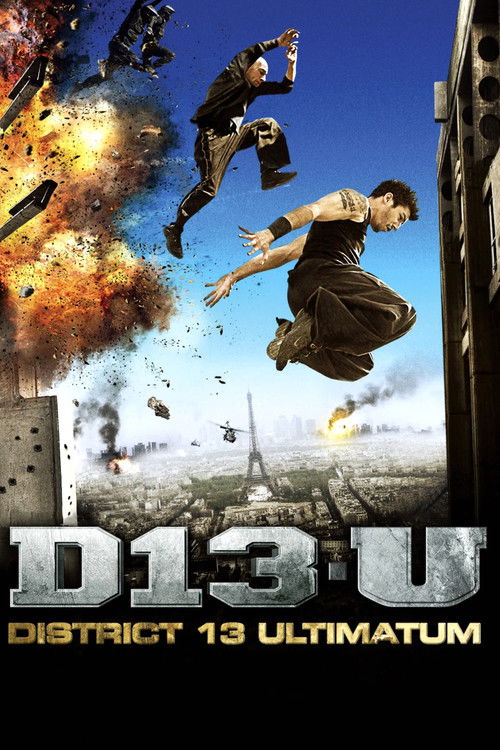
District 13: Ultimatum
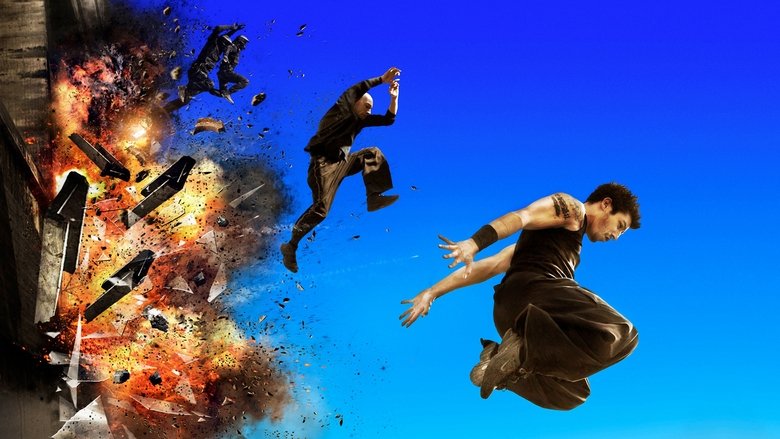
An adrenaline-soaked dystopian thriller bursting with fierce rebellious energy, where human bodies transform into kinetic lightning bolts leaping through the concrete cages of a forgotten metropolis.
District 13: Ultimatum

District 13: Ultimatum

Banlieue 13 - Ultimatum

18 February 2009 France 101 min 6.4 (1,303)

Director: Patrick Alessandrin

Cast: Cyril Raffaelli, David Belle, Philippe Torreton, Daniel Duval, Élodie Yung

Crime Action Thriller Institutional Corruption and Predatory Capitalism Unity and Solidarity Across Divides Physical Autonomy and Flow as Liberation State Oppression vs. Grassroots Resistance Urban Regeneration vs. Annihilation
Budget: $15,000,000
Box Office: $14,103,752

Overview

Set three years after the events of the original film in a near-future Paris, District 13: Ultimatum returns to the walled-off banlieue, where isolation has intensified and the ghetto has fractured into territories controlled by five distinct ethnic and cultural gangs. Despite prior government promises to dismantle the containment walls and restore social order, the barricades remain higher and more militarized than ever.

When a corrupt deep-state conspiracy stages a deadly false-flag incident inside the district to justify the banlieue's total annihilation, elite undercover police officer Damien Tomaso is framed and imprisoned to silence him. Meanwhile, agile banlieue native Leïto comes into possession of video evidence exposing the setup.

Teaming up once again, the martial artist cop and the master traceur must break through police custody, infiltrate the district's rival criminal factions to forge an unprecedented alliance, and race against the clock to confront the conspirators at the highest echelons of power before District 13 is wiped off the map.
Core Meaning

Directed by Patrick Alessandrin and penned by Luc Besson, the core message of District 13: Ultimatum is a sharp critique of state-sponsored marginalization, political corruption, and predatory urban gentrification. The film posits that urban decay is exacerbated by political apathy and corporate greed that treat lower-income populations as disposable collateral. The narrative argues that genuine systemic change cannot emerge from bureaucratic decree or isolated resistance; rather, it requires solidarity across fractured subcultures and mutual accountability between civil society and the state.

Thematic DNA

Institutional Corruption and Predatory Capitalism 30%
Unity and Solidarity Across Divides 25%
Physical Autonomy and Flow as Liberation 20%
State Oppression vs. Grassroots Resistance 15%
Urban Regeneration vs. Annihilation 10%

Institutional Corruption and Predatory Capitalism

The driving conflict is manufactured by state intelligence (DISS) working hand-in-hand with private defense and construction conglomerates seeking real estate windfalls from engineered catastrophe.

Unity and Solidarity Across Divides

The five warring neighborhood factions realize their petty turf wars serve only their oppressors, proving that communal survival requires collective coalition-building.

Physical Autonomy and Flow as Liberation

Parkour and acrobatic martial arts serve as thematic extensions of personal freedom, overcoming concrete, legal, and architectural limitations through pure human agility.

State Oppression vs. Grassroots Resistance

The state builds physical walls to hide systemic inequality, while the community's defense is rooted in unyielding grassroots resistance.

Urban Regeneration vs. Annihilation

The film explores the paradox between maintaining obsolete, crumbling concrete ruins out of sentimentality versus clearing the slate for dignified, inclusive modern urban living.

Character Analysis

Damien Tomaso

Cyril Raffaelli

Archetype: The Righteous Warrior / Paladin Key Trait: Explosive martial arts precision and unwavering integrity.

Motivation

Uphold genuine justice and protect innocent lives.

Character Arc

Starts as an unquestioning enforcer working inside the system; becomes disillusioned and allies directly with outlaws against corrupt superiors.

Leïto

David Belle

Archetype: The Free Spirit / Urban Rebel Key Trait: Fluid acrobatic mastery and street smarts.

Motivation

Liberate District 13 and preserve the dignity of its residents.

Character Arc

Evolves from a solitary vigilante defending his building to a charismatic organizer uniting rival factions.

All 5 characters and cast

Symbols & Motifs

The Containment Walls and Checkpoints

Meaning:

Symbolize institutional apartheid and the state’s desire to render socioeconomic issues invisible rather than resolve them.

Context:

Enclosing District 13, these towering militarized barricades physically separate the marginalized populace from the rest of Paris.

The Van Gogh Painting

Meaning:

Symbolizes the clash between high-culture establishment values and primal street-level survival.

Context:

Damien uses an authentic masterwork canvas as an improvised weapon and shield during an undercover raid.

The Five District Gangs

Meaning:

Represent the fragmented, multi-ethnic tapestry of marginalized France; their initial hostility mirrors societal divide-and-conquer tactics, while their eventual union symbolizes collective power.

Context:

The Asian, African, North African, Corsican/Latino, and Skinhead factions dividing the district into hostile territories before uniting against the common threat.

The Red Detonation Button

Meaning:

A visual motif of executive authority, highlighting how detached political leaders hold the power to destroy entire communities with a single, sanitized keystroke.

Context:

Featured in the executive offices where military missile strikes on District 13 are orchestrated.

Parkour and Fluid Movement

Meaning:

Acts as a living motif of human resilience, transforming oppressive architectural obstacles into pathways for escape and autonomy.

Context:

Utilized throughout the film as characters navigate walls, railings, rooftops, and urban barriers.

Memorable Quotes

Si tu veux changer les choses, il faut changer les règles.
— Leïto

Context

Leïto explains his perspective to Damien when discussing systemic failure.

Meaning

Emphasizes that playing within a rigged system will never bring true freedom or liberation to marginalized communities.

Je sers la République, pas les escrocs qui s'en servent.
— Damien Tomaso

Context

Damien rebukes Gassman and rogue agents after refusing to act as a pawn in their coup.

Meaning

Affirms Damien's core allegiance to justice and the public good rather than corrupt bureaucrats who exploit the state.

All 4 quotes

Philosophical Questions

Can violent rebellion against institutional corruption ever achieve long-term democratic reform?

The film explores whether working outside the law is justified when the institutions protecting the law are fundamentally corrupted from within.

Is architecture an instrument of social control?

By contrasting vertical concrete tenement blocks with fluid horizontal traceur movement, the film questions how physical urban planning dictates class destiny.

What defines legitimate sovereignty?

Walter Gassman acts under an official government security mandate while Leïto's criminal council represents the organic populace, challenging who truly possesses the moral authority to govern.

Alternative Interpretations

The central narrative functions as an anti-gentrification reading targeting 'disaster capitalism,' where the ruling class manufactures social chaos to displace poor communities and redevelop prime real estate.

Full ending explanation

Cultural Impact

District 13: Ultimatum was produced in the aftermath of the actual 2005 French banlieue riots, which triggered nationwide debates regarding suburban integration, institutional police violence, and social neglect, amplifying these anxieties into an exaggerated pulp sci-fi action scenario.

Alongside its 2004 predecessor, the film cemented parkour as a mainstream cinematic language, directly influencing major Western blockbusters including Casino Royale and Live Free or Die Hard while building a significant international cult following.

Audience Reception

District 13: Ultimatum holds an approval rating of 73–74% on Rotten Tomatoes. Critical praise is centered on its world-class parkour, inventive practical fight stunts, brisk pacing, and the entertaining chemistry between leads David Belle and Cyril Raffaelli. Critiques generally focus on cartoonish villains, a convoluted deep-state conspiracy, and thematic contradictions in the explosive finale, cementing the film as an entertaining, high-octane B-movie classic prioritizing spectacle over subtle drama.

Interesting Facts

  • David Belle, recognized worldwide as the creator of Parkour, performed all roof-to-roof jumps and ascents without safety wires, crash pads, or CGI enhancement.
  • Co-star Cyril Raffaelli, an elite Wushu champion and veteran stunt coordinator, personally choreographed the film's hand-to-hand fight sequences, including the opening undercover museum fight.
  • Before landing roles as Elektra in Marvel’s Daredevil and Jinx in G.I. Joe: Retaliation, Élodie Yung earned international attention here for her weapon work and martial arts background (holding a black belt in Karate).
  • Luc Besson cast authentic French hip-hop legends, notably MC Jean Gab'1 (playing gang leader Molko) and James Deano (Karl), lending genuine Parisian street culture to the ensemble.
  • Pierre Morel directed the 2004 original before moving on to direct Taken (2008); Patrick Alessandrin stepped in to direct Ultimatum under Luc Besson’s EuropaCorp banner.
  • The fictional mega-corporation in the film is called 'Harriburton,' an overt satirical reference to the American multinational corporation Halliburton, critiquing military-industrial reconstruction profiteering.

Easter Eggs

Homage to Escape from New York (1981)

The walled-off urban containment zone, cynical anti-hero partnership, and infiltration into the seat of government directly reference John Carpenter's classic sci-fi film.

Luc Besson Action Universes

The cross-dressing undercover nightclub sting in the opening mirrors visual styling and choreography from Besson’s other productions, notably La Femme Nikita and The Transporter series.

Classic Art as Stunt Props

Damien’s fight sequence utilizing an authentic Van Gogh canvas serves as a playful jab at high art values versus action cinema utility.

Tribute to Hong Kong Action Cinema

The close-quarters kitchen and hallway battles pay deliberate visual homage to Jackie Chan's 1980s filmography (such as Police Story), blending acrobatic prop usage with practical comedy-action beats.

Frequently Asked Questions

Explore More About This Movie

Dive deeper into specific aspects of the movie with our detailed analysis pages

Comments (0)

Leave a comment

No comments yet. Be the first to share your thoughts!

Similar Movies