Skip to content
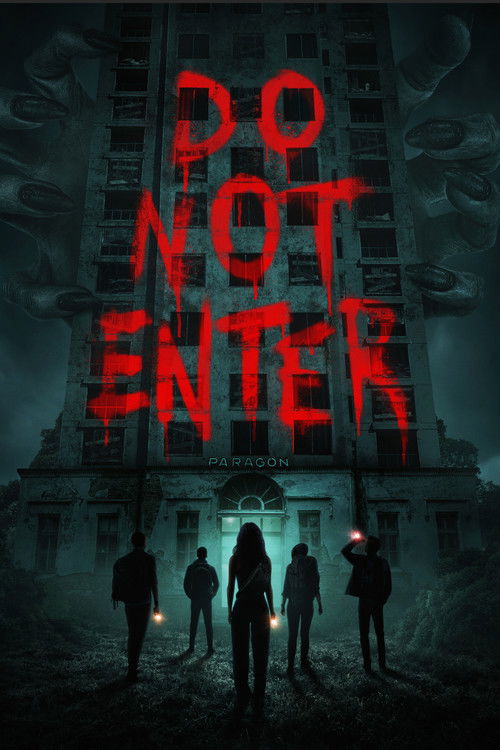
Do Not Enter
An atmospheric supernatural survival thriller drenched in suffocating darkness and primal dread, where the glitz of digital ambition is devoured inside a decaying labyrinth of generational secrets and forgotten blood.
Do Not Enter

Do Not Enter

"Getting in is hard, getting out is hell."

19 March 2026 United States of America 91 min 6.3 (315)

Director: Marc Klasfeld

Cast: Francesca Reale, Nicholas Hamilton, Adeline Rudolph, Jake Manley, Shane Paul McGhie

Horror The Perils of Social Media Validation & Voyeurism The Intrusion into Forbidden History & Urban Decay Greed, Moral Corruption, and the Price of Ambition Fractured Camaraderie, Loyalty, and Survival Instincts

Overview

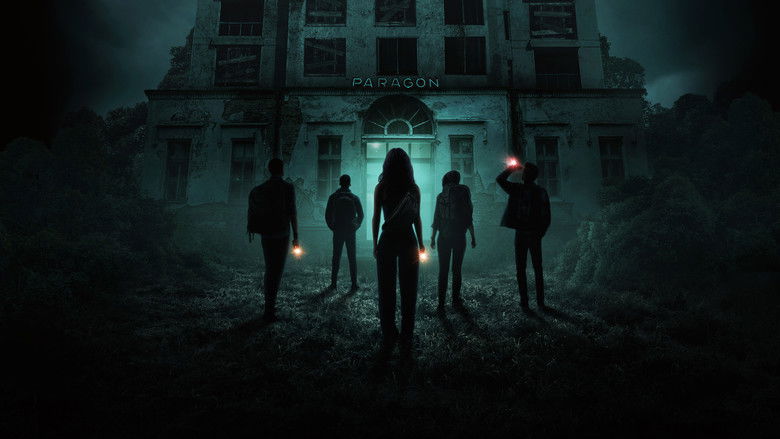
Do Not Enter (2026), directed by veteran music video auteur Marc Klasfeld, is an adaptation of David Morrell’s 2005 bestselling horror novel Creepers. The story centers on "The Creepers," an ambitious squad of young urban explorers whose high-stakes stunts and trespassing adventures are streamed online to chase viral social media relevance. Plagued by low engagement numbers and internal friction following a fractured friendship, the group sets out on their most dangerous mission to date: infiltrating the infamous, condemned Paragon Hotel along the New Jersey shoreline.

The derelict monolith carries a sinister history steeped in mid-century mob violence, unexplained disappearances, and rumors of a hidden $300 million cash fortune left buried in its walls. Teaming up with Frank Balenger, an enigmatic outsider claiming to be an investigative reporter documenting their urban descent, the Creepers bypass heavy barricades and "Do Not Enter" warnings to broadcast their exploration.

Once sealed inside the crumbling structure, the thrill-seekers discover that the building is an inescapable trap. They find themselves hunted not only by "The Scavengers"—a ruthless rival crew determined to claim the rumored loot—but also by an agile, unnatural entity lurking within the architectural decay. As corridors shift and communications deteriorate, the mission devolves into a desperate fight for survival.
Core Meaning

At its core, Do Not Enter serves as a cautionary critique of modern validation culture, internet exhibitionism, and the transactional nature of internet celebrity. Marc Klasfeld utilizes the horror framework to examine how the relentless drive for clicks and online visibility desensitizes young people to genuine physical and spiritual peril. The film illustrates that when boundaries are shattered purely for content creation, trespassers unwittingly awaken unresolved historical traumas and self-destructive forces that can consume them from within.

Thematic DNA

The Perils of Social Media Validation & Voyeurism 35%
The Intrusion into Forbidden History & Urban Decay 25%
Greed, Moral Corruption, and the Price of Ambition 20%
Fractured Camaraderie, Loyalty, and Survival Instincts 20%

The Perils of Social Media Validation & Voyeurism

Revealed through the Creepers' obsession with livestream metrics and subscriber counts, constantly putting themselves in life-threatening scenarios just to feed a fleeting online audience.

The Intrusion into Forbidden History & Urban Decay

Embodied by the Paragon Hotel; modern youth disregard warnings to conquer past spaces, unaware that certain histories are sealed away to protect the living.

Greed, Moral Corruption, and the Price of Ambition

Contrasts the Creepers' original code ("take only pictures, leave only footprints") with the corrupting influence of the rumored $300 million mob cache, leading to betrayal.

Fractured Camaraderie, Loyalty, and Survival Instincts

Explored through the split between the core crew and JD, showing how extreme pressure strips away performative friendship to expose raw survival reflexes.

Character Analysis

Cora

Francesca Reale

Archetype: The Resourceful Hero / Moral Compass Key Trait: Pragmatic, acrobatic, and empathetic.

Motivation

Driven by group unity, exploration passion, and staying true to the urban exploration code rather than chasing empty clout.

Character Arc

Evolves from the quiet technician and lockpicker into a resilient survivor using agility, parkour, and quick thinking to navigate the hostile maze.

Frank Balenger

Laurence O'Fuarain

Archetype: The Mysterious Stranger / Antihero Mentor Key Trait: Stoic, physically imposing, and secretive.

Motivation

Infiltrates the group under the pretense of journalistic coverage, harboring covert objectives tied to the hotel's past.

Character Arc

Shifts from an aloof, suspicious guide with combat skills to a tragic figure who directly confronts the hotel's hidden legacy.

All 5 characters and cast

Symbols & Motifs

The "Do Not Enter" / Barricade Warning Signs

Meaning:

Symbolize societal and moral thresholds; crossing past them represents the irreversible transition from innocent thrill-seeking into existential danger.

Context:

Placed at the barricaded entryways of the condemned Paragon Hotel, repeatedly ignored by the urban explorers to gain entrance.

The Smartphone / Livestream Screen (Live Chat HUD)

Meaning:

Represents the parasitic gaze of the digital audience; comments and viewer counters visually emphasize detachment from reality.

Context:

Overlayed across key sequences during the broadcast to depict real-time engagement and viewer detachment.

The Paragon Hotel

Meaning:

Serves as a physical manifestation of decay, institutional crime, and unresolved temporal malevolence—a tomb disguised as an adventure playground.

Context:

The central setting on the New Jersey shoreline containing shifting corridors and sealed historical secrets.

Lockpicking Tools and Master Keys

Meaning:

Symbolize both access and intrusion; unlocking forbidden chambers physically mirrors peeling back forbidden secrets.

Context:

Held and utilized by Cora to bypass structural barriers and navigate the locked rooms of the hotel.

Claw Marks and Flaking Plaster

Meaning:

Visual motifs indicating an enduring, predatory inhabitant claiming dominion over the structure.

Context:

Observed throughout the damaged hallways as evidence of the unnatural entity stalking the corridors.

Memorable Quotes

Getting in is hard, getting out is hell.
— Tagline / Core Dialogue Motif

Context

Used as a central thematic motif reflecting the fatal architecture of the building.

Meaning

Sets the trap-like nature of the Paragon Hotel, summarizing the inescapable descent waiting for the characters.

We take only pictures. We leave only footprints. That's the code.
— Cora

Context

Spoken early in the film during the confrontation over stolen items.

Meaning

Establishes the ideological boundary between genuine urban explorers and destructive looters.

All 4 quotes

Philosophical Questions

Does the presence of an observer alter basic morality?

The film asks whether individuals make inherently dangerous choices solely because a virtual crowd is watching.

Is modern digital curiosity merely voyeuristic desecration?

It interrogates the line between preserving historical memory and exploiting forgotten tragedy for personal gain.

Alternative Interpretations

The Hotel as a Temporal Purgatory: Some viewers interpret the shifting corridors and surviving characters as caught in a cyclical supernatural loop where the Paragon feasts on intruders' vanity, leaving open whether the final escape is real or a hallucinated release.

Full ending explanation

Cultural Impact

Filmed during the post-pandemic digital boom and released in March 2026 by Lionsgate, Do Not Enter arrived at a time when "livestreamer horror" and urban exploration channels ("Urbex") on platforms like YouTube and TikTok were at an all-time high in pop culture.

While mainstream critics were lukewarm regarding its CW-esque character archetypes and tonal balance between teen adventure and creature feature, the film gained considerable second-life success upon hitting streaming platforms (such as Prime Video), climbing into Top 5 viewing charts due to its compact 91-minute runtime, fast pace, and atmospheric setting.

Audience Reception

Critical Consensus: Mixed-to-negative (hovering around a ~4.3/10 aggregate score). Critics cited clunky social media dialogue, occasionally shallow character development, and a reliance on familiar horror tropes.

Praised Elements: The moody brutalist set design, Yon Thomas’s shadow-heavy cinematography, Javier Botet’s unsettling physical creature performance, and Francesca Reale’s charismatic, grounding turn as Cora.

Audience Verdict: Viewed as a fun, breezy, popcorn B-movie horror-adventure that works best when leaning into claustrophobic cat-and-mouse tension rather than high-concept influencer satire.

Interesting Facts

  • The film is based on the 2005 novel Creepers by David Morrell, the acclaimed creator of John Rambo (First Blood).
  • The film spent years in development under the novel's title Creepers before Lionsgate rebranded it to Do Not Enter to avoid market confusion with the Jeepers Creepers franchise.
  • The project marks Marc Klasfeld's return to narrative feature directing more than twenty years after his 2005 cult satire The L.A. Riot Spectacular, following decades of directing music videos for artists like Slipknot, Red Hot Chili Peppers, Jay-Z, and Katy Perry.
  • Although set at the Jersey Shore, the film was shot entirely on location in Bulgaria, utilizing real brutalist architectural complexes to craft the oppressive layout of the fictional Paragon Hotel.
  • The terrifying pale supernatural entity stalking the hotel corridors was portrayed practically by Javier Botet, the renowned Spanish contortionist actor famous for [REC], Mama, IT, and Crimson Peak.
  • Production was temporarily halted when an on-set COVID-19 outbreak forced the entire cast into a two-week quarantine in Bulgaria, which the cast and director later credited with bonding them like a real-life family.

Easter Eggs

Graphic Novel & Cult Film Nods in Opening Credits

Klasfeld built stylistic New Jersey iconography and hidden urban legend Easter eggs directly into the opening credit montage.

Homage to 1980s Adventure Ensembles

The dynamic of four friends entering a forbidden place accompanied by an older outsider consciously homages classic films like The Goonies and modern retro-throwbacks like Stranger Things.

Stephen Susco's Horror DNA

Co-screenwriter Stephen Susco incorporated subtle screen-life and livestream tension techniques reminiscent of his previous horror screenplays (The Grudge, Unfriended: Dark Web).

Frequently Asked Questions

Explore More About This Movie

Dive deeper into specific aspects of the movie with our detailed analysis pages

Comments (0)

Leave a comment

No comments yet. Be the first to share your thoughts!

Similar Movies