Skip to content
Lee Cronin's The Mummy
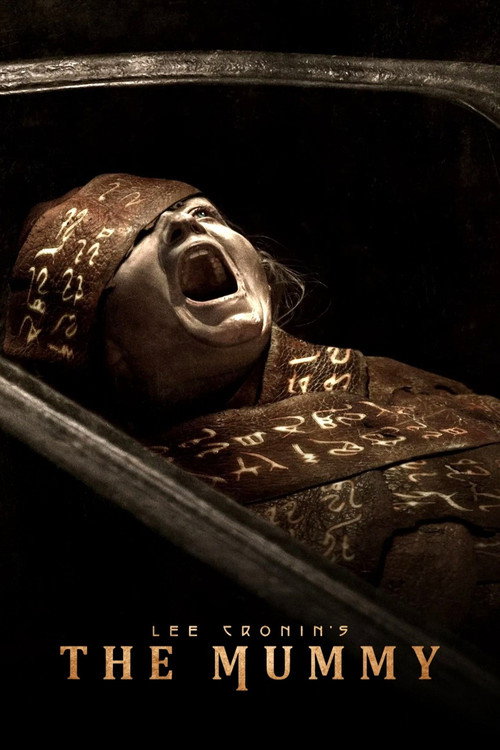
A grueling supernatural horror that subverts ancient Egyptian lore, portraying a shattered family unwrapping the suffocating layers of a demonic curse. It is a chilling descent where a miraculous reunion transforms into a claustrophobic, flesh-tearing nightmare.
Lee Cronin's The Mummy

Lee Cronin's The Mummy

"What happened to Katie?"

15 April 2026 United States of America 133 min 8.0 (2,240)

Director: Lee Cronin

Cast: Jack Reynor, Laia Costa, May Calamawy, Natalie Grace, Shylo Molina

Mystery Horror The Rot of Grief and Trauma Sacrifice and the Cycle of Containment Corruption of the Domestic Space Grave Desecration and Cultural Consequences
Budget: $22,000,000
Box Office: $90,552,113

Overview

Following the harrowing disappearance of their daughter Katie during the Arab Spring in Cairo, journalist Charlie Cannon and his wife Larissa are left completely broken. Eight years later, the family experiences what seems to be a miracle: Katie is discovered alive, having been trapped inside an ancient, 3,000-year-old sarcophagus. Hoping to heal their family, they bring her back to their home in New Mexico to reunite with her siblings.

However, the joyous reunion rapidly deteriorates into a claustrophobic nightmare. Katie's behavior becomes erratic and violent, and a rotting supernatural presence begins to infect the household. The Cannons soon discover that their daughter was subjected to a dark ritual by a cultist known as the Magician, turning her body into a living prison for a malevolent Egyptian entity called the Nasmaranian.

Forced to confront an ancient evil that delights in destroying families, Charlie, Larissa, and Cairo detective Dalia Zaki must unravel the mystery of the binding spells etched into Katie's skin. As the demon threatens to consume them all, the parents are pushed to the absolute brink, realizing that saving their daughter will require an unthinkable, brutal sacrifice.
Core Meaning

Director Lee Cronin utilizes the framework of The Mummy to explore the corrosive, consuming nature of grief and unresolved trauma. By shifting the classic monster archetype away from adventure-based tomb raiding and into an intimate, domestic setting, the film examines how holding onto the past can literally rot a family from the inside out.

The demonic Nasmaranian, known as the Destroyer of Family, serves as a visceral metaphor for how pain spreads among loved ones. The film ultimately asks devastating questions about parental sacrifice, suggesting that while the love for a child is boundless, the lengths to which one will go to protect them can strip away their own humanity and perpetuate a relentless cycle of suffering.

Thematic DNA

The Rot of Grief and Trauma 35%
Sacrifice and the Cycle of Containment 30%
Corruption of the Domestic Space 20%
Grave Desecration and Cultural Consequences 15%

The Rot of Grief and Trauma

This theme is manifested physically through the Nasmaranian curse. As the family attempts to process the trauma of Katie's eight-year absence and sudden return, a literal and figurative rot spreads through their home, infecting the siblings and turning their safe space into a nightmare.

Sacrifice and the Cycle of Containment

The plot revolves around the brutal mechanics of the curse, which cannot be destroyed, only transferred. Charlie's ultimate choice to become the demon's vessel highlights absolute parental sacrifice, while the final act's revenge reveals the dark, cyclical nature of passing pain onto others.

Corruption of the Domestic Space

Taking cues from Cronin's previous work, the film subverts the concept of the family home. What should be a place of healing and reunion in New Mexico becomes an inescapable, claustrophobic trap where the family is hunted by the very person they tried to save.

Grave Desecration and Cultural Consequences

The film touches upon the real-world history of Egyptomania and the arrogant assumption that ancient artifacts and rituals can be neatly contained. The consequences of disturbing ancient bindings result in catastrophic modern-day horror.

Character Analysis

Charlie Cannon

Jack Reynor

Archetype: The Sacrificial Hero Key Trait: Resolute

Motivation

To protect his family from the escalating evil and make up for his perceived failure to protect Katie eight years ago.

Character Arc

Charlie transforms from a desperate journalist searching for logical answers to a broken father who embraces the supernatural reality. In a tragic climax, he sacrifices his own freedom and body to become the new living prison for the demon, saving his daughter.

Larissa Cannon

Laia Costa

Archetype: The Fierce Protector Key Trait: Unforgiving

Motivation

Survival of her surviving children and ruthless vengeance against those who destroyed her family.

Character Arc

Larissa navigates the impossible horror of her corrupted daughter. Her arc concludes in a morally ambiguous space; after her husband's sacrifice, she chooses an incredibly dark path of revenge by transferring the demon into her daughter's kidnapper.

Katie Cannon

Natalie Grace / Emily Mitchell

Archetype: The Corrupted Innocent Key Trait: Tragic

Motivation

Her physical body is driven by the demon's desire to break familial bonds, while her trapped consciousness merely seeks release.

Character Arc

Katie shifts from a lost child to a terrifying, animalistic vessel for the Nasmaranian. She spends the film trapped within her own possessed body, unwittingly terrorizing her family, until she is finally freed by her father's sacrifice.

Detective Dalia Zaki

May Calamawy

Archetype: The Seeker / Guide Key Trait: Relentless

Motivation

To solve the impossible case that has haunted her career and to right a supernatural wrong.

Character Arc

Beginning as the lead investigator on Katie's disappearance in Cairo, she reunites with the Cannons years later to help uncover the truth about the Magician. She ultimately steps over the line of law enforcement into participating in a dark, supernatural revenge ritual.

Symbols & Motifs

The Bandages and Skin Wraps

Meaning:

They symbolize the suffocating, inescapable nature of trauma. The spells are literally embedded into the layers of the skin, representing how deeply the abuse and the curse have been etched into the victim's identity.

Context:

Throughout the film, Katie's bandages are revealed to be layers of her own skin covered in ancient Egyptian bindings, which she violently tears at in moments of self-mutilation as the curse tries to spread.

The Sarcophagus

Meaning:

It acts as a dual symbol: a tomb of the forgotten past, and a twisted, corrupted womb. It represents the isolation of grief.

Context:

Katie is found locked inside it after eight years. Later, it becomes the tragic resting place for Charlie after he takes the curse upon himself.

The Dead Bird

Meaning:

A classic harbinger of death and the desecration of a sanctuary, symbolizing the moment the outside evil successfully penetrates the home.

Context:

It is prominently featured in the terrifying opening sequence when the family returns home to find it waiting for them, signaling that the ancient evil has followed them.

Memorable Quotes

Some that passed over were gone forever, but an unlucky few were consumed by a darkness far more evil than anyone could have ever imagined.
— Narrator / Prologue

Context

Featured in the film's chilling opening lore, setting up the ancient history of the Nasmaranian demon.

Meaning

Sets the grim, hopeless tone of the film's mythology, establishing that death is not the worst fate in this universe.

For dust you are.
— The Magician

Context

Repeated as a chilling incantation related to the binding and transferring of the demon between hosts.

Meaning

A corruption of traditional religious comfort, turning mortality into a terrifying threat of the curse.

.. .. / .-.. --- ...- . / -.-- --- ..-
— Charlie Cannon

Context

Tapped out in Morse code from the inside of the sarcophagus by Charlie after he has sacrificed himself to contain the curse.

Meaning

Translates to I love you. It is a heartbreaking reminder that despite his horrific fate and mummified state, his humanity and love for his family remain intact beneath the demon.

Philosophical Questions

Is it morally justifiable to inflict unimaginable suffering on an evil person to save an innocent?

The film's controversial ending directly challenges the audience's moral compass. Larissa and Dalia force the demonic possession onto the Magician as an act of revenge and to free Charlie. The narrative asks if fighting a monster by using its own horrific methods turns the heroes into monsters themselves.

How much of human identity survives profound, altering trauma?

Katie returns after eight years not just physically changed, but possessed by an entity whose spells are etched into her skin. The film explores whether the core of a person remains intact beneath the layers of abuse, culminating in Charlie's heart-wrenching Morse code message proving his love survives his living death.

Alternative Interpretations

The Cycle of Abuse: While the theatrical ending frames Larissa and Dalia's revenge against the Magician as a cathartic, dark victory, many critics interpret it as a tragedy. By performing the ritual to force the demon into another human, Larissa and Dalia succumb to the exact evil they were fighting. They become the new abusers, proving that the Nasmaranian—the Destroyer of Family—ultimately won by stripping them of their morality.

Metaphor for Terminal Illness: Some audiences read Katie's sudden, changed return and the subsequent rot in the house as a grounded allegory for a family dealing with a child's terminal or severe mental illness. The horror stems from the parents' helplessness, the strain it places on the siblings, and the excruciating guilt of realizing that their child is trapped in a body that is actively destroying itself.

Cultural Impact

Lee Cronin's The Mummy marked a massive tonal shift for the iconic Universal Monsters property. Following the critical and commercial failure of the action-heavy 2017 reboot starring Tom Cruise, Warner Bros., New Line Cinema, and Blumhouse took a massive risk by pivoting the property into an R-rated, claustrophobic possession film.

The film was widely praised by the horror community for returning the Mummy to its genuinely terrifying roots, blending the emotional weight of The Exorcist with the visceral, blood-soaked brutality Cronin established in Evil Dead Rise. While it proved highly divisive among purists who expected classic gothic romance or pulp adventure, it successfully proved that legacy movie monsters could be effectively reinvented through the lens of modern, trauma-based domestic horror. Grossing over $90 million on a modest $22 million budget, it solidified Cronin's reputation as a master of family-centric terror.

Audience Reception

Audience reception was highly polarized but skewed positive among hardcore horror fans. Viewers praised Jack Reynor's emotionally devastated performance, the claustrophobic dread, and the terrifying practical effects surrounding Katie's peeling skin and bandages.

The main points of criticism came from fans of the Brendan Fraser Mummy films, who felt the movie lacked the adventure and camp they associated with the title, arguing it felt more like an Evil Dead spin-off than a classic Mummy tale. The film's ending was heavily debated; some audiences cheered the brutal revenge enacted upon the Magician, while others felt it was a studio-mandated addition that undermined the bleak, suffocating tone of the first two acts. Overall, it was deemed one of the most unsettling and terrifying mainstream horror releases of 2026.

Interesting Facts

  • The film shares a cinematic universe with Lee Cronin's 2023 hit 'Evil Dead Rise'. This is subtly confirmed through the inclusion of Professor Bixler, an Egyptologist who shares a surname with characters from the Evil Dead lore.
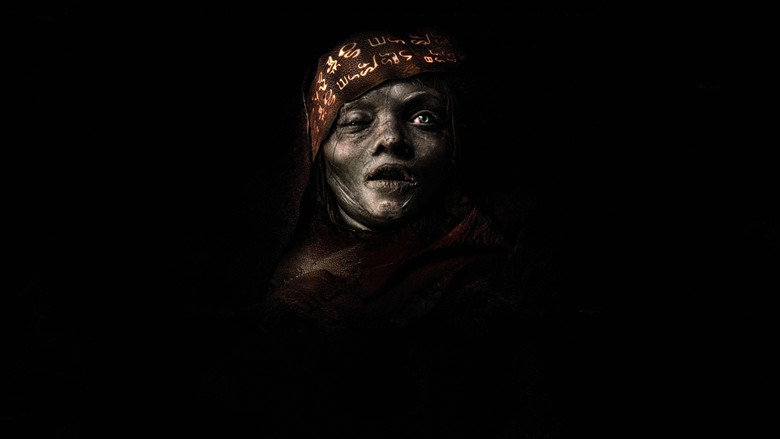
  • The film's incredibly creepy theatrical poster drew actual complaints. A parent reported the imagery to the UK's Advertising Standards Authority (ASA), sparking a debate over whether the horror visuals were too terrifying for public spaces.
  • The original cut of the film ended on a much bleaker note, concluding immediately after Charlie was trapped in the sarcophagus. Following test screenings, a brutal but cathartic coda was added where Larissa and Dalia use the ritual to transfer the demon to the Magician.
  • Director Lee Cronin specifically avoided using standard CGI sandstorms and adventure tropes, pushing the franchise into hard-R psychological and body horror, likening the possession scenes more to 'The Exorcist' than classic Universal monster movies.
  • Charlie's backstory roots the film in real-world history; he was originally posted to Cairo to cover the 2011 Arab Spring when his daughter went missing.

Easter Eggs

Professor Bixler

The character shares a surname with characters central to the mythology of Evil Dead Rise. Director Lee Cronin confirmed in interviews that this was a deliberate inclusion to place The Mummy and his Evil Dead entries in the same overarching horror universe.

Deadite-like behavior of the Nasmaranian

The demon's penchant for psychological torture, self-mutilation, and turning family members against one another heavily mirrors the iconic behavior of Deadites in the Evil Dead franchise, serving as a stylistic nod to Cronin's roots.

⚠️ Spoiler Analysis

Click to reveal detailed analysis with spoilers

Frequently Asked Questions

Explore More About This Movie

Dive deeper into specific aspects of the movie with our detailed analysis pages

Comments (0)

Leave a comment

No comments yet. Be the first to share your thoughts!

Similar Movies