Skip to content
Doctor Who
A dazzling sci-fi adventure swirling with existential wonder, where a solitary time traveler paints vibrant hope across cosmic dark, spinning through human mortality like a chaotic blue box lost in an ocean of stars.
Doctor Who

Doctor Who

"Space. For all."

26 March 2005 — 05 December 2021 Canada 13 season 153 episode Ended 7.6 (3,419)

Cast: Matt Smith, David Tennant, Karen Gillan, Nicholas Briggs, Jenna Coleman

Drama Sci-Fi & Fantasy Action & Adventure Mortality, Time, and Transience Kindness vs. Cruelty & Moral Responsibility Trauma, Guilt, and Self-Redemption The Extraordinary Worth of Ordinary Humans

Overview

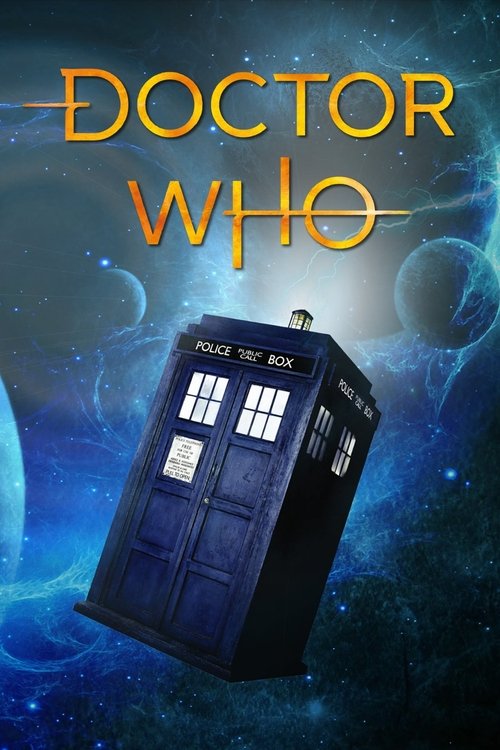
Doctor Who (2005) revives the legendary television franchise by centering on "The Doctor," an enigmatic alien Time Lord who travels across time and space in the TARDIS—a living time machine disguised as an iconic 1960s British police box. Armed with a sonic screwdriver, unmatched intellect, and an insatiable curiosity, the Doctor intervenes in galactic crises, fights tyrannical extraterrestrial threats like the Daleks and Cybermen, and rescues imperiled civilizations across the cosmos.

The narrative backbone relies on "regeneration," a biological mechanism allowing the Doctor to transform physically and emotionally when facing mortal injury. Across 13 seasons, the modern revival follows multiple incarnations of the Doctor—from a war-weary survivor grappling with profound guilt to eccentric protectors, brooding philosophers, and optimistic wanderers—each offering a fresh perspective on the same enduring soul.

The heart of the series lies in the Doctor's relationships with human companions—ordinary everyday people lifted from modern Earth into extraordinary adventures. These mortal partners ground the Doctor’s godlike power, offering emotional warmth, ethical accountability, and a reminder of why the universe is worth saving.

Core Meaning

The core meaning of Doctor Who is that compassion, intelligence, and moral courage will always triumph over brute violence and hatred. Across every season, the show argues that no human life is small or insignificant; even the briefest mortal existence holds infinite worth in a vast, uncaring universe. The Doctor embodies the supreme hero who rejects weapons and tyranny, demonstrating that choosing to be kind—especially when it is hardest—is the ultimate act of courage.

Thematic DNA

Mortality, Time, and Transience 30%
Kindness vs. Cruelty & Moral Responsibility 25%
Trauma, Guilt, and Self-Redemption 25%
The Extraordinary Worth of Ordinary Humans 20%

Mortality, Time, and Transience

As an immortal or near-immortal creature, the Doctor lives in a state of perpetual loss. Companions grow old, move on, or die, while the Doctor continuously changes faces through regeneration. The show explores how time gives meaning to life: because human lives are short, every second is precious.

Kindness vs. Cruelty & Moral Responsibility

The Doctor’s self-chosen title represents a promise: "Never cruel or cowardly, never give up, never give in." Throughout the show, the Doctor struggles against the temptation to misuse supreme temporal power (e.g., the "Time Lord Victorious" phase). Kindness is portrayed not as passive softness, but as an active, militant moral stance against cruelty.

Trauma, Guilt, and Self-Redemption

The 2005 revival begins under the shadow of the Last Great Time War. The Ninth Doctor struggles with post-traumatic shock and self-loathing. Over 13 seasons, the Doctor's arc moves from crushing war guilt to self-forgiveness, climaxing when the Doctor retroactively alters history to save their home planet Gallifrey.

The Extraordinary Worth of Ordinary Humans

The series consistently exalts mundane human life. Companions like shop-girl Rose, nurse Rory, temp Donna, or teacher Clara start as ordinary people but routinely save the cosmos through empathy, stubborn resilience, and love.

Character Analysis

The Doctor

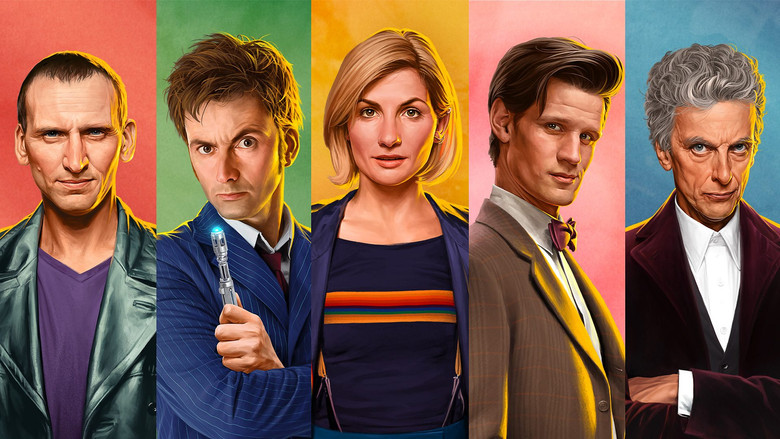
Christopher Eccleston, David Tennant, Matt Smith, Peter Capaldi, Jodie Whittaker

Archetype: Trickster / Wandering Hero / Mentor / Cosmic Savior Key Trait: Boundless empathy coupled with transcendent intelligence

Motivation

To explore the cosmos, protect the vulnerable, and redeem past failures.

Character Arc

Evolves from a traumatized, survivor-guilt-ridden soldier (Ninth) into a charismatic, romantic hero (Tenth), a whimsical ancient soul hiding dark secrets (Eleventh), a stern philosopher searching for his moral compass (Twelfth), and an energetic, warm leader confronting deep origins (Thirteenth).

Rose Tyler

Billie Piper

Archetype: The Catalyst / Everyday Heroine Key Trait: Intuitiveness and emotional warmth

Motivation

Seeking adventure and meaningful purpose; evolves into unconditional love for the Doctor.

Character Arc

Begins as an unfulfilled department store worker in London and evolves into a fearless dimensional defender who heals the Doctor’s broken heart.

All 4 characters and cast

Symbols & Motifs

The TARDIS (Police Box)

Meaning:

Symbolizes refuge, hope, and infinite interior possibility ("bigger on the inside").

Context:

Its police box exterior represents safety and civic protection in British culture.

The Sonic Screwdriver

Meaning:

Symbolizes intellect over violence.

Context:

It is a tool for building, scanning, unlocking, and repairing—never a lethal weapon.

Bad Wolf

Meaning:

Symbolizes destiny, temporal omnipresence, and the unseen threads binding the Doctor and Rose across space-time.

Context:

Placed as scattered background references across space and time that culminate in Rose absorbing the Time Vortex.

The Chameleon Arch (Fob Watch)

Meaning:

Symbolizes suppressed identity and hidden truth.

Context:

It physically transforms a Time Lord into a human, holding their godhood inside a pocket watch.

The Bow Tie / Fez

Meaning:

Symbolizes childlike wonder and eccentric individuality as an armor against ancient sorrow.

Context:

Worn by the Eleventh Doctor as a distinctive stylistic choice representing eccentric individuality.

Memorable Quotes

Everybody lives, Rose! Just this once, everybody lives!
— Ninth Doctor (Christopher Eccleston)

Context

Spoken in Season 1, Episode 10 ("The Doctor Dances").

Meaning

The pivotal moment where Nine overcomes his Time War trauma, realizing he can be a healer rather than a destroyer.

We're all stories, in the end. Just make it a good one, eh?
— Eleventh Doctor (Matt Smith)

Context

Spoken in Season 5, Episode 13 ("The Big Bang").

Meaning

Encapsulates the entire ethos of the show—that individual lives gain immortality through the stories and memories we leave behind.

All 5 quotes

Episode Highlights

The Empty Child / The Doctor Dances

S1E9

Written by Steven Moffat; introduces Captain Jack Harkness and marks Nine's emotional healing from war trauma.

Significance:

Marks Nine's emotional healing from Time War trauma and introduces Captain Jack Harkness.

Blink

S3E10

Introduces the Weeping Angels. A masterclass in "Doctor-lite" storytelling demonstrating non-linear temporal suspense.

Significance:

Introduces the Weeping Angels and serves as a masterclass in non-linear temporal suspense.

The Stolen Earth / Journey's End

S4E12

RTD-era finale crossover bringing back every companion to defeat Davros; features the tragic mind-wipe of Donna Noble.

Significance:

Serves as a major crossover finale bringing back all companions to defeat Davros and ending with Donna Noble's tragic mind-wipe.

Vincent and the Doctor

S5E10

Deeply emotional historical episode handling mental illness and Vincent van Gogh, showing that saving a life doesn't always rewrite history's tragedy.

Significance:

Handles mental illness with deep empathy, demonstrating that saving a life does not always rewrite historical tragedy.

The Day of the Doctor

S7E14

Unites the Tenth, Eleventh, and War Doctors. Redefines show lore by saving Gallifrey, replacing the Doctor's guilt with hope.

Significance:

Redefines show lore by saving Gallifrey, transforming the Doctor's trauma into hope.

Heaven Sent

S9E11

Solo tour-de-force performance by Peter Capaldi. The Doctor punch-breaks diamond over 4.5 billion years trapped in a confession dial to grieve Clara; ultimate study of grief and endurance.

Significance:

Acts as an ultimate study of grief and endurance as the Doctor breaks diamond over 4.5 billion years to save Clara.

The Timeless Children

S12E10

Rewrites the Doctor's origins, revealing the Doctor is not native to Gallifrey but the foundational source of Time Lord regeneration.

Significance:

Fundamentally rewrites the Doctor's origin story, revealing the true foundational source of regeneration.

Philosophical Questions

What constitutes personal identity when physical form and personality change?

Examined through regeneration. Despite shifting appearances and quirks, a core moral identity persists.

Is pacifism morally sustainable in the face of absolute evil?

Explored through the Doctor's struggle with guns, weapons, and war. The series asks whether refusing to kill makes one complicit in evil.

How do short, fragile human lives matter in an infinite universe?

Contrasted between the Doctor's functional immortality and human companions' brief lifespans.

Can time be rewritten, and what are the consequences of playing God?

Investigated through "fixed points in time" and paradoxes (The Waters of Mars, Father's Day).

Alternative Interpretations

The show supports several key alternative interpretations:

Full ending explanation

Cultural Impact

Relaunched in 2005 under showrunner Russell T Davies, Doctor Who transformed from a fondly remembered, campy cult relic into a modern British television powerhouse. Davies grounded high-concept sci-fi in relatable working-class British family life.

The era reception highlights distinct shifts:

  • RTD Era (2005-2010): Character-driven, emotional, grounded; massive mainstream UK ratings hit.
  • Moffat Era (2010-2017): Cinematic, complex timey-wimey puzzles; global explosion and acclaimed writing.
  • Chibnall Era (2018-2022): Progressive, ensemble-focused, historical; polarizing, praised for inclusion, hit by lore controversy.

Doctor Who is an indelible pillar of British pop culture. It pioneered family sci-fi drama on modern television, paving the way for British genre hits and proving that serialized sci-fi can achieve mainstream popularity.

Audience Reception

Praised Aspects: Exceptional character writing, high-concept emotional sci-fi, iconic villain designs (Daleks, Weeping Angels), incredible musical scores (Murray Gold), and pitch-perfect lead performances.

Main Criticism: Occasional cheap CGI effects in earlier seasons, overly convoluted plot arcs in the mid-Moffat era, and exposition-heavy dialogue during the Chibnall era.

Controversial Moments: The wiping of Donna Noble’s memories (Journey's End), the "Doctor-lite" experimental structure, and "The Timeless Child" lore retcon which changed the Doctor's back-story origin.

Overall Verdict: Widely regarded as one of the greatest sci-fi shows ever made, celebrating the beauty of existence through imaginative storytelling.

Interesting Facts

  • Family Doctor Dynamics: David Tennant (Tenth Doctor) married Georgia Moffett, who played his cloned daughter in 'The Doctor's Daughter'. Georgia is the real-life daughter of Peter Davison (Fifth Doctor).
  • Capaldi’s Fan Mail: Peter Capaldi was such a massive fan of Doctor Who as a child that he wrote letters to the BBC at age 15 in 1973 asking to run the fan club.
  • Creation of the Bow Tie: Showrunner Steven Moffat originally hated the idea of Matt Smith wearing a bow tie, but Smith insisted on keeping it during wardrobe fittings, giving birth to the famous catchphrase.
  • TARDIS Sound Origin: The iconic sound of the TARDIS materializing was originally created in 1963 by sound technician Brian Hodgson dragging house keys along the bass strings of a dismantled piano.
  • Emergency Scripting of 'Blink': Steven Moffat wrote 'Blink' to adapt his own short story because the production schedule needed a low-budget episode shot while David Tennant filmed another episode simultaneously.

Easter Eggs

The "Bad Wolf" Trail

Throughout Season 1, the words "Bad Wolf" are placed in background details—graffiti, posters, corporate names, alien dialects—foreshadowing the finale arc.

Tom Baker’s Cameo

In The Day of the Doctor, 80-year-old classic Fourth Doctor actor Tom Baker cameos as "The Curator," winking at the idea that the Doctor might "revisit a few old favorite faces" in the future.

Nicholas Briggs' Voice Work

Voice actor Nicholas Briggs has voiced all Daleks, Cybermen, and Judoon since the 2005 revival.

"An Unearthly Child" Callbacks

In The Magician's Apprentice (Season 9), the Twelfth Doctor enters playing an electric guitar on a tank and references lines from the very first 1963 episode.

Frequently Asked Questions

Explore More About This Movie

Dive deeper into specific aspects of the movie with our detailed analysis pages

Comments (0)

Leave a comment

No comments yet. Be the first to share your thoughts!

Similar Movies