Skip to content
Dolly
A suffocating descent into backwoods grime where matrimonial anxiety morphs into visceral terror, suffocating the viewer beneath cracked porcelain stares, soiled nursery lace, and relentless, flesh-tearing brutality.
Dolly

Dolly

"Mommy knows best."

06 March 2026 United States of America 83 min 5.7 (211)

Director: Rod Blackhurst

Cast: Max Lindsey, Fabianne Therese, Seann William Scott, Ethan Suplee, Russ Tiller

Horror Distorted Motherhood & Parental Dread Regression, Infantilization & Identity Grindhouse Brutality & Survival Cyclical & Intergenerational Abuse
Box Office: $1,062,322

Overview

Dolly is an independent survival horror film directed and co-written by Rod Blackhurst alongside Brandon Weavil, developed from Blackhurst's 2022 proof-of-concept short film Babygirl. The story centers on Macy and her loving partner Chase, a single father who brings her on a remote hiking trip through the dense forests of Tennessee. Chase secretly plans to propose at a scenic mountain overlook, but Macy harbors deep-seated psychological dread regarding her ability to assume the role of stepmother to Chase's young daughter, Evy, fearing she will repeat the maternal failures of her own past.

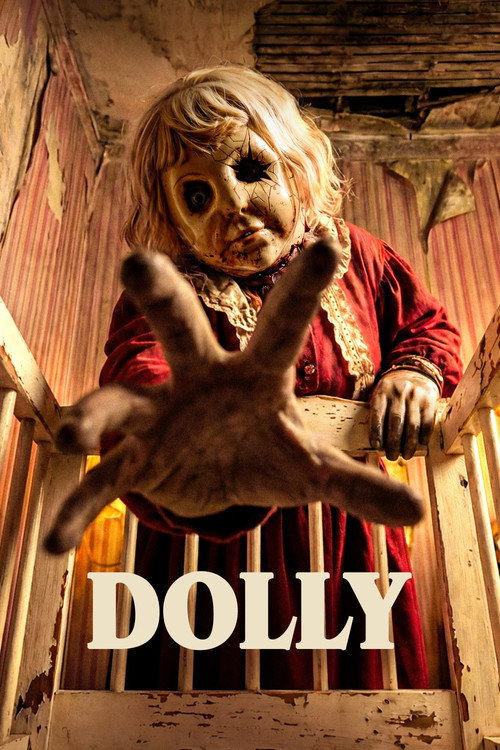
The romantic excursion turns catastrophic when the couple stumbles across an unsettling clearing deep in the woods—a ceremonial burial trench surrounded by mutilated dolls dangling from the trees. Before they can escape, they are ambushed by Dolly, a towering, mute figure clad in an infantile playsuit and a shattered ceramic doll mask.

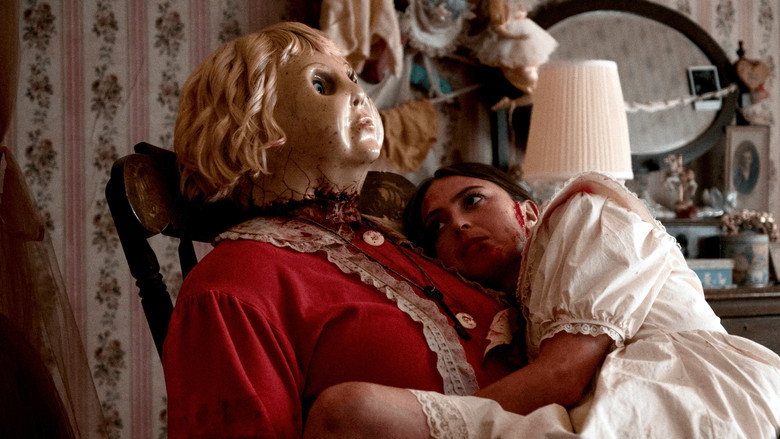
After violently incapacitating Chase, Dolly abducts Macy and drags her to a decrepit, filth-ridden cabin. Trapped inside an oversized crib in a locked, nightmarish nursery, Macy is subjected to a perverted regime of infantilization, force-feeding, and sadistic domestic rituals. To survive, she must navigate Dolly's volatile emotional outbursts and the surrounding backwoods perils while a grievously wounded Chase desperately fights his way through the wilderness to find her.
Core Meaning

At its core, Dolly externalizes the primal terror of motherhood, domestic confinement, and intergenerational trauma. The monstrous antagonist serves as a grotesque manifestation of forced maternal duty and distorted childhood. Macy's internal crisis—her profound anxiety over being thrust into motherhood and the fear of repeating inherited cycles of abuse—is mirrored in Dolly's violent, literalized obsession with forcibly 'raising' an adult as an infant toy. The film examines how unresolved childhood trauma and societal expectations surrounding caregiving can metastasize into controlling, suffocating violence.

Thematic DNA

Distorted Motherhood & Parental Dread 35%
Regression, Infantilization & Identity 25%
Grindhouse Brutality & Survival 20%
Cyclical & Intergenerational Abuse 20%

Distorted Motherhood & Parental Dread

The driving thematic engine of the narrative. Macy's reluctance to become a maternal figure to Evy is juxtaposed with Dolly's monstrous, obsessive enactment of motherhood, framing domestic nurture as an invasive, non-consensual nightmare.

Regression, Infantilization & Identity

Dolly forces adult victims into the physical and social confines of early infancy using cribs, diapers, and bibs, exploring the horror of total helplessness and the systematic stripping away of adult autonomy and identity.

Grindhouse Brutality & Survival

Grounded in the tradition of 1970s backwoods slashers, the film tests human resilience against raw, untamed physical power in an isolated wilderness completely devoid of modern rescue.

Cyclical & Intergenerational Abuse

The plot underlines that Dolly's severe, punishing behaviors mimic the abusive discipline she once endured, revealing how learned violence repeats across generations under the guise of 'good parenting.'

Character Analysis

Macy

Fabianne Therese

Archetype: Final Girl / Reluctant Matriarch Key Trait: Resilient distress under pressure.

Motivation

To escape captivity and survive the woods.

Character Arc

Begins as an anxious young woman terrified of parental responsibility and inherited trauma, but is forced through severe physical torment to reclaim agency and fight ruthlessly for survival.

Dolly

Max Lindsey (Max the Impaler)

Archetype: Monstrous Mother / Slasher Juggernaut Key Trait: Towering physical strength and non-verbal vocalizations.

Motivation

To capture, control, and 'raise' Macy as a docile child.

Character Arc

Remains a persistent, terrifying juggernaut who oscillates between infantile playfulness, desperate nurturing, and explosive sadism as her control over Macy unravels.

All 5 characters and cast

Symbols & Motifs

The Shattered Porcelain Mask

Meaning:

Symbolizes the fractured persona of a damaged individual clinging to an idealized, artificial innocence while hiding raw, void-like trauma beneath.

Context:

Worn by Dolly throughout the film, prominently featuring one painted eye and one hollow, blackened socket.

The Hanging Doll Forest / Burial Pit

Meaning:

Represents Dolly's trail of failed 'children' and serves as a physical graveyard of discarded innocence.

Context:

A wooded clearing and ceremonial funeral site filled with hanged, decapitated, and dismembered toys where Chase and Macy stumble upon Dolly's domain.

The Giant Crib & Nursery

Meaning:

Symbolizes domestic imprisonment, regression, infantilization, and the total destruction of personal agency.

Context:

The locked, nightmarish room inside the decrepit cabin where Macy is confined and subjected to forced domestic routines.

The Shovel

Meaning:

Unlike sterile or technological weaponry, it represents manual labor, burial, and raw agrarian violence.

Context:

Utilized as Dolly's primary instrument of control and execution, most notably used to mutilate Chase's face.

Flies and Rotting Flesh

Meaning:

Motifs the decay of the domestic sanctuary and the foul, grim reality underpinning Dolly's manic pretend games.

Context:

Seen swarming mutilated bodies in the fly-infested opening chapter and around Dolly's victims.

Memorable Quotes

The girl now hides, behind a mask, to raise her own, long at last.
— Folkloric Rhyme / Lore

Context

Recited and presented in the film to explain the urban legend and background surrounding Dolly's woodland presence.

Meaning

Frames Dolly's origin, mythology, and psychological fixation on recreating a family structure through violent means.

I just don't know if I'm cut out to be a mom... What if I'm just like her?
— Macy

Context

Spoken by Macy via FaceTime to Rachel immediately before embarking on the hiking trip with Chase.

Meaning

Establishes Macy's central psychological flaw and thematic anxiety regarding stepmotherhood and inherited maternal abuse.

All 3 quotes

Philosophical Questions

Can nurture exist without coercion when agency is stripped?

The film interrogates where the line between caregiving and domination lies when one party forcibly defines another's reality without consent.

Is violent discipline inexorably inherited?

Dolly's actions illustrate how abusive parental methods and punitive discipline are mechanically mirrored by victims when no external intervention occurs.

What defines survival when the self is dismantled?

The narrative questions whether physical escape alone suffices when a victim is forced through complete psychological and bodily degradation.

Alternative Interpretations

The narrative supports multiple thematic and allegorical readings:

Full ending explanation

Cultural Impact

Dolly arrived in early 2026 amid a broader revival of 'back-to-basics,' high-gore exploitation cinema popularized by films such as Terrifier, Ti West's X, and In a Violent Nature (2024). Rather than adopting the meta-commentary of modern studio slashers, the film aligns itself with 1970s rural terror and the visceral cruelty of New French Extremity.

Critical reception was sharply divided, holding roughly a 60–64% Rotten Tomatoes approval rating. While genre critics praised Max Lindsey's intimidating physical performance and the grim, practical gore effects, mainstream reviews criticized its derivative narrative beats, abrupt chapter structure, and pacing hurdles.

Audience Reception

Audience and critical reception was notably polarized:

  • Praise: Critics widely commended Max the Impaler's imposing, terrifying physical performance as Dolly, Justin Derry's gritty 16mm celluloid cinematography, and the visceral, gnarly practical makeup effects (notably Chase's split jaw).
  • Criticisms: Reviewers noted the film felt highly derivative of The Texas Chain Saw Massacre without adding significant narrative depth, while citing questionable protagonist decision-making and pacing issues driven by chapter title cards.
  • Controversial Elements: Reviewers highlighted discomfort surrounding adult diaper-changing and spanking sequences, with debates over depicting developmental disability traits within a monster archetype.

Interesting Facts

  • The feature is an expanded adaptation of Rod Blackhurst and Brandon Weavil's 2022 horror short film Babygirl.
  • The titular killer is played by non-binary professional wrestling star Max Lindsey (Max the Impaler, known as 'The Non-Binary Nightmare'), marking their major feature film acting debut.
  • Director of photography Justin Derry shot the film on physical 16mm film stock to authentically recreate the tactile, grainy aesthetic of 1970s grindhouse cinema.
  • Director Rod Blackhurst previously co-directed the acclaimed Netflix documentary Amanda Knox (2016) and the Tribeca-winning post-apocalyptic thriller Here Alone (2016).
  • Best known for comedic roles such as Stifler in American Pie, Seann William Scott took on a rare, intensely physical dramatic role requiring hours of prosthetic makeup application for a split-jaw wound.
  • The movie was produced under Blackhurst and Noah Lang's independent banner, Witchcraft Motion Picture Company, and acquired by IFC Films and Shudder for its March 2026 theatrical rollout.

Easter Eggs

Hooper Mine Landmark

A direct homage to legendary horror director Tobe Hooper, seen on a roadside marker passed by hikers.

Ethan Suplee's Character Name 'Tobe'

Named directly after The Texas Chain Saw Massacre director Tobe Hooper, reinforcing the film's 1970s rural slasher influences.

Gunnar Hansen / Leatherface Parallels

Dolly's imposing physical presence, mask-wearing persona, infantile temperament, and non-verbal vocalizations serve as a direct structural homage to Gunnar Hansen's original 1974 portrayal of Leatherface.

Eve Blackhurst Cameo

Chase's daughter Evy is portrayed by Eve Blackhurst, the real-life daughter of director Rod Blackhurst.

Frequently Asked Questions

Explore More About This Movie

Dive deeper into specific aspects of the movie with our detailed analysis pages

Comments (0)

Leave a comment

No comments yet. Be the first to share your thoughts!

Similar Movies