Skip to content
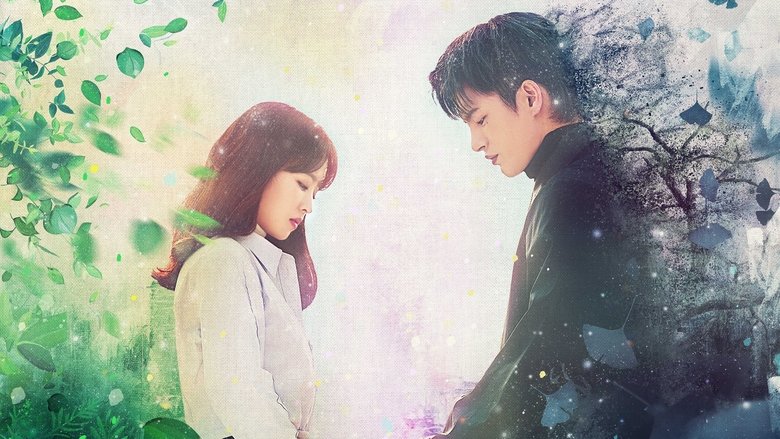
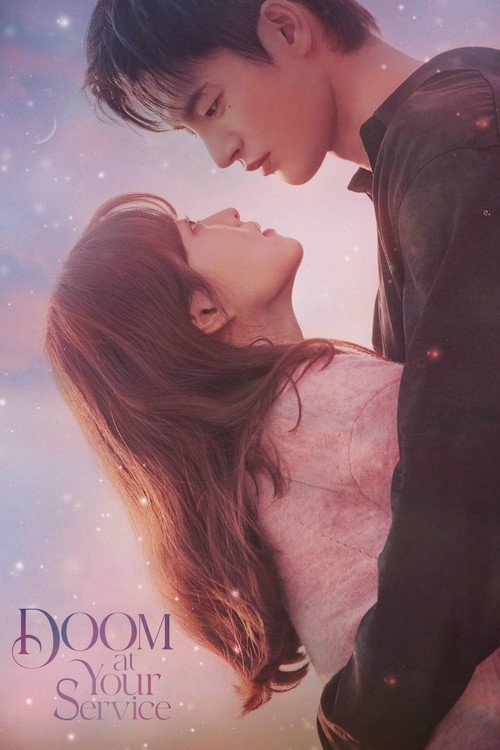
Doom at Your Service
A melancholic fantasy melodrama saturated with quiet ache and existential warmth, framing human mortality like a supernova that illuminates the dark void between life and oblivion.
Doom at Your Service

Doom at Your Service

어느 날 우리 집 현관으로 멸망이 들어왔다

"She prayed for doom, but love came instead."

10 May 2021 — 29 June 2021 South Korea 1 season 16 episode Ended 7.9 (531)

Cast: Park Bo-young, Seo In-guk, Lee Soo-hyuk, Kang Tae-oh, Shin Do-hyun

Drama Sci-Fi & Fantasy Comedy The Interdependence of Life & Death / Creation & Ruin Existential Isolation vs. Human Connection Free Will, Fate, and Moral Choice Grief, Acceptance, and Living Fully in the Face of Loss First Love Nostalgia vs. Mature Realism

Overview

Doom at Your Service (어느 날 우리 집 현관으로 멸망이 들어왔다) is a 16-episode South Korean fantasy romance series penned by Im Me-a-ri and directed by Kwon Young-il. The story centers on Tak Dong-kyung, a weary web novel editor whose mundane, overworked life collapses when she is diagnosed with terminal glioblastoma and given roughly 100 days to live. Disillusioned by ceaseless tragedy, she drunkenly screams a wish upon a shooting star for the entire world to be destroyed. Her cosmic curse summons Myeol-mang (literally "Doom" or "Destruction"), a supernatural entity created by God to serve as the bridge between darkness and light, whose very existence brings ruin to everything he touches.

Weary of his eternal, involuntary role as the universe’s harbinger of devastation, Myeol-mang seeks to grant Dong-kyung’s apocalyptic wish on her final day. Together, they forge a 100-day contract: she will live pain-free until her death in exchange for wishing doom upon humanity, but if she defaults, the person she loves most in that moment will die instead. As the countdown progresses, what begins as a cynical game of existential chicken evolves into profound mutual empathy, forcing both mortals and immortals to confront the value of existence.

Interwoven with this cosmic dilemma is an earthly romance subplot featuring Dong-kyung’s web novel writer and best friend Na Ji-na, caught in a lingering emotional triangle between her regretful high school first love, Lee Hyun-kyu, and her pragmatic editorial manager, Cha Joo-ik. Through both parallel narratives, the overarching series balances supernatural stakes with grounded human relationships.
Core Meaning

The fundamental message of Doom at Your Service is that destruction is not the antithesis of life, but its prerequisite condition for meaning and renewal. Through the philosophical interplay between a mortal nearing death and an immortal embodiment of ruin, the series posits that joy, love, and vitality only gain weight because everything is finite. The narrative champions Amor Fati (love of fate)—illustrating that embracing grief and pain is essential to experiencing genuine connection, and that true divinity lies in humanity's quiet capacity for selfless love.

Thematic DNA

The Interdependence of Life & Death / Creation & Ruin 30%
Existential Isolation vs. Human Connection 25%
Free Will, Fate, and Moral Choice 20%
Grief, Acceptance, and Living Fully in the Face of Loss 15%
First Love Nostalgia vs. Mature Realism 10%

The Interdependence of Life & Death / Creation & Ruin

The narrative continually establishes that darkness exists to define light, night to reveal day, and destruction to make room for birth. Myeol-mang's initial resentment of his purpose softens as he realizes his role is what allows mortal moments to be precious.

Existential Isolation vs. Human Connection

Both leads begin in extreme emotional isolation: Dong-kyung through emotional suppression and high-functioning numbness, and Myeol-mang through metaphysical detachment. Their gradual vulnerability demonstrates how being truly seen by another breaks the cycle of psychological alienation.

Free Will, Fate, and Moral Choice

The overarching contract serves as a vehicle to test human agency against cosmic destiny. Rather than blindly submitting to divine rules set by the deity, Dong-kyung and Myeol-mang constantly find loopholes, proving that intentional love can reshape predetermined fate.

Grief, Acceptance, and Living Fully in the Face of Loss

Having repressed grief since the death of her parents, Dong-kyung learns through impending mortality that crying, expressing fear, and acknowledging pain are not signs of weakness, but vital acts of living.

First Love Nostalgia vs. Mature Realism

Represented through the secondary love triangle, the series dismantles the romanticization of the past, contrasting Hyun-kyu’s arrested adolescent longing with Joo-ik’s grounded, forward-looking commitment.

Character Analysis

Tak Dong-kyung

Park Bo-young

Archetype: Tragic Heroine / Resilient Everywoman Key Trait: Quiet, unyielding inner strength and radical empathy

Motivation

Starts as survival and protecting her brother; evolves into saving both the world and the deity of doom, even at the cost of her life.

Character Arc

Initially emotionally dissociated and self-sacrificing due to childhood trauma, she accepts an apocalyptic bargain out of despair. Across the series, she learns to express anger, sorrow, and desire, actively choosing love over passive resignation.

Myeol-mang / Kim Sa-ram

Seo In-guk

Archetype: Cynical Deity / Antihero transformed into Romantic Hero Key Trait: Brooding nihilism masking deep spiritual loneliness

Motivation

Initially seeks the absolute annihilation of the world and his own non-existence; transforms into an absolute desire for Dong-kyung to live happily.

Character Arc

Begins as a cold, bitter cosmic force resentful of humanity's suffering and his own purpose. Through Dong-kyung’s warmth, he develops human sentiment, sacrifices his immortal divinity, and is ultimately reborn as a mortal man.

All 5 characters and cast

Symbols & Motifs

The Red String of Fate / Charging Bracelet

Meaning:

Symbolizes destiny, biological life force, and emotional tethering between mortal and immortal.

Context:

Myeol-mang binds a crimson thread around Dong-kyung’s wrist, which manifests as a red cord when they hold hands daily to alleviate her physical cancer pain.

The Deity’s Potted Plant & Garden

Meaning:

Represents the human heart and Myeol-mang’s spiritual cultivation, which blooms only when nourished by sacrifice and genuine love.

Context:

Tended by God (Sonyeoshin) as an apparently barren pot in a hospital ward, reflecting the spiritual growth of her creations.

Rain and Umbrellas

Meaning:

Rain represents inevitable sorrow and downpours of human existence, while the shared umbrella symbolizes protection and emotional solidarity.

Context:

Used across pivotal romantic and emotional scenes, emphasizing the choice to endure life’s storms together rather than hiding from them.

The Supernova (Dying Stars)

Meaning:

A direct metaphor for creative destruction and selfless sacrifice, leaving behind energy to birth new cosmos.

Context:

Dong-kyung compares Myeol-mang to a dying star that burns brightest at its end.

The Doorway / Portal

Meaning:

Represents the threshold between the mundane world and metaphysical truth, as well as the opening of private trauma to intimate companionship.

Context:

The physical entrance and boundary of Dong-kyung's apartment where Myeol-mang repeatedly appears and enters her life.

Memorable Quotes

사라지는 것들은 대개 아름답다.
— Myeol-mang

Context

Spoken during Episode 5 when reflecting on the nature of existence and fading beauty.

Meaning

Highlights his philosophical purpose: doom and endings are what give temporal phenomena their radiance.

내 목표는 너를 사랑하는 거야. 그래서 널 위해 세상을 멸망시키는 거지.
— Tak Dong-kyung

Context

Delivered in Episode 3 when Dong-kyung realizes the terms of the contract and decides to make Myeol-mang the target of her ultimate love.

Meaning

Marks the tactical pivot in their contract dynamics, turning romance into an existential loophole.

All 5 quotes

Episode Highlights

Contract with Ruin

S1E1

Establishes Dong-kyung’s tragic diagnosis and her fateful drunken wish upon a shooting star.

Significance:

Myeol-mang appears at her door on his supernatural birthday, setting the 100-day metaphysical contract in motion.

The Strategic Romance

S1E3

Dong-kyung analyzes the cruel parameters of the metaphysical contract.

Significance:

Realizing that either the world ends or her most beloved dies, Dong-kyung makes the calculated decision to fall in love with Myeol-mang so he becomes the sacrifice.

Running Through the Rain

S1E6

Features the pivotal alleyway kiss in the pouring rain.

Significance:

Myeol-mang accepts Dong-kyung’s feelings, openly giving her permission to love him so she can live, shifting their relationship from adversarial to deeply romantic.

A Birthday Celebration

S1E10

Dong-kyung prepares a heartfelt birthday celebration for Myeol-mang.

Significance:

Treats Myeol-mang as a person rather than a cosmic curse, crystallizing his longing to experience humanity.

The Memory Reset

S1E12

Seeking to spare each other further anguish, the Deity erases their memories of one another.

Significance:

Their inevitable re-encounter in the hospital proves that true love transcends divine manipulation and predetermined fate.

The Inevitable Disappearance

S1E14

The 100-day countdown expires in an emotionally devastating climax.

Significance:

Myeol-mang fades into starlight in front of Dong-kyung, willingly sacrificing his immortal existence to fulfill the contract and save her life.

Kim Sa-ram / Human at Last

S1E16

The series finale resolves the cosmic paradox as the Deity’s plant blossoms.

Significance:

Myeol-mang is resurrected as the mortal Kim Sa-ram, Dong-kyung’s cancer is confirmed gone, and they embrace a normal, fragile mortal life together.

Philosophical Questions

Does human life derive value solely from its impermanence?

The drama argues that immortality leads to emotional numbness, whereas the countdown of finite time creates urgency, passion, and meaning.

Can love exist without the capacity to cause destruction?

The series explores how genuine intimacy always entails opening oneself up to devastating emotional vulnerability.

Is human agency powerful enough to overturn divine or fatalistic design?

Through relentless moral choices, Dong-kyung and Myeol-mang challenge the illusion of predetermined fate.

Alternative Interpretations

The series can be analyzed through multiple analytical lenses:

Full ending explanation

Cultural Impact

Aired in mid-2021 on tvN, Doom at Your Service arrived during the golden era of high-concept Korean fantasy melodramas following the trail blazed by Guardian: The Lonely and Great God (Goblin) and Hotel Del Luna. While domestic South Korean Nielsen ratings hovered around a modest 2.5% to 4.4%, the drama became a massive international hit on platforms like Viki and Viu, topping viewership charts in over 150 territories.

The show reflects contemporary Korean anxieties regarding burnout culture, sudden health crises, and emotional isolation among modern millennials. It contributed to cementing Seo In-guk and Park Bo-young as a premier romantic pairing and fostered significant discourse on existentialism in commercial K-dramas.

Audience Reception

Viewers and critics universally lauded the magnetic on-screen chemistry and expressive emotional acting of Park Bo-young and Seo In-guk. The evocative soundtrack (featuring Baekhyun, Ailee, and Seo In-guk), stylized cinematography, and witty dialogue were widely celebrated.

However, critics noted that the intricate rules of the supernatural contract became needlessly convoluted in the middle acts (episodes 9–13), leading to repetitive conversational loops and uneven pacing. The secondary love triangle, while charming, occasionally felt disconnected from the high-stakes main plot. Overall, it is regarded as an emotionally compelling, philosophically ambitious fantasy romance that overcomes minor narrative pacing flaws through stellar lead performances and poetic depth.

Interesting Facts

  • Screenwriter Im Me-a-ri was formerly an assistant writer for Kim Eun-sook (writer of Goblin, Descendants of the Sun, Mr. Sunshine), heavily inspiring the show's witty repartee and metaphysical romance tropes.
  • Seo In-guk, an established singer and winner of Superstar K, recorded the emotional ballad 'Distant Fate' (아득한 먼 훗날 우리가) for the drama's official soundtrack.
  • tvN's behind-the-scenes production reels frequently highlighted the playful, lighthearted chemistry between Park Bo-young and Seo In-guk, which sharply contrasted their characters' intense angst.
  • Tak Sun-kyung was played by Dawon (Lee Sang-hyuk) of K-pop boy group SF9 in his first major television series role, receiving praise for his natural comedic timing.
  • The series was largely pre-produced under strict COVID-19 pandemic safety protocols across late 2020 and early 2021, influencing its reliance on tightly controlled urban sets and CGI visual effects.

Easter Eggs

Prominent Actor Cameos

Features special guest appearances including Kim Ji-seok as Dong-kyung's cowardly ex-boyfriend in Episode 1, Han Ye-ri as a patient, and Kwon Soo-hyun as Dong-kyung’s blind date.

Literary References to Pinocchio & The Little Prince

Myeol-mang’s journey from a cosmic construct into a real person parallels Carlo Collodi’s Pinocchio, while the Deity’s garden mirrors Antoine de Saint-Exupéry’s The Little Prince and the tending of a unique rose.

Web Novel Meta-Commentary

The publishing company 'Life Story' serves as a satirical window into South Korea's real-world web novel market, incorporating inside jokes regarding trending web novel tropes, serialization deadlines, and reader star ratings.

Frequently Asked Questions

Explore More About This Movie

Dive deeper into specific aspects of the movie with our detailed analysis pages

Comments (0)

Leave a comment

No comments yet. Be the first to share your thoughts!

Similar Movies