
Skip to content
Hi Bye, Mama!
Blending fantasy melodrama with poignant domestic warmth, this bittersweet narrative mirrors the fleeting beauty of cherry blossoms, evoking an ache of maternal sacrifice and profound gratitude for transient everyday moments.
Hi Bye, Mama!

Hi Bye, Mama!

하이바이, 마마!

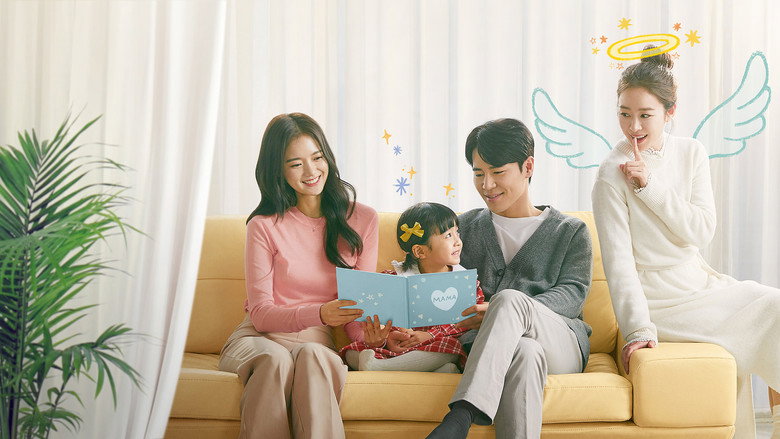
"Shh! It's a secret that I'm watching!"

22 February 2020 — 19 April 2020 South Korea 1 season 16 episode Ended 8.1 (456)

Cast: Kim Tae-hee, Lee Kyoo-hyung, Go Bo-gyeol, Shin Dong-mi, Seo Woo-jin

Drama Sci-Fi & Fantasy Comedy Grief, Bereavement, and Moving Forward Unconditional Maternal Sacrifice The Sanctity and Fleeting Nature of Ordinary Life The Definition and Evolution of Family Karma, Fate, and Unfinished Regrets

Overview

Hi Bye, Mama! is a 16-episode South Korean fantasy melodrama that follows Cha Yu-ri, a young woman who dies in a tragic traffic accident while heavily pregnant. Her daughter, Cho Seo-woo, survives the crash, but Yu-ri remains on Earth for five years as an invisible, lingering ghost because she cannot bear to leave her child without watching her grow.

Yu-ri's continued spectral presence inadvertently causes her daughter to see spirits, placing the child in spiritual peril. After an impassioned outcry against the deities regarding the unfairness of her premature passing, Yu-ri is suddenly reincarnated into human flesh and granted a 49-day earthly trial. If she successfully reclaims her original place as a wife to her husband and a mother to her daughter, she will be allowed to live permanently as a mortal.

However, her return disrupts a delicate reality: her grieving husband, Cho Gang-hwa—a thoracic surgeon burdened by debilitating surgical trauma and survivor's guilt—has since remarried a reserved, devoted woman named Oh Min-jung. Navigating reunions with her family, friends, and fellow ghosts, Yu-ri faces a profound choice between reclaiming her former life or offering true closure to those she loves.
Core Meaning

The core meaning of Hi Bye, Mama! is that true love—particularly maternal and parental love—is ultimately defined by selfless release rather than possession. The series frames bereavement not as something to rush or suppress, but as a transformative process of learning to live with absence while honoring past bonds.

Through Yu-ri's 49-day trial, the narrative highlights the sanctity of everyday banalities often taken for granted, such as sharing a meal, holding a child's hand, and saying unhurried farewells. The title reflects both greeting and departure: Yu-ri's hello and goodbye to her daughter, as well as her final reunion and release of her own mother.

Thematic DNA

Grief, Bereavement, and Moving Forward 30%
Unconditional Maternal Sacrifice 25%
The Sanctity and Fleeting Nature of Ordinary Life 20%
The Definition and Evolution of Family 15%
Karma, Fate, and Unfinished Regrets 10%

Grief, Bereavement, and Moving Forward

The series explores how sudden loss leaves lingering wounds across loved ones, ranging from Gang-hwa's severe surgical trauma and survivor's guilt to Yu-ri's mother enduring quiet grief at the ossuary. It demonstrates that prolonged denial stagnates life, whereas acceptance allows genuine emotional healing.

Unconditional Maternal Sacrifice

Juxtaposing biological and adoptive maternal devotion, the story highlights Yu-ri's willingness to forfeit her earthly return for Seo-woo's spiritual safety, alongside Min-jung's deep, selfless commitment to raising a child who is not biologically hers.

The Sanctity and Fleeting Nature of Ordinary Life

Through the wandering spirits at the columbarium, the show emphasizes that souls long not for grandiose achievements, but for trivial, mundane moments: eating homemade meals, conversing with family, and walking side by side.

The Definition and Evolution of Family

The narrative deconstructs conventional domestic dynamics by showing that shared devotion and mutual care build familial legitimacy, establishing a relationship of mutual respect between the birth mother and stepmother.

Karma, Fate, and Unfinished Regrets

Secondary ghost storylines illustrate the universal human burden of unexpressed feelings and unfinished business, highlighting the urgency of expressing love before life ends abruptly.

Character Analysis

Cha Yu-ri

Kim Tae-hee

Archetype: Sacrificial Hero / Lingering Soul Key Trait: Boundless empathy and maternal tenacity.

Motivation

Initially seeks to stay by her daughter's side, but ultimately resolves to grant peace, safety, and closure to all her living loved ones.

Character Arc

Transforms from an obsessive spectral watcher unable to sever attachments into a self-actualized mother who willingly releases earthly reincarnation to ensure her child's well-being.

Cho Gang-hwa

Lee Kyu-hyung

Archetype: Wounded Healer / Grieving Protector Key Trait: Deep emotional tenderness masked by internalized sorrow.

Motivation

Evolves from suppressing his pain to keep his household functional into openly acknowledging his grief and committing to Min-jung and Seo-woo.

Character Arc

Begins paralyzed by surgical trauma and survivor's guilt, but gradually confronts his unresolved bereavement to regain his identity as a competent thoracic surgeon and fully present husband.

All 5 characters and cast

Symbols & Motifs

Cherry Blossoms / Falling Petals

Meaning:

Symbolizes the transient, fleeting nature of human existence, which retains its inner emotional imprint and enduring love even after physical beauty fades.

Context:

Seen during pivotal encounters between Yu-ri and Gang-hwa, and explicitly referenced in the series finale with the phrase, 'Petals fall, but the flower endures.'

Pervasive Snow and Sleet

Meaning:

Represents the freezing shock of sudden mortality and the subsequent defrosting of stagnant, long-held grief.

Context:

Accompanies Yu-ri's fatal car accident and her initial physical reincarnation, contrasting with the warmth of her human rebirth.

The Bell and Exorcism Charms

Meaning:

Represents the delicate boundary separating the living and spiritual realms, showing that artificially tethering deceased souls to the mortal world creates chaos for the living.

Context:

Utilized by Shaman Midongdaek to manage lingering ghosts and protect children from spiritual intrusion.

Seo-woo's Drawing Pad and Crayon Figures

Meaning:

Acts as a barometer of the child's spiritual danger and symbolizes how young children absorb unseen emotional and supernatural burdens within a household.

Context:

Used by Seo-woo to depict the lingering spirits that inhabit her kindergarten and home.

The Handheld Mirror

Meaning:

Symbolizes ultimate self-acceptance, individual identity, and closure before transitioning to the afterlife.

Context:

Held by Yu-ri in her final moments to view herself as an individual rather than merely a wandering spirit or mother.

Memorable Quotes

꽃잎은 떨어져도 꽃은 영원히 남아.
— Cha Yu-ri

Context

Spoken in Episode 16 as Yu-ri reflects on her impending departure and prepares to leave her family.

Meaning

Encapsulates the philosophy that although mortal physical life ends, the love and positive impact left behind endure indefinitely.

내가 내 목숨보다 더 귀하게 여긴 첫 번째 생명이야. 서우를 위해선 뭐든 할 수 있어.
— Cha Yu-ri

Context

Spoken to Gang-hwa in Episode 16 when explaining why she refuses to reclaim her physical life at the cost of Seo-woo's safety.

Meaning

Highlights Yu-ri's selfless maternal devotion, prioritizing Seo-woo's spiritual well-being above her own earthly survival.

All 4 quotes

Episode Highlights

Life is Full of Unpredictable Surprises

S1E1

Establishes Yu-ri's five-year existence as a ghost watching over her family, culminating in her sudden reincarnation after railing against the deities, which leaves Gang-hwa stunned on a busy street.

Significance:

Introduces the main supernatural premise, starts the 49-day ticking clock, and sets the high emotional stakes.

There is Nothing That Cannot Happen to Me

S1E4

Yu-ri secures a job as a kitchen assistant at Seo-woo's kindergarten to clear the facility of roaming spirits, while Gang-hwa grapples with the shock of her physical presence.

Significance:

Brings the biological mother, child, and stepmother into close physical proximity, complicating the family dynamics.

The People Who Can't Say Goodbye

S1E8

Yu-ri is discovered by her best friend Go Hyun-jung and her mother, resulting in an overwhelming reunion between the grieving parents and their resurrected daughter.

Significance:

Expands the emotional focus beyond romantic grief to explore profound parental bereavement and friendship.

The Days Given to Me

S1E12

Min-jung discovers Yu-ri's true identity and confronts Gang-hwa about the secrets he has kept regarding his late wife's physical return.

Significance:

Removes the barrier of deception and forces all three adult leads into direct emotional confrontation.

My Life's Most Beautiful Goodbye

S1E15

Yu-ri learns the hidden consequence of her trial: choosing to stay alive permanently will force Seo-woo to see spirits forever, endangering the child's life.

Significance:

Eliminates any easy resolution, cementing Yu-ri's ultimate maternal sacrifice.

Petals Fall, but the Flower Endures

S1E16

Yu-ri delivers heartfelt individual farewells to her parents, sister, Gang-hwa, Min-jung, and Seo-woo before peacefully crossing over into the afterlife.

Significance:

Provides definitive emotional closure, leading to an epilogue where Seo-woo grows up safe, happy, and grounded with Gang-hwa and Min-jung.

Philosophical Questions

Does the desire to linger around living loved ones bring comfort or unseen harm?

Explored through Yu-ri's ghost presence, which, despite her pure maternal affection, inadvertently endangers Seo-woo's development by opening the child's vision to the spirit world.

Can grief ever be truly completed, or is healing simply learning to live alongside loss?

Examined through Gang-hwa's inability to operate or move forward until he openly confronts and articulates his deep sorrow.

What defines true motherhood—biological birth or enduring daily presence and care?

Deconstructed through the mutual respect and shared maternal commitment between Yu-ri and Min-jung.

If given a chance to redo unfinished goodbyes, would it lessen the pain of death or amplify the sorrow of departure?

Explored across the emotional journeys of the ossuary spirits and Yu-ri's final farewells to her family.

Alternative Interpretations

Interpretations of the series and its conclusion vary across several viewpoints:

Full ending explanation

Cultural Impact

Airing in early 2020, Hi Bye, Mama! resonated with global and domestic audiences during a period of heightened reflection on domestic vulnerability and mortality. It distinguished itself in Korean television by portraying the stepmother character through a deeply sympathetic, supportive lens rather than utilizing the classic 'wicked stepmother' archetype.

The drama reinforced the standing of tvN and Studio Dragon in producing emotionally resonant, high-concept fantasy melodramas that ground celestial concepts in relatable human relationships. It also marked a successful transition for Kim Tae-hee into complex maternal roles.

Audience Reception

Hi Bye, Mama! received strong praise for Kim Tae-hee's emotional performance and her on-screen chemistry with child actor Seo Woo-jin. Lee Kyu-hyung was widely lauded for his nuanced depiction of survivor's guilt, panic attacks, and grief. Additionally, viewers appreciated the supportive female solidarity between Yu-ri, Min-jung, and Hyun-jung instead of typical antagonistic love-triangle tropes.

Criticism centered primarily on the middle episodes (episodes 9–13), which some viewers felt suffered from pacing issues and repetitive ghost subplots. Some also found Gang-hwa's emotional passivity toward Min-jung frustrating. Overall, the drama is regarded as a deeply moving, tear-jerking narrative with a philosophically satisfying resolution.

Interesting Facts

  • The series marked actress Kim Tae-hee's return to television after a 5-year hiatus following her 2015 SBS drama Yong-pal.
  • Child actor Seo Woo-jin, who played the female role of Cho Seo-woo, is biologically male and was cast due to his striking resemblance to Kim Tae-hee.
  • Seo Woo-jin's mother publicly clarified on social media that the child actor fully understood the difference between acting and his real-life gender identity.
  • Episodes 13 and 14 were postponed for one week in April 2020 by tvN to ensure production safety and manage scheduling amidst early COVID-19 precautions.
  • The drama took over tvN's coveted Saturday-Sunday 21:00 time slot directly following the major ratings hit Crash Landing on You.
  • Screenwriter Kwon Hye-joo previously authored the popular fantasy family melodrama Go Back Couple in 2017.

Easter Eggs

Cameo by Yang Kyung-won

Following directly after Crash Landing on You, actor Yang Kyung-won made a comedic guest appearance as an exorcist sent by the celestial council.

Korean 49-Day Afterlife Tradition (Sasinam-il)

The narrative is built around Buddhist and Korean folk beliefs regarding the 49-day intermediate state (Bardo) where souls undergo trials before reincarnation.

Columbarium (Ossuary) Culture

Depicts the contemporary Korean practice of placing urns, photographs, and personal items in memorial walls, bringing human personality to the spirits resting there.

Frequently Asked Questions

Explore More About This Movie

Dive deeper into specific aspects of the movie with our detailed analysis pages

Comments (0)

Leave a comment

No comments yet. Be the first to share your thoughts!

Similar Movies