Skip to content
Dorohedoro
A grimy, darkly comic dark-fantasy brawl with an oddly tender heart, in which a reptile-headed man stumbles through a soot-stained city of smoke and gyoza steam, hunting the ghost of his own face.
Dorohedoro

Dorohedoro

ドロヘドロ

"What did the guy inside my head say?"

13 January 2020 — 27 May 2026 Japan 2 season 23 episode Returning Series 8.4 (461)

Cast: Reina Kondo, Wataru Takagi, Yu Kobayashi, Yoshimasa Hosoya, Kenyu Horiuchi

Animation Sci-Fi & Fantasy Action & Adventure Comedy Identity and memory Found family and friendship Class, power and exploitation Violence and black humour Food and everyday pleasure

Overview

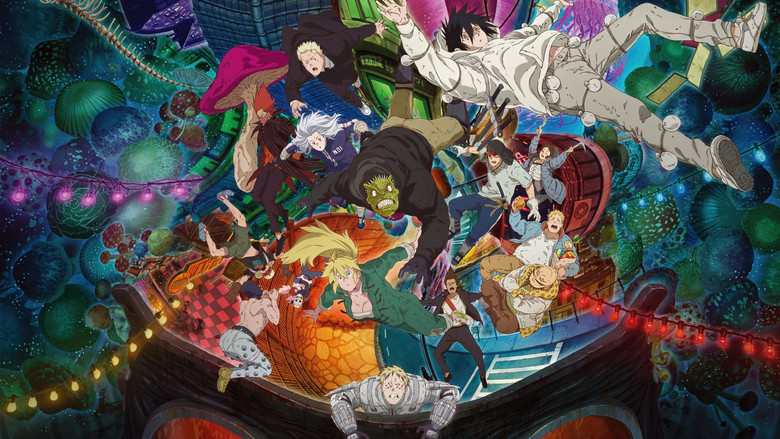
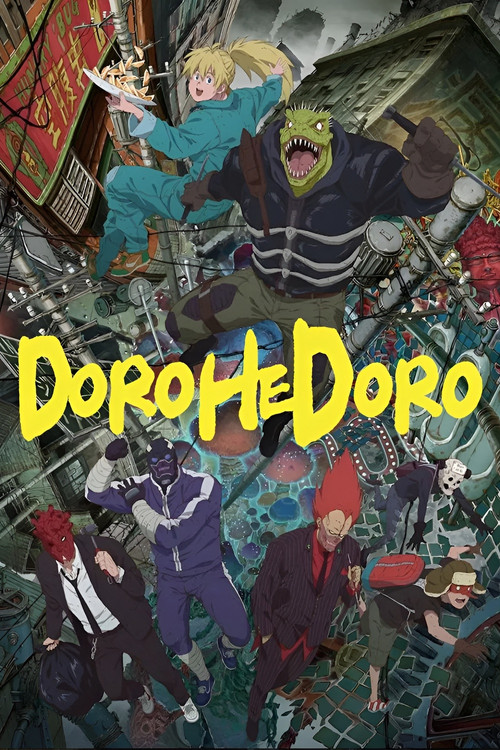
Dorohedoro is a Japanese anime adapted from Q Hayashida's manga. Its hero is Caiman, an amnesiac man with a reptile's head, who lives in a lawless, decaying district called the Hole. Together with his friend Nikaido, he hunts the sorcerers who come down from their own world to practise magic on the Hole's residents. He wants to find the one who cursed him and undo the spell. Each time, he asks the man living inside his throat what the sorcerer's magic means.

The story widens from this simple revenge quest. It brings in a sorcerer crime boss named En and his cleaners, Shin and Noi, and a hierarchy of magic users with their own politics and rivalries. The series is violent, gory and absurd, and it often plays horror as comedy. Much of its warmth comes from the characters' everyday lives: eating, drinking, bickering and cooking.

The anime began in 2020 and has since returned for a second season, according to IMDb's 2020–2025 listing. It is notable for its unusual world design and its mix of splatter and slice-of-life.
Core Meaning

Underneath the gore, Dorohedoro is about identity and belonging. Caiman's search for his "real" face matters less than the people he has gathered around him along the way. The series suggests that identity is built from relationships, habits and shared meals, not just from a hidden past.

It also treats the divide between the Hole and the sorcerer world as a harsh hierarchy of power, and shows ordinary people making lives with dignity and humour inside it. Its message is that people survive violence and absurdity by choosing connection and pleasure, even when the world is rotten.

Thematic DNA

Identity and memory 30%
Found family and friendship 25%
Class, power and exploitation 20%
Violence and black humour 15%
Food and everyday pleasure 10%

Identity and memory

Caiman's lost past and lizard head drive the plot, and the series keeps asking whether he is defined by who he was or by who he has become. Over time the answers shift from a hunt for one culprit to an acceptance of the self.

Found family and friendship

Caiman and Nikaido's bond, and the gang around En and Shin and Noi, show people building families from outcasts. Meals, jokes and loyalty are treated as seriously as combat.

Class, power and exploitation

Sorcerers treat the Hole as a testing ground, and magic users sit in a rigid hierarchy. The story gradually shows how that inequality shapes both worlds.

Violence and black humour

Gore is delivered with comic timing, which makes brutality an everyday texture of the world. The tone keeps the series from being pure grimness.

Food and everyday pleasure

Nikaido's gyoza and the characters' constant eating anchor the show in warmth. They offer a counterweight to the filth around them.

Character Analysis

Caiman

Wataru Takagi

Archetype: Amnesiac antihero Key Trait: Magic immunity and a regenerating reptile head

Motivation

To restore his human face and memories, a goal that gradually shares space with protecting his friends.

Character Arc

He begins as a single-minded killer hunting the sorcerer who cursed him. Across the series his purpose is complicated by the bonds he forms and by what he learns of his past.

Nikaido

Reina Kondo

Archetype: Loyal friend and powerhouse Key Trait: Fearsome fighter who cooks gyoza

Motivation

To help Caiman and to keep the community around her restaurant alive.

Character Arc

She starts as Caiman's cheerful partner and restaurateur. As the story widens, her own power and history gain importance and she becomes central to the plot.
All 4 characters and cast

Symbols & Motifs

Caiman's reptile head

Meaning: A mask and wound: a borrowed identity, and a question about what a person really is.
Context: The lizard head hides his past. Its regeneration and the man in his mouth keep the mystery alive throughout the series.

The man in Caiman's mouth

Meaning: The hidden self, or the unknown past speaking from inside.
Context: A recurring ritual: Caiman puts a sorcerer's head in his mouth and the man within judges whether it is the culprit.

Gyoza

Meaning: Comfort, home and friendship.
Context: Nikaido's restaurant, The Hungry Bug, is the characters' gathering place and a calm spot amid violence.

The red crosses over the eyes

Meaning: Marks of a shared, obscured connection and of identity.
Context: Both Caiman and the man in his throat bear red crosses, as do the gangsters Shin and Noi kill in the first episode.

Mushrooms

Meaning: Decay and recycling; nothing is wasted.
Context: En's magic turns people into mushrooms, and a gag reveals that they are cultivated on bodies.

Episode Highlights

Caiman

S1E1
Introduces Caiman, Nikaido and the ritual of the man in Caiman's throat, and the sorcerer cleaners Shin and Noi. It sets out the amnesia mystery and the series' tone.
Significance: Establishes the central quest, the Hole, and the dark-comedy blend of violence and domesticity.

In the Bag / At the Eating Contest

S1E2
Brings in En as the boss of Shin and Noi, who sends them to kill Caiman and Nikaido. It also shows how En's magic works.
Significance: Sets up the conflict between the two groups and introduces the sorcerer world's politics.

Philosophical Questions

Is identity what we were or what we choose to be?

Caiman's amnesia and reptile head put the question in literal form. His life with Nikaido suggests that identity grows from present relationships.

Can people find dignity inside a violent, unjust order?

The Hole's residents endure sorcerer exploitation yet cultivate humour, food and community, which the series presents as a form of resistance.

How It Ends

Alternative Interpretations

The series can be read as a revenge story, as a story about identity, or as a social allegory about the Hole as a neglected underclass preyed on by the privileged. Some viewers treat it as a pure comedy-of-horrors with no deeper message, while others see its warmth as the real subject.

Full ending explanation

Cultural Impact

The series was adapted from a long-running seinen manga that built a cult following for its grotesque, richly detailed world. IMDb reviewers describe the anime as fresh and unusual compared with standard anime, praising its animation, backgrounds and soundtrack. Its return for a second season suggests lasting demand.

Audience Reception

Viewers on IMDb rate the series about 8.0/10 from over 14,000 ratings. Reviewers call it bonkers, brutal, humorous and unique, and praise MAPPA's adaptation, the background art and the soundtrack. Readers new to the manga often say they are moved to read it afterwards. I did not find detailed season-by-season criticism, so that comparison is not covered here.

Interesting Facts

  • Dorohedoro is based on the manga by Q Hayashida, which was serialized from November 2000 to 2018 and collected in 23 volumes.
  • The manga was serialized in Monthly Ikki, then Hibana, then Monthly Shonen Sunday, all published by Shogakukan.
  • IMDb lists the anime as running from 2020 to 2025, which reflects its return for a second season.
  • Wataru Takagi voices Caiman in Japanese and Aleks Le voices him in English.

Frequently Asked Questions

Explore More About This Movie

Dive deeper into specific aspects of the movie with our detailed analysis pages

Comments (0)

Leave a comment

No comments yet. Be the first to share your thoughts!

Similar Movies