Noblesse
A gothic-action tapestry where ancient power awakens in the modern world, painting a crimson streak of loyalty and loneliness against a cold, urban canvas.
Noblesse

Noblesse

NOBLESSE -ノブレス-

08 October 2020 — 31 December 2020 Japan 1 season 13 episode Ended ⭐ 8.5 (413)
Cast: Akihisa Wakayama, Hiroki Yamada, Daishi Kajita, Youhei Hamada, Ryota Iwasaki
Animation Sci-Fi & Fantasy Action & Adventure Comedy
The Burden of Power and Loneliness Friendship and Loyalty Clash of Old and New Worlds Humanity and What It Means to Be 'Human'

Overview

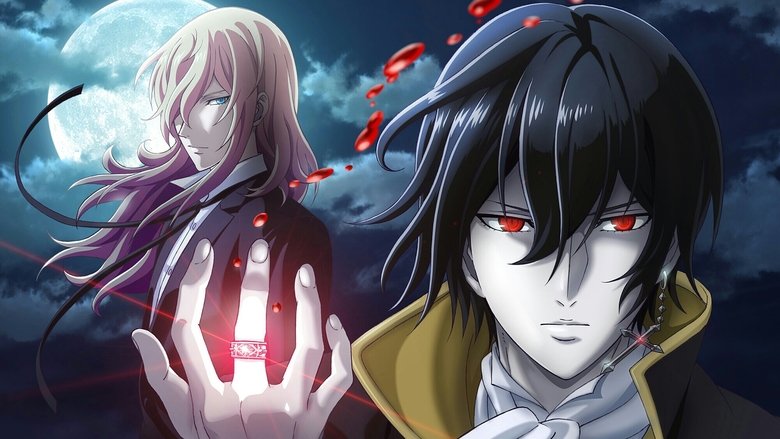
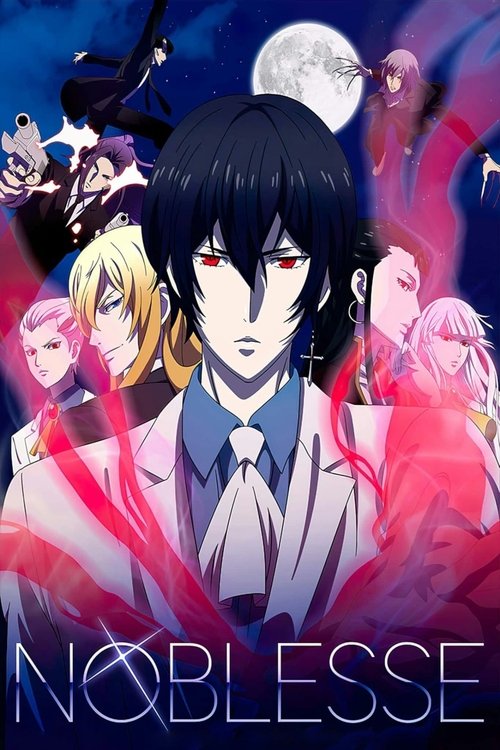
"Noblesse" chronicles the reawakening of Cadis Etrama Di Raizel (or Rai), an immensely powerful Noble who has been asleep for 820 years. Upon waking in modern-day South Korea, he finds himself completely lost in a world of advanced technology and different social customs. By chance, he reunites with his loyal and powerful servant, Frankenstein, who is now the director of a high school. To help Rai acclimate to the new era and to protect him, Frankenstein enrolls him as a student.

Rai's peaceful school life with new human friends is short-lived. A clandestine organization known as the Union, which conducts sinister human experiments, becomes aware of his existence and sends modified humans to pursue him and his associates. Rai is forced to use his profound abilities to protect his newfound friends, all while uncovering the secrets behind his long slumber and confronting figures from his past. The series balances slice-of-life high school comedy with intense supernatural battles, exploring themes of friendship, loyalty, and the burden of immense power.
Core Meaning

The core meaning of "Noblesse" revolves around the concept of Noblesse Oblige — the idea that with great power and privilege comes great responsibility. Rai, as the most powerful Noble, embodies this principle. His existence is defined by his duty to protect others, both Nobles and humans, even at a great personal cost to his own life force. The series explores the loneliness inherent in this duty and posits that true strength is found not just in power, but in the connections and friendships one chooses to protect. It suggests that even an ancient, god-like being can find new meaning and purpose through simple, everyday human connections.

Thematic DNA

The Burden of Power and Loneliness 35%
Friendship and Loyalty 30%
Clash of Old and New Worlds 20%
Humanity and What It Means to Be 'Human' 15%

The Burden of Power and Loneliness

Rai's immense power as the Noblesse is also his greatest burden. Every use of his abilities shortens his lifespan, framing his acts of protection as ultimate sacrifices. This power isolates him, as few can understand his existence or the weight of his responsibilities. His 820-year slumber was a means of recovery, and his reawakening forces him to once again face a solitary path of duty. His quiet, stoic demeanor is a mask for this profound loneliness, which only begins to ease through his interactions with his new, unsuspecting human friends.

Friendship and Loyalty

The bond between Rai and his servant Frankenstein is the series' central pillar of loyalty, spanning over 800 years. Frankenstein's devotion is absolute, going so far as to establish a school to create a safe haven for his master. This theme expands as Rai forms new friendships with students like Shinwoo and Ik-Han, and even modified humans like M-21. Rai's motivation shifts from a sense of abstract duty to a personal desire to protect these specific individuals, demonstrating that loyalty and friendship give his power a renewed purpose.

Clash of Old and New Worlds

Having been asleep for 820 years, Rai is a relic in the 21st century. Much of the series' humor and heart comes from his attempts to understand modern technology, like cell phones and computers, and social norms. This theme highlights the vast changes in human society while also showing that core values like friendship and the desire for a peaceful life are timeless. The school itself becomes a symbolic bridge between Rai's ancient, supernatural world and the ordinary, modern world he now inhabits.

Humanity and What It Means to Be 'Human'

The series contrasts the ancient, powerful Nobles with the 'modified humans' created by the Union. Characters like M-21 struggle with their identities, having been unwillingly stripped of their humanity for the sake of power. Through Rai's protection and Frankenstein's help, M-21 begins to reclaim a sense of self and purpose. The show questions whether power defines a being, suggesting instead that compassion, loyalty, and the choice to protect others are the true measures of one's 'humanity,' regardless of species.

Character Analysis

Cadis Etrama Di Raizel (Rai)

Tarusuke Shingaki

Archetype: The Reluctant Protector / The Majestic Being
Key Trait: Regal and Compassionate

Motivation

Initially, Rai's motivation is rooted in his inherent role as the Noblesse: a being who maintains balance and protects the weak. However, this abstract motivation becomes deeply personal. His primary drive becomes the protection of his new friends and the tranquil life they represent. He is willing to sacrifice his own existence to preserve their ordinary happiness, a stark contrast to his previous solitary existence.

Character Arc

Having awakened after 820 years, Rai begins as a passive, detached observer, unfamiliar with the modern world. His initial arc is one of acclimation and rediscovery. As he forms bonds with the students at Ye Ran High, his purpose shifts from an abstract, ancient duty to a concrete, personal mission to protect his new friends. This evolution forces him to expend his limited life force, transforming his detached sense of responsibility into a profound, self-sacrificial love for the peaceful life he has found.

Frankenstein

Daisuke Hirakawa

Archetype: The Devoted Servant / The Mad Scientist
Key Trait: Fiercely Loyal

Motivation

Frankenstein's sole motivation is the safety and well-being of his master, Rai. Every action he takes—from scientific research to his duties as a high school principal—is dedicated to serving Rai and preventing him from having to use his life-draining powers. This unwavering loyalty is the driving force of his character.

Character Arc

Frankenstein starts as Rai's utterly loyal servant, having waited centuries for his master's return. His arc involves balancing his immense power and sadistic combat tendencies with his role as a protector and guardian. He founded the school to give Rai a peaceful life. Throughout the series, he learns to temper his ruthlessness and trust others, such as M-21 and the other modified humans, to help protect Rai, thereby slightly lessening the burden on both himself and his master.

M-21

Daishi Kajita

Archetype: The Reformed Antagonist
Key Trait: Searching for Identity

Motivation

M-21's initial motivation is survival and a desperate search for the names and identities of his fallen comrades from the M-series experiments. After joining Rai's side, his motivation evolves into a desire to protect his new home at Ye Ran High and atone for his past. He fights to create a world where others won't suffer the same fate he did.

Character Arc

M-21 is introduced as a conflicted agent of the Union, shackled by his past as a human experiment. Initially an antagonist, his arc is one of redemption and finding a new purpose. After being saved by Rai and taken in by Frankenstein, he transitions from a weary cynic into a dedicated guardian of the school and its students. He finds the camaraderie and sense of belonging he never had, choosing to use his powers to protect rather than to serve the Union's destructive goals.

Symbols & Motifs

Rai's Cross Earring

Meaning:

Rai's silver cross earring is a symbol of his status as the Noblesse and the seal on his immense power. It represents both his authority as a judge and executioner of his kind and the burden he carries. It is a constant visual reminder of his unique, sacred, and lonely duty.

Context:

The earring is a permanent part of Rai's design and is often focused on during moments when he unleashes his power. It was crafted for him by Frankenstein. When his power is fully released, the earring sometimes glows or emanates an aura, signifying that the seal is being temporarily loosened for him to pass judgment.

Ye Ran High School

Meaning:

The high school serves as a sanctuary and a symbol of the normal, peaceful life that Rai has never been able to experience. It represents his attempt to understand humanity and form connections outside of his duty-bound existence. It is a neutral ground where Nobles, modified humans, and ordinary teenagers can coexist.

Context:

Founded and run by Frankenstein specifically for his master, the school is the primary setting for the series' slice-of-life moments. It is the place where Rai forges his first new friendships in centuries and becomes the location he feels compelled to protect above all else from the threats of the Union and other supernatural forces.

Ramen

Meaning:

On a lighter note, Rai's fascination with and love for instant ramen symbolizes his connection to the simple pleasures of the modern human world. It is one of the first things he genuinely enjoys with no ties to his past or his powers. It humanizes the god-like character and serves as a recurring comedic element reflecting his innocence about contemporary life.

Context:

Rai is frequently shown enjoying ramen with his human friends Shinwoo and Ik-Han. His deadpan, serious analysis of the different flavors and his solemn appreciation for the dish provide a humorous contrast to his immense power and regal demeanor. Frankenstein also strives to create the perfect ramen for him.

Episode Highlights

A Reason to Fight / Nobility

S1E2

This episode establishes the central conflict by properly introducing the Union as a threat. It also solidifies Rai's role as a protector when he steps in to save his friends, showcasing his overwhelming power for the first time in the series. It's a key episode for setting the stakes and defining the dynamics between the main characters and the antagonists.

Significance:

It sets the narrative in motion, moving beyond Rai's initial culture shock to establish the action-oriented plot. It defines Rai's motivation to protect his new friends and gives M-21 a reason to begin questioning his allegiance to the Union.

A Friend's Hand / Fight For...

S1E5

Regis and Seira, two other Nobles, arrive to investigate Rai, creating tension and expanding the world's lore. This episode is significant for introducing the politics of the Nobles' society (Lukedonia) and for the major confrontation between Frankenstein and the DA-5, a specialized unit from the Union. Frankenstein's immense power and sadistic fighting style are put on full display.

Significance:

This episode deepens the world-building by introducing Lukedonia and the hierarchy of the Nobles. It establishes Frankenstein as a formidable fighter in his own right and plants the seeds of conflict between Rai's group and the established Noble society.

Great Power / Raizel

S1E6

Ranked as one of the best episodes by viewers, this entry features intense, escalating battles. Rai fully intervenes in the fight against the Union's agent Crans, using his signature Blood Field ability. It's a pivotal moment where Rai demonstrates the true, terrifying extent of his power as the Noblesse to save M-21 and his friends.

Significance:

This episode is a turning point, solidifying M-21's loyalty to Rai and showcasing the life-draining cost of Rai's powers. It's a crucial demonstration of the series' central theme: the burden of power and the sacrifices made to protect others.

Frankenstein / First Contact

S1E8

Gejutel, a Noble elder and Regis's grandfather, arrives in Japan and has an unexpected reunion with Frankenstein and Rai. This episode delves into Frankenstein's mysterious past and his complicated history with the Nobles, revealing that he is a human who possesses power rivaling that of a clan leader.

Significance:

It provides crucial backstory for Frankenstein, adding depth to his character beyond being a loyal servant. The episode builds the bridge between the conflict with the Union and the impending conflict with Lukedonia, setting the stage for the season's climax.

Noblesse / Take Her Hand

S1E13

The season finale brings the conflict with Lukedonia to a head. Rai confronts the current Lord, Raskreia, to stop the execution of Gejutel and reveals the truth behind the previous Lord's 'betrayal'. The episode features a climactic battle and resolves the misunderstanding that has plagued Noble society for centuries, but at a great cost to Rai's remaining life force.

Significance:

This episode concludes the first major arc of the story, revealing key secrets about Rai's past and the history of the Nobles. It firmly establishes Rai's authority and righteousness but ends on a somber note, emphasizing the toll his duties have taken on him and leaving his future uncertain.

Philosophical Questions

Does immense power necessitate a life of solitude and sacrifice?

The series explores this through its protagonist, Raizel. As the Noblesse, his power is absolute, but it also isolates him and drains his life force. His existence poses the question of whether a being with such profound responsibility can ever form genuine, equal relationships or live a normal life. His friendship with the human students serves as a counterargument, suggesting that connection is possible, but it comes at the cost of constantly placing himself in danger and hastening his own demise, thereby reinforcing the idea that his power is an inescapable burden.

What is the true meaning of loyalty?

"Noblesse" presents loyalty in various forms. Frankenstein's loyalty to Rai is absolute and centuries-old, bordering on religious devotion. In contrast, M-21 develops a new loyalty to Rai based on gratitude and shared values, breaking away from the coercive loyalty demanded by the Union. The series contrasts these forms of earned, heartfelt loyalty with the blind, duty-bound loyalty of some Nobles, questioning whether true allegiance comes from a sense of obligation or from a genuine, personal connection.

Can one reclaim a humanity that has been forcibly taken away?

This question is central to the arcs of the modified humans, especially M-21. As a product of the Union's experiments, he was treated as a tool rather than a person. By joining Rai's group, he begins a journey of reclaiming his identity and purpose. The series suggests that humanity is not just a matter of origin but of choice: the choice to form bonds, to protect others, and to live with dignity. It posits that a 'monster' can be more human than his creators if he chooses compassion over power.

Alternative Interpretations

One of the primary alternative interpretations of the "Noblesse" anime stems from its nature as a heavily condensed adaptation. While on the surface it is a straightforward action-fantasy, some viewers and critics interpret the series as a commentary on the difficulty of maintaining one's identity in the face of overwhelming duty. Rai's struggle can be seen not just as a physical battle, but as a metaphorical one against the erosion of his selfhood by his title of 'The Noblesse'. His quiet moments and fascination with ramen are not just comic relief, but desperate attempts to anchor himself to a personal identity beyond his role.

Another interpretation focuses on Frankenstein's character. Instead of viewing him as purely a loyal servant, some see his actions as driven by a possessive, almost selfish desire to keep his 'Master' in a gilded cage. He builds the school and surrounds Rai with peace not just for Rai's sake, but to control his environment and prevent Rai from leaving him again. This reading adds a layer of tragic codependency to their relationship, suggesting Frankenstein's loyalty is intertwined with a deep-seated fear of abandonment after spending centuries searching for him.

Cultural Impact

"Noblesse" arrived as part of a significant wave of manhwa (South Korean webtoon) adaptations in the early 2020s, alongside titles like "Tower of God" and "The God of High School." As a Crunchyroll Original, its production signified a major investment by international streaming platforms into the webtoon market, aiming to capitalize on its massive existing readership.

However, the series' reception was mixed, particularly among long-time fans of the source material. A primary point of criticism was the anime's highly condensed plot and rushed pacing. The decision to skip the first 90+ chapters of the story, directing viewers to a four-year-old OVA ("Noblesse: Awakening") for the beginning, was widely seen as a misstep that alienated newcomers and frustrated veterans. While the animation by Production I.G. was polished, many felt the adaptation failed to capture the nuanced character interactions, world-building, and humor that made the webtoon beloved.

As a result, its cultural impact is more of a cautionary tale in adaptation. It highlighted the challenges of converting a long-running, deeply detailed webtoon into a short, 13-episode anime season. Unlike its contemporaries which generated significant buzz, "Noblesse" had a more muted reception and its legacy is often discussed in the context of the broader successes and failures of the webtoon-to-anime boom. There have been no announcements for a second season, leaving the anime's future uncertain.

Audience Reception

The audience reception for "Noblesse" was largely divided, with a significant split between anime-only viewers and fans of the original manhwa. Many manhwa readers expressed deep disappointment, citing the anime's rushed pacing and the omission of key story arcs, character development, and comedic moments that were integral to the source material. The decision to skip the extensive prologue, which was covered in the 2016 OVA "Noblesse: Awakening," was a major point of criticism, as it left new viewers confused and feeling dropped into the middle of a story.

On the other hand, some anime-only viewers found the series to be an enjoyable, if somewhat generic, action show with stylish characters and well-animated fight scenes. They praised the dynamic between Rai and Frankenstein and the blend of supernatural action with high school comedy. However, even among this group, some criticized the plot as lackluster and the characters as underdeveloped. Overall, the consensus is that while "Noblesse" had positive elements, it failed to live up to the potential of its beloved source material and stands as the weakest of the initial trio of Webtoon adaptations by Crunchyroll.

Interesting Facts

  • The 2020 TV anime is not the first adaptation; it's a direct sequel to a 2016 Original Net Animation (ONA) titled "Noblesse: Awakening", which adapted the first 78 chapters of the manhwa. Many viewers were confused because the TV series begins where the ONA ends.
  • The series was part of the 'Crunchyroll Originals' initiative, a slate of anime produced or co-produced by the streaming service to adapt popular webcomics and other properties.
  • The source material is a South Korean webtoon (manhwa) written by Son Jeho and illustrated by Lee Kwangsu, which ran for over a decade from 2007 to 2019 and amassed a huge global fanbase.
  • The anime was animated by the renowned Japanese studio Production I.G, famous for its work on series like "Ghost in the Shell", "Psycho-Pass", and "Haikyuu!!".
  • In the anime adaptation, the setting was changed from South Korea to Japan, and some of the human characters' Korean names were changed to Japanese names to better suit the new setting.
  • The opening theme song, "BREAKING DAWN," was performed by Kim Jae-joong, a popular South Korean singer and member of the group JYJ, while the ending theme "Etoile" was by K-pop girl group OH MY GIRL.

⚠️ Spoiler Analysis

Click to reveal detailed analysis with spoilers

Frequently Asked Questions

Explore More About This Movie

Dive deeper into specific aspects of the movie with our detailed analysis pages

Comments (0)

Leave a comment

No comments yet. Be the first to share your thoughts!